
18 Best Mayfly Dry Flies
Choosing the best mayfly dry flies transforms an ordinary day on the water into a truly extraordinary experience—especially in May, when the best dry fly fishing unfolds across much of the U.S. This is the stretch anglers dream about all year long, a window filled with steady hatches, soft light on the currents, and trout rising with a rhythm that feels almost timeless.Anglers often rely on classic mayfly patterns that have proven themselves for generations, yet they’ve also found that today’s newer mayfly designs can give trout a fresh look they’re more willing to take. While patterns like the Pheasant Tail and Hare’s Ear remain reliable go-tos, those who broaden their mayfly selection usually notice a clear boost in their success.
From the Light Cahill, a pattern that has inspired countless anglers for decades, to the latest modern mayfly dry flies, this guide will walk you through the 18 best mayfly patterns for every season.
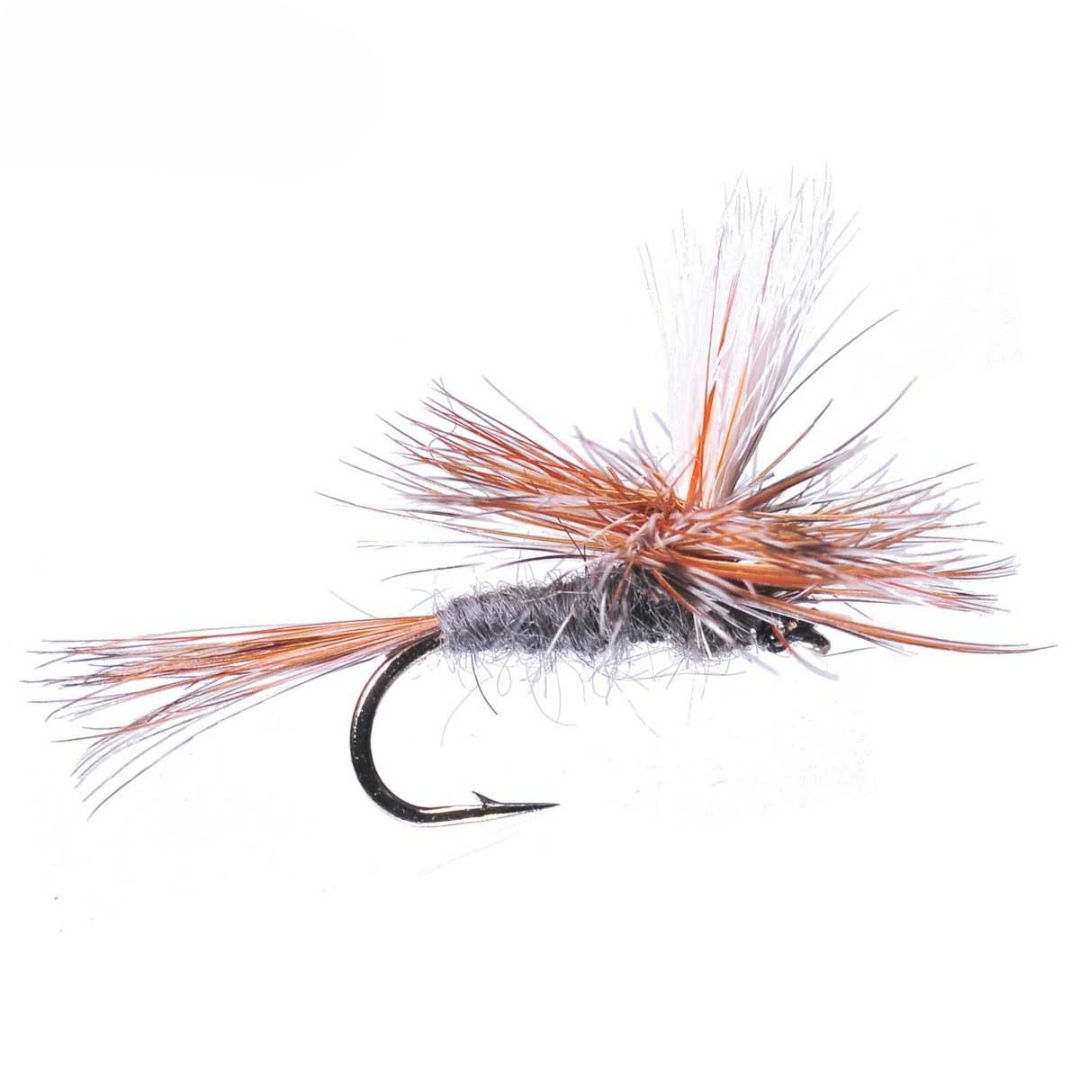
Choosing the Parachute Adams is essential for any angler’s fly box. First tied by Leonard Halladay in 1922, this versatile mayfly dry fly has evolved into a parachute-style pattern prized for its realistic silhouette and adaptability.
Key Features:
- Gray body, grizzly hackle, and white post mimic multiple mayfly species
- Parachute-style design sits naturally on the water’s surface
- One of the best dry flies for trout fishing
Matching Hatch Types:
- Blue-Winged Olives (BWOs) – use olive body
- Pale Morning Duns (PMDs) – use tan body
- Gray Drakes – use gray body
- Callibaetis – particularly effective in stillwaters
Best season to use Parachute Adams: Year-round, shining from March through November
Ideal water conditions for Parachute Adams: Streams, tailwaters, and clear-water areas; gentle currents and low water perfect for tandem rigs
Parachute Adams presentation tips: Dead-drift presentation, keep floating with floatant, use 9’-12’ leader with 5X–6X tippet
Recommended sizes for Parachute Adams: 12–26; 16 most versatile, smaller sizes (18–20) for low water or active hatches
Reliable, adaptable, and proven, the Parachute Adams remains a top choice for consistent dry fly fishing success.
2. Sparkle Dun

Developed by Craig Mathews and John Juracek in the early 1980s, the Sparkle Dun quickly became a must-have for serious dry fly anglers. Designed for selective trout, it imitates emerging mayflies, bridging the crucial nymph-to-adult stage.
Key Features:
- Trailing Z-lon or Antron shuck mimics empty nymphal casings
- Upright deer hair wing provides flotation and realistic silhouette
- Sits flush on the surface film for natural presentation
- Highly visible yet effective for selective trout
Matching Hatch Types:
- Pale Morning Duns (PMDs)
- Blue-Winged Olives (BWOs)
- Sulphurs
- Baetis
- Green Drakes
- March Browns
- Tricos
Best season to use Sparkle Dun: April–June and September–October, during active mayfly emergences
Ideal water conditions for Sparkle Dun: Slow-moving waters, glassy flats, tailwaters, and clear streams
Sparkle Dun presentation tips: Dead-drift, use 9’-12’ leader with 6X–7X tippet, keep fly riding naturally on surface film
Recommended sizes for Sparkle Dun: 12–22; 16–20 for selective hatches, 16–18 for PMDs, 18–22 for BWOs
Adaptable, precise, and proven, the Sparkle Dun is a top choice for consistent dry fly fishing success.

Originally known as Lunn's Particular, the Rusty Spinner is one of the most trusted mayfly dry flies in fly fishing. It imitates spent mayflies returning to the water to lay eggs, making it ideal for late-season and selective trout.
Key Features:
- Rusty-colored body mimics spent mayflies
- Wings flat and perpendicular for realistic silhouette
- Floats naturally in the surface film
- Highly effective in dusk or low-light conditions
Matching Hatch Types:
- Blue-Winged Olives (BWOs)
- Pale Morning Duns (PMDs)
- Sulphurs
- Hendricksons
- Quill Gordons
- March Browns
- Cahills
Best season to use Rusty Spinner: Spring through fall, most productive at dusk
Ideal water conditions for Rusty Spinner: Glassy, smooth waters; slow-moving sections, tailwaters, and spring creeks
Rusty Spinner presentation tips: Fish alone without indicators, use 4X–5X tippet, drag-free presentation, apply floatant generously
Recommended sizes for Rusty Spinner: 14–18 standard; 12–22 for specific hatches
Reliable, realistic, and adaptable, the Rusty Spinner remains a top choice for consistent dry fly fishing success.
4. Light Cahill

Named after legendary angler Dan Cahill from the early 1900s, the Light Cahill is one of the most versatile mayfly dry flies available. Originating in New York’s Adirondack region, it has become a staple for anglers across northeastern waters.
Key Features:
- Pale cream and light ginger coloration mimics multiple mayfly species
- Neutral appearance triggers strikes even when no obvious feeding occurs
- Effective as a searching pattern or during active hatches
Matching Hatch Types:
- Eastern Light Cahill (Stenonema canadense)
- Various Ephemerella species
- Pale Morning Dun (PMD)
- Pale Evening Dun (PED)
Best season to use Light Cahill: Late April through July, extending into September in many regions
Ideal water conditions for Light Cahill: Eastern mountain streams and brisk waters, including native brook trout rivers
Light Cahill presentation tips: 12–18; 14–16 most versatile for typical hatches
Reliable, adaptable, and proven, the Light Cahill remains a top choice for consistent dry fly fishing success.

A game-changer for challenging fishing conditions, the CDC Mayfly Emerger uses Cul de Canard (CDC) feathers to create one of fly fishing’s most effective dry-fly patterns. Its design perfectly mimics a mayfly in the vulnerable transitional emerger stage.
Key Features:
- CDC feathers float naturally above the surface film
- Body hangs down to imitate emergers precisely
- Natural oils provide buoyancy without excessive hackle
- Ultra-realistic profile that entices selective trout
Matching Hatch Types:
- CDC feathers float naturally above the surface film
- Body hangs down to imitate emergers precisely
- Natural oils provide buoyancy without excessive hackle
- Ultra-realistic profile that entices selective trout
Best season to use CDC Mayfly Emerger: Early spring through June, and again September–October during technical dry fly opportunities
Ideal water conditions for CDC Mayfly Emerger: Spring creeks, tailwaters, and clear water where trout feed just below the surface film
CDC Mayfly Emerger presentation tips: Use 9–12’ leader with 6X–7X tippet; allow a drag-free drift and watch for subtle takes
Recommended sizes for CDC Mayfly Emerger: 14–18; 14, 16, 18 for BWOs and PMDs
Reliable and versatile, the CDC Mayfly Emerger remains a top choice for consistent dry fly fishing success.
6. Wally Wing
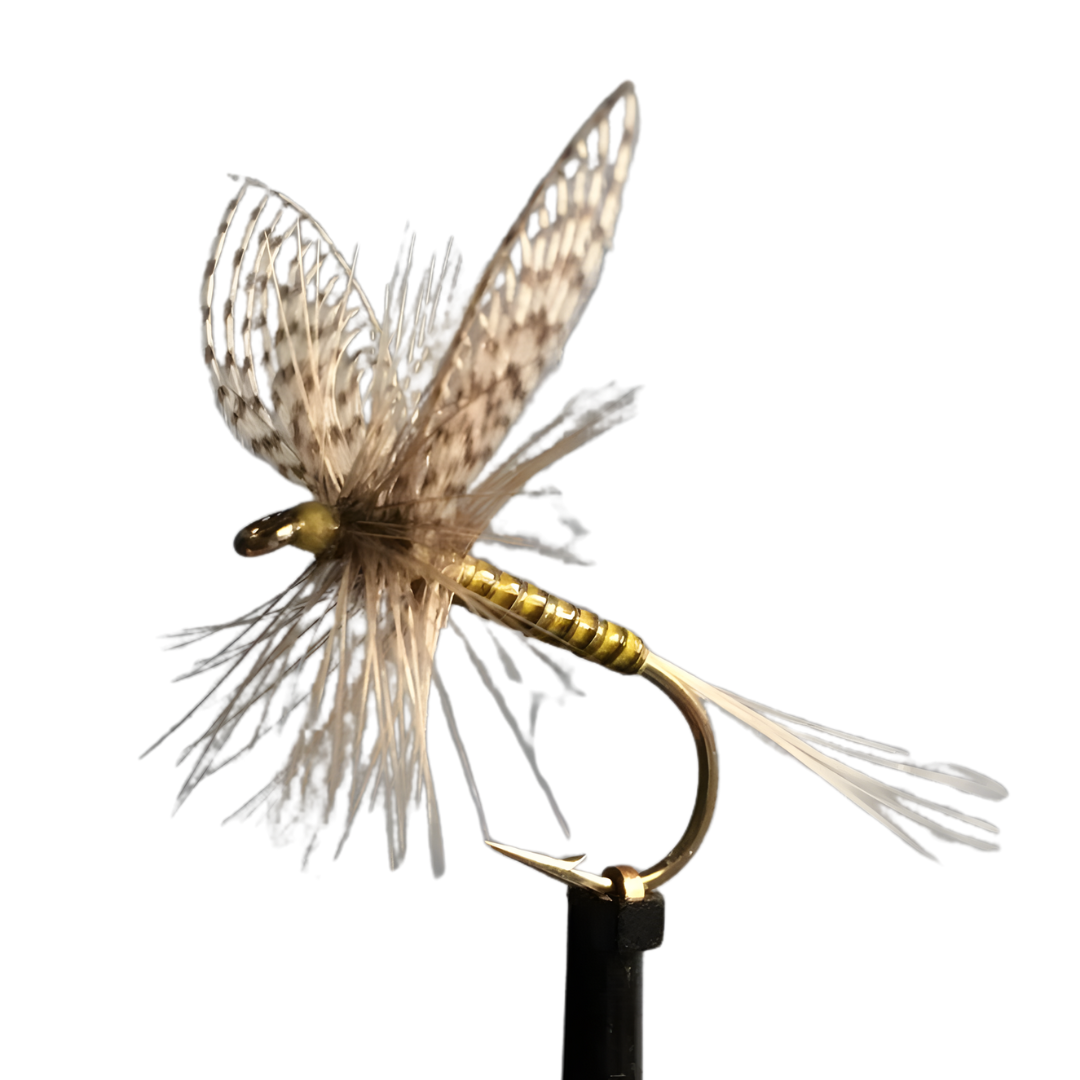
Invented by Canadian fly tier Wally Lutz in the 1970s, the Wally Wing has seen a resurgence among anglers who value its realistic profile and exceptional durability. Its structured design floats naturally while maintaining a lifelike silhouette, consistently enticing selective trout.
Key Features:
- Single mallard flank feather split to form wings
- Accurate silhouette sitting naturally on the water
- Superior floatation with lifelike appearance
- Durable, fooling multiple strikes with proper care
Matching Hatch Types:
- Callibaetis
- Pale Morning Duns (PMDs)
- Baetis
- Various Drake species
Best season to use Wally Wing: Late spring through early fall, peaking during Callibaetis hatches
Ideal water conditions for Wally Wing: Calm waters where trout scrutinize flies carefully; short casts with slow-action rods ideal
Wally Wing presentation tips: Apply desiccant floatant between uses; barbless hooks improve longevity
Recommended sizes for Wally Wing: Primarily size 12; adjust for local hatch sizes
Reliable, realistic, and adaptable, the Wally Wing is a top choice for consistent dry fly fishing success.
7. Mosquito
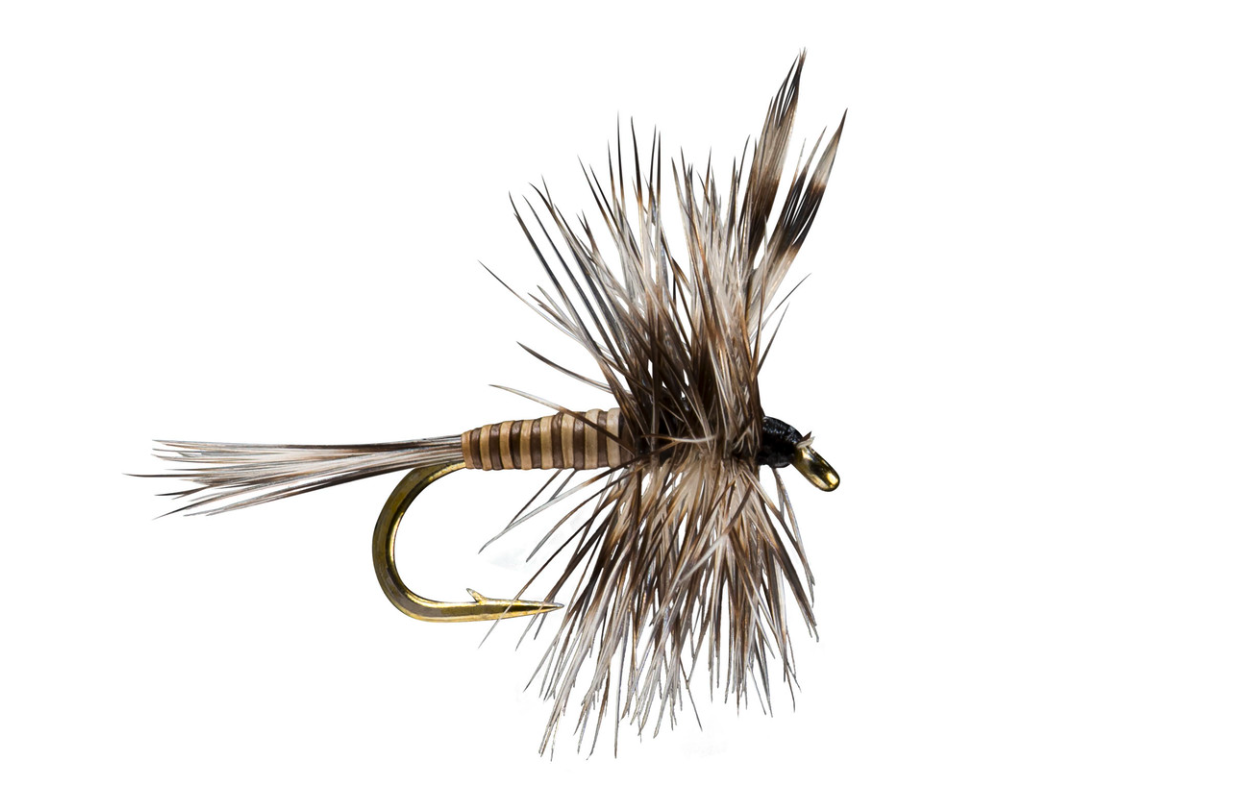
Often underestimated, the Mosquito dry fly leverages these pesky insects’ role as a key food source for trout. This makes it an essential addition to any angler’s mayfly and midge fly collection.
Key Features:
- Slim gray body with delicate wings
- Hackle legs create realistic silhouette on the water
- Imitates both mosquitoes and small midges
- Simple yet highly effective and versatile
Matching Hatch Types:
- Blue Quill mayflies
- Callibaetis mayflies
- Small midges
Best season to use Mosquito: May through October, especially during warm summer evenings
Ideal water conditions for Mosquito: Stillwater lakes, calm water, and slow-moving streams; high alpine lakes are ideal
Mosquito presentation tips: Apply floatant generously; cast toward shorelines and shallow areas where mosquitoes congregate
Recommended sizes for Mosquito: 12–18; size 14 most versatile
Reliable and adaptable, the Mosquito dry fly remains a top choice for consistent dry fly fishing success.
8. Green Drake

Among fly fishing's most celebrated hatches, the Green Drake draws both anglers and large trout with almost religious fervor. This iconic mayfly pattern represents one of the most anticipated seasonal events on many legendary waters.
Key Features:
- Large olive-green body with long gray wings and three tails
- Muscular build makes it unmistakable to trout
- Substantial size creates irresistible targets for selective fish
Matching Hatch Types:
- Ephemera guttulata (Eastern)
- Drunella grandis / Drunella doddsii (Western)
Best season to use Green Drake: Late May through July, sometimes into early August at higher elevations; peak hatches often occur late morning to early afternoon
Ideal water conditions for Green Drake: Clean, well-oxygenated rivers with medium to fast currents and rocky gravel bottoms
Green Drake presentation tips: Use 9’ leader with 3X–4X tippet; apply floatant generously; subtle twitches mimic skittering naturals
Recommended sizes for Green Drake: 8–12; 10 most versatile, 8 for heavy hatches, 12 for spinner falls
Reliable and iconic, the Green Drake is essential for consistent dry fly fishing success.

Blue-Winged Olives belong to the Baetis genus, characterized by olive-hued bodies and delicate bluish-gray wings. These slender mayflies measure just 10-14mm with subtle olive to gray-green tones and translucent wings. Their most distinctive feature? Two to three graceful tails that flutter as they ride the water's surface.
Key Features:
- Olive-hued bodies with delicate bluish-gray wings
- Slender 10–14mm size with 2–3 fluttering tails
- Subtle coloring mimics natural Baetis mayflies
- Versatile year-round pattern for multiple waters
Matching Hatch Types:
- Various species in the Baetidae family
- Approximately 20 species in Colorado rivers, including South Platte
Best season to use BWO: March–November, peaking March–May and September–November; winter hatches persist in smaller sizes
Ideal water conditions for BWO: Freestone streams, spring creeks, and tailwaters; cloud cover or light rain enhances activity
BWO presentation tips: Fine tippet (6X–7X); upstream casts in transition zones, bubble lines, or shelf pools
Recommended sizes for BWO: #16–24; #16–20 spring/fall, #22–24 for winter
Reliable and adaptable, BWOs remain essential for consistent dry fly fishing success.
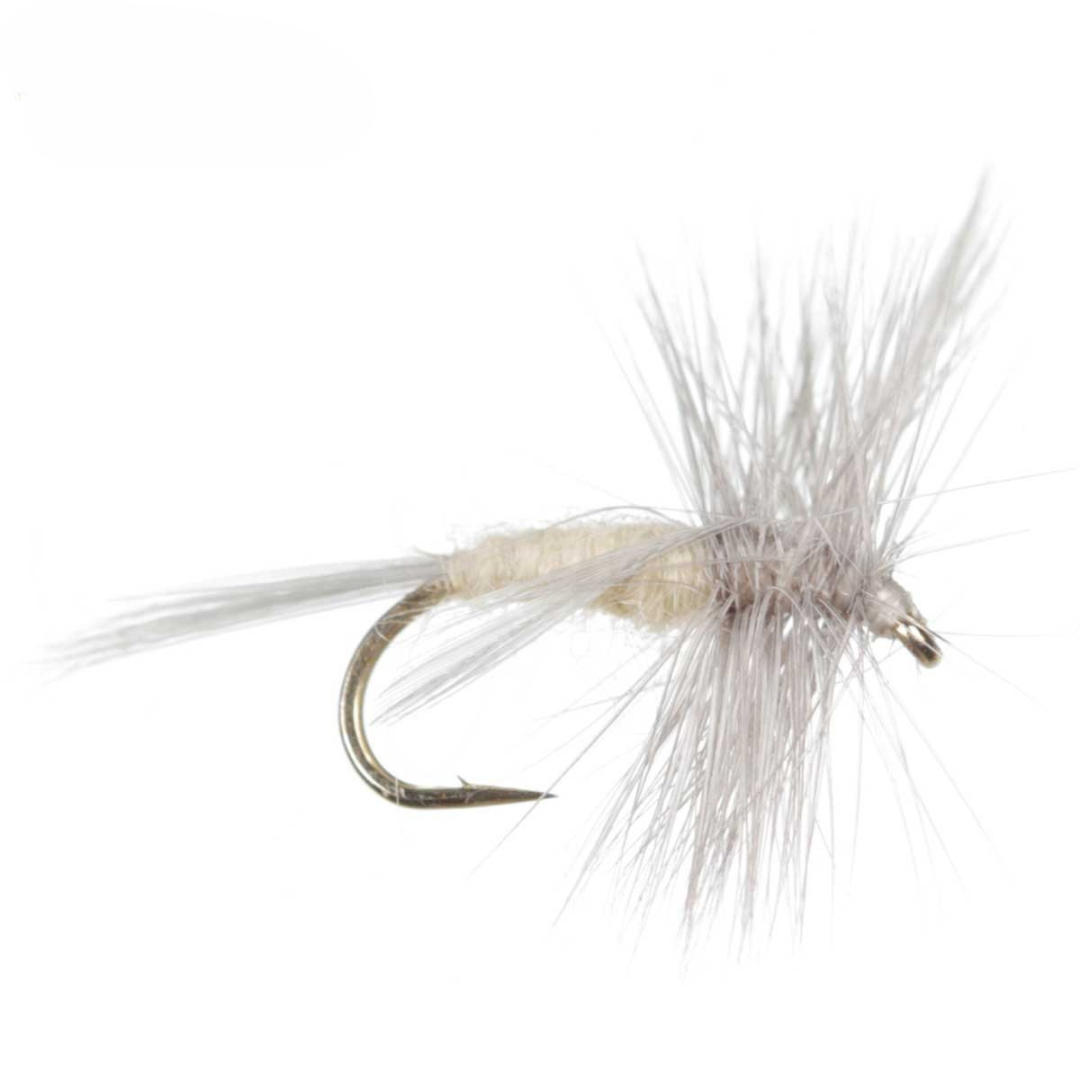
Anglers across western waters consider the Pale Morning Dun (PMD) a premier summer mayfly pattern. Its versatile design triggers surface feeding and is essential in every trout angler’s fly box.
Key Features:
- Light-dun colored wings with pale yellow to light olive bodies
- Three-tailed insects with subtle pink or tan undertones
- Highly effective during surface feeding hatches
- Versatile for rivers and streams of varying currents
Matching Hatch Types:
- Ephemerella inermis – size 14–16
- Ephemerella excrucians – size 18–20
Best season to use PMD: Late spring through summer, peaking in June–July; can remain active into October
Ideal water conditions for PMD: Moderate to slow currents across gravel, aquatic plants, or diverse substrates; cooler, cloudy days enhance hatches
PMD presentation tips: Start with nymphs, switch to emergers, then dries; use light tippet (5X–6X) and drag-free drifts
Recommended sizes for PMD: 14–18, occasionally size 20 for smaller E. excrucians
Reliable and effective, the PMD remains a must-have for consistent dry fly fishing success.
11. March Brown
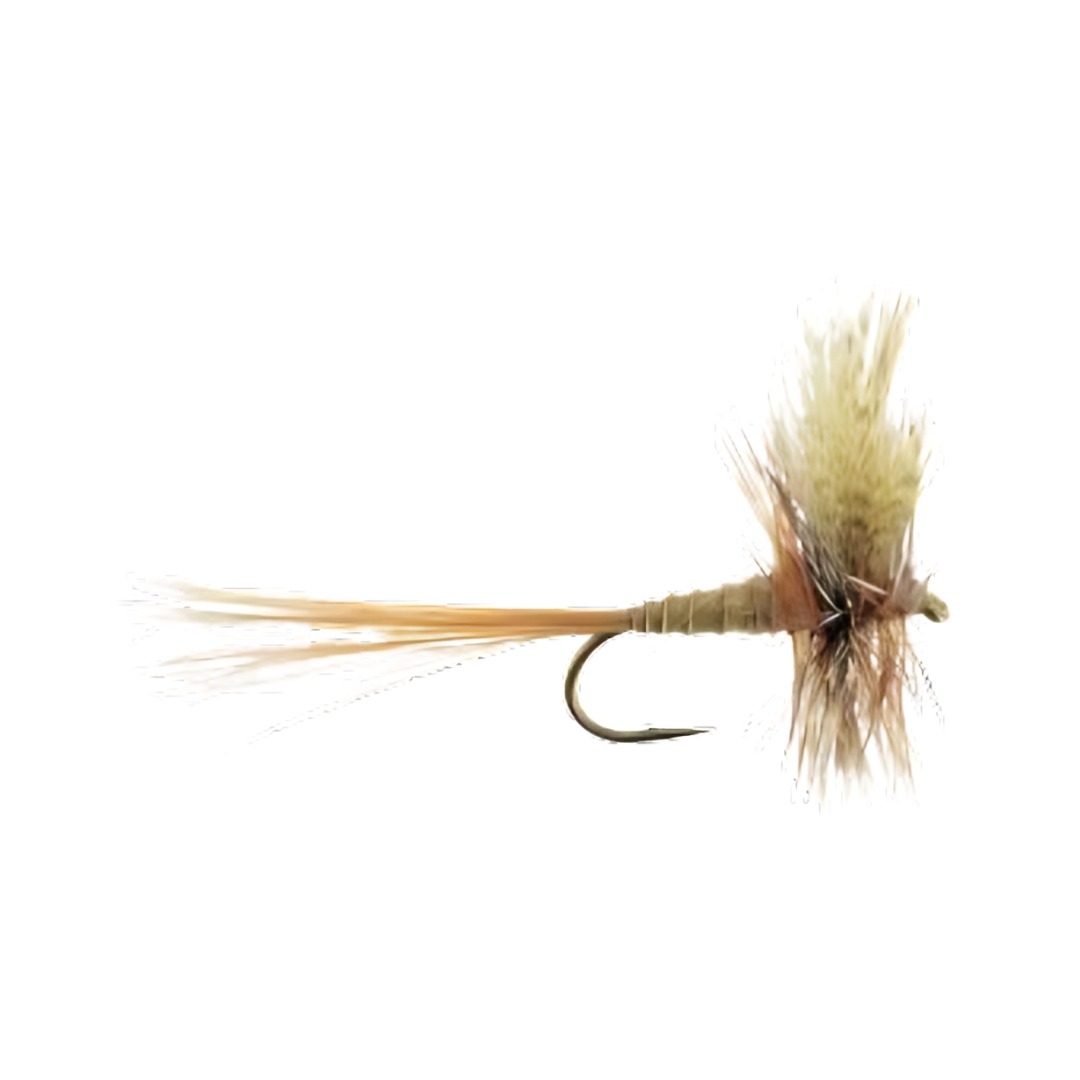
Dating back to 1600s England, the March Brown is one of fly fishing’s most time-honored patterns. Its enduring presence in angling literature reflects its importance as a staple imitation for trout.
Key Features:
- Light brown to tan body with mottled wings showing dark venation
- Three-tailed mayflies with creamy tan to pale yellow abdomens
- Realistic silhouette encourages strikes even in selective fish
- Effective in both fast and slack water during emergence
Matching Hatch Types:
- Eastern March Browns (Rhithrogena germanica)
- Western March Browns (Rhithrogena morrisoni)
- Gray Foxes (later-season smaller hatches, sizes 12–14)
Best season to use March Brown: Mid-April through May (Eastern); late March through early May (Western), peaking 11 a.m.–3 p.m.
Ideal water conditions for March Brown: Clean, well-oxygenated rivers with rocky bottoms; emerging from fast to slack water
March Brown presentation tips: Blind-cast dry flies; skitter or twitch Catskill-style patterns; 9’ 5X leader
Recommended sizes for March Brown: 8–14; 8–10 for early season, 12–14 for smaller later hatches
Reliable, realistic, and historic, the March Brown remains essential for consistent dry fly fishing success.

Yellow Sallies serve as the unsung heroes of summer dry fly fishing, often overlooked yet remarkably effective when other patterns fail. Despite technically being stoneflies rather than mayflies, the Little Yellow Sally is an essential addition to any trout angler’s mayfly and summer dry fly collection.
Key Features:
- Bright yellow body with distinctive red “butts” or egg sacs
- Slim profile with striped abdomen and patterned head
- Highly visible yet natural silhouette
- Effective when other summer patterns fail
Matching Hatch Types:
- Isoperla species (approximately 57 North American species)
- Colors range from pale to darker yellow
Best season to use Little Yellow Sally: Late May through August, especially mid-afternoon to evening
Ideal water conditions for Little Yellow Sally: Fast-moving, highly oxygenated mountain streams with cobble and gravel; choppy riffles ideal
Little Yellow Sally presentation tips: Fish the heads of pools; use drag-free presentations near shorelines to imitate egg-laying females
Recommended sizes for Little Yellow Sally: 14–18; smaller sizes (14–16) for pressured or slower waters
Reliable, versatile, and productive, the Little Yellow Sally is a top choice for consistent dry fly fishing success.
13. Elk Hair Caddis

The Elk Hair Caddis features a dubbed body, palmered hackle, and distinctive elk hair wing that creates a lifelike tent-shaped silhouette on water. This elegant design allows it to float high, maintain durability, and effectively imitate adult caddis flies. As both an imitator and attractor pattern, it remains one of fly fishing's most adaptable creations.
Key Features:
- Dubbed body with palmered hackle
- Distinctive elk hair wing forms a lifelike tent-shaped silhouette
- Floats high and maintains durability
- Functions as both imitator and attractor
Matching Hatch Types:
- Adult caddis species
- Stoneflies, including Little Yellow Sally
- Spring creeks: green body versions excel
Best season to use Elk Hair Caddis: Mid-April through early October; color changes seasonally from dark spring bodies to tan/yellow summer and rust/olive autumn patterns
Ideal water conditions for Elk Hair Caddis: Turbulent waters, fast seams, pocket water, slower pools near banks or vegetation
Elk Hair Caddis presentation tips: Dead-drift in riffles; “skate” across the surface; swing at drift’s end to imitate egg-laying females
Recommended sizes for Elk Hair Caddis: 10–20; 14–18 for most situations, 16–18 for targeted emergences
Reliable and adaptable, the Elk Hair Caddis is essential for consistent dry fly fishing success.
14. Royal Wulff
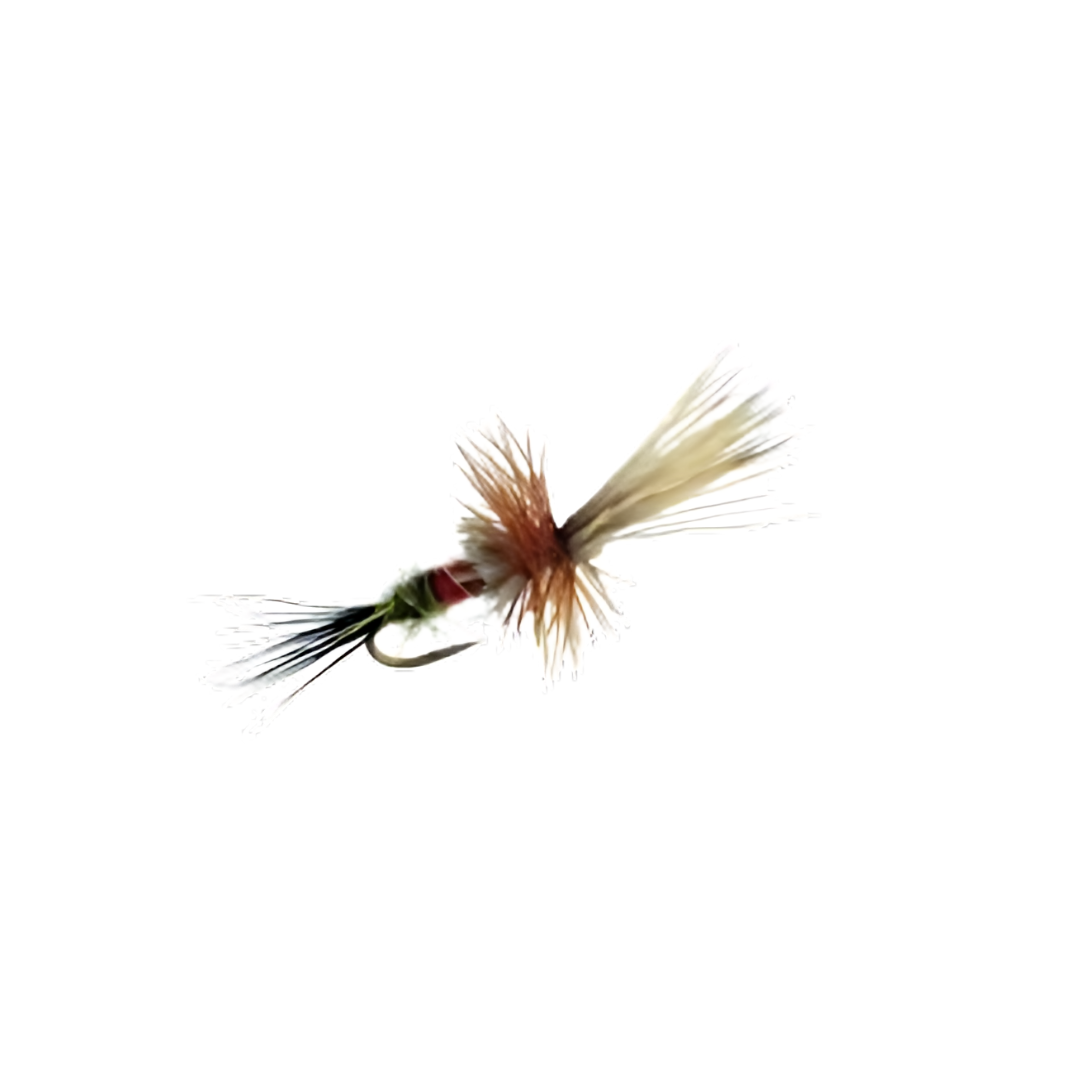
Designed by legendary angler Lee Wulff, the Royal Wulff is one of fly fishing’s most iconic attractor patterns. It doesn’t imitate a specific insect but provokes strikes through reaction and curiosity, making it a must-have in any fly box.
Key Features:
- Distinct red band with peacock herl body segments
- Moose hair and bucktail provide exceptional buoyancy
- Thick hackle collar supports hook bend in turbulent water
- Bushy profile prevents sinking in rough currents
Matching Hatch Types:
- Suggests various mayflies
- Terrestrials
- Multiple insect types simultaneously
Best season to use Royal Wulff: Year-round; early spring excels, summer variations include Tennessee Wulff (lime green band) and Carolina Wulff (yellow band)
Ideal water conditions for Royal Wulff: Fast riffles, turbulent runs, pocket water; excels where delicate flies fail
Royal Wulff presentation tips: Upstream dead-drift; slight twitches near boulders; apply floatant generously
Recommended sizes for Royal Wulff: 10–18; 12–14 most versatile, 10 for searching, 16–18 for selective hatches
Reliable, buoyant, and striking, the Royal Wulff is a top choice for consistent dry fly fishing success.
15. Griffith’s Gnat

Renowned for its simplicity and effectiveness, the Griffith’s Gnat is a must-have mayfly dry fly. Created by George Griffith, a founding member of Trout Unlimited, it continues to fool trout across diverse waters.
Key Features:
- Peacock herl body with palmered grizzly hackle
- Clustered, buggy silhouette mimicking multiple food sources
- Effective as a midge cluster or standalone insect
- Small, versatile, and subtle for selective trout
Matching Hatch Types:
- Adult midges (Chironomids)
- Small mayfly spinners
- Tiny mayfly duns
Best season to use Griffith’s Gnat: Fall through spring, especially during midday lulls between major hatches; productive year-round
Ideal water conditions for Griffith’s Gnat: Smooth tailwaters, spring creeks, and slow-moving sections of faster streams
Griffith’s Gnat presentation tips: Dead-drift with minimal drag; use long, fine tippets (5X–7X); apply powder floatant sparingly
Recommended sizes for Griffith’s Gnat: 16–22; 18–20 most versatile
Reliable, subtle, and productive, the Griffith’s Gnat is essential for consistent dry fly fishing success.
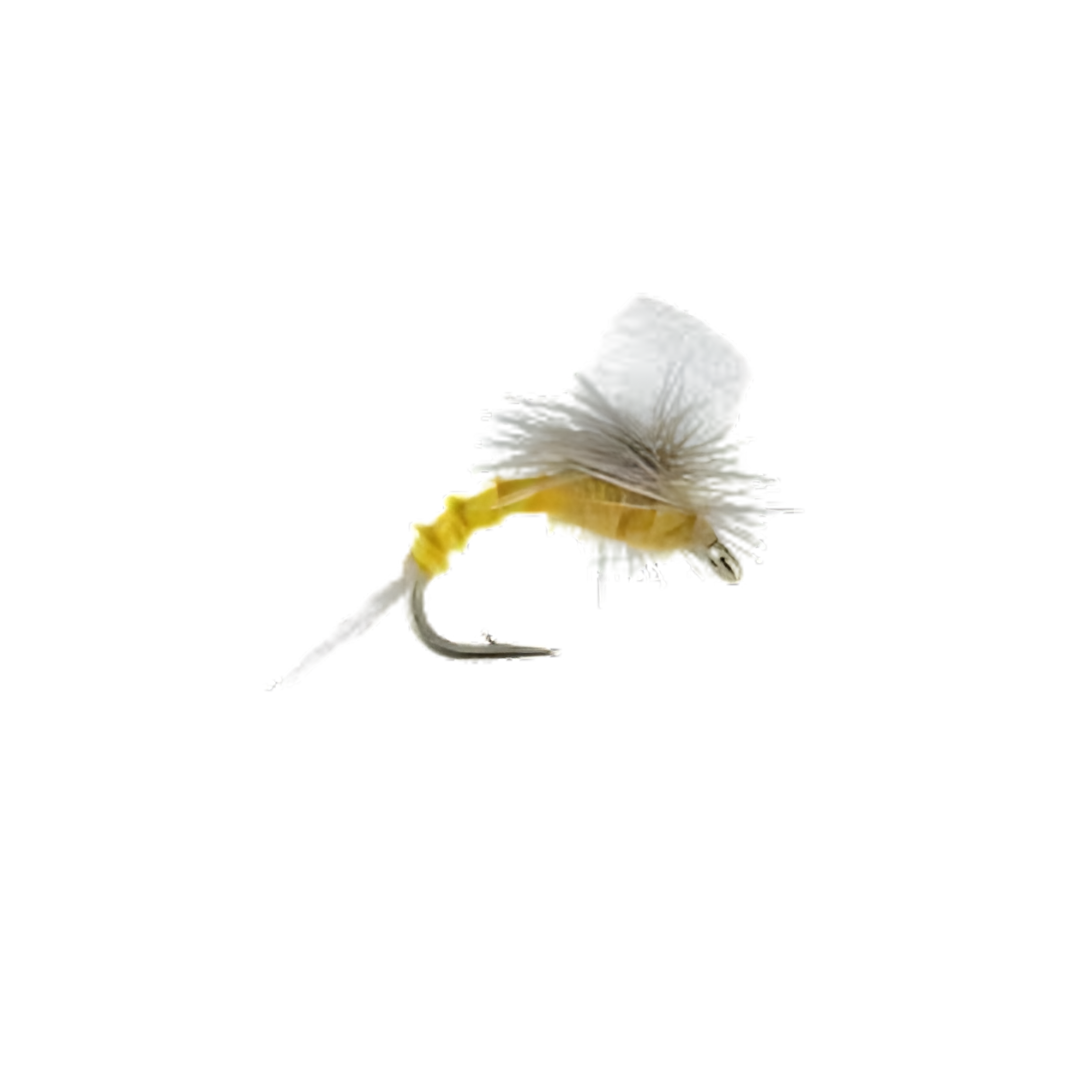
The Foam Back Emerger is an essential addition to any mayfly fly box, designed to imitate insects in their most vulnerable emerging stage. Its half-submerged profile attracts selective trout that target transitional nymphs.
Key Features:
- Slim, segmented body with foam back strip for buoyancy
- Curved hook mimics natural hunch of emerging nymphs
- Sits half in, half out of the surface film
- Effective as a standalone or dropper pattern
Matching Hatch Types:
- Blue-Winged Olives (Baetis)
- Tricos
- PMDs, Cahills, Sulphurs
- March Browns
Best season to use Foam Back Emerger: Year-round; excels during BWO hatches (spring/fall) and Trico emergences (summer)
Ideal water conditions for Foam Back Emerger: Tailwaters, spring creeks, and flatwater where trout feed just below the surface
Foam Back Emerger presentation tips: Dead-drift with a long leader; or fish as a dropper 9–12 inches below a dry fly
Recommended sizes for Foam Back Emerger: 16–26; smaller sizes (20–24) for winter midges
Reliable and precise, the Foam Back Emerger is key for consistent dry fly fishing success.

Originally created by Sid Knight, the Shuttlecock Emerger mimics the critical stage when mayflies transition through the water’s surface film. Its subtle presentation targets selective trout in both stillwaters and rivers.
Key Features:
- CDC wing floats while body hangs below the surface
- No hackle required; buoyancy relies entirely on CDC feathers
- Thorax-only floatant application creates realistic emerging silhouette
- Highly effective for midges and small mayflies
Matching Hatch Types:
- Blue-Winged Olives (BWOs)
- Baetis and other olive-colored mayflies
- Chironomid midges
- Small caddis emergers
Best season to use Shuttlecock Emerger: Year-round; excels during BWO hatches in spring and fall
Ideal water conditions for Shuttlecock Emerger: Stillwaters, dams, reservoirs, smooth rivers, and calm or lightly rippled sections
Shuttlecock Emerger presentation tips: Apply floatant sparingly on dry fly; dry thoroughly after each use; maintain buoyancy with powder floatant
Recommended sizes for Shuttlecock Emerger: 10–18; smaller sizes (16–18) for technical fishing, 24 for BWO imitations on spring creeks
Reliable, precise, and subtle, the Shuttlecock Emerger is a top choice for consistent dry fly fishing success.

Extended body mayfly patterns bring unmatched realism to dry fly fishing. By extending beyond the hook bend, they create natural silhouettes that trigger strikes from even the wariest trout.
Key Features:
- Extended abdomen for lifelike insect profiles
- Flexible construction enhances natural drift
- Sits deep in the surface film while floating effectively
- Built with hollow tubing (small mayflies) or needle-based methods (larger species)
Matching Hatch Types:
- Green and Gray Drakes
- Hexagenia mayflies
- Blue-Winged Olives (BWOs) and Pale Morning Duns (PMDs)
Best season to use Extended Body Mayfly: Spring hatches, summer evenings, and low-light fall conditions
Ideal water conditions for Extended Body Mayfly: Spring creeks, tailwaters, and small streams near structure; ideal for selective trout and technical fishing
Extended Body Mayfly presentation tips: Dead-drift presentations with careful orientation in currents
Recommended sizes for Extended Body Mayfly: 12–20; larger mayflies (12–14), standard (16–18), technical (20)
Reliable, precise, and realistic, the Extended Body Mayfly is a top choice for consistent dry fly fishing success.
Comparison Table of the 18 Best MAYFLY DRY Fishing Flies.
| Pattern Name | Best Season | Ideal Water Conditions | Key Features/Design | Size Range | Main Hatch Matches |
| Parachute Adams | March-November | Streams, gentle currents, clear waters | White post, horizontal hackle, gray body | 12-26 | BWOs, PMDs, Callibaetis, Gray Drakes |
| Sparkle Dun | April-October | Slow-moving water, glassy flats, tailwaters | Z-lon/Antron shuck, upright deer hair wing | 12-22 | PMDs, BWOs, Sulphurs, Baetis |
| Rusty Spinner | Spring-Fall | Glassy, smooth waters, slow-moving sections | Rusty-colored body, flat perpendicular wings | 14-18 | BWOs, PMDs, Sulphurs, Hendricksons |
| Light Cahill | April-September | Eastern mountain streams, brisk water | Pale cream/light ginger coloration | 12-18 | Eastern Light Cahill, PMDs, Pale Evening Dun |
| CDC Mayfly Emerger | April-October | Spring creeks, tailwaters | CDC feathers, sits in surface film | 14-18 | BWOs, PMDs, Tan Mayflies |
| Wally Wing | Summer | Calm waters | Single mallard flank feather split wings | 12 | Callibaetis, PMDs, Baetis |
| Mosquito | May-October | Stillwater, lakes, slow-moving streams | Slim gray body, delicate wings | 12-18 | Blue quill, Callibaetis |
| Green Drake | Late May-July | Fast, rocky waters with clean gravel | Olive-green body, long gray wings | 8-12 | Green Drake species |
| Blue-Winged Olive | March-November | Freestone streams, spring creeks, tailwaters | Olive body, bluish-gray wings | 16-24 | Baetis species |
| Pale Morning Dun | Late Spring-Summer | Moving water, various substrates | Light-dun colored wings, variable body colors | 14-20 | PMD species |
| March Brown | April-May | Clean, fast-flowing rivers with rocky bottoms | Light brown/tan body, mottled wings | 8-14 | March Brown species |
| Little Yellow Sally | May-August | Fast-moving mountain streams | Bright yellow body, red egg sacs | 14-18 | Yellow Sally stoneflies |
| Elk Hair Caddis | April-October | Turbulent waters | Dubbed body, elk hair wing | 10-20 | Caddis species, Little Yellow Sally |
| Royal Wulff | Year-round | Rough water, fast riffles | Red band, peacock herl body | 10-18 | Various mayflies, terrestrials |
| Griffith's Gnat | Fall-Spring | Smooth, glassy tailwaters, spring creeks | Peacock herl, grizzly hackle | 16-22 | Midges, small mayflies |
| Foam Back Emerger | Year-round | Tailwaters, spring creeks, flat water | Foam back strip, curved hook | 16-26 | BWOs, Tricos, PMDs |
| Shuttlecock Emerger | Year-round | Dams, reservoirs, stillwaters | CDC wing, hanging body | 10-18 | Baetis, Chironomids |
| Extended Body Mayfly | Spring-Fall | Spring creeks, tailwaters | Extended flexible abdomen | 12-20 | Green/Gray Drakes, Hexagenia, BWOs |
Conclusion
Armed with these top 18 best mayfly patterns, anglers are prepared for every 2025 fishing scenario. Classic flies like the Parachute Adams and Light Cahill deliver consistent results, while innovations such as the CDC Mayfly Emerger excel with pressured trout. Success comes down to seasonal selection, precise presentation, and paying close attention to hatch activity. Building a core collection of versatile patterns—paired with tandem rigs and fine leaders—ensures readiness for any hatch and creates those magical, productive moments on the water.
You can shop all the best mayfly patterns online at Aquinaflies, where we offer bulk-discount wholesale pricing per dozen. Our flies are tied with high-quality materials and follow the latest professional guide-proven techniques, ensuring durability, realism, and top-tier performance on the water.
Faqs About best Mayfly Dry fishing flies
What are mayfly dry flies?
Mayfly dry flies are artificial floating flies designed to look like adult mayflies resting on the water surface. They are used to attract fish during or outside a mayfly hatch.
When should one use mayfly dry flies?
They work best during mayfly hatches, especially when fish are rising to feed on insects on the surface. They can also be used anytime fish show interest in surface activity.
What sizes are most common for mayfly dry flies?
Common sizes range from #12 to #20, depending on the mayfly species you want to match. Larger patterns imitate bigger mayflies, while smaller patterns match tiny spring and fall hatches.
How do I present mayfly dry flies on the water?
A natural, drag-free drift is key. Cast upstream or across-stream and allow the fly to float freely without tension so it resembles a real mayfly on the surface.
What are the most popular mayfly dry fly patterns?
Some well-known and widely used patterns include the Parachute Adams, Comparadun, Sparkle Dun, CDC Mayfly, and Blue-Winged Olive Dry Fly.
Where can I buy bulk mayfly dry fishing flies online?
You can buy bulk mayfly fishing flies online from trusted specialty fly shops, outdoor retailers, and direct suppliers. Many anglers prefer ordering custom salmon flies directly from manufacturers or international fly tying factories in Kenya, such as Aquinaflies.com. This ensures hand-tied quality, consistency, and better pricing on larger quantities. Kenya has been renowned since the colonial era for producing skilled fly tiers with decades of experience and deep knowledge of traditional patterns.