
Top 19 Best Winter Fly Fishing Flies
Choosing the right winter fly fishing flies separates productive outings from cold, fishless days on the water. Cold temperatures and lethargic trout demand specific patterns that get down quickly and trigger strikes. As a matter of fact, Zebra Midges are one of a few flies that produce when nothing else does. Parachute Adams patterns work because they mimic so many insects, while Wooly Buggers remain possibly the single most effective fly for streamer fishing. We've compiled 19 best winter flies for trout, covering the best flies for winter trout and proven winter fly patterns you need in your box.
1. Zebra Midge

The Zebra Midge is one of the best winter fly fishing flies for trout, thanks to its simple yet highly effective design. Built with thread, wire ribbing, and a tungsten bead, this pattern imitates midge larvae and pupae that remain active throughout winter. The tungsten bead helps the fly sink quickly into deep pools and runs where trout often hold during cold weather. Black, red, and brown variations consistently produce results, especially in clear winter water.
How to Fish a Zebra Midge
- Fish it deep under a strike indicator.
- Use it as the bottom fly in a two-fly nymph rig.
- Trail it behind a larger attractor pattern such as a Copper John or Prince Nymph.
- Use long leaders and fine tippet (6X–7X) for a natural drift.
- Focus on slow pools, deep runs, and winter holding water.
Best Sizes and Colors
- Sizes: 18–22 (Size 20 is the most versatile)
- Colors: Black, Red, Brown
- Bead: Silver or black tungsten
The Zebra Midge remains a must-have pattern for anglers seeking consistent winter trout fishing success.
2. Copper John

The Copper John is one of the most effective winter trout flies for reaching deep-holding fish. Designed by John Barr, this heavily weighted nymph features a copper wire body, peacock herl thorax, biot tails, and a bead head that helps it sink quickly through fast currents. Its flashy appearance attracts trout even in stained or murky winter water.
Rather than imitating a specific insect, the Copper John resembles a variety of aquatic nymphs, making it a versatile pattern for winter fly fishing. The fly is available in several colors, including copper, red, green, black, and chartreuse, with natural copper remaining a proven favorite.
How to Fish a Copper John
- Use it as the lead fly in a two-nymph rig.
- Fish deep runs, pools, and winter holding water.
- Pair it with a smaller dropper fly such as a Zebra Midge.
- Drift naturally under a strike indicator.
- Target high or slightly stained water conditions.
Best Sizes and Colors
- Sizes: 12–20 (18–20 for winter)
- Colors: Copper, Red, Green, Black
- Bead: Brass or Gold
The Copper John is a must-have winter fly pattern for anglers seeking trout in deep water.
3. Pheasant Tail Nymph

The Pheasant Tail Nymph is a timeless trout fly and one of the most productive winter fly fishing patterns. Originally designed by Frank Sawyer, this fly uses pheasant tail fibers and copper wire to imitate a wide range of aquatic insects, including mayfly and stonefly nymphs. Its slim, natural profile makes it highly effective in clear winter water where trout become selective and cautious.
Modern variations include bead-head, flashback, and soft-hackle versions that add weight, flash, and movement. The fly's versatility allows anglers to imitate multiple food sources with a single pattern, making it a staple in any winter fly box.
How to Fish a Pheasant Tail Nymph
- Fish it deep under an indicator.
- Use a bead-head version in fast or deeper water.
- Rig it as the point fly in a two-fly setup.
- Use smaller, unweighted versions as a dropper fly.
- Focus on riffles, runs, and winter holding water.
Best Sizes and Colors
- Sizes: 12–20
- Colors: Natural Pheasant Tail, Brown, Olive, Purple, Pink
- Beads: Black Tungsten, Gold, Copper
The Pheasant Tail Nymph remains one of the best winter trout flies due to its natural appearance and year-round effectiveness.
4. Beadhead Hare's Ear
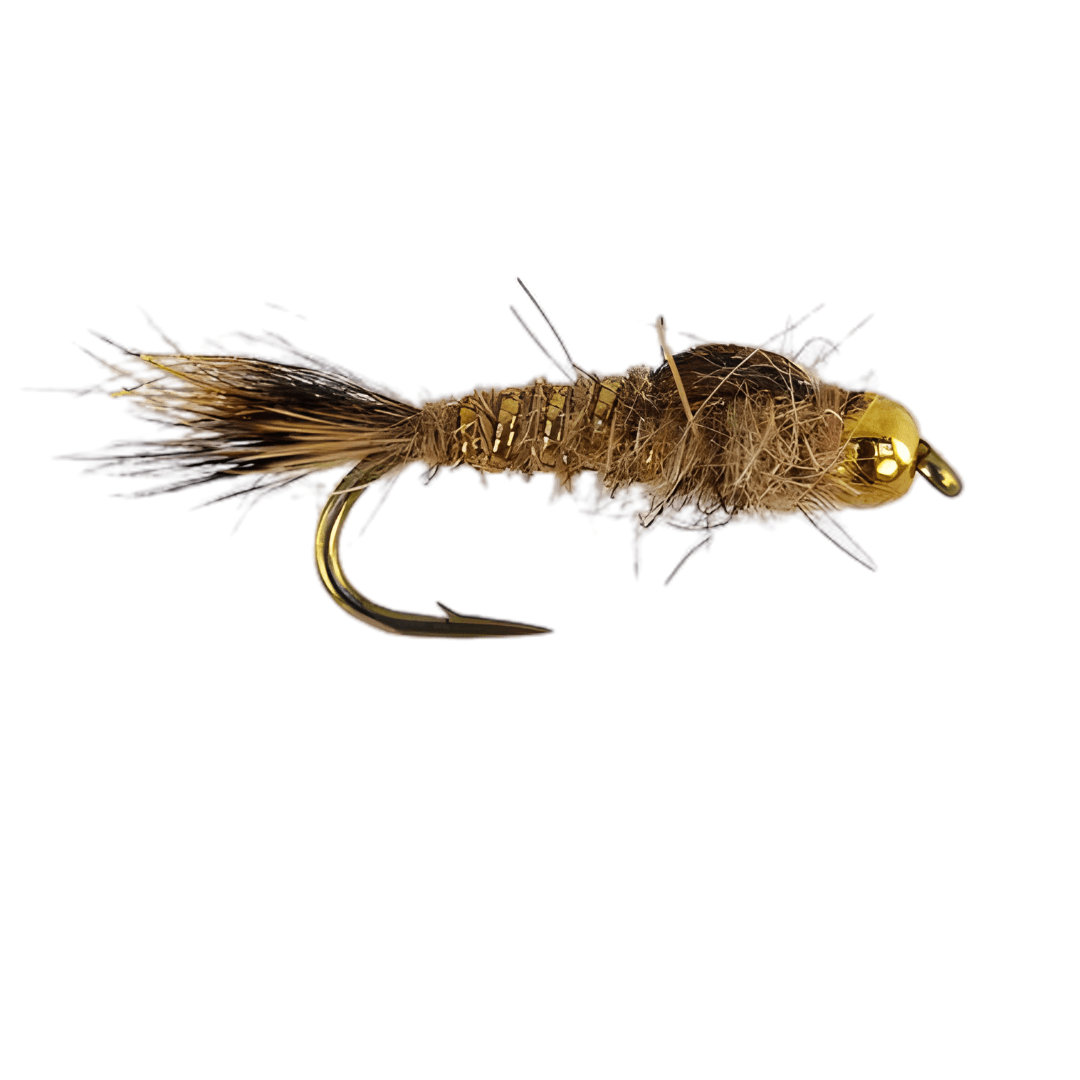
The Beadhead Hare's Ear is one of the most versatile winter fly fishing flies, known for its buggy appearance and ability to imitate a wide range of aquatic insects. Made from natural hare's mask fur, this pattern features spiky guard hairs that create lifelike movement underwater. A bead head, combined with wire ribbing, helps the fly sink quickly into deeper water where trout often hold during winter.
Because it resembles mayfly nymphs, caddis larvae, and small crustaceans, the Beadhead Hare's Ear is an excellent searching pattern when trout are feeding selectively. Its natural profile and subtle movement make it highly effective in both rivers and stillwaters.
How to Fish a Beadhead Hare's Ear
- Fish it deep under a strike indicator.
- Use it as a dropper in a two-fly nymph rig.
- Target deep pools, runs, and slow winter currents.
- Experiment with different colors to match conditions.
- Use tungsten bead versions for faster sinking.
Best Sizes and Colors
- Sizes: 12–18
- Colors: Natural, Black, Olive, Cream
- Beads: Brass or Tungsten
The Beadhead Hare's Ear remains a must-have winter trout fly thanks to its versatility, realistic movement, and consistent ability to catch fish in cold water.
5.WooLly Bugger

The Woolly Bugger is one of the most effective and versatile trout flies ever created. Originally designed by Russell Blessing, this pattern is famous for its marabou tail, flowing hackle, and lifelike movement that triggers aggressive strikes. During winter, the Woolly Bugger excels because it imitates multiple food sources, including leeches, baitfish, crayfish, and large aquatic insects.
Its ability to be fished deep makes it a top choice when trout are holding in slow pools and deeper runs. Weighted versions help reach the strike zone quickly, while the marabou tail creates irresistible action even with minimal movement.
How to Fish a Woolly Bugger
- Target deep pools and winter holding water.
- Use a slow, steady retrieve with occasional pauses.
- Add subtle jigging motions to imitate struggling prey.
- Dead-drift the fly through slower currents.
- Choose weighted patterns for deeper presentations.
Best Sizes and Colors
- Sizes: 6–12
- Colors: Black, Olive, Brown
- Variations: Egg-Sucking Woolly Bugger, Beadhead Woolly Bugger
The Woolly Bugger remains a must-have winter fly pattern thanks to its versatility, natural movement, and ability to attract larger trout in cold water.
6. Griffith's Gnat

The Griffith’s Gnat is a highly effective winter fly fishing pattern designed to imitate clusters of adult midges on the water surface. Created by George Griffith, this simple yet deadly fly uses peacock herl for the body and grizzly hackle to create the illusion of movement and life. Its ability to represent both single midges and mating clusters makes it especially valuable during winter hatches.
This pattern excels when trout are feeding on the surface in slow, calm water where precision and presentation matter most. It rides low in the film, making it appear natural and vulnerable—key triggers for selective winter trout.
How to Fish a Griffith’s Gnat
- Fish on a long, drag-free drift.
- Use light tippet (5X–6X) for a natural presentation.
- Fish it in slow pools, tailouts, and flat water.
- Use it as a single dry fly or behind a larger dry like a Parachute Adams.
- Set the hook on any subtle surface rise near the fly.
Best Sizes and Colors
- Sizes: 18–22
- Colors: Black, Tan, Ginger
- Tippet: 5X–6X recommended
The Griffith’s Gnat is a must-have winter dry fly, especially when trout are selectively feeding on midges in calm conditions.
7.Brassie
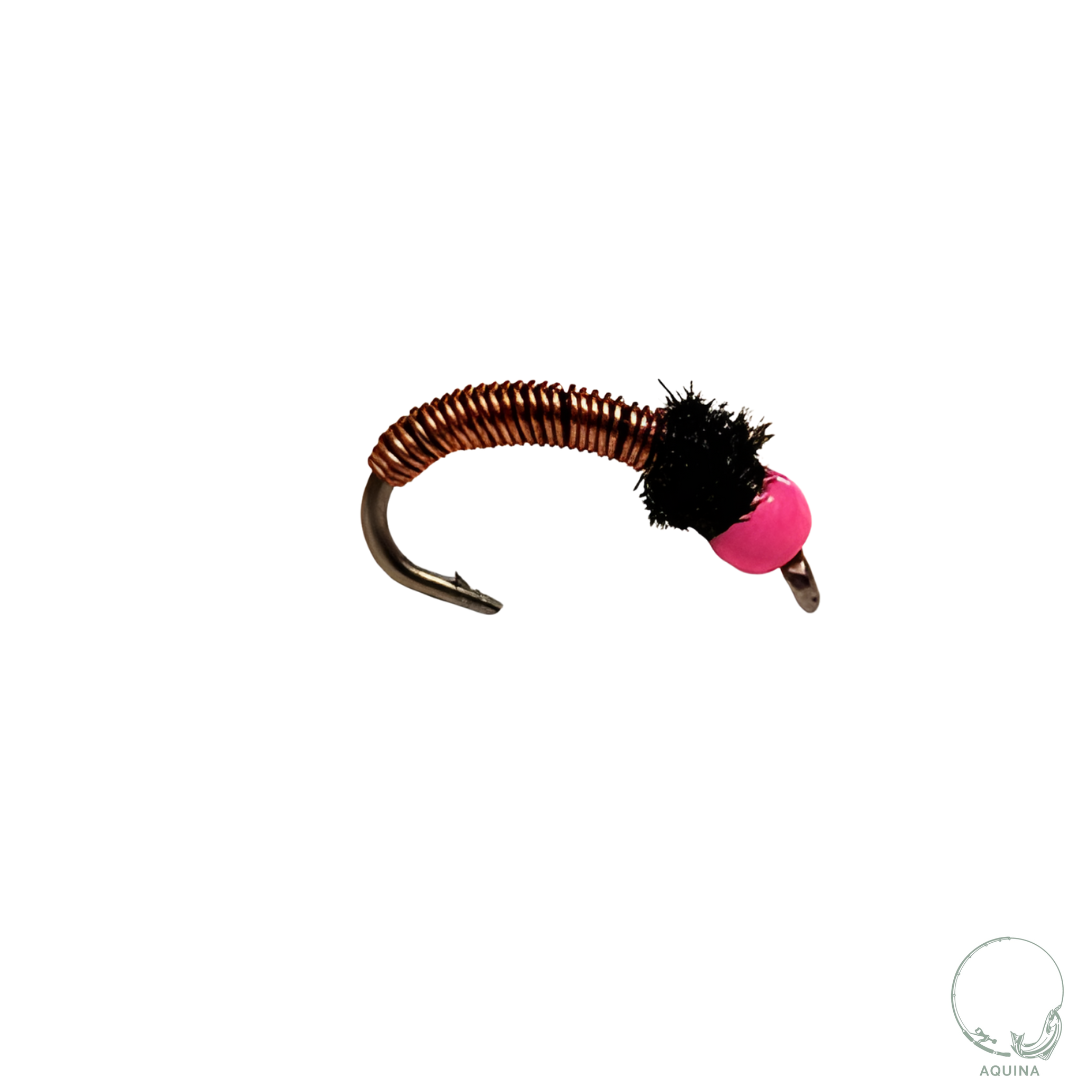
The Brassie is a simple but highly effective winter fly fishing nymph designed to imitate small aquatic insects such as midge larvae, pupae, and tiny caddis larvae. Created in the 1960s, its minimalist design uses copper or brass wire for the body and a peacock herl thorax, making it both durable and naturally attractive to trout.
Its slim profile allows it to sink quickly into deep feeding zones where trout concentrate during cold winter conditions. The Brassie is especially effective in clear tailwaters and spring creeks where fish feed selectively on small food sources.
How to Fish a Brassie
- Fish it deep under a strike indicator.
- Use it as a trailer fly behind a larger nymph or scud.
- Present it on a two-fly rig for better coverage.
- Use light tippet (6X–7X) for a natural drift.
- Focus on slow runs, tailouts, and deep winter pools.
Best Sizes and Colors
- Sizes: 14–20
- Colors: Copper, Red, Green, Purple, Black
The Brassie remains a proven winter trout fly, especially effective when fish are keyed in on small subsurface insects.
8. Rainbow Warrior

The Rainbow Warrior is a modern attractor nymph designed by Lance Egan that is highly effective during winter fly fishing when trout respond to flash and movement rather than exact imitation. Its flashy materials—pearl tinsel or Flashabou body, rainbow dubbing, pheasant tail fibers, and a red hotspot—create strong visual triggers that grab attention even in cold, clear water.
Although it does not imitate a specific insect, it suggests a variety of food sources such as midges, scuds, and emerging mayflies. The silver tungsten bead helps it sink quickly into the feeding zone, making it especially useful in deep winter runs and tailwaters.
How to Fish a Rainbow Warrior
- Fish it as a dropper behind a heavier nymph.
- Use it as a point fly in euro-nymphing setups.
- Pair it with more natural patterns for contrast.
- Target deep runs and slow winter pools.
- Use when fish are not responding to natural flies.
Best Sizes and Colors
- Sizes: 16–20 (can range from 12–22)
- Colors: Pearl, Red, Black
- Bead: Silver tungsten
The Rainbow Warrior is a powerful winter attractor fly that excels when trout need an extra visual trigger to strike.
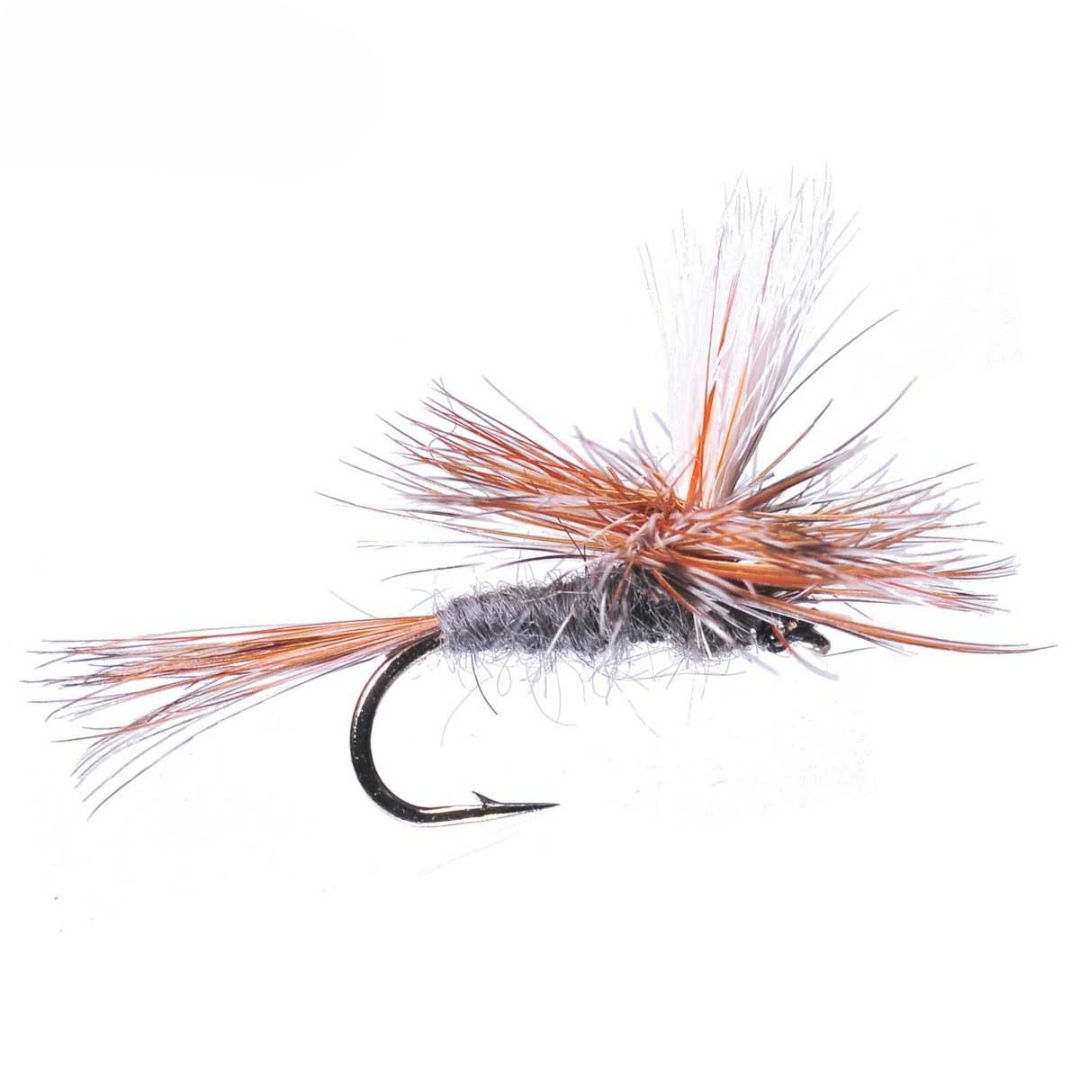
The Parachute Adams is one of the most iconic and versatile dry flies in fly fishing, especially effective during winter mayfly and midge activity. Developed from the original Adams pattern, the parachute version features a white post and horizontal hackle that allows it to sit lower and more naturally in the surface film while remaining highly visible to the angler.
Its gray body and mixed grizzly-brown hackle make it a generalist pattern that imitates a wide range of mayflies and small insects. This versatility is what makes it a must-have dry fly for trout in all water types, particularly during Blue-Winged Olive (BWO) hatches in colder months.
How to Fish a Parachute Adams
- Fish it as a dry fly during surface activity.
- Use it as a lead fly in a dry-dropper setup.
- Target riffles, seams, and slow winter rises.
- Use it during BWO and midge hatches.
- Keep a drag-free drift for best results.
Best Sizes and Colors
- Sizes: 12–20 (18–20 best for winter)
- Colors: Gray (standard), Olive, Purple variants
- Post: White calf hair or synthetic yarn
The Parachute Adams remains a core winter dry fly due to its visibility, versatility, and consistent ability to fool selective trout.
10. Little Black Stonefly
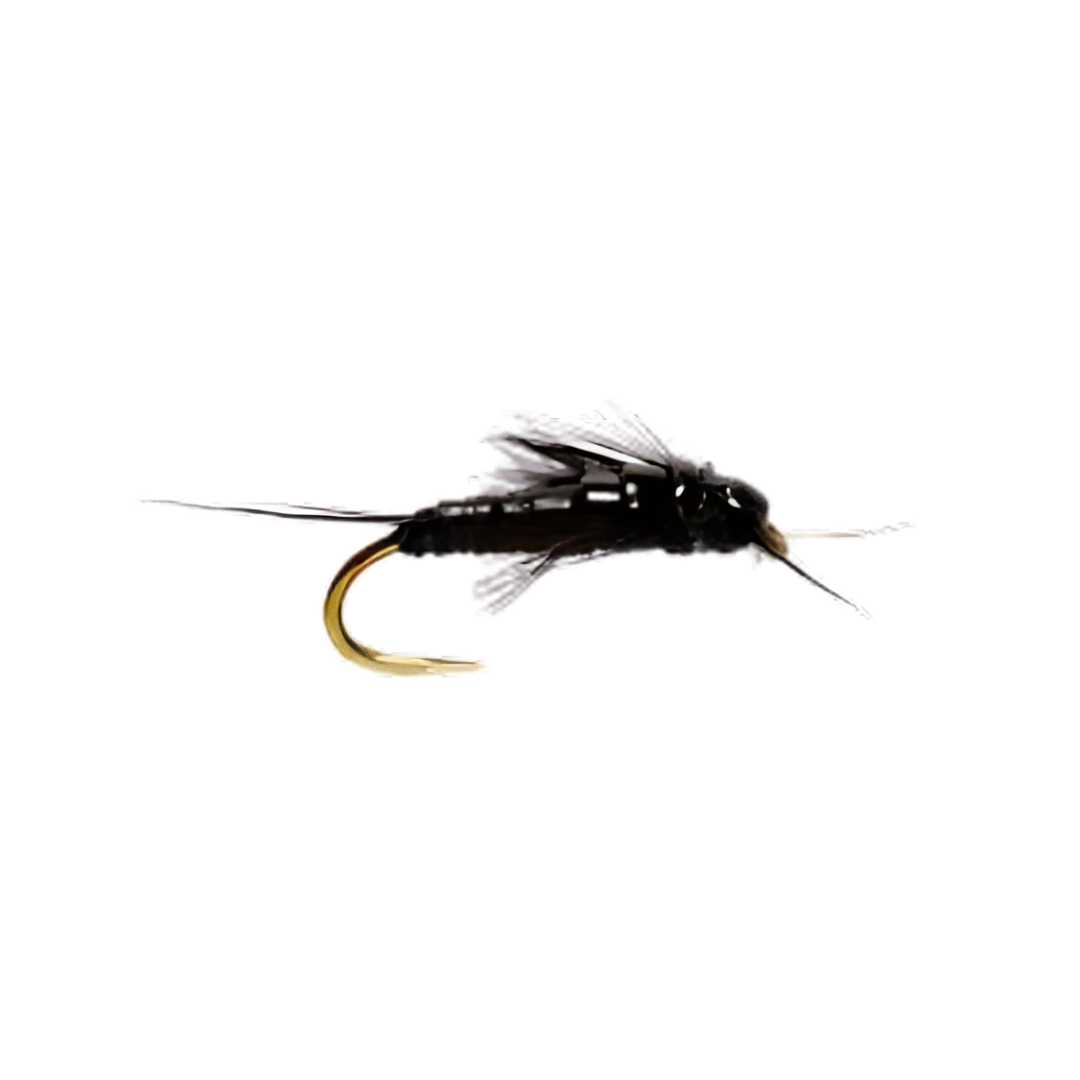
The Black Stonefly is an essential winter fly fishing pattern that represents one of the earliest aquatic insect hatches of late winter and early spring. Often called the “snowflake hatch,” these stoneflies can emerge even when snow is still on the ground. Adult insects live for weeks after emergence, providing a consistent food source for trout in cold conditions.
This pattern is simple yet effective, using black dubbing for the body, dark CDC or hackle for wings, and a clean dry fly silhouette. The nymph stage is equally important, as trout frequently feed on drifting stonefly nymphs near the bottom during winter months.
How to Fish a Black Stonefly
- Fish as a dry fly near banks during surface activity.
- Target slow seams and soft water along river edges.
- Use upstream mends to extend drift time in feeding zones.
- Fish nymph versions deep near the riverbed.
- Focus on slack water where adults fall from banks.
Best Sizes and Colors
- Sizes (Dry): 14–18
- Sizes (Nymph): 16–20
- Color: Black (standard across all variations)
The Black Stonefly is a key winter fly pattern, especially effective during early-season hatches when trout move shallow to feed.
11. Blue Wing Olive (BWO)

The Blue Wing Olive (BWO) is one of the most important winter fly fishing hatches, offering consistent trout feeding opportunities across all water columns. These Baetis mayflies are present in nymph, emerger, and adult stages, making them a key food source during colder months. Trout primarily feed on nymphs, but emergers and adults also become significant during active hatches.
Because of this full lifecycle availability, BWO patterns require multiple fly styles to match different feeding zones, including fast-sinking nymphs, soft hackle emergers, and low-riding dry flies.
How to Fish a BWO Hatch
- Start with nymphs (e.g., Perdigon style) near the bottom.
- Switch to emergers as fish rise in the water column.
- Use dry flies when trout begin surface feeding.
- Fish during overcast, rainy, or snowy conditions.
- Adjust depth and presentation as hatch progresses.
Best Sizes and Colors
- Sizes: 16–22
- Colors: Olive, Gray-Olive, Brown-Olive
- Stages: Nymph, Emerger, Adult
The Blue Wing Olive is a cornerstone winter hatch, providing consistent action when matched correctly with the right stage and presentation.
12. Glo Bug
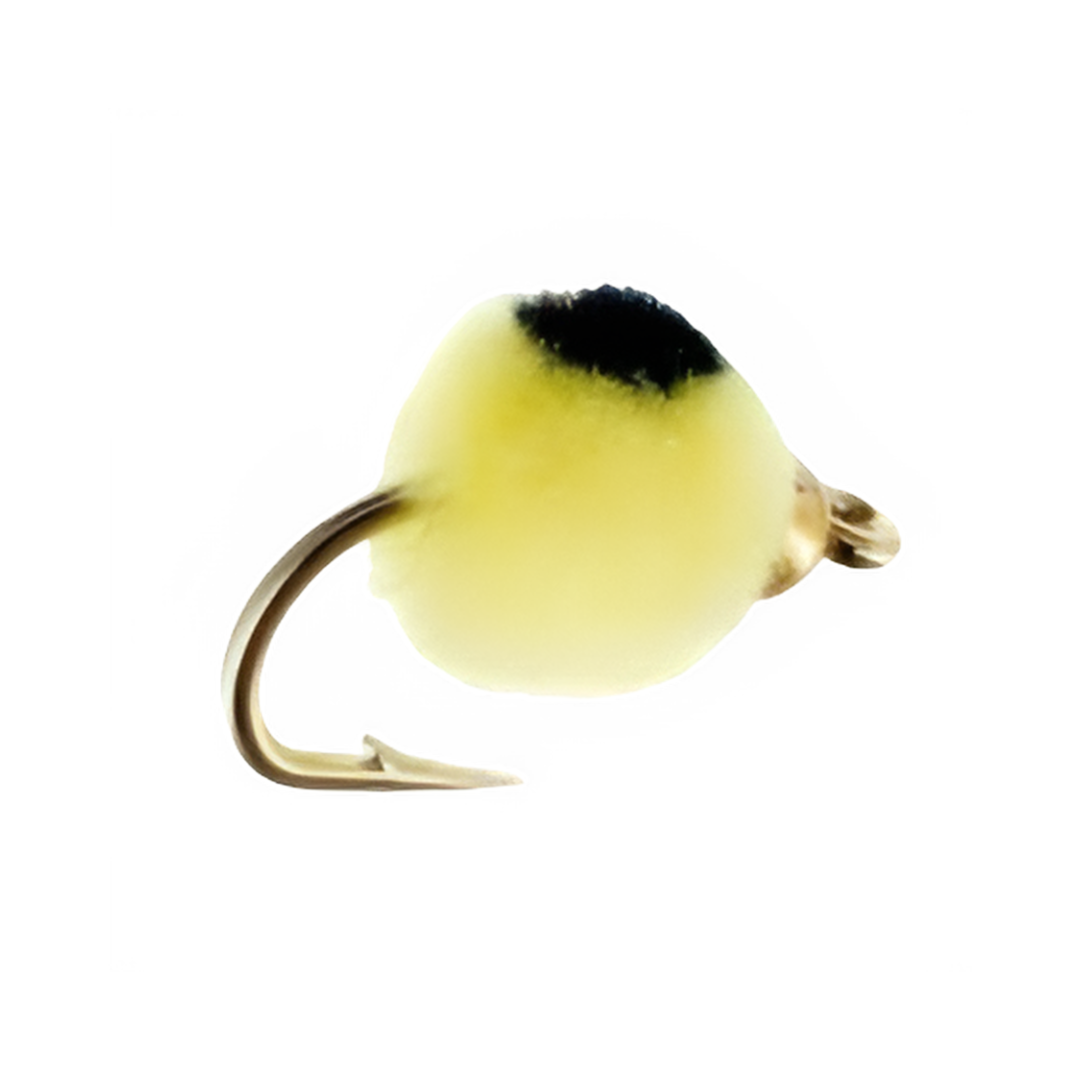
The Glo Bug is one of the most effective winter fly fishing egg patterns, especially during spawning periods when trout and steelhead feed on drifting eggs. Designed to imitate dislodged fish eggs tumbling along the riverbed, this pattern is simple but highly productive. It is typically tied using McFly Foam or egg yarn, with a sparse, rounded profile that allows natural drift near the bottom.
Unlike many nymphs, the Glo Bug is not an imitation of insects but a direct food source imitation. Its effectiveness comes from color contrast and visibility, which trigger aggressive feeding responses from trout in cold water.
How to Fish a Glo Bug
- Fish tight to the bottom in spawning areas.
- Drift naturally in slow seams and deep runs.
- Pair with a nymph like a Squirmy Wormy for added attraction.
- Focus below spawning beds and holding zones.
- Use slow, controlled presentations for natural drift.
Best Sizes and Colors
- Sizes: 10–14 (smaller for trout, larger for steelhead)
- Colors: Orange, Pink, Oregon Cheese, Chartreuse, Red
- Material: McFly Foam preferred for durability and shape
The Glo Bug is a highly productive winter pattern, particularly when fish are focused on egg sources during spawning activity.
13. San Juan Worm
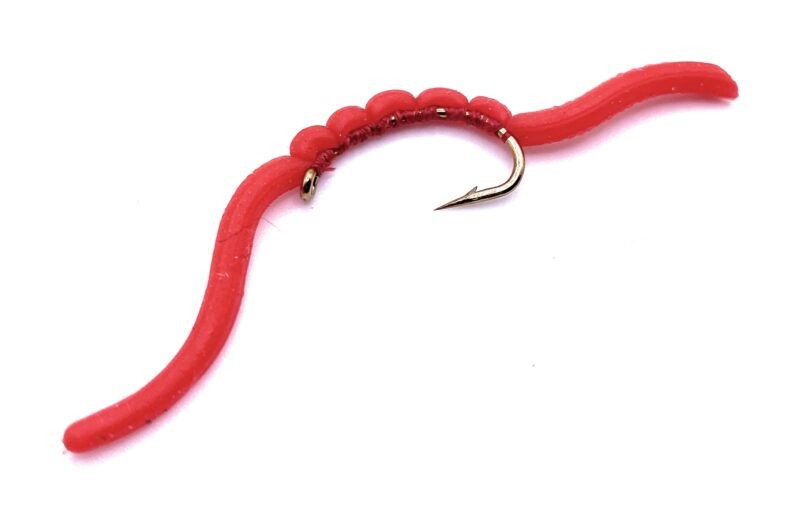
The San Juan Worm is one of the simplest yet most effective winter fly fishing patterns, designed to imitate aquatic worms that become dislodged during runoff and winter storms. Built with just a hook, thread, and chenille, this pattern is easy to tie but extremely productive, especially in high or slightly stained water conditions.
Despite its simplicity, the San Juan Worm is a reliable food source imitation when natural worms are washed into rivers from eroding banks. Its effectiveness increases during runoff events and after heavy rain, when trout actively feed on drifting organic material.
How to Fish a San Juan Worm
- Fish it deep along the river bottom.
- Use it as the top fly in a nymph rig.
- Add split shot above the leader for better depth control.
- Focus on high, dirty, or freshly stained water.
- Avoid overly fast retrieves—dead drift works best.
Best Sizes and Colors
- Sizes: 6–14
- Colors: Red (most effective), Pink, Tan, Brown, Purple
- Variations: Beadhead or standard chenille body
The San Juan Worm remains a highly effective winter fly pattern, especially in disturbed water conditions where trout feed opportunistically.
14. Mop Fly

The Mop Fly is a highly effective modern winter fly fishing pattern known for its simplicity and strong fish-attracting movement. Originating from mop head microfiber materials, this fly imitates larvae, worms, and other drifting food sources. Its dense fibers absorb water and create a slow, natural sink rate with an erratic motion that consistently triggers strikes.
Often tied with tungsten beads and weighted hooks, the Mop Fly is designed to reach deep holding zones where trout stay during cold winter months. It performs especially well in slow water where fish have time to inspect and eat larger, easy meals.
How to Fish a Mop Fly
- Fish it deep under an indicator or Euro-nymph rig.
- Present it as a single heavy point fly.
- Use slow dead-drift presentations near the riverbed.
- Add subtle rod lifts to trigger reaction strikes.
- Focus on deep pools and slow winter currents.
Best Sizes and Colors
- Sizes: 10–12
- Colors: Chartreuse, Tan, Purple
- Bead: Tungsten recommended
The Mop Fly is a highly productive winter pattern that excels when trout are feeding on slow-moving, bottom-drifting food sources.
15. Squirmy Wormy
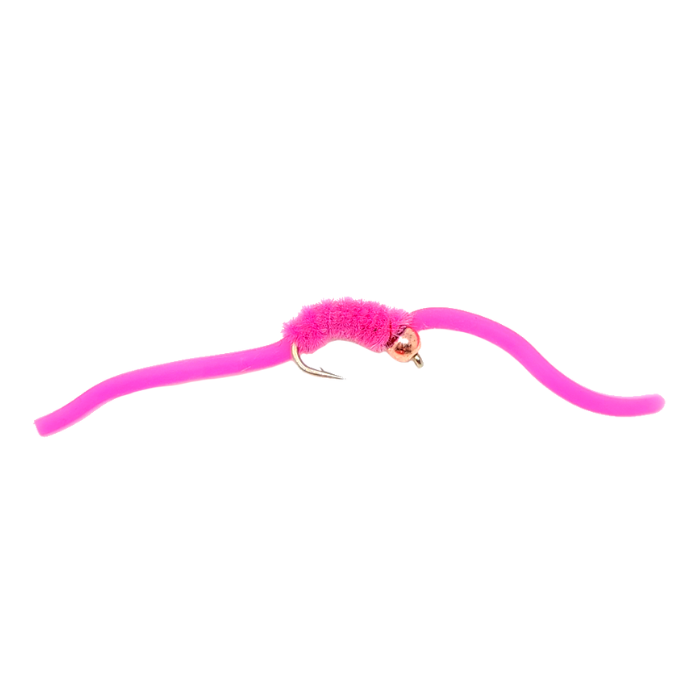
The Squirmy Wormy is one of the most effective winter fly fishing patterns, especially when fish are feeding aggressively on natural worm-like food sources. Made from soft silicone material, this fly imitates aquatic worms that are commonly washed into rivers during runoff or disturbed conditions. Its lifelike movement and stretchable body create constant motion in the water, making it a strong attractor even when other flies fail.
This pattern is particularly effective in cold water when trout and grayling are less selective and respond to high-visibility, easy-to-capture food items. Despite its simplicity, it consistently produces results in both clear and stained water.
How to Fish a Squirmy Wormy
- Fish it as a middle dropper in a multi-fly rig.
- Use a heavier nymph as the point fly for depth.
- Target runs, seams, and disturbed water.
- Fish short, controlled drifts for better contact.
- Expect aggressive takes from trout and softer takes from grayling.
Best Sizes and Colors
- Sizes: 12–16 (smaller for finesse presentations)
- Colors: Hot Pink, Blood Red, Aqua Glow
- Beads: 3–4mm tungsten recommended
The Squirmy Wormy is a high-impact winter fly that consistently saves difficult fishing days with its strong visual attraction and natural movement.
16. RS2 Emerger

The RS2 Emerger is a highly effective winter fly fishing pattern designed by Rim Chung to imitate emerging Blue Wing Olive and other small mayflies. Its slim, minimalist profile closely represents an insect in transition, making it especially deadly during hatches when trout feed selectively on emergers rather than fully developed adults.
The pattern features a sparse tail, fine dubbing body, trailing shuck, and a CDC wing that sits just in or slightly below the surface film. This positioning is critical, as it targets trout feeding just beneath the surface where most winter action occurs during BWO hatches.
How to Fish an RS2 Emerger
- Fish it as a dropper behind a dry fly.
- Use fine tippet (5X–7X) for a natural drift.
- Fish just under the surface film with floatant on the leader.
- Pair it with heavier nymphs for a multi-depth rig.
- Focus on slow seams and rising fish during hatches.
Best Sizes and Colors
- Sizes: 18–22 (down to 24 for pressured water)
- Colors: Black, Gray, Olive
- Best use: BWO emergence and selective winter trout feeding
The RS2 Emerger is a must-have winter fly pattern when trout are keying on emerging insects rather than fully surfaced adults.
17. Scud

The Scud is a highly productive winter fly fishing pattern that imitates freshwater shrimp found in most healthy rivers, tailwaters, and spring creeks. These small crustaceans are a constant, protein-rich food source for trout year-round, making them especially important during winter when other insect activity is limited.
Scuds have a curved, segmented body and naturally drift or dart near the riverbed, often hiding in vegetation and gravel. Their movement and high nutritional value make them a consistent target for feeding trout, particularly in clear or lightly colored water.
How to Fish a Scud
- Fish deep along the river bottom near vegetation.
- Use fluorocarbon tippet for a natural presentation.
- Dead-drift the fly through slow seams and runs.
- Add slight twitches to imitate swimming scuds.
- Use double rigs with contrasting nymphs for more takes.
Best Sizes and Colors
- Sizes: 14–20 (larger patterns 8–10 in some waters)
- Colors: Gray-Olive, Tan, Amber, Pink, Orange
- Behavior: Fish near substrate and vegetation edges
The Scud is a key winter fly pattern, offering a reliable food source imitation when trout are feeding close to the bottom.
18. Sexy Walt

The Sexy Walt’s Worm is a modern, flash-enhanced variation of the classic Walt’s Worm, designed to improve visibility and trigger more strikes in pressured or low-visibility conditions. It combines a simple nymph profile with bright hotspot accents, rainbow scud dubbing, and subtle flash materials that create movement and reflection underwater.
Tied on a jig-style hook with a tungsten bead, this pattern sinks quickly into the feeding zone while maintaining a natural, buggy silhouette. The added hotspot behind the bead helps draw attention, while the blended dubbing imitates a wide range of aquatic insects, making it effective in both clear and slightly stained winter water.
How to Fish a Sexy Walt’s Worm
- Fish it as a point or dropper nymph in a Euro rig.
- Use under an indicator in multi-fly setups.
- Target pressured waters where fish avoid natural patterns.
- Fish slow, deep drifts near the bottom.
- Add slight movement for extra attraction.
Best Sizes and Colors
- Sizes: 12–18 (commonly 10–16 also effective)
- Colors: Red, Fluorescent Orange, Purple, Natural blends
- Bead: Silver tungsten preferred
The Sexy Walt’s Worm is a reliable winter attractor nymph that combines simplicity with flash to increase strike rates in tough fishing conditions.
19. Caddis Larva

The Caddis Larva is one of the most consistent winter fly fishing patterns, imitating the larval stage of caddisflies that live year-round in streams, rivers, and tailwaters. These larvae build protective cases or move freely along the riverbed, making them an easy and reliable food source for trout during cold months when insect activity is limited.
This pattern is typically tied with a slim, segmented body using dubbed materials, chenille, or synthetic fibers, often reinforced with wire for durability and subtle flash. Some variations include bead heads for added weight to reach deep feeding zones quickly.
Caddis Larva patterns are especially effective in slow seams, deep runs, and gravel bottoms where natural larvae drift or crawl. Their natural movement and subtle appearance make them a staple in winter nymphing setups.
How to Fish a Caddis Larva
- Fish deep near the riverbed under an indicator.
- Use as a dropper in a two-fly nymph rig.
- Focus on slow-moving seams and tailouts.
- Add slight movement to imitate crawling larvae.
- Pair with heavier attractor nymphs for contrast.
Best Sizes and Colors
- Sizes: 14–20
- Colors: Olive, Green, Brown, Tan
- Bead: Optional tungsten for deeper water
The Caddis Larva remains a dependable winter fly pattern due to its year-round availability and natural, low-profile presentation.
Conclusion
The article presents a curated selection of 19 essential winter fly fishing patterns designed to help anglers stay productive when insect activity is low and trout feed deeper, slower, and more selectively. The collection covers a full range of winter food sources—from tiny midges and mayflies to larger opportunistic meals like worms, eggs, shrimp, and baitfish imitations.
Together, these flies are built around key winter principles: getting down quickly into the strike zone, maintaining a natural dead-drift, and triggering strikes through either realistic imitation or strong visual attraction. Patterns like the Zebra Midge, Pheasant Tail Nymph, RS2 Emerger, BWO, and Caddis Larva focus on natural insect imitation, while flies such as the Rainbow Warrior, Sexy Walt’s Worm, Mop Fly, Squirmy Wormy, and San Juan Worm rely on flash, movement, and high visibility. Larger searching and attraction flies like the Woolly Bugger, Copper John, and Glo Bug ensure coverage across different depths and conditions. Surface options such as the Parachute Adams and Griffith’s Gnat provide dry-fly opportunities during winter hatches, while scuds and brassies maintain consistent subsurface action in tailwaters and spring creeks.
Each pattern plays a specific role, but together they form a complete winter system that covers all water columns and feeding behaviors, giving anglers reliable success in cold conditions.
Shop winter flies at bulk wholesale price per dozen at aquinaflies.com
Faqs About Best Winter fly fishing flies
What makes the Zebra Midge so effective for winter fly fishing?
The Zebra Midge's simple construction of thread, wire, and a tungsten bead allows it to sink quickly to deep holes where trout congregate in winter. Its slim profile drifts naturally in cold, clear water, and the tungsten bead provides both weight and subtle flash that triggers strikes even when fish are lethargic.
What size flies should I use for winter trout fishing?
Winter trout fishing typically requires smaller flies ranging from size 16 to 22, with size 18-20 being the most versatile. Midges and Blue Wing Olives (BWOs) are primary winter hatches, so carrying patterns in sizes 18-22 will cover most situations. Larger patterns like size 12-14 can be effective for stoneflies or as attractor nymphs.
Which colors are most productive for winter fly fishing?
Black, red, and natural colors like olive and brown prove most effective during winter months. Black works consistently year-round for patterns like Zebra Midges and Wooly Buggers. Red excels as a trigger color in egg patterns and midge larvae. Natural earth tones match the subdued winter aquatic insect life and work well in clear water conditions.