
21 Best Mouse Pattern Flies for Trout fishing
Mouse pattern flies trigger big, aggressive strikes from trout that few other fly fishing techniques can match. These specialized patterns represent a substantial protein source that activates the predatory instinct in trout, particularly large browns and rainbows. Indeed, these patterns can be extremely productive when presented correctly.
Unlike standard dry flies or nymphs, mouse flies excel at targeting trophy fish. In some rivers, trout will readily attack these patterns even during daylight hours, creating an unforgettable visual experience and rush of adrenaline for anglers. The effectiveness stems from the high protein content that mice represent - they trigger the hunter-killer instinct in big trout. Additionally, mouse patterns prove equally effective for other species including bass, pike, and exotic fish such as taimen.
Certain fishing locations with substantial mouse or lemming populations create prime conditions for these patterns. Furthermore, anglers have discovered that presentation technique plays a crucial role in success with mouse patterns. This comprehensive guide examines 21 proven mouse flies patterns that consistently entice trophy trout, with detailed analysis of when, where, and how to fish each effectively.
1. Morrish Mouse

The Morrish Mouse emerged in 2002 when Ken Morrish designed it specifically for targeting the massive rainbow trout in Kamchatka. This pattern has since become one of the most widely used and effective mouse patterns for trout fishing across North America and beyond.
Key Features
- Simple three-material design
- Black foam back for visibility
- Spun deer/elk hair body
- Rabbit strip tail
- Wakes water effectively
- Floats all day without waterlogging
Ideal Conditions
The Morrish Mouse performs exceptionally well when fished tight against banks, near fallen logs, or along alders where trout ambush prey. Its effectiveness shines in both fast and slow-moving water, though in faster currents, angling casts downstream at a 45-degree angle prevents the fly from racing too quickly. Moreover, this pattern works surprisingly well even in locations where sockeye are spawning and trout are gathered to eat eggs.
Best Season
Late June through July represents the prime time for fishing the Morrish Mouse, especially in Alaska waters with voracious rainbow trout. August also proves highly productive as sockeye spawning migrations increase rainbow trout populations in small tundra streams.
Recommended Size
Originally designed for use with a 5-weight rod (though a 6-weight is often preferred for mousing), the pattern typically comes in size #2 or #4. For optimal presentation, a short 6-8 foot 0X leader helps turn the fly over effectively and quickly bring trout to hand.
Rigging & Presentation
Cast the fly close to the bank, then raise the rod tip and pulse it with its head upstream across the current. Fish it similar to skating steelhead flies—cast across-stream, point the rod tip downstream, and allow current to work the fly back across. Subsequently, wait for the take rather than setting the hook visually as with dry flies.
Why Morrish Mouse Works
The pattern's effectiveness lies not in realistic appearance but in its low-riding, sputtering swimming action that triggers predatory responses. The foam back functions like a water ski tip, pushing water and creating an enticing wake. Consequently, the subtle movement combined with its profile makes it irresistible to trout seeking substantial protein sources.
2. Mr. Hankey

Developed on the banks of the Kanektok River by Jeff Hickman, the Mr. Hankey has become a go-to mouse pattern for many anglers pursuing trophy trout. This innovative design combines several key elements that make it extraordinarily effective at triggering aggressive strikes.
Key Features
- Upturned stinger hook design
- Natural rabbit fur body
- Foam back for flotation
- Round rubber legs
- Pearl Krystal Flash whiskers
- Low-profile swimming action
Ideal Conditions
The Mr. Hankey excels when fished tight against high banks, mimicking a mouse that has just entered the water. Its design with a lip on the front ensures it moves substantial water, creating attention-grabbing surface disturbance. This pattern performs exceptionally well in both current (skating technique) and calm water (stripping retrieve).
Best Season
This pattern works best during summer months when trout actively feed on protein-rich food sources. On the Kanektok and Arolik Rivers, where the pattern originated, trout have a short growing season and must consume significant protein while available.
Recommended Size
Typically tied in sizes #2 and #4, this versatile pattern works with a stout leader. The #4 hook size offers ideal balance between castability and fish-attracting profile.
Rigging & Presentation
For optimal results, rig with a 9-foot, 10-pound test leader. Presentation options include throwing onto banks or logs to simulate a mouse falling into water, dead-drifting, or actively skating in current. While fishing, the foam back ensures the fly lands upright regardless of casting angle.
Why Mr. Hankey Works
The pattern's effectiveness stems from its unique combination of floating and sinking materials. The foam back creates surface disturbance while rabbit fur body pushes into the surface film, appearing vulnerable. Furthermore, the upturned stinger hook design doubles hookup probability while safely catching fish in the upper lip.
3. Black Heifer Groomer
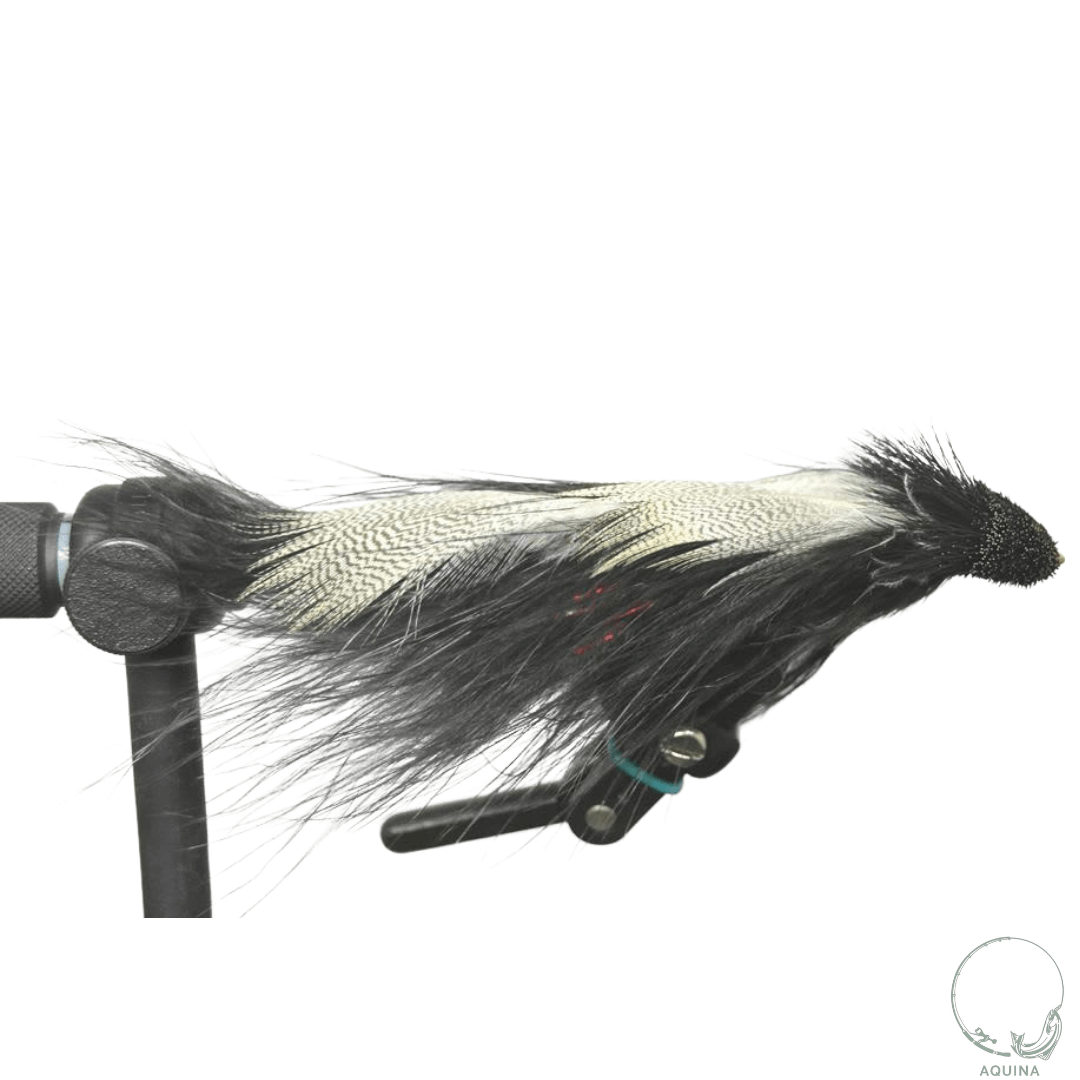
Originally created by Kelly Galloup, the Black Heifer Groomer represents an articulated evolution of the Zoo Cougar pattern. This deadly mouse pattern gained legendary status after Andy Sobota added the rear flank feather, transforming it into an extraordinary fly for targeting trophy trout.
Key Features
- Articulated two-hook design
- Unweighted for natural movement
- Marabou palmered body construction
- Mallard flank feather overwing
- Distinct deer hair head
- Huge underwater profile
Ideal Conditions
The Black Heifer Groomer performs optimally in shallow water where aggressive fish hunt. Primarily effective in bright light conditions, the yellow variant has proven exceptionally productive. Although originally unweighted, some anglers modify it with lead wrapping or dumbbell eyes for fishing deeper runs.
Best Season
This pattern proved remarkably effective during 2005, producing nearly all the big fish caught on the Madison River. For maximum effectiveness, fish it throughout summer months when trout actively seek substantial protein sources.
Recommended Size
Available in sizes 4 and 6, the pattern typically uses a 3XL streamer hook for both front and rear sections. The front hook should be one size larger than the rear for proper balance and action.
Rigging & Presentation
Fish the Heifer Groomer using a fast jerk-strip retrieve with brief pauses. Unlike traditional dry flies, avoid setting the hook visually - instead, use a strong strip set when feeling the take. This technique effectively prevents pulling the fly away prematurely.
Why Black Heifer Groomer Works
The unweighted design creates an irresistible fluttering and gliding action underwater. Additionally, its articulated construction throws a massive profile that triggers predatory responses from big trout. The yellow variant notably excels as a must-have pattern, particularly under bright conditions.
4. Sex Dungeon Mouse
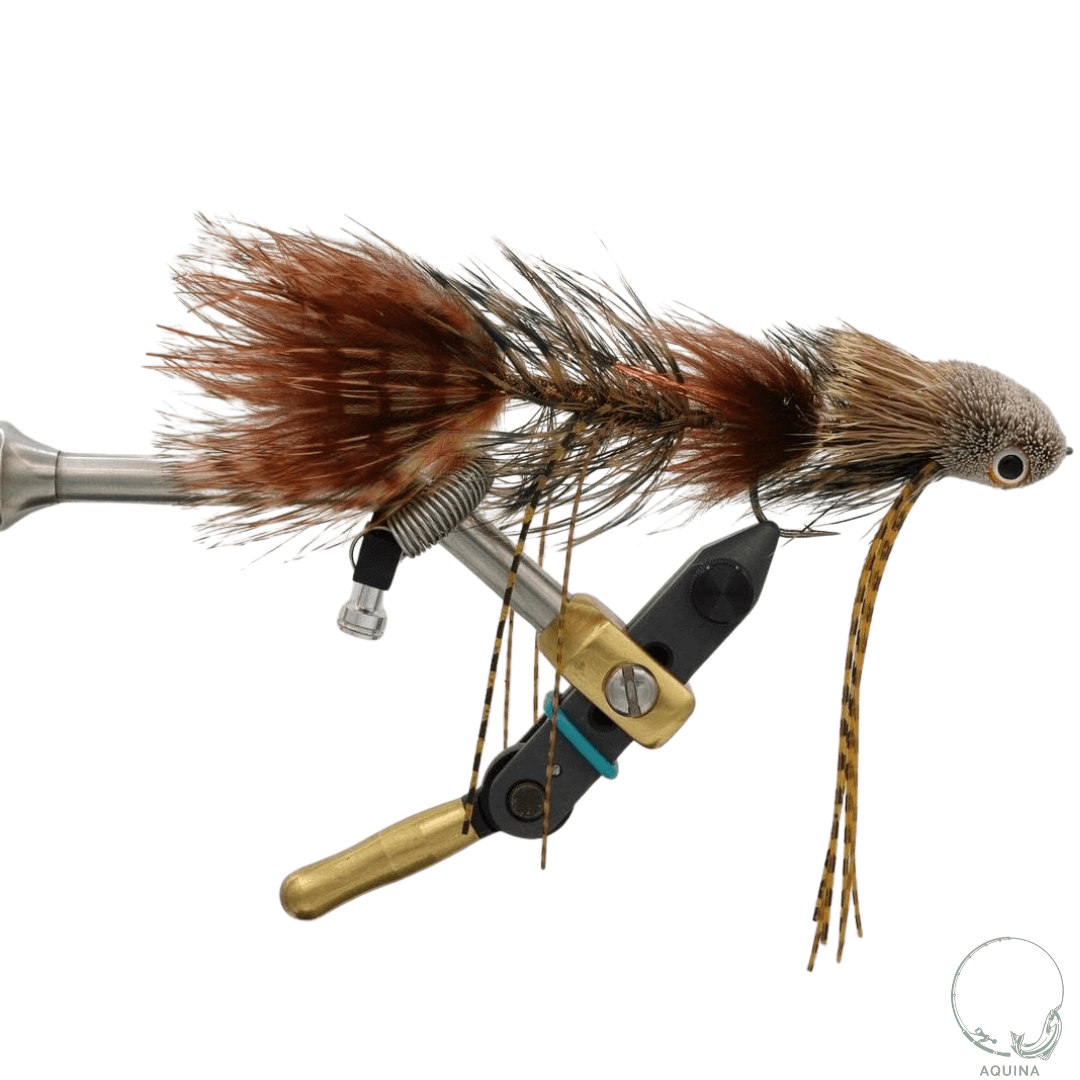
Created by fly-fishing innovator Kelly Galloup, the Sex Dungeon Mouse represents a breakthrough in articulated streamer design that consistently triggers aggressive strikes from trophy trout.
Key Features
- Articulated two-hook design
- Deer hair spun head
- Neutrally buoyant construction
- Marabou tail with flashabou
- Dumbbell eyes for movement
- Silicone rubber legs
- Schlappen hackle throughout
Ideal Conditions
This pattern excels when fished near structure—log jams, undercut banks, and deep runs. The design pushes water effectively, making it deadly even in murky conditions where trout can "feel" its presence. Despite being primarily a streamer, its deer hair head allows it to function as a mouse pattern.
Best Season
The Sex Dungeon works year-round in both moving and stillwater, yet performs exceptionally during summer when large trout become more aggressive.
Recommended Size
Available in size 2-6, with mini versions for when fish prefer smaller profiles.
Rigging & Presentation
Rig with a full-sinking line and short (3-4 foot) leader with 12-pound tippet minimum. For optimal action, use an urgent jerk-strip retrieve, moving the rod tip 12-20 inches downstream before picking up slack.
Why Sex Dungeon Mouse Works
The pattern's neutrally buoyant design creates a jointed, suspending jerkbait action that triggers predatory instincts. Furthermore, its substantial profile imitates everything from sculpins to immature trout.
5. Deer Hair Mouse

The traditional Deer Hair Mouse stands as a classic pattern in the mouse fly arsenal, revered for its realistic appearance and deadly effectiveness on predatory fish. This time-tested pattern remains a favorite among anglers targeting trophy brown trout.
Key Features
- Densely packed deer hair body
- Pulsating rabbit strip tail
- Realistic eyes for added appeal
- Flat bottom for water stability
- Buoyant and water-resistant construction
Ideal Conditions
The Deer Hair Mouse truly shines in low-light scenarios, making it perfect for dawn, dusk, or night fishing expeditions. Nevertheless, anglers report success during daylight hours as well. The pattern performs admirably around structure, undercut banks, or anywhere large browns might lurk.
Best Season
Summer months yield optimal results, yet this versatile pattern remains effective throughout the fishing season. In locations with known rodent populations, effectiveness increases dramatically.
Recommended Size
Typically tied on #4 hooks, with some variants available in sizes #2-10. The standard length without tail measures approximately 3.5 cm (1.4").
Rigging & Presentation
For optimal presentation, cast upstream across current, then strip back with twitching motions. Alternatively, swing the pattern and let water current create tension before adding subtle twitches.
Why Deer Hair Mouse Works
The pattern's effectiveness stems from its realistic profile coupled with the pulsating action of the rabbit strip tail. Hence, studies show that up to 25% of trout populations consume rodents when available. The deer hair construction creates a water-resistant, buoyant body that sits properly on the surface.
6. Dorado Mouse
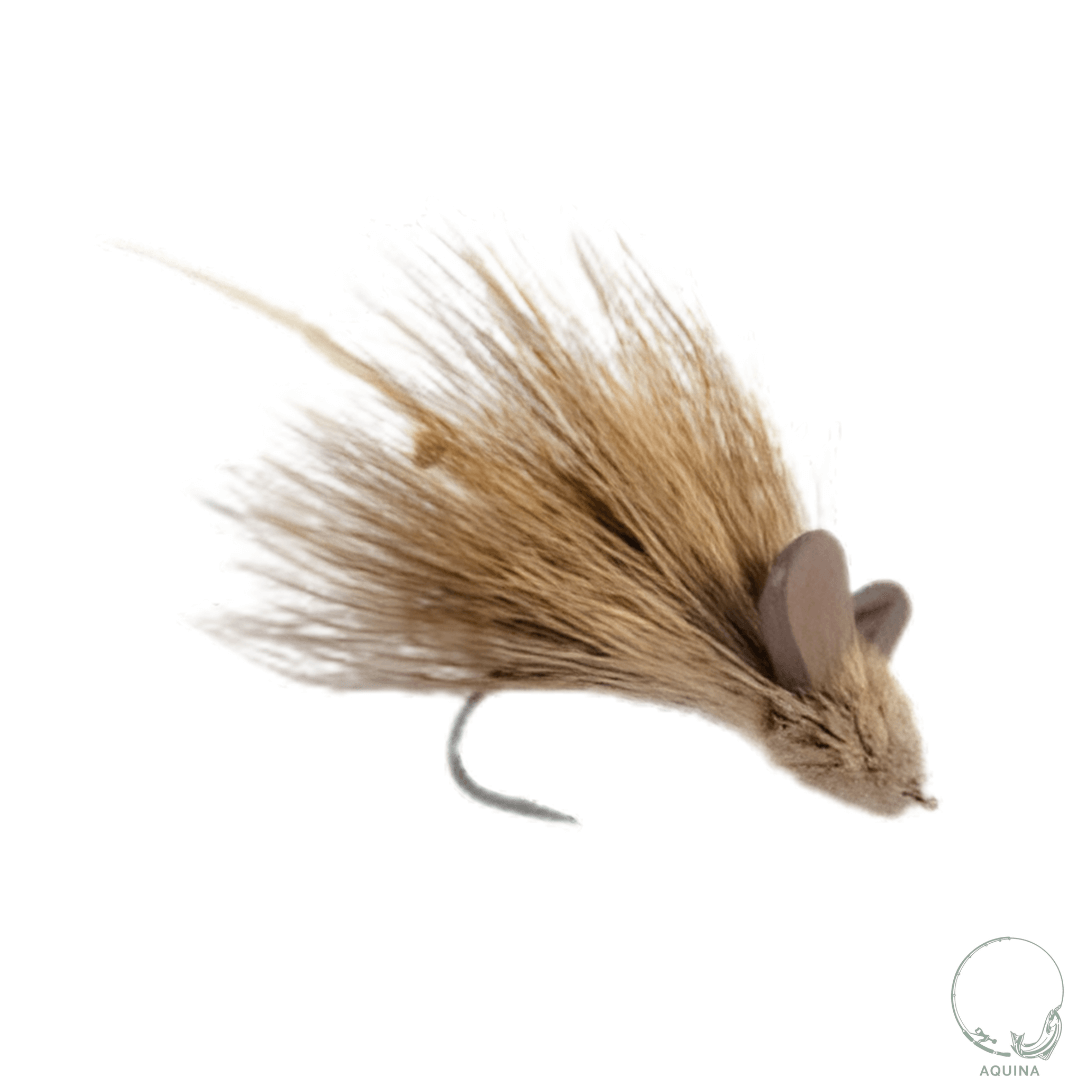
The Dorado Mouse is a robust, high-profile mouse pattern engineered for aggressive surface predators, particularly in large rivers where confidence and visibility are critical. Built to push water and maintain a strong silhouette, this pattern is synonymous with explosive surface takes and sustained durability under violent strikes.
Key Features
- Large buoyant body for consistent surface tracking
- Broad head design that displaces water effectively
- Long, flexible tail for trailing motion
- Prominent ears enhancing low-light visibility
- Reinforced hook and thread wraps for strength
Ideal Conditions
The Dorado Mouse performs best at night or during low-light periods on wide rivers, deep runs, and bank-side structure. It excels along cut banks, log jams, and grassy margins where large predators patrol confidently, relying on vibration and silhouette rather than fine detail.
Best Season
Late summer through early autumn marks the prime window, when surface-feeding behavior intensifies. The pattern remains effective anytime warm water temperatures encourage predators to hunt upward.
Recommended Size
Typically tied on size #1 to #2 heavy-wire streamer hooks, ensuring a balance between a commanding profile and secure hook penetration during forceful strikes.
Rigging & Presentation
Fish the Dorado Mouse on a short, abrasion-resistant leader—3 to 4 feet of 20 lb monofilament. Present with a slow, deliberate wake across the surface, allowing the fly to push water continuously. Occasional pauses or subtle twitches can suggest a struggling rodent and trigger reaction strikes.
Why Dorado Mouse Works
The Dorado Mouse capitalizes on primal feeding instincts. Its pronounced surface disturbance, bold outline, and steady movement send clear signals through dark or broken water, prompting decisive, high-impact takes from dominant predators lurking below.
7. Blair Mouse
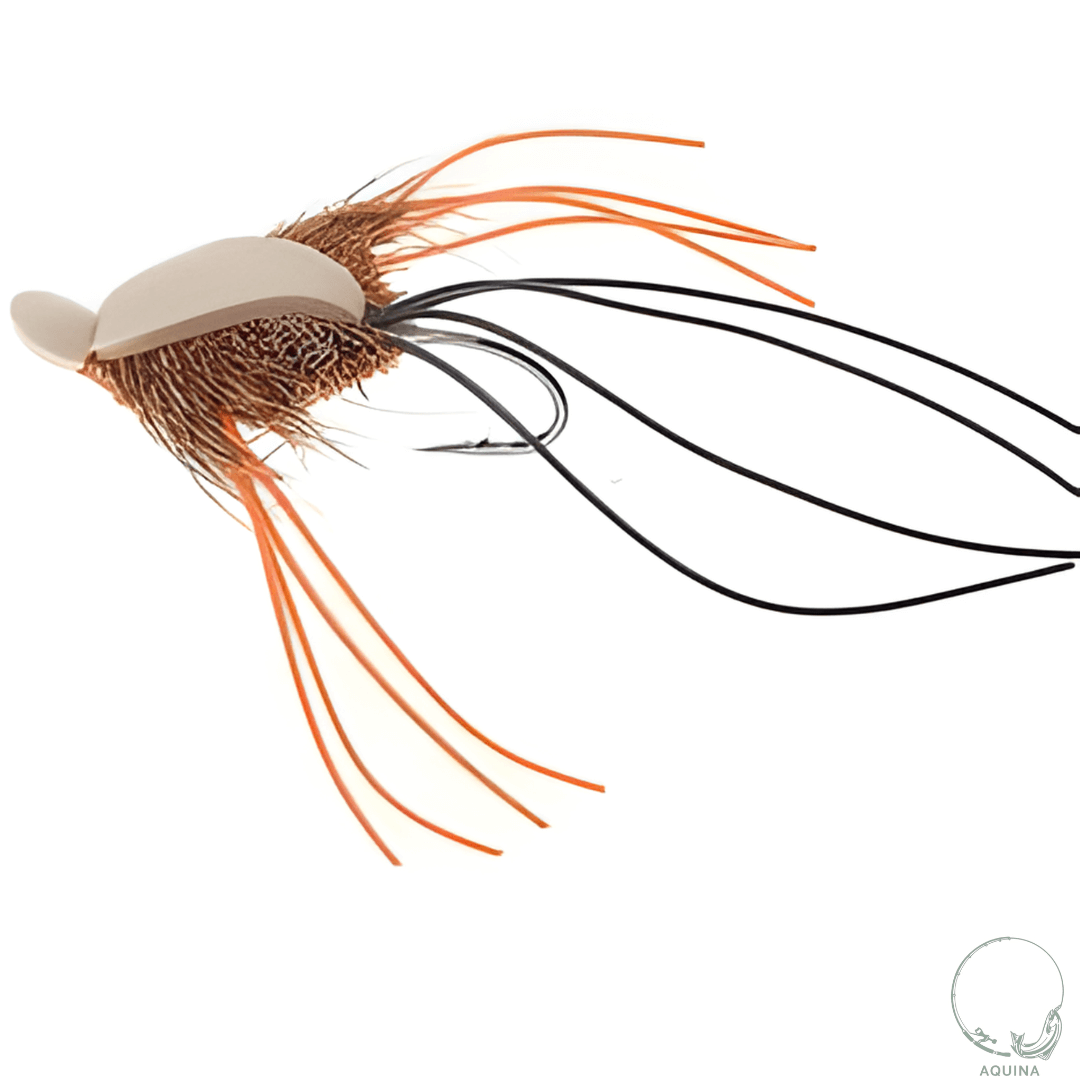
Originally developed as a steelhead pattern, the Blair Mouse has evolved into a versatile mouse fly that proves remarkably effective for trout, largemouth bass, and smallmouth bass.
Key Features
- Foam back for flotation
- Spun deer hair body
- Rubber legs create movement
- Up-eye salmon style hook
- High floatation design
Ideal Conditions
The Blair Mouse shines primarily in moving water where it can skate across the surface. Typically, it performs exceptionally well when cast toward backeddies behind midstream rocks or into slow water along opposite shores. Furthermore, this pattern excels when fished along banks where mice naturally enter the water.
Best Season
This pattern works throughout summer months, yet produces best results during late evening hours when trout become more aggressive surface feeders.
Recommended Size
Tied on medium-sized hooks (#4-6), the Blair Mouse creates just enough surface disturbance without being difficult to cast.
Rigging & Presentation
Will Blair, booking agent for Rapids Camp Lodge, recommends fishing this pattern with a twitching, chugging action similar to bass popper techniques. Initially, cast downstream and use the rod tip to create movement. Pauses between twitches often trigger strikes as the fly momentarily sits stationary.
Why Blair Mouse Works
The pattern's effectiveness stems from its ability to create surface disturbance while maintaining perfect floatation. Ultimately, the rubber legs impart lifelike movement even during pauses, mimicking a struggling rodent.
8. Hemorrhoidal Mouse

Frank Smethurst's Hemorrhoidal Mouse gained fame through the film "Eastern Rises" and its success in the U.S. Flyfishing Masters tournaments of the early 2000s. This uniquely named pattern has proven effective from Alaska to the lower 48 states.
Key Features
- Pearl core braid tail
- Distinctive orange posterior "hotspot"
- Spun deer hair body
- Foam construction for flotation
- High-riding design maintains buoyancy
Ideal Conditions
The Hemorrhoidal Mouse excels in small streams yet performs admirably in various water bodies. This pattern remains particularly effective under full moon conditions where the pearl tail creates additional shimmer. Essentially, it works wherever mice are naturally present in the ecosystem.
Best Season
Summer months yield optimal results, primarily in Alaska's Bristol Bay region where Smethurst first developed this pattern as a guide. However, the fly's versatility allows year-round use across different geographic locations.
Recommended Size
Typically tied on a #6 hook, making it ideal for small to medium-sized waters like the Driftless region's streams. For larger species or waters, size #4 or #2 options offer increased visibility and disturbance.
Rigging & Presentation
Cast near banks, then fish with a skating motion across current. The distinctive orange posterior serves as a visual trigger when viewed from below.
Why Hemorrhoidal Mouse Works
The orange "hot butt" attracts fish that respond to egg patterns or strike indicators. Ultimately, this feature provides an additional visual trigger beyond standard mouse patterns, appealing to opportunistic feeders across multiple species including trout, bass, pike and steelhead.
9. Pike Mouse Popper
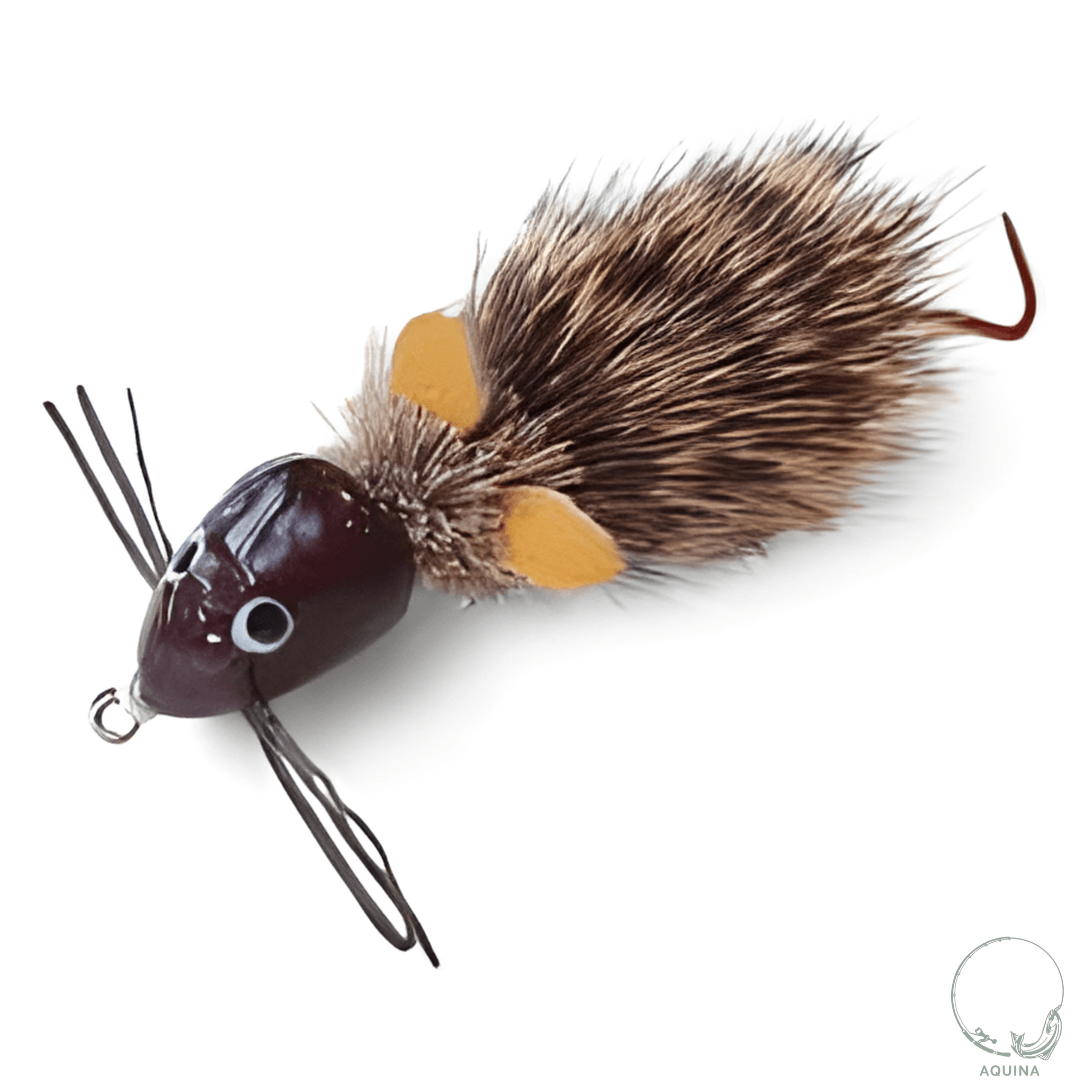
The Pike Mouse Popper is a large, aggressive topwater pattern specifically designed to provoke explosive strikes from pike and other large predators. Its buoyant foam body and popping head create a dramatic surface disturbance, making it highly effective in weedy lakes, shallow bays, and river margins where predators lurk.
Key Features
- Large foam body for maximum visibility
- Upturned popping head to create surface commotion
- Flexible rubber legs for added vibration
- Highly buoyant and durable construction
- Designed for aggressive topwater strikes
Ideal Conditions
Excels in shallow weedy lakes, river bays, and along submerged structure where pike or large predators patrol. Works best in calm to moderate current and near lily pads, weed beds, and log jams where surface prey is expected.
Best Season
Peak effectiveness occurs during summer, when water is warm and pike actively hunt near the surface. Remains productive through early fall in temperate waters.
Recommended Size
Typically tied on #1 to #2 hooks, providing a commanding surface profile while remaining castable.
Rigging & Presentation
Use a 4–5 foot leader of 20–25 lb monofilament or fluorocarbon to handle heavy strikes. Fish with short pops, twitches, or steady crawls to imitate a struggling rodent. Pausing occasionally allows predators to focus before explosive attacks.
Why Pike Mouse Popper Works
Its combination of bold surface disturbance, clear silhouette, and rubber leg vibration triggers predatory instincts. The popping action and wake simulate an injured or panicked rodent, provoking aggressive strikes from large, topwater-hunting pike.
10. Dahlberg Diver Mouse

Designed in the 1970s by renowned angler Larry Dahlberg, the Dahlberg Diver Mouse creates unique action that separates it from typical surface patterns.
Key Features
- Bullet-shaped deer hair head
- Slanted rear collar design
- Creates enticing surface disturbance
- Dives when stripped aggressively
- Rises slowly during pauses
Ideal Conditions
Primarily effective in still or gently moving water where its diving action becomes most pronounced. For optimal results, fish this pattern near structure—fallen trees, lily pads, or along shorelines where predatory trout lurk. The pattern's versatility allows it to work in both clear and murky conditions.
Best Season
Summer through early fall proves most productive, yet many anglers report consistent success throughout warmer months. Toward evening, the pattern's effectiveness increases dramatically as trout become more aggressive surface feeders.
Recommended Size
Typically tied on 3/0 hooks for saltwater applications or sizes 2-6 for freshwater trout.
Rigging & Presentation
Rig with floating line and short, stout leader. Cast toward structure, afterward let it sit momentarily, finally retrieve with short, sharp strips to trigger the diving action.
Why Dahlberg Diver Mouse Works
The pattern's unique diving-and-rising action mimics vulnerable prey. Even more, the vertical movement dimension triggers predatory responses beyond what surface-only patterns achieve.
11. Gurgler Mouse

The Gurgler Mouse stands out for its foam-based design principle, initially created by Jack Gartside over twenty years ago. This pattern has become among the most popular surface flies worldwide due to its versatility and effectiveness.
Key Features
- Foam strip creates popping lip
- Floats exceptionally well
- Versatile color options available
- Creates distinctive surface wake
- Simple yet effective design
Ideal Conditions
The Gurgler Mouse excels on smooth water where its wake and popping action become most visible to predatory fish. Because of its construction, this pattern works remarkably well for aggressive fish in both freshwater and saltwater environments. As well as imitating mice, it can suggest frogs or baitfish depending on how it's fished.
Best Season
Summer evenings yield optimal results, yet this pattern remains effective throughout warmer months. Given its visibility, some anglers prefer black or yellow variants under certain light conditions.
Recommended Size
Usually tied on hooks ranging from #6 for trout to larger sizes for saltwater applications.
Rigging & Presentation
For trout fishing, cast across current and "wake" the fly across on a fixed line length. Alternatively, employ a pop-and-stop retrieve that trout and bass prefer, allowing brief pauses between strips.
Why Gurgler Mouse Works
The Gurgler's effectiveness stems from the surface commotion created by its protruding lip. Upon stripping, it produces sounds resembling feeding fish, which attracts predators even in low light or dirty water.
12. Mini Mouse

The Mini Mouse pattern offers a scaled-down alternative to standard mouse flies, proving exceptionally effective for subtle presentations in low water conditions.
Key Features
- Spun deer hair body
- Realistic tail and profile
- Eyes, ears, whiskers details
- Weed guard for protection
- Ultra-durable construction
Ideal Conditions
This diminutive pattern truly shines in shallow water where larger mice would spook fish. Interestingly, it creates a satisfying "plop" on landing that generates interest from opportunistic feeders. Cast this pattern along log jams, downfalls, back eddies, or shaded banks for optimal results.
Best Season
From May until late October, this versatile pattern remains productive. Naturally, it performs best during early spring and fall when small rodents are most active.
Recommended Size
Commonly tied on size 2 hooks with approximately 1.5-inch body length. The pattern casts beautifully on 4-5 weight rods, making it significantly easier to present than bulkier mouse patterns.
Rigging & Presentation
Dead-drift with occasional small twitches to make the legs dance and create subtle ripples. Otherwise, a slow twitching action produces excellent results. Always watch the pattern carefully as trout often take this fly with quiet confidence.
Why Mini Mouse Works
The Mini Mouse triggers strikes even from larger trout despite its diminutive size. Its buoyant legs create a distinctive dimpled outline in the surface film, thus appearing irresistible when viewed from below.
13. McCoy's Mouse
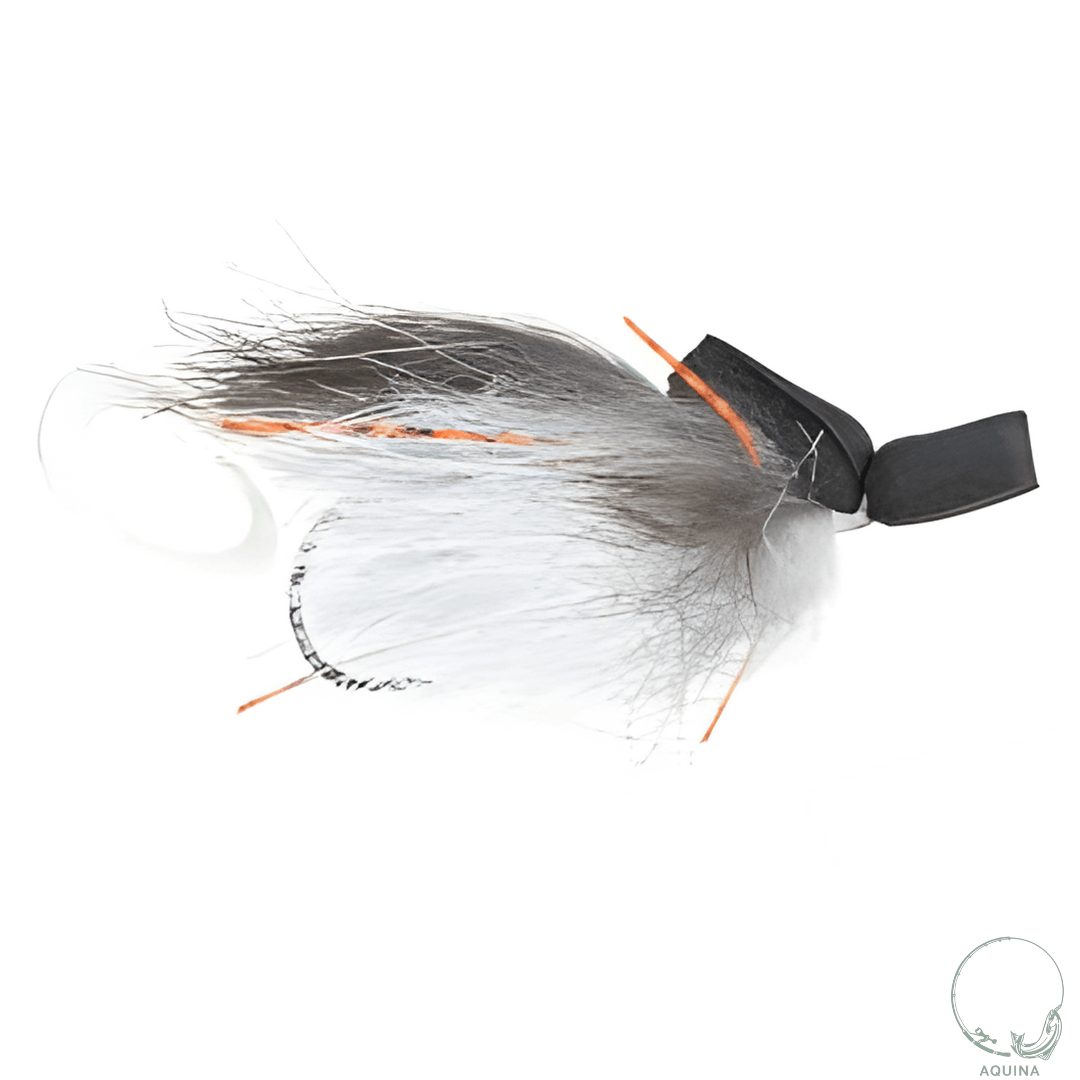
McCoy’s Mouse is a traditional surface mouse pattern valued for its clean proportions and dependable surface behavior. Built to suggest a naturally swimming rodent rather than an exaggerated disturbance, this fly emphasizes silhouette, steady movement, and subtle surface pressure—qualities that make it especially effective on educated trout.
Key Features
- Balanced body profile for stable surface tracking
- Soft hair construction that absorbs water naturally
- Tapered tail creating lifelike trailing motion
- Defined ears for a clear, recognizable silhouette
- Simple, durable tie maintaining shape after repeated use
Ideal Conditions
McCoy’s Mouse performs best during dusk, night, and early morning hours on medium to large rivers. It excels along grassy banks, slow seams, and shallow edges where rodents commonly enter the water and drift with the current.
Best Season
Late summer through early fall is the prime window, when nocturnal surface feeding becomes consistent. The pattern remains productive whenever warm evening temperatures encourage surface hunting.
Recommended Size
Commonly tied on size #2 or #4 streamer hooks, providing a realistic footprint while retaining good casting control and accuracy.
Rigging & Presentation
A 4–5 foot leader of 15–20 lb monofilament offers the right balance of abrasion resistance and turnover. Fish the fly on a natural downstream drift with occasional gentle twitches, or allow it to swing slowly across the current near structure.
Why McCoy’s Mouse Works
Its restrained design and natural surface posture closely resemble a real swimming mouse. By riding low and moving steadily, McCoy’s Mouse delivers convincing surface cues that prompt confident, deliberate strikes from large trout under low-light conditions.
14. Lemming Mouse

Characterized by its articulated body and realistic wiggling action, the Lemming Mouse creates lifelike movement that predatory fish find irresistible. This meticulously crafted pattern has gained popularity among anglers pursuing trophy fish.
Key Features
- Articulated body design
- Deer hair and rabbit fur
- Realistic swimming motion
- Strong surface silhouette
- Buoyant construction
Ideal Conditions
The Lemming Mouse excels in both moving and still waters where predatory fish hunt large meals. Currently, this pattern performs exceptionally well during low light conditions when fish actively seek protein-rich targets. The combination of water-pushing profile and lifelike swimming action makes it effective even in streams where sockeye spawn and trout gather.
Best Season
Late spring through summer represents prime time for fishing the Lemming Mouse. In this case, evening and night fishing sessions yield the most spectacular results. Above all, the pattern remains effective throughout seasons when mice or lemmings might naturally enter waterways.
Recommended Size
Available in standard sizes that balance castability with fish-attracting profile.
Rigging & Presentation
For optimal results, fish with a floating line and short, heavy leader. Cast across current, then allow the pattern to swing naturally while adding occasional twitches to enhance the wiggling action. At the same time, be patient upon strike—let the fish fully commit before setting.
Why Lemming Mouse Works
The articulated construction creates that signature wiggling motion perfectly mimicking a struggling rodent. As a result, the pattern triggers aggressive topwater strikes from predators seeking substantial meals. Whereas other mouse patterns may only suggest rodents, the Lemming Mouse's realistic swimming action convincingly imitates natural prey movement.
15.Tube Mouse
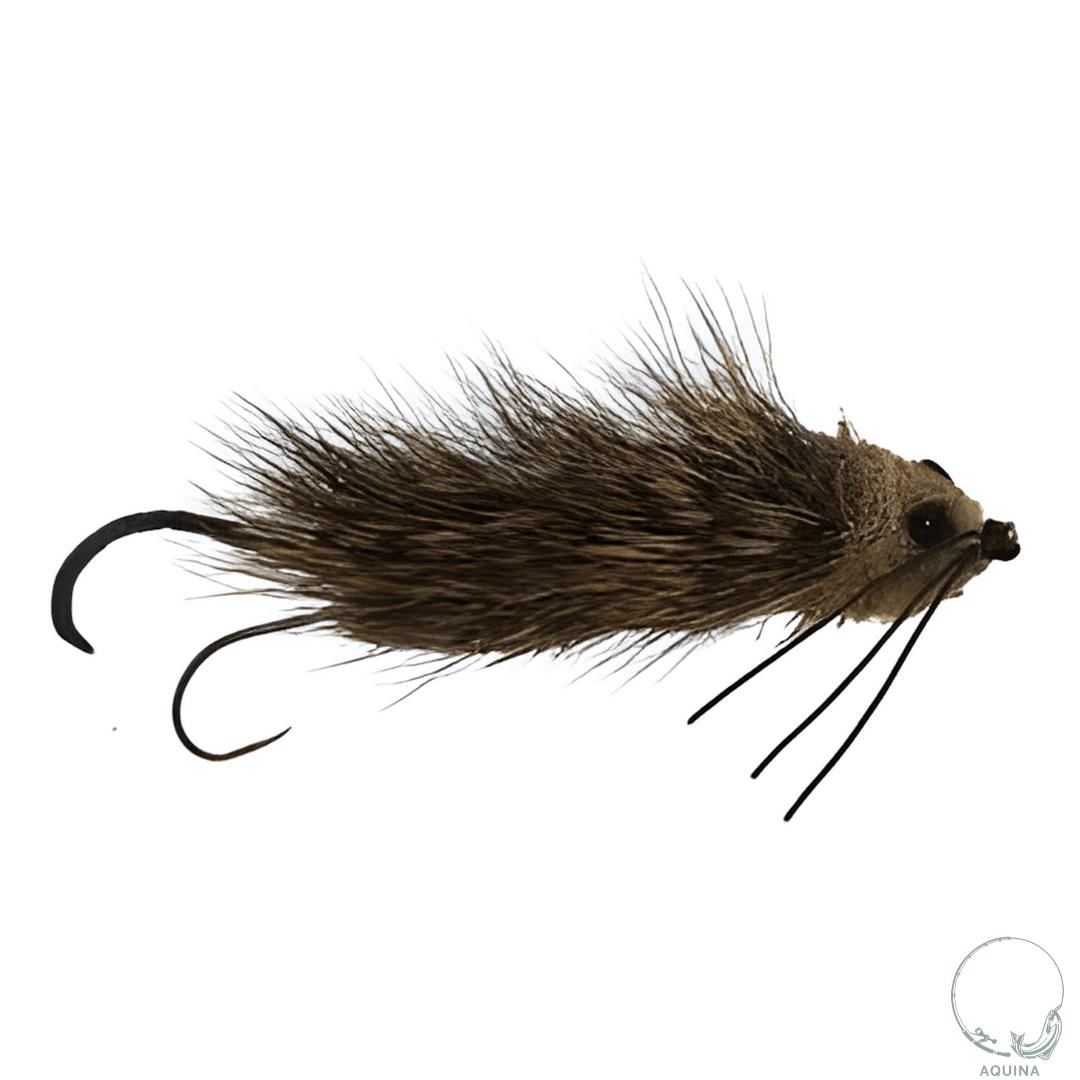
A revolutionary adaptation in mouse pattern flies, the Tube Mouse places traditional patterns on plastic tubes rather than hooks. This innovative design creates distinct advantages for anglers targeting trophy trout across diverse waters.
Key Features
- Built on plastic tubing
- Accommodates multiple hook sizes
- Super-light casting properties
- Impossible to drown
- Improved hookup percentages
Ideal Conditions
The Tube Mouse performs admirably across various water types, predominantly excelling in clear water where fish have become more selective. Anglers find this pattern extraordinarily effective when fished in rivers with rainbow trout, leopard trout, and even Arctic char. Unlike traditional hook-tied mice, these patterns cast easily on medium-light gear, expanding their utility in situations requiring longer casts.
Best Season
Summer through early fall offers prime fishing opportunities, yet the pattern remains effective whenever larger fish hunt actively near surface.
Recommended Size
Usually tied on 3.2mm tubing, equivalent to a #1-1/0 hook size, offering versatility while maintaining castability.
Rigging & Presentation
Rigged with a variety of short-shank hooks that can be easily changed as needed. For presentation, cast downstream at a 45° angle near banks, then skate across current. Alternately, employ a lifting and dropping technique during moderate drift.
Why Tube Mouse Works
The tube construction enables anglers to use smaller hooks for better hooksets while maintaining the substantial profile that triggers predatory responses. Beyond standard patterns, tubes offer superior buoyancy with their unique hitch tube design. Ultimately, this construction allows for light casting properties while creating the substantial wake that trout find irresistible.
16. Squirrel Tail Mouse

The Squirrel Tail Mouse harnesses the unique properties of natural squirrel tail hair for creating deadly effective patterns that consistently trigger aggressive strikes from trout.
Key Features
- Natural barred material appearance
- Doesn't mat when wet
- Continuous pulsating water action
- Silky bucktail-like texture
- Alternating color bands
- Silver-white tipped ends
Ideal Conditions
The Squirrel Tail Mouse excels in faster moving water where its stiff hair properties create maximum disturbance. Evidently, this pattern becomes more effective as it becomes waterlogged. Throughout bright moon conditions, the silver-tipped tail creates additional visibility for night feeding trout.
Best Season
Summer through early fall yields optimal results when trout actively hunt substantial protein sources. In comparison to other patterns, the Squirrel Tail Mouse works effectively across multiple seasons wherever mice naturally occur.
Recommended Size
Commonly tied on medium hooks, creating approximately 12" total length including tail. This size provides ideal balance between castability and fish-attracting profile.
Rigging & Presentation
Fish similar to bass poppers with pull-pause-pull technique. Cast near structures, gradually retrieving while maintaining tension. Primarily, motion creates the strikes, so generate substantial disturbance.
Why Squirrel Tail Mouse Works
The material's greatest strength lies in maintaining continuous pulsating action underwater without matting when wet. Simultaneously, the natural banded coloration (tan-black-tan-black with silvery white tips) provides realistic appearance. This pattern requires faster retrieval speeds as the stiffer tail hair needs movement to activate its fish-attracting properties.
17. Satkowski’s Quasi Modo Mouse Fly

Satkowski’s Quasi Modo Mouse Fly is a purpose-built night pattern recognized for its unconventional proportions and aggressive surface footprint. Designed to ride low while pushing substantial water, this fly combines exaggerated features with controlled movement, making it a dependable choice when large trout are hunting confidently after dark.
Key Features
- Hunched, uneven body profile creating a strong silhouette
- Water-pushing head that displaces surface film
- Soft hair construction for natural absorption and movement
- Flexible tail adding trailing motion and vibration
- Durable build suited for repeated violent strikes
Ideal Conditions
This pattern excels during night fishing and deep low-light periods, particularly on larger rivers with broad runs and dark edges. It is especially effective along undercut banks, boulder-strewn margins, and shadowed seams where trout rely on vibration and outline to locate prey.
Best Season
Late summer through early fall represents peak performance, coinciding with increased nocturnal surface activity. It remains effective whenever warm water temperatures promote surface-oriented feeding behavior.
Recommended Size
Typically tied on size #2 or #4 heavy-wire streamer hooks, providing a commanding profile while maintaining reliable hook penetration.
Rigging & Presentation
Fish on a short, stout leader—3 to 5 feet of 15–20 lb monofilament. Present with a slow, steady crawl that allows the fly to push water consistently. Brief pauses or subtle twitches can suggest struggling movement and often provoke explosive takes.
Why Quasi Modo Mouse Fly Works
Its irregular shape and pronounced surface disturbance break predictable patterns that fish may ignore. The combination of silhouette, vibration, and water displacement triggers instinctive, high-commitment strikes from large trout patrolling the surface at night.
18. Mandy’s Mouse

Mandy’s Mouse is a refined yet highly effective mouse pattern recognized for its balanced profile and natural surface behavior. Designed to suggest a swimming rodent rather than an exaggerated disturbance, this pattern excels when predators key on realism, movement, and subtle surface cues during low-light periods.
Key Features
- Moderately buoyant body for controlled surface tracking
- Soft hair construction for natural water absorption
- Slender, flexible tail producing lifelike trailing motion
- Defined ears contributing to a clear silhouette
- Clean, durable tie that maintains shape after repeated strikes
Ideal Conditions
Mandy’s Mouse performs exceptionally well during dusk, night, and early dawn, particularly on medium to large rivers with steady flow. It shines along grassy banks, shallow edges, and soft seams where rodents frequently enter the water and drift naturally with the current.
Best Season
Late summer through fall represents peak effectiveness, especially when nocturnal feeding becomes consistent. The pattern remains productive whenever warm evening temperatures encourage surface-oriented hunting.
Recommended Size
Commonly tied on size #2 or #4 streamer hooks, offering a realistic footprint while maintaining ease of casting and precise placement.
Rigging & Presentation
A 4–5 foot leader of 15–20 lb monofilament provides the ideal balance of control and abrasion resistance. Present with a natural downstream drift, adding gentle twitches to imitate paddling. The fly also fishes well on slow swings or subtle wakes near structure.
Why Mandy’s Mouse Works
Its restrained profile and authentic movement closely match the appearance of a real swimming mouse. By absorbing water and riding low, Mandy’s Mouse produces convincing surface signals that trigger confident, deliberate strikes from large, surface-feeding trout.
19. Mc MouseFace

The Mc MouseFace is a distinctive surface mouse pattern defined by its expressive head profile and pronounced facial silhouette. Designed to push water while maintaining a recognizable rodent outline, this pattern has earned a reputation for provoking aggressive surface responses during low-light and night fishing sessions.
Key Features
- Sculpted head with defined “mouse face” profile
- Buoyant body construction for reliable surface tracking
- Prominent ears enhancing silhouette visibility
- Flexible tail providing trailing motion
- Durable tie built to withstand repeated surface strikes
Ideal Conditions
McMouse Face Mouse excels after sunset and during pre-dawn hours, particularly on rivers with cut banks, slow glides, and dark edges. It is especially effective where trout hunt by outline and vibration rather than detail, such as along shaded margins and overhanging vegetation.
Best Season
Late summer through early autumn remains the prime period, aligning with increased nocturnal surface feeding. The pattern can also produce during warm spring and early summer nights when rodents are active near water.
Recommended Size
Most commonly tied on size #2 or #4 streamer hooks, creating a bold yet controllable surface presence that balances visibility and castability.
Rigging & Presentation
A short, stout leader—3 to 5 feet of 15–20 lb monofilament—offers maximum control and durability. Fish the fly with a steady crawl across the surface, interspersed with brief pauses. Downstream swings and gentle wakes along structure are equally effective.
Why Mc MouseFace Works
The exaggerated head and facial profile generate strong visual and vibrational cues. Combined with consistent surface displacement and a clear silhouette, Mc MouseFace triggers instinctive, high-commitment strikes from large predators patrolling the surface under cover of darkness.
20. Miura’s Mouse

Miura’s Mouse is a meticulously crafted surface mouse pattern known for its sleek profile and realistic movement. Designed to combine subtle water displacement with a lifelike silhouette, this pattern excels when predators are keyed on natural-looking prey, particularly during low-light conditions or nighttime fishing.
Key Features
- Streamlined body for smooth surface tracking
- Soft, water-absorbing hair for natural paddling action
- Long, flexible tail that trails convincingly
- Distinct ears enhancing the silhouette in dim light
- Durable construction that withstands repeated strikes
Ideal Conditions
Miura’s Mouse is most effective during dusk, night, and early dawn, especially on medium to large rivers with steady flow. It excels near overhanging banks, grassy margins, and slack-water seams where mice naturally fall into currents.
Best Season
Late summer through early autumn is the prime period, coinciding with nocturnal surface feeding activity. The pattern also remains effective in warmer spring and early summer nights.
Recommended Size
Typically tied on size #2 or #4 streamer hooks, balancing visibility with turnover and casting control.
Rigging & Presentation
A 4–5 foot leader of 15–20 lb monofilament provides optimal control and durability. Present with a gentle downstream drift, occasionally adding subtle twitches to mimic paddling. Slow swings along structure or minor wakes near margins are also effective.
Why Miura’s Mouse Works
Its natural profile, lifelike movement, and subtle surface displacement closely imitate a real mouse swimming or struggling on the water. The combination of visual silhouette and motion triggers decisive, instinctive strikes from trout hunting along the surface.
21. Weedless Mouse

The Weedless Mouse is a purpose-built surface mouse pattern engineered for fishing heavy cover and vegetation without snagging. Its streamlined, low-profile design allows it to glide across lily pads, weed beds, and submerged grass while maintaining an enticing silhouette that triggers aggressive strikes.
Key Features
- Low-profile, buoyant body that rides above weeds
- Weed-guarded hook minimizing snags
- Flexible tail for natural trailing motion
- Prominent ears for silhouette recognition
- Durable construction suited for repeated strikes
Ideal Conditions
This pattern excels in heavily vegetated rivers, ponds, and lakes where standard mouse patterns might snag. It performs best along lily pads, grassy margins, and shallow edges where trout and other predators hunt in tight cover.
Best Season
Late summer through early fall is the prime period when surface-feeding activity peaks near vegetation. It remains effective anytime fish are targeting rodents and other small surface prey in thick cover.
Recommended Size
Commonly tied on size #2 or #4 streamer hooks, offering a balance between a strong silhouette and smooth weedless presentation.
Rigging & Presentation
Use a 4-foot leader of 15–20 lb monofilament or fluorocarbon for control and durability. Present the fly with a slow crawl across the surface, allowing it to float over weed tops naturally. Gentle twitches can simulate a struggling mouse, and short pauses encourage explosive strikes.
Why Weedless Mouse Works
The Weedless Mouse combines stealth and action, allowing anglers to fish heavy cover without spooking predators. Its water displacement, clear silhouette, and subtle movement provoke instinctive strikes while keeping the fly from hanging up in vegetation.
The Mouse Fly Patterns Comparison Table
| Pattern Name | Key Features | Ideal Conditions | Best Season | Size | Why It Works |
| Morrish Mouse |
• Simple 3-material design • Black foam back • Spun deer hair body • Rabbit strip tail |
Banks, fallen logs, alders | Late June - July | #2 or #4 | Low-riding, sputtering action triggers surface strikes |
| Mr. Hankey |
• Upturned stinger hook • Rabbit fur body • Foam back • Rubber legs |
High banks, current areas | Summer months | #2 and #4 | Combines floating and sinking action for versatile presentation |
| Black Heifer Groomer |
• Articulated design • Unweighted body • Marabou construction • Mallard flank wing |
Shallow water, bright conditions | Summer | 4 and 6 | Fluttering underwater action mimics struggling prey |
| Sex Dungeon Mouse |
• Articulated design • Deer hair head • Marabou tail • Rubber legs |
Near structure, murky water | Year-round | 2-6 | Neutrally buoyant, jointed action triggers natural strikes |
| Deer Hair Mouse |
• Dense deer hair body • Rabbit strip tail • Flat bottom • Realistic eyes |
Low-light, structure areas | Summer | #4 (#2-10) | Realistic profile with pulsating tail provokes feeding response |
| Mini Mouse |
• Spun deer hair • Realistic tail • Eyes and whiskers • Weed guard |
Shallow water, log jams | May-October | Size 2 | Subtle surface dimples entice selective fish |
| Squirrel Tail Mouse |
• Dense squirrel tail body • Foam back • Rubber legs • Realistic eyes |
Shallow water, near banks | Summer | #2-#4 | Soft trailing tail and lifelike profile encourage strikes |
| Lemming Mouse |
• Curved foam body • Spun fur tail • Flexible legs • Pronounced ears |
Streams, riffles | Summer | #2-#4 | Compact silhouette with lifelike paddling action |
| Gurgler Mouse |
• Foam popping lip • Floats well • Various colors • Simple design |
Smooth water, ponds | Summer evenings | #6+ | Creates surface commotion that attracts attention |
| Dahlberg Diver Mouse |
• Weighted head • Deer hair body • Tapered tail • Soft legs |
Deep pools, slow runs | Summer-Fall | #2-#4 | Slight sinking action produces lifelike diving motion |
| Hemorrhoidal Mouse |
• Rounded foam body • Large ears • Soft tail • Rubber legs |
Stillwater edges, logs | Summer | #2-#4 | Distinct silhouette and wobbling motion trigger strikes |
| Blair Mouse |
• Foam back • Spun deer hair • Rubber legs • Up-eye hook |
Moving water, backeddy areas | Summer evenings | #4-6 | Surface disturbance and subtle leg movement entice strikes |
| Dorado Mouse |
• Large buoyant body • Broad head for water displacement • Long flexible tail • Prominent ears • Reinforced construction |
Night/low-light rivers • Cut banks • Slack water |
Late summer - early autumn | #1-#2 heavy-wire hooks | Bold silhouette and water push trigger aggressive strikes |
| McCoy’s Mouse |
• Balanced body profile • Soft hair • Tapered tail • Defined ears • Durable tie |
Dusk, night • Medium to large rivers |
Late summer - early fall | #2 or #4 | Natural swimming mouse imitation triggers confident strikes |
| Tube Mouse |
• Plastic tube base • Multiple hook options • Light casting • Never drowns |
Clear water, selective fish | Summer-Fall | 3.2mm tube | Superior buoyancy and easy casting make it versatile |
| Satkowski’s Quasi Modo Mouse Fly |
• Hunched, uneven body profile • Water-pushing head • Soft hair • Flexible tail • Durable build |
Night fishing • Large rivers • Undercut banks |
Late summer - early fall | #2 or #4 heavy-wire hooks | Irregular shape and surface disturbance provoke instinctive strikes |
| Mandy’s Mouse |
• Moderately buoyant body • Soft hair • Slender tail • Defined ears • Durable tie |
Dusk, night • Medium to large rivers • Grassy margins |
Late summer - fall | #2 or #4 | Authentic movement and silhouette trigger strikes |
| McMouse Face Mouse |
• Sculpted head with “mouse face” profile • Buoyant body • Prominent ears • Flexible tail • Durable construction |
Night/dusk • Rivers with cut banks and dark edges |
Late summer - early autumn | #2 or #4 | Exaggerated head and surface disturbance provoke aggressive strikes |
| Miura’s Mouse |
• Streamlined body • Soft water-absorbing hair • Long flexible tail • Distinct ears • Durable tie |
Dusk, night • Medium to large rivers • Overhanging banks |
Late summer - early autumn | #2 or #4 | Subtle water displacement and lifelike movement trigger strikes |
| Weedless Mouse |
• Low-profile buoyant body • Weed-guarded hook • Flexible tail • Prominent ears • Durable tie |
Heavily vegetated rivers, ponds, lakes • Lily pads, grassy margins |
Late summer - early fall | #2 or #4 | Fish heavy cover without snagging; surface cues trigger strikes |
| Pike Mouse Popper |
• Large foam body • Upturned popping head • Rubber legs • Buoyant and durable |
Shallow weedy lakes and rivers • Pike hunting grounds |
Summer | #1-#2 | Creates explosive topwater commotion and triggers aggressive pike strikes |
Perfecting your mouse pattern technique offers unparalleled excitement in the fly fishing world. Beyond pattern selection, success often hinges on presentation and tactical decisions.
For optimal mouse fishing results:
- Fish dawn/dusk or nighttime
- Use heavy 20-30lb tippet
- Strip-set instead of trout-set
- Cast toward structure/banks
- Listen carefully for strikes
Mouse patterns work effectively far beyond Alaska—from Pennsylvania spring creeks to Rocky Mountain rivers. Remarkably, trout hit these patterns throughout summer, sometimes even with ice still on higher-elevation lakes.
In shallow riffles below pool tailouts, mouse patterns often outperform other flies. For maximum effectiveness, use short, heavy leaders (6-8 foot 0X) both for turning the fly over and quickly bringing fish to hand.
Patience proves crucial during hook-sets—trout frequently slash at mouse patterns without immediately eating them. After a missed strike, allow the pattern to dead-drift as the fish often returns to eat it seconds later.
The distinctive V-wake behind a properly fished mouse pattern creates that heart-stopping moment anglers live for. This visual excitement, combined with explosive strikes, makes mouse pattern fishing an addictive pursuit unlike any other fly fishing experience.
Conclusion
Mouse pattern flies undoubtedly represent one of the most exciting and effective approaches for targeting trophy trout. Throughout this comprehensive guide, we've examined 21 proven patterns that consistently trigger aggressive strikes from large trout. Each pattern offers unique advantages, whether creating surface disturbance, mimicking realistic swimming action, or presenting an irresistible profile.
Despite their differences, these patterns share common elements that make them successful. Most importantly, they trigger the predatory instinct in trout by representing substantial protein sources worth pursuing. Additionally, their ability to create surface disturbance through wakes and ripples proves critical to their effectiveness.
When fishing mouse patterns, remember that presentation significantly impacts success rates. Fishing during low-light conditions—dawn, dusk, or nighttime—generally yields optimal results. Likewise, casting tight against banks, near fallen logs, or along structure where actual rodents might enter water increases strike probability.
First-time mouse anglers should certainly start with patterns like the Morrish Mouse or McCoy's Mouse for their simplicity and consistent performance. Eventually, experimenting with articulated patterns such as the Sex Dungeon or Black Heifer Groomer might produce even larger fish.
Accordingly, mouse pattern fishing requires patience and proper technique. Rather than setting the hook immediately upon strike, allow fish to fully commit before responding. This approach significantly improves hookup percentages while preventing premature fly removal.
The explosive, visual strikes these patterns generate create unforgettable fishing experiences unlike anything else in fly fishing. Whether you're targeting browns in Montana or rainbows in Alaska, these mouse patterns deserve space in your fly box for those moments when trophy trout hunt substantial meals near the surface.
Key Takeaways
Master these essential mouse pattern strategies to trigger explosive strikes from trophy trout and transform your fly fishing success.
- Fish during low-light conditions - Dawn, dusk, and nighttime produce the most aggressive strikes from large trout hunting substantial protein sources.
- Use heavy tippet and strip-set hooks - 20-30lb tippet prevents break-offs while strip-setting (not trout-setting) ensures solid hookups on aggressive takes.
- Cast tight to structure and banks - Target fallen logs, undercut banks, and shorelines where real mice naturally enter water for maximum effectiveness.
- Start with proven patterns - Morrish Mouse and Foam Mouse offer simplicity and consistent performance for beginners before advancing to articulated designs.
- Be patient with hooksets - Allow trout to fully commit before setting the hook, as fish often slash initially then return to eat the pattern.
Mouse pattern fishing creates heart-stopping visual strikes unlike any other fly fishing technique. The explosive surface takes from trophy trout make this pursuit addictive for anglers seeking unforgettable experiences on the water.
Faqs About Mouse flies Patterns
What is the best time to fish with mouse patterns?
Mouse patterns are most effective during low-light conditions, particularly at dawn, dusk, and nighttime. The first few hours of daylight can be especially productive, as trout are still in their nocturnal feeding positions and more likely to strike at mouse imitations.
Which mouse pattern is recommended for beginners?
For those new to fishing with mouse patterns, the Morrish Mouse or Deer Hair Mouse are excellent choices. These patterns offer simplicity in design and consistent performance, making them ideal starting points before progressing to more complex articulated designs.
How should I present a mouse pattern for the best results?
Cast the mouse pattern close to structure such as banks, fallen logs, or undercut shores. Use a strip-set technique instead of a traditional trout-set when you feel a strike. Be patient and allow the trout to fully commit to the fly before setting the hook.
What type of leader should I use for mouse pattern fishing?
Use a short, heavy leader, typically 6-8 feet of 0X tippet. This helps turn over the larger fly and allows for quickly bringing fish to hand. Some anglers prefer even heavier 20-30 lb test tippet to prevent break-offs from aggressive strikes.
Are mouse patterns only effective in certain regions?
While mouse patterns are famously effective in Alaska, they can be productive in many different locations. From Pennsylvania spring creeks to Rocky Mountain rivers, trout will strike mouse patterns throughout the summer months, even in higher elevation lakes where ice may still be present.