
24 Best Tube Flies for Salmon and Steelhead
Tube flies have become one of the most effective patterns for salmon and steelhead fishing. Unlike traditional hook-mounted flies, tube flies are tied on small tubes that slide on the leader, allowing anglers to change hooks easily and extend the lifespan of each fly. This design improves hook-up rates while maintaining excellent movement and presentation in the water.
In this guide, we highlight 24 of the best tube flies for salmon and steelhead, including both classic and modern patterns that consistently produce results in different fishing conditions.
1. Willie Gunn Tube Fly

Born on Scotland's River Brora in the 1940s, the Willie Gunn stands as one of the most successful Atlantic salmon flies ever created. RAF flight lieutenant 'Dusty' Millar originated the pattern for Rob Wilson, who ran a fly shop in Brora. The fly earned its name when customer Willie Gunn purchased the pattern and landed six salmon on his first outing, followed by four more the next day.
Willie Gunn Key Features
- Classic color scheme: black, orange, and yellow
- Traditional materials: bucktail, floss, and tinsel
- Modern variations: Arctic fox, marabou, Nayat, and innovative flash materials
- Body options: black with gold rib, orange holographic mylar, or gold
- Wing style: mixed fibers for ethereal movement versus stacked temple dog style
Willie Gunn Ideal Conditions
The pattern excels in higher, slightly darker, or peaty water where visibility matters. Colored water during spate runoff provides ideal conditions. Yellow shows the most impact on salmon in cold water, making this color combination effective across varied clarity levels.
Willie Gunn Best Season
This pattern produces results from early spring through late autumn[63]. The gold-bodied variant performs particularly well in spring and late season. Anglers fish this tube fly year-round with consistent success.
Willie Gunn Recommended Size
Tube lengths between one inch and two inches suit most conditions, with wings extending up to twice the body length. Brass, copper, aluminum, and plastic tubes allow depth and current speed adjustments. Hook sizes range from 8 to 12, with smaller options for micro tubes down to 3mm.
Willie Gunn Rigging & Presentation
Fish the pattern slowly by casting downstream rather than at ninety degrees. Mending keeps the fly in front of salmon longer. Position hooks inside the wing since salmon typically strike from the side.
How Willie Gunn Works
The mixed fiber construction creates an ethereal illusion of life that surprises fish. Materials move in separate layers when swimming through currents. The color combination triggers aggressive responses across the entire season.
2. Sun Ray Shadow Tube Fly
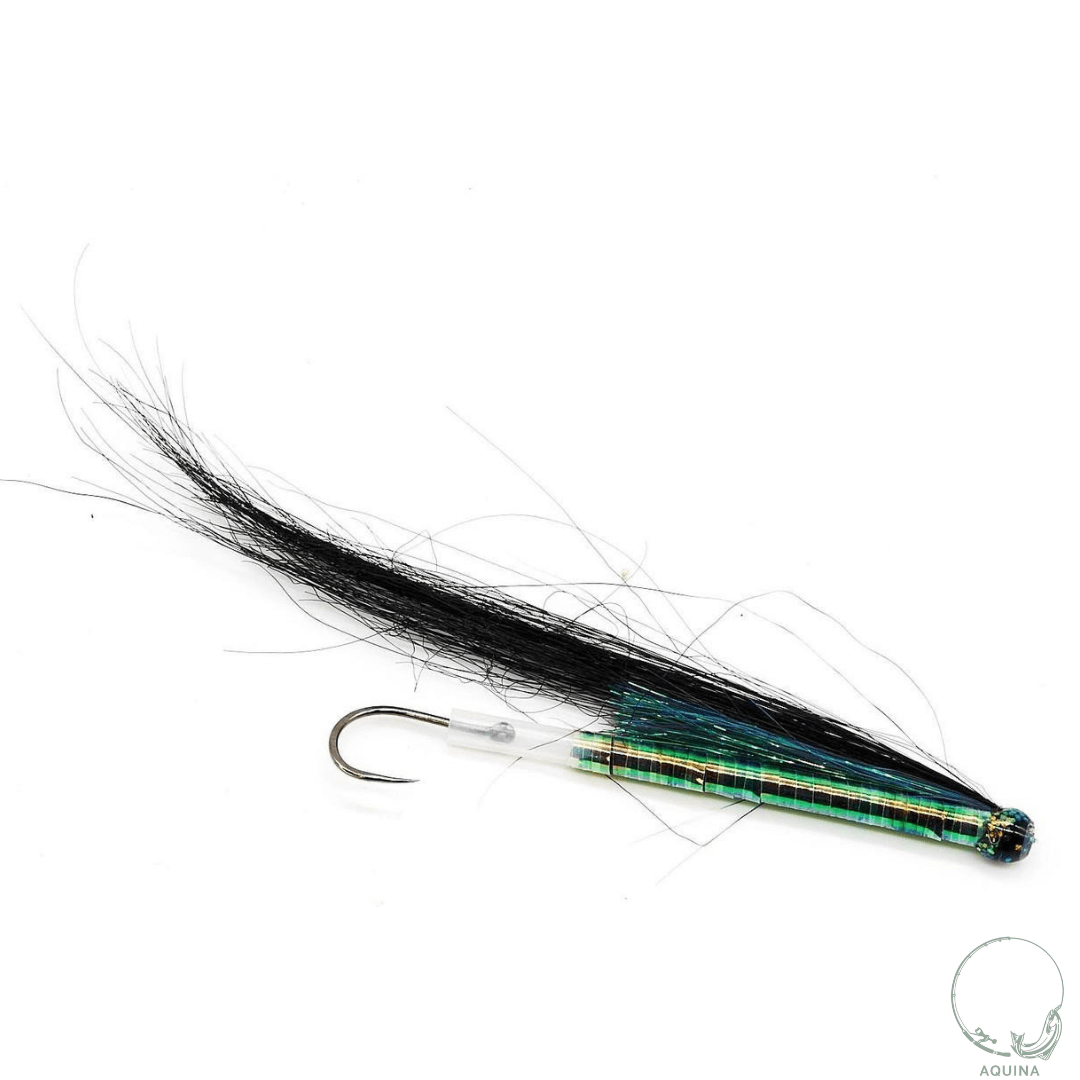
Raymond Brooks designed the Sun Ray Shadow on Norway's Laerdal River during the 1960s, creating what became one of salmon fishing's most minimalistic yet deadly patterns. Brooks attempted to patent the fly, aware of its efficiency after experiencing flies stolen directly off his rods. The design represents an evolution of the Collie Dog, stripped down to core elements that produce results.
Sun Ray Shadow Key Features
- Bare tube body with no dressing
- Black goat or Arctic fox wing (originally colobus monkey)
- Peacock herl topping for natural metallic sheen
- Stiff underwing (squirrel or bucktail) prevents fouling
- Variants include eyes, epoxy heads, colored bodies
Sun Ray Shadow Ideal Conditions
This pattern performs across almost all river levels and conditions. Fast water suits the technique particularly well, where fish chase faster-moving presentations. The fly provokes reactions when other patterns fail, working effectively in colored or peat-stained water. Accordingly, anglers find success in higher water events after runoff when turbidity increases.
Sun Ray Shadow Best Season
The pattern works throughout the entire season. Water temperature determines presentation speed, with warmer conditions later in the season encouraging aggressive chases. Early spring Chinook respond to subsurface presentations, while summer fish take surface-hitched versions.
Sun Ray Shadow Recommended Size
Tube lengths range from 1/2 inch to 2 inches for standard applications. Anglers fish sizes as small as 1/4 inch for day fishing with hitch presentations. Moreover, larger patterns extend to 8-10 inches on tubes for specific situations. Wings typically measure 5 inches or longer.
Sun Ray Shadow Rigging & Presentation
Cast square across current with rod downstream, actively pulling the fly back. Fish fast and high using 1.5 to 3 ips polyleaders. Hook placement sits midway through the fly for salmon strikes. Strip retrieval works effectively, or swing without stripping for seductive movement.
How Sun Ray Shadow Works
The simple design swims horizontally through currents with natural action. Minimal materials create a teardrop shape that moves seductively. Black wing silhouettes against lighter backgrounds, triggering cannibalistic responses from salmon, steelhead, and brown trout.
3. Intruder Tube Fly
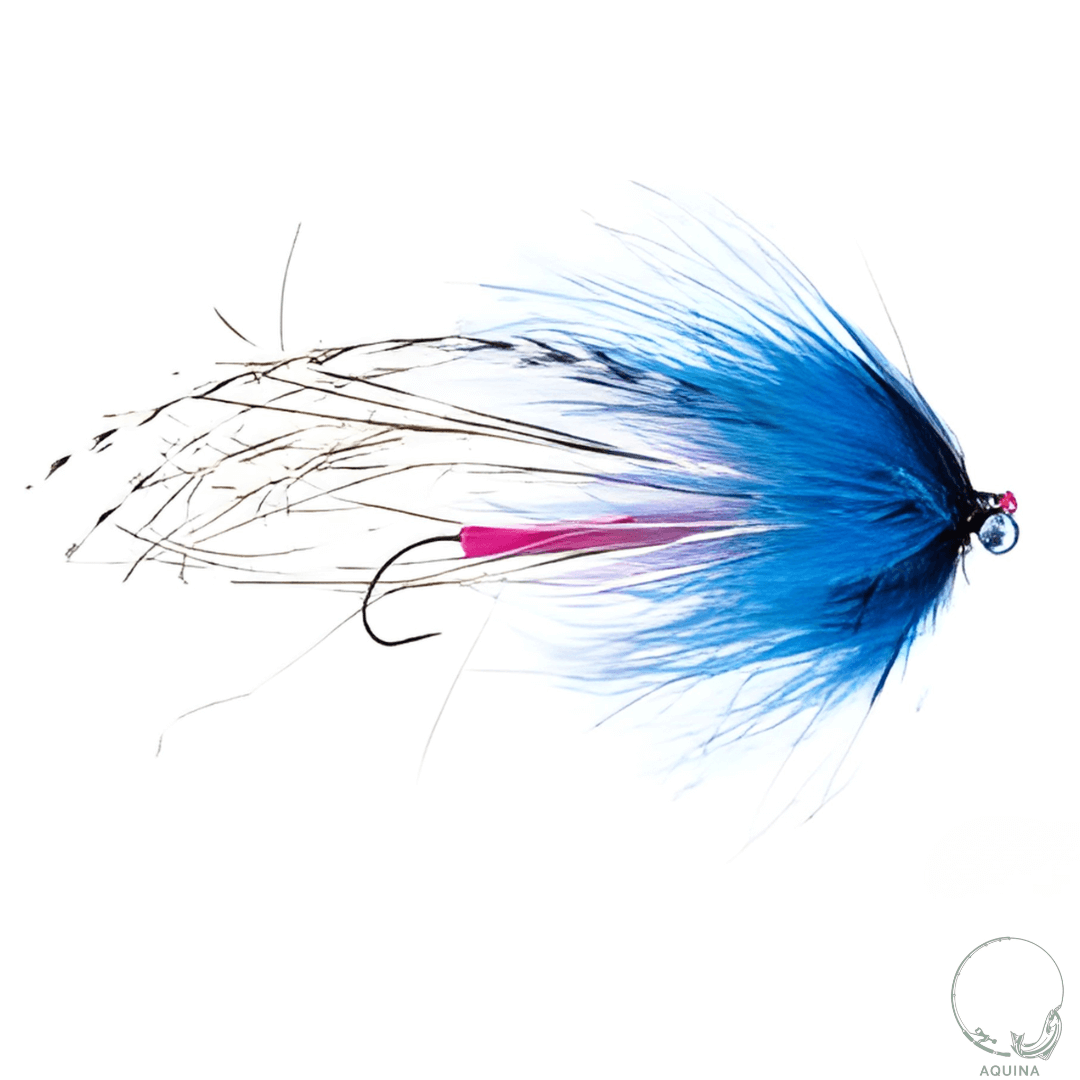
Pacific steelheader Ed Ward created the Intruder style in 1993, originally designed to attack king salmon by mimicking the large profile of a pulled plug. The fly proved its worth quickly as a steelhead pattern, spawning countless variations through discovery of new materials.
Intruder Key Features
- Large profile built with flowing materials over sparse body
- Two-station design: pronounced tail and thorax regions
- Materials: ostrich, rhea, saddles, burnt spey, bunny, Arctic fox
- Dumbbell eyes for weight and faster sink rates
- Stinger hook system separates from shank or tube
Intruder Ideal Conditions
Deep, slow pools flowing at walking pace suit this pattern best. Changes in depth and structure throughout run length produce optimal results. The sparse design sinks well while maintaining action in slow to moderate currents. High or off-colored water allows fish to easily pick out the fly's large profile and obvious movement.
Intruder Best Season
Fall represents prime time when spawning salmon and trout display heightened aggression. Winter steelhead in cold water respond to gaudy patterns dangling in front of their faces. Spring spawning season triggers territorial strikes from rainbow, cutthroat, and steelhead.
Intruder Recommended Size
Tube lengths range from 2 to 4.5 inches. Hook sizes between 2 and 6 work for most applications, with size 4 being most common. Owner SSW needlepoint hooks in sizes 1, 2, or 4 provide easy resharpening. Brass cones balance tube flies and control sink rates.
Intruder Rigging & Presentation
Cast down and across at 45 degrees, mend to allow sinking, then let the fly swim across until directly below. Make upstream mend before line tightens to keep fly in the zone. Junction tubing allows hook changes like traditional tube flies.
How Intruder Works
The two-station design creates a teardrop shape matching baitfish, squid, and shrimp profiles. Propped materials flare against current while maintaining profile. Large silhouette with limited materials triggers territorial responses, intruding on fish's personal space.
4. Temple Dog Tube Fly
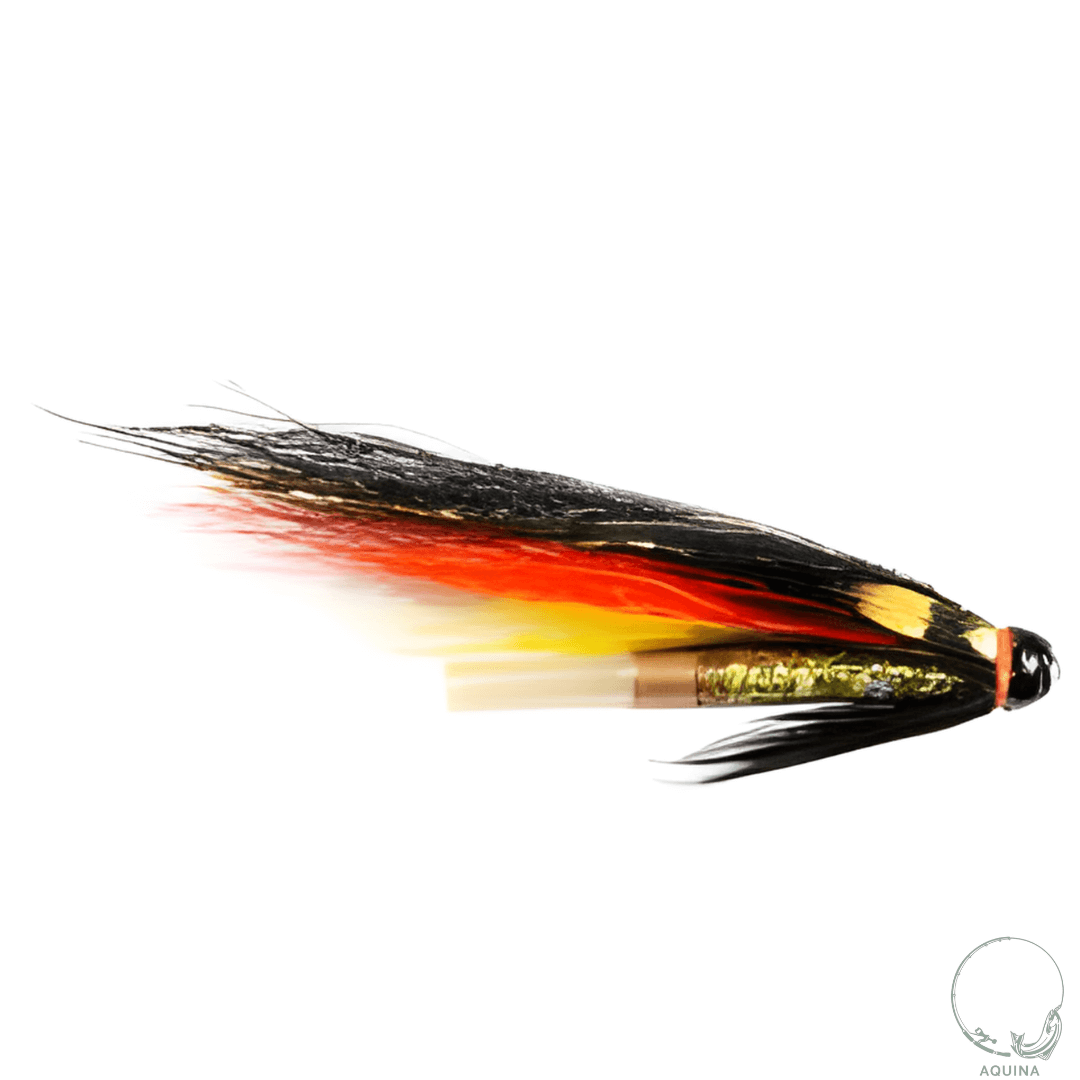
Swedish fly tyer Hakan Norling developed the Temple Dog series during the 1990s, creating tube fly patterns that revolutionized salmon fishing by proving anglers could consistently catch fresh spring fish in conditions previously requiring spinning gear. The style originally used temple dog hair from sled dogs, though Arctic fox and black bear now serve as readily available substitutes.
Temple Dog Key Features
- Long flowing wing with tear-drop shape for lifelike movement
- Arctic fox tail hair or temple dog fox creates liquid-like mobility when wet
- Rigid plastic or metal tubes 20-50mm long
- Layered wing construction tapering from thick to thin
- Body variations: gold holographic tinsel, black dubbing, seal fur
Temple Dog Ideal Conditions
Cold water below 10°C suits this pattern. Big rivers with strong current produce optimal results. High water and early season conditions match the fly's substantial profile. In similar fashion, stained or colored water allows the wing's movement to trigger responses.
Temple Dog Best Season
Early season and late autumn represent prime time. Spring fishing in Scandinavian and Russian rivers relies heavily on larger versions.
Temple Dog Recommended Size
Tube lengths range from 1-2 inches for standard fishing, with wings extending 2-3 inches. Sizes span from tiny 1-2cm tubes for summer to 8-12cm patterns for high spring water.
Temple Dog Rigging & Presentation
Swing presentation works best, casting down-and-across and letting the fly move under tension. Line selection matches water depth and temperature. Upstream mends slow the swing for confident takes.
How Temple Dog Works
The long wing undulates with current, imitating small fish or large shrimp. Layered soft materials create substantial body size and action. Light penetrates the translucent wing while maintaining full baitfish silhouette.
5. Marabou Tube Fly
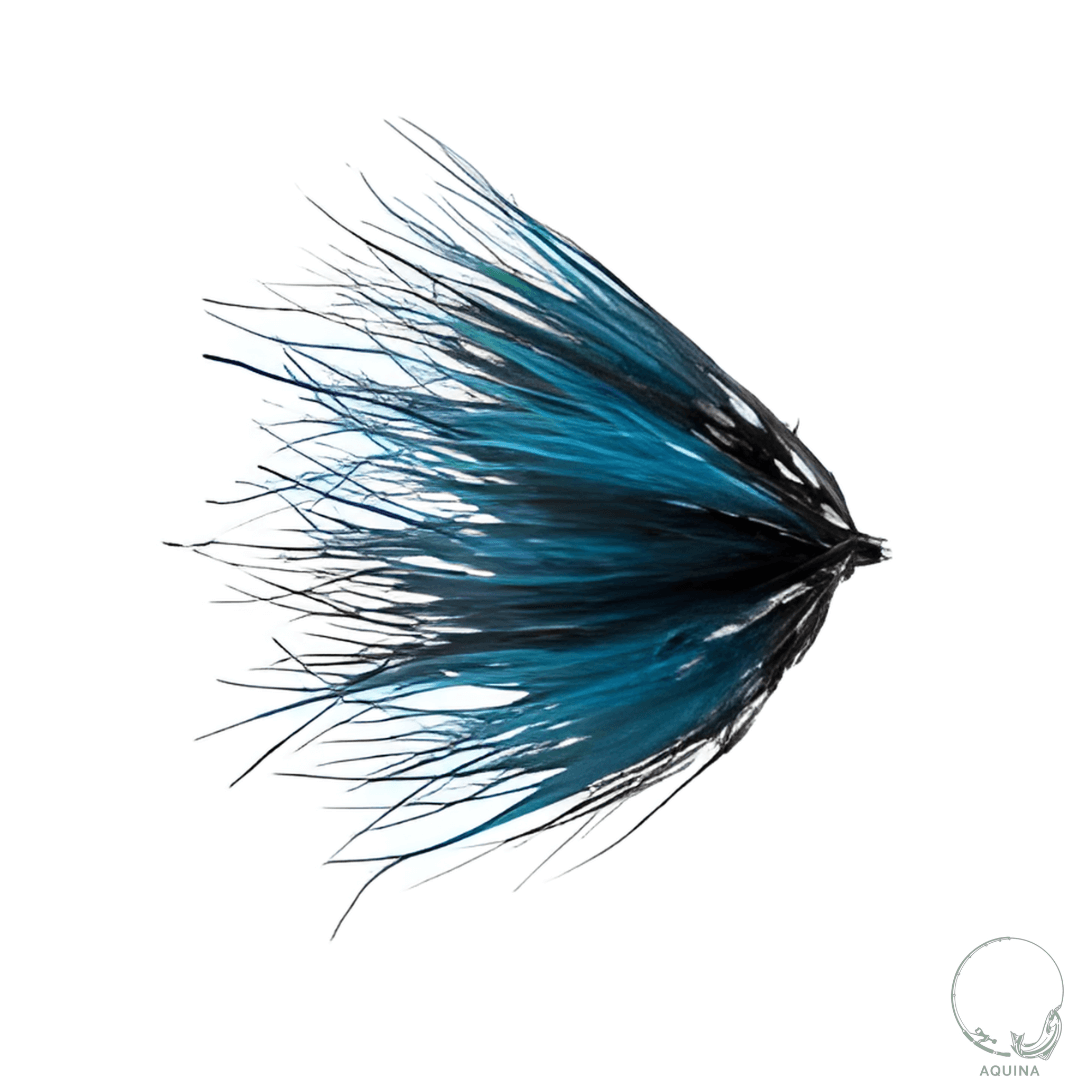
Marabou tube flies rank among the simplest patterns to tie while delivering outstanding results for steelhead and salmon. These flies utilize soft, downy feathers from domestic turkeys, creating lifelike movement that attracts fish across varied conditions.
Marabou Key Features
- Blood quill marabou with thin, pliable center stem for wrapping
- Wooly Bugger marabou with shorter barbs, longer barbules
- Select marabou featuring long quills, uniform tips
- Maximum eight wraps prevents matting when wet
- Unweighted design for soft water fishing
Marabou Ideal Conditions
This pattern excels in midday fishing when sun sits high and fish hold deep. Guides rely on these patterns for swinging steelhead across Great Lakes and Pacific Coast waters. The large profile attracts attention in turbid conditions while maintaining action in slow to moderate currents.
Marabou Best Season
Winter months favor black and blue combinations. Summer and winter steelhead both respond to color variations. Consequently, anglers fish marabou tubes year-round with proven success.
Marabou Recommended Size
Tube lengths measure 3 inches for standard applications. Wings extend beyond body proportionally based on marabou type selected.
Marabou Rigging & Presentation
Hook rigging uses loop systems with knots pulled into tube rear. Adjust loop size to position hooks precisely behind fly body.
How Marabou Works
Soft barbules create tremendous action underwater. Materials breathe and pulse with current rather than collapsing. Black over purple, black over chartreuse, and all-pink variations trigger instinctive strikes.
6. Frances Copper Tube Fly
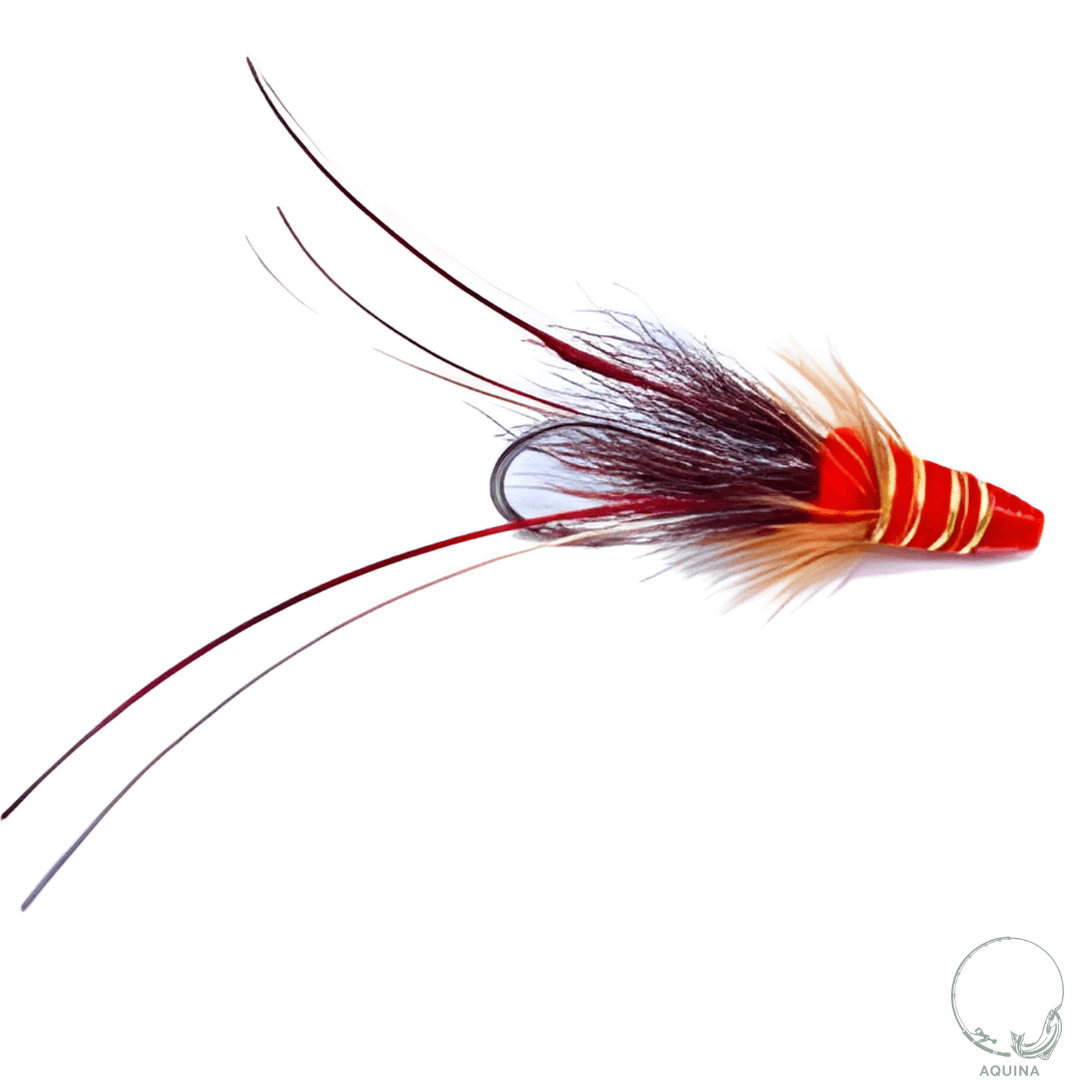
British fly tyer Peter Deane created the Frances in 1968 as a commission for client David Blythe's Iceland fishing journey. Deane's assistant Frances Hydon tied the pattern, lending her name to what became one of Iceland's most trusted salmon flies. This shrimp-prawn imitation earned legendary status across European rivers.
Frances Copper Tube Key Features
- Carrot-shaped body with stiff antennae for water movement
- Copper tube construction provides necessary weight
- Color variations: red, black, magenta, blue, pink, amber
- Compact profile with hackle stem feelers
- Tube lengths: 1/4" to 2 inches[373]
Frances Copper Tube Ideal Conditions
Water up to six feet deep suits this pattern best. Steady walking-pace current produces optimal results. The fly works effectively in eddies and below waterfalls. Red versions handle both clear water and water with color tinge, while black excels specifically in clear, low conditions.
Frances Copper Tube Best Season
Autumn represents prime time when red and orange variants trigger aggressive pre-spawn strikes. The pattern produces results throughout the entire season.
Frances Copper Tube Recommended Size
Standard sizes range from 1/2 inch to 1 inch copper tubes. Micro tubes with copper and tungsten cones handle low clear water, while larger tubes address medium and heavy flows.
Frances Copper Tube Rigging & Presentation
Fish across using short, twitching pulls. Dead drifting or nymphing techniques work effectively. Hook selection matters since the bulky rear end can mask small hook gapes.
How Frances Copper Tube Works
The carrot shape and stiff antennae create vibration and pulse underwater. Materials imitate shrimp behavior, particularly effective on fresh fish entering river systems.
7. Black and Silver Monkey Tube
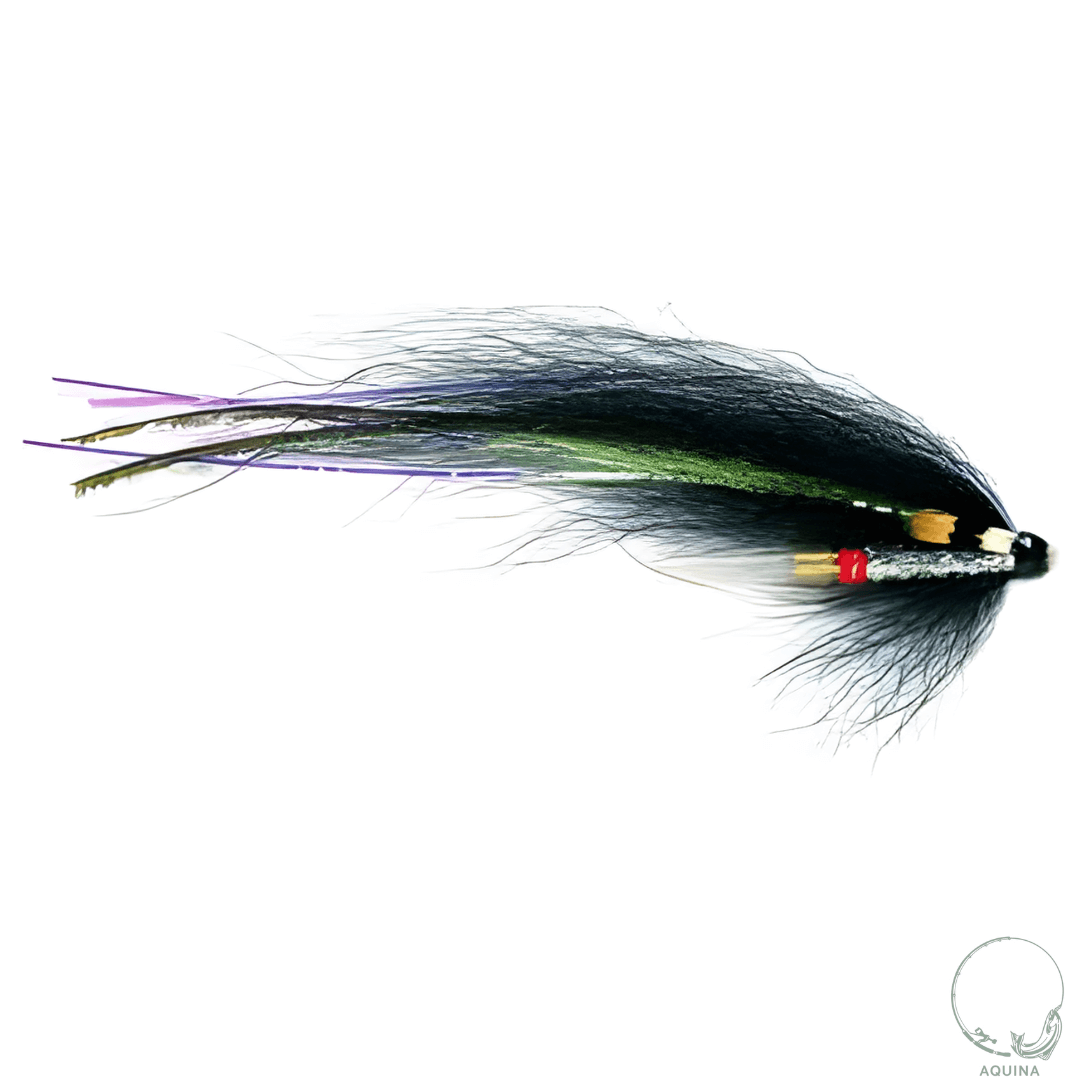
The Monkey fly burst onto the salmon fishing scene building on the success of long-tailed patterns like the Collie Dog and Sunray Shadow. This aggressive pattern earned its own category based on deadly effectiveness.
Black and Silver Monkey Key Features
- Silver body with black wing materials
- Arctic fox, temple dog, or goat hair for flowing profile
- Conehead construction for subsurface fishing
- Available sizes: 25mm and 38mm tubes
- Price range: $3.70-$3.95
Black and Silver Monkey Ideal Conditions
Fresh salmon entering rivers respond best to this pattern. The conehead takes plastic tubes subsurface, making it suited for conditions requiring depth control. Anglers fish these tubes differently from conventional patterns by making them swing faster without mending, or even mending towards their own bank.
Black and Silver Monkey Best Season
Spring and autumn represent prime time. Early season salmon fishermen rely on Monkey tubes as top producers.
Black and Silver Monkey Recommended Size
Standard aluminum tubes measure 1 inch. Plastic tube variants come in 25mm (total length 12cm, weight 0.5g) and 38mm (total length 15cm, weight 0.7g).
Black and Silver Monkey Rigging & Presentation
Power-packed fresh salmon love chasing flies moving at pace. Cast across and actively pull the fly back faster than traditional swings. Avoid upstream mending that slows presentation.
How Black and Silver Monkey Works
The long-winged profile triggers chase responses from energetic fish. Speed presentation capitalizes on aggressive behavior patterns in fresh-run salmon.
8. Posh Tosh Tube Fly
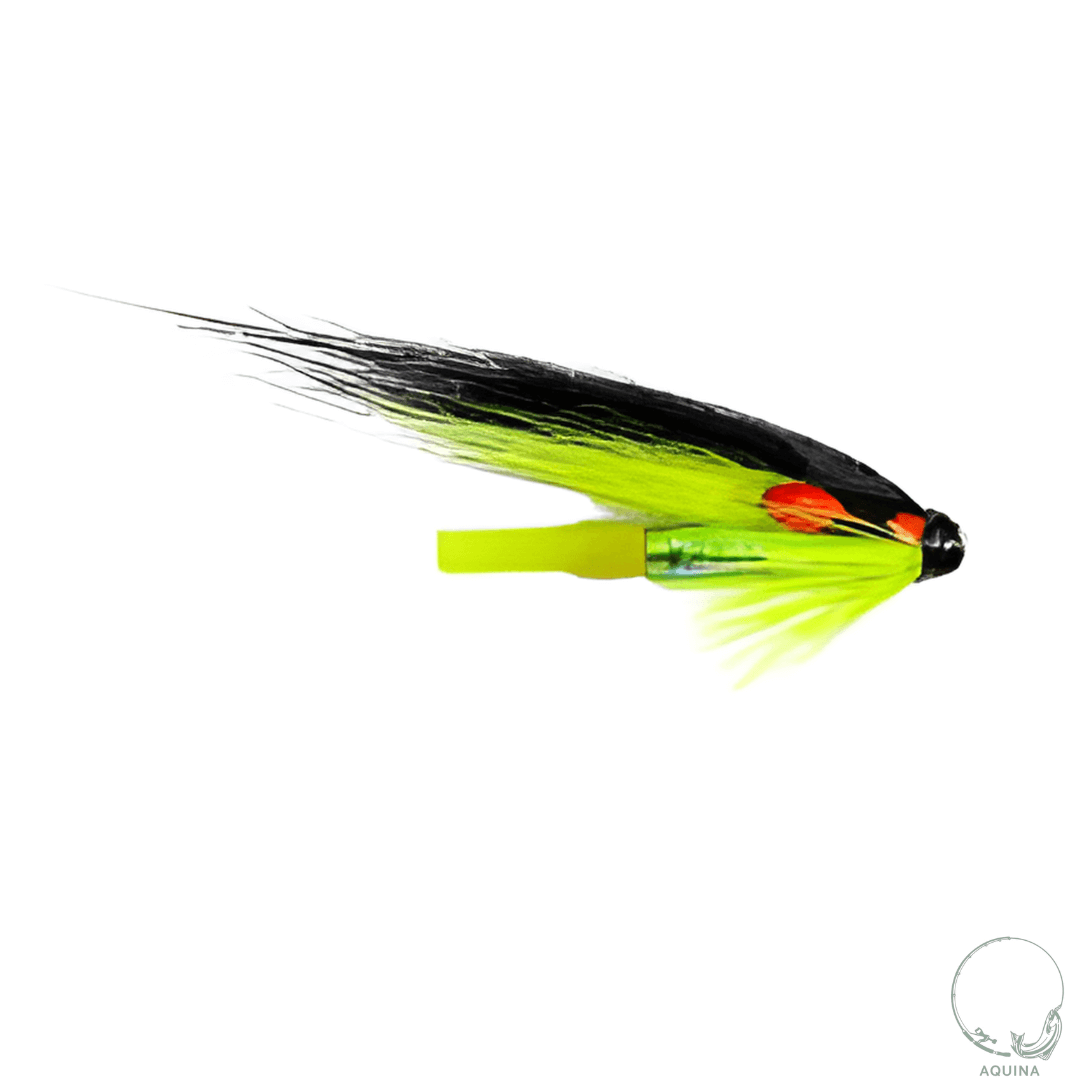
Iain Wilson from Borders Gunroom in St Boswells developed the Posh Tosh specifically for River Tweed, creating a flashier version of the original Tosh that quickly became a firm favorite on Tweed and other Scottish salmon rivers. The "Posh" refers to UV qualities of materials, making the fly highly visible underwater.
Posh Tosh Key Features
- Black and yellow vibrant pattern with UV mirage body
- Fluorescent yellow fox tail underwing with black fox overwing
- Conehead versions on plastic or aluminum tubes
- Wire rib over black thread base
Posh Tosh Ideal Conditions
This pattern handles clearing, peaty, silty, or clear water conditions. The fly works best when water runs cool or high, yet also proves effective in bright summer conditions when sized down.
Posh Tosh Best Season
Early season represents prime time for this salmon tube fly. Spring and autumn fishing benefit from the conehead's ability to reach deeper water.
Posh Tosh Recommended Size
Standard tubes measure 25mm (1 inch), with sizes ranging from 1/4 inch to 2 inches on copper tubes.
Posh Tosh Rigging & Presentation
Conehead construction gets the fly down quickly in faster runs. Fish with confidence across varied presentations.
How Posh Tosh Works
UV properties make the body jump out visually. The waving black and yellow wing creates movement that triggers salmon responses in front of holding fish.
9. Prawn Truder Tube Fly

Stu's Prawn Truder combines prawn imitation with intruder-style construction, creating a two-stage tube fly pattern that performs across Pacific Northwest rivers.
Prawn Truder Key Features
- Two-stage collar design with distinct rear and front sections
- OPST Intruder Shank 45mm base
- Hot pink and shell pink trilobal salmon dubbing
- Orange spey hackle, barred plume, guinea feathers
- Krystal flash and arctic fox fur accents
Prawn Truder Ideal Conditions
British Columbia rivers and Pacific Northwest waters suit this pattern. The two-stage construction maintains profile in varied current speeds while the prawn coloration triggers responses in steelhead holding water.
Prawn Truder Best Season
Winter and spring steelhead runs represent prime time. The bright orange and pink materials stand out during periods when fish actively move through systems.
Prawn Truder Recommended Size
The 45mm shank provides standard length. Hook sizes between 2 and 4 match most steelhead applications.
Prawn Truder Rigging & Presentation
Swing presentations work best. Cast across and allow the fly to sink before beginning the swing through holding water.
How Prawn Truder Works
The two-collar system creates movement at different rates. Front and rear materials pulse independently, imitating crustacean swimming behavior that steelhead recognize as prey.
10. Dragon Gurgler Tube Fly

Bob Quigley originally devised the Dragon Gurgler wake fly, which Fishmadman later adapted to riffling hitch tube systems for steelhead anglers from British Columbia. This classic foam and spun hair tube skater rides extremely high on the surface, eliminating the technical demands of traditional hitch knots.
Dragon Gurgler Key Features
- Foam and spun deer hair construction for buoyancy
- Red fox tail, moose body fiber legs, peacock herl topping
- 2-millimeter tan foam overbody with white calftail post
- Black 6/0 thread base on riffling hitch tube
- Recommended #6 trailer style hook
Dragon Gurgler Ideal Conditions
Surface presentations work when fish actively chase topwater flies. Pacific salmon, including 14-pound hook-nosed northern coho from the Dean River in BC, attack these wake patterns aggressively.
Dragon Gurgler Best Season
Summer and fall periods suit wake fly fishing when water temperatures encourage surface activity.
Dragon Gurgler Recommended Size
Standard tubes measure 50-45mm, equivalent to patterns tied on #2-4 hooks. Hook-up positions prevent missed strikes when skating.
Dragon Gurgler Rigging & Presentation
The riffling hitch tube allows leaders to thread through the fly's hole before tying hooks. Up-eye or egg hooks enable upside-down fishing for different hooking angles.
How Dragon Gurgler Works
Foam construction creates surface disturbance while deer hair adds profile. The pattern skates and swings across currents, producing visible wakes that trigger explosive strikes.
11. Turbo Cone Tube Fly
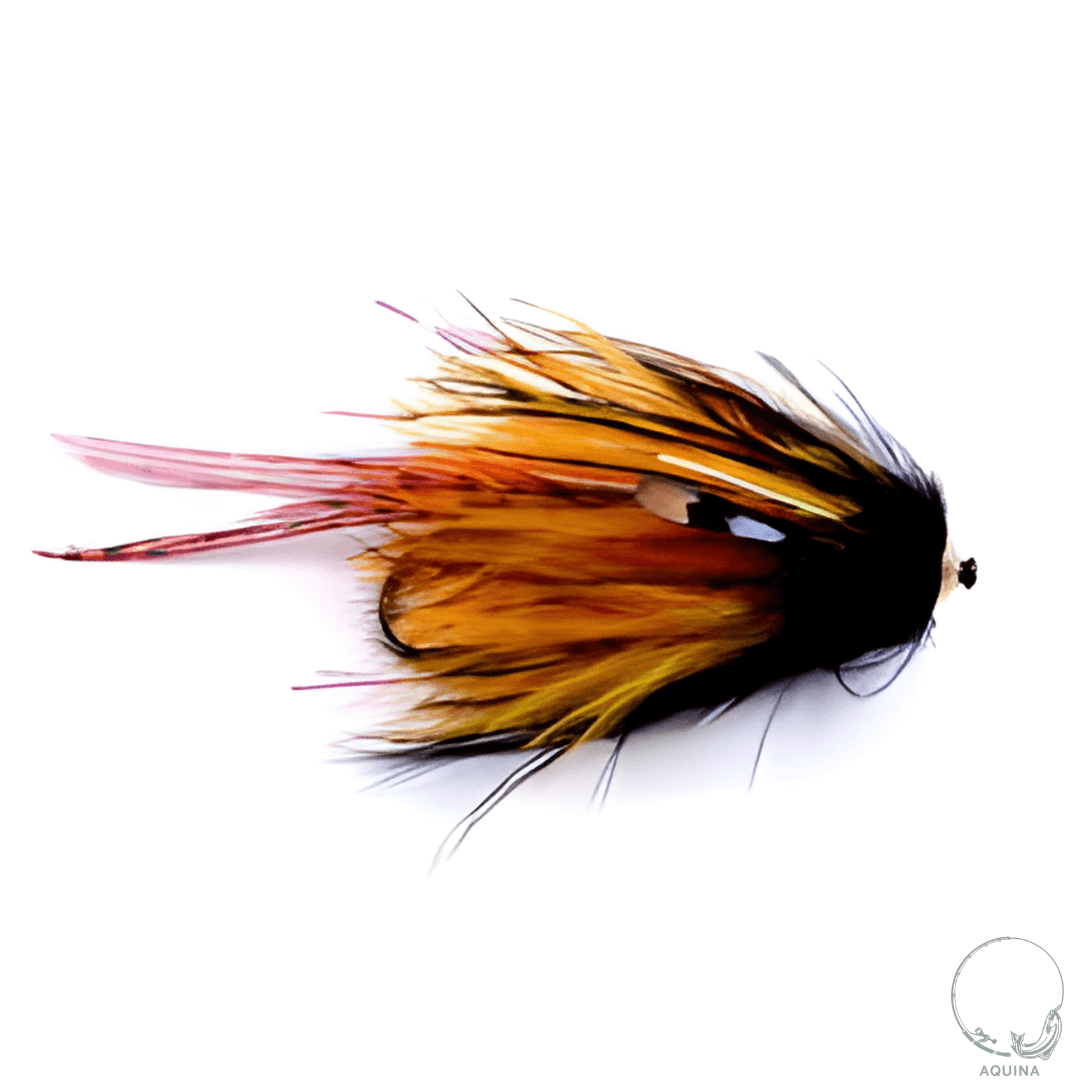
Frodin Flies and Guideline developed the FITS Turbo Cone system using physics principles to create turbulence that makes tube fly materials move and look alive. The cone divides water flow, generating a vortex at the front of the fly underwater. This turbulent stream allows soft materials to maintain movement without collapsing in any current speed.
Turbo Cone Key Features
- Creates vortex and turbulence for lifelike movement
- Tungsten construction for thin profile with high density
- Tube length: 1.25 inches with 10mm cone
- Weights: 0.20g to 0.75g depending on size
- Colors: fluorescent orange, yellow, red, chartreuse, blue, black
Turbo Cone Ideal Conditions
These patterns perform in slowest or strongest currents. The cone balances hook weight, keeping flies horizontal rather than tail-down. Walking-speed water suits marabou versions particularly well.
Turbo Cone Best Season
Shop favorites for all seasons of steelhead. Alaska anglers rely on hot pink and orange combinations for kings, steelhead, and silvers.
Turbo Cone Recommended Size
Sizes range from X-small (2.5 x 6mm, 0.20 gram) to Large (4.5 x 12mm, 0.75 gram). Total fly length measures roughly 3 inches.
Turbo Cone Rigging & Presentation
Junction tubing and size 2 stinger hooks enable easy setup. Anglers can swap hooks to match fishing situations.
How Turbo Cone Works
The turbo cone creates a pressure wave that prevents materials from collapsing, forcing the fly's wings to pulse and "dance" in heavy currents. Simultaneously, its weight helps the fly sink quickly and track straight through the water column.
12. Flashtail Tube Fly

Jason Hartwick designed the Flashtail Tube series to deliver maximum flash with a moderate profile. The pattern builds on traditional marabou construction yet incorporates durability enhancements that extend the fly's fishing life.
Flashtail Key Features
- Marabou, opossum, ostrich, and flash material combination
- Brass cone prevents profile collapse underwater
- Paper-thin opossum hide with Polar Bear-like glow
- Super wiggly action with full profile maintenance
- Tied on plastic tubes
Flashtail Ideal Conditions
Bright, sunny days suit this pattern when generous flash adds visibility. For instance, the pattern works effectively on both winter and summer steelhead across Great Lakes tributaries and Pacific Coast rivers. Chinook salmon respond aggressively to the flash and movement combination.
Flashtail Best Season
Year-round applications make this versatile. Winter steelhead favor black and blue color schemes, while spring Chinook push through runs chasing chartreuse and blue variants.
Flashtail Recommended Size
Just over 3 inches in length. The brass cone and materials create a larger profile without excessive weight for casting.
Flashtail Rigging & Presentation
Junction tubing and stout size 2 hooks come pre-rigged. Pull the hook from tubing, thread leader through the fly, tie to hook, and snug back into position.
How Flashtail Works
The cone props marabou and opossum materials into shoulder position, maintaining body shape under tension. Materials waggle independently through currents, creating lifelike baitfish imitation.
13. Bunny Tube Fly
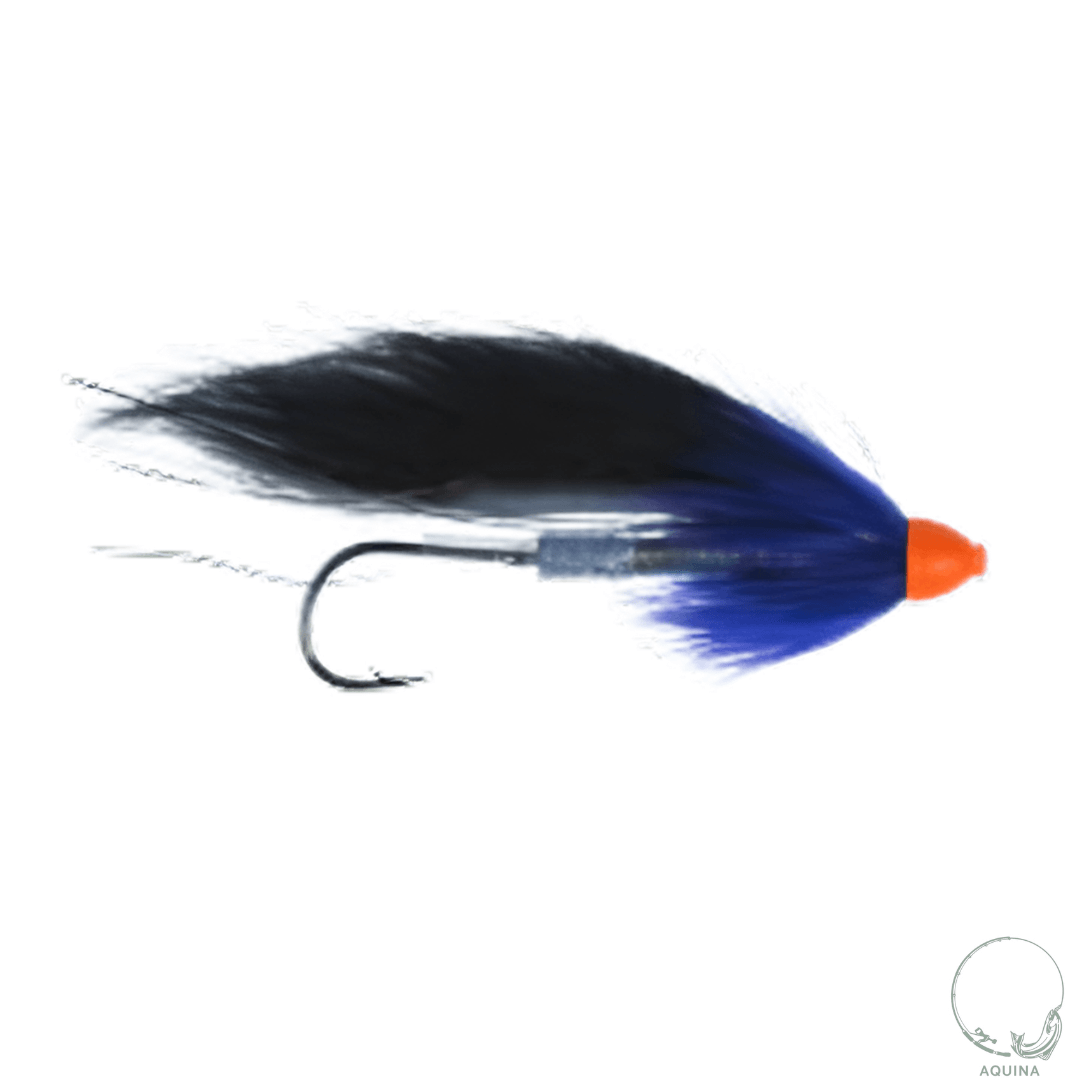
Rabbit strip tube flies rank among the easiest patterns to tie while accounting for steelhead across multiple river systems. The egg-sucking leech variation catches trout, bulltrout, and salmon from Alaska to Northern California.
Bunny Tube Key Features
- Small tube construction with cone head for weight
- Black rabbit strip creating significant movement
- Minimal materials for easy casting
- Fluorescent brass cone on 1.25" plastic glitter tube
- Quick tying allows building multiple flies without concern for losses
- Swappable hook system
Bunny Tube Ideal Conditions
Soft inside edges suit this pattern since the cone sinks gradually rather than plummeting. Stained water calls for darker colors like black or purple, while clear water favors olive, brown, and tan naturals. The pattern performs in walking-pace currents where rabbit fur undulates naturally.
Bunny Tube Best Season
Summer transitioning to fall represents prime time. Winter flows benefit from barbell eyes added for faster sinking. Consequently, anglers fish these tube flies year-round with color adjustments.
Bunny Tube Recommended Size
Standard patterns measure 1.25 inches. Smaller versions on sizes 6-10 hooks work for clear water presentations.
Bunny Tube Rigging & Presentation
Junction tubing holds hooks that slide easily for replacement. Fish into structure without worry given the simple construction encourages bold placement.
How Bunny Tube Works
Rabbit fur strips breathe underwater with lifelike motion. The combination of conehead weight, flowing collar, and rabbit strip produces wiggle steelhead recognize.
14. Metal Head Tube Fly
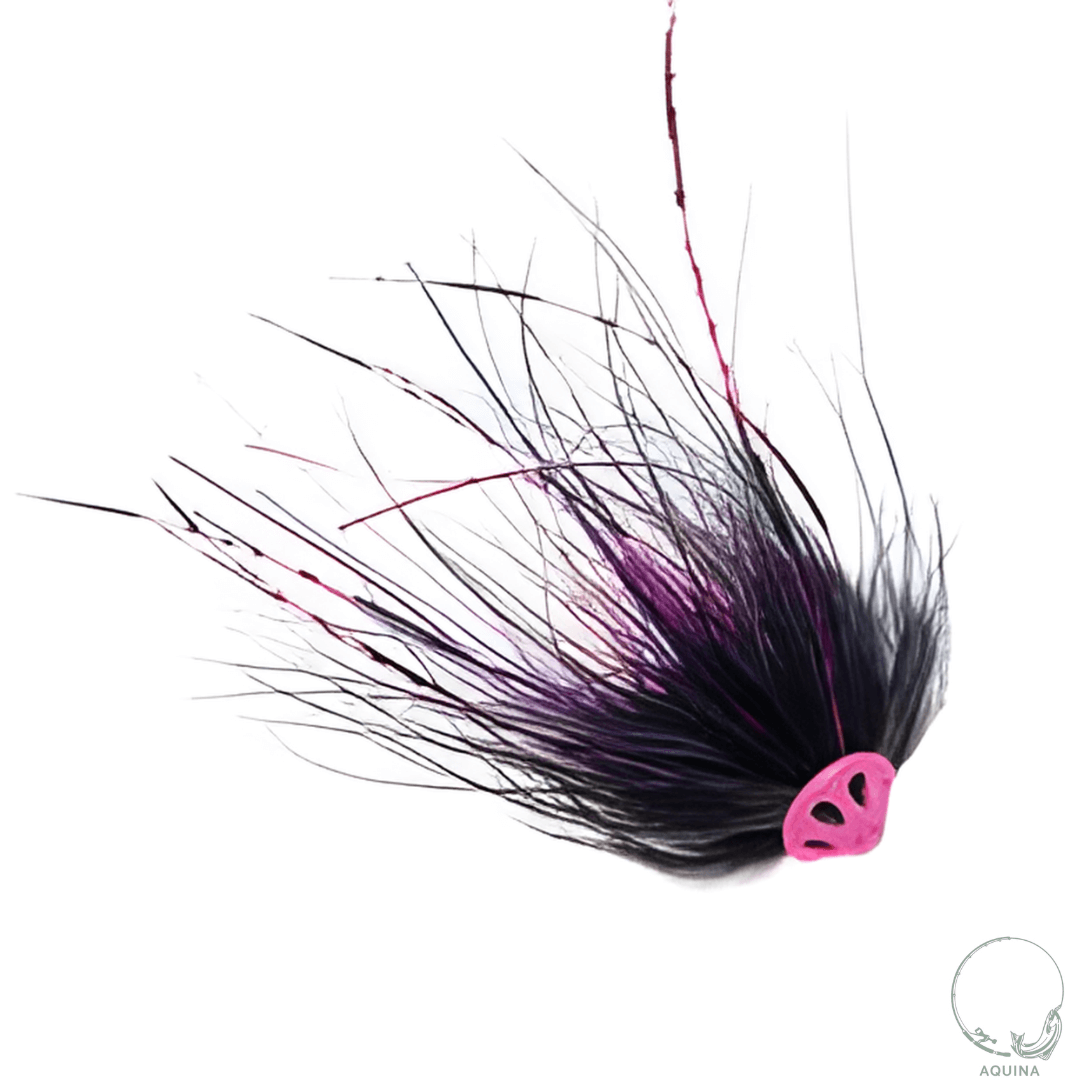
Stu Foxall developed the Metal Head Tube incorporating Pro Sportfisher Ultra Sonic Cones, a brass design that solves persistent challenges with metal tube flies. The slotted cone construction addresses issues anglers face when fishing weighted patterns in varied currents.
Metal Head Key Features
- Brass Ultra Sonic Cone with venting holes
- Creates vortex preventing material collapse
- Standard length: 2.5 inches
- Pre-rigged with junction tubing and #2 hook
- Color options: fuschia/orange, blue, black/blue, white/pink
- Price: $4.95
Metal Head Ideal Conditions
Metal tubes control sink rates in fast, deep flows where aluminum or brass provides necessary weight without excessive bulk. The vented cone lifts easily from water while maintaining vortex action, making it suitable for deep runs requiring precise depth control. Brass balances weight and castability better than copper for most current speeds.
Metal Head Best Season
Year-round applications across species. The fuschia/orange version attracts king salmon, while white/pink variants double as flesh patterns for trout or coho change-ups.
Metal Head Recommended Size
Standard tubes measure 2.5 inches with #2 hooks. Metal tube diameter options include 1/8 or 3/32 outside diameter.
Metal Head Rigging & Presentation
Swap hooks through junction tubing when damaged. Brass construction prevents rear hang-down common with straight metal tubing.
How Metal Head Works
Venting holes create turbulent water flow behind the disk, allowing marabou to flow naturally rather than collapsing in heavy current.
15. Bomber Tube Fly
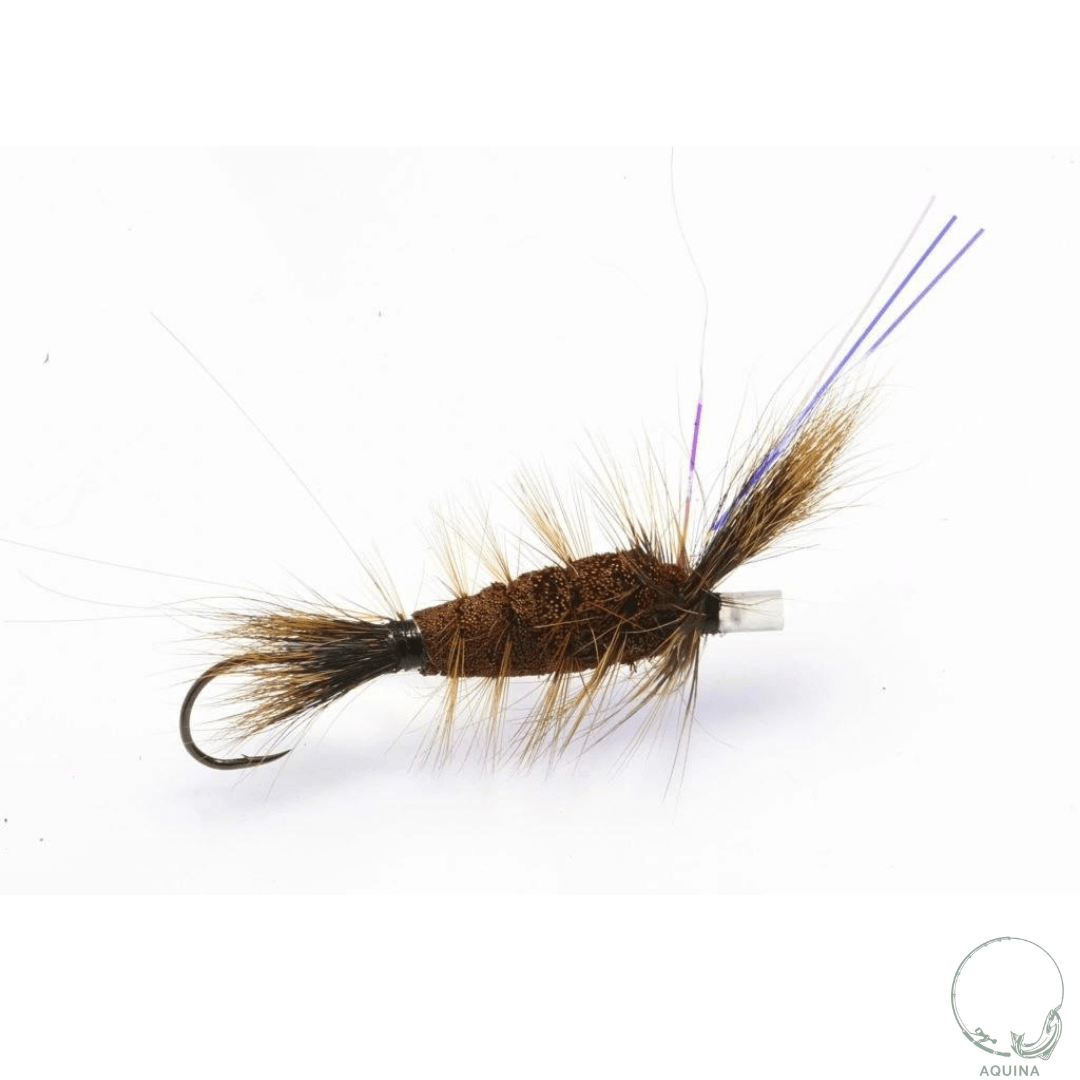
Waking flies ride on the surface to create enough disturbance that summer steelhead strike aggressively. The Bomber tube fly delivers this presentation while maintaining buoyancy through spun deer hair construction, eliminating concerns about hook rust common with traditional tied patterns.
Bomber Key Features
- White Tail deer or caribou belly hair for cigar-shaped body
- Multiple stiff hackle wraps closer to eye
- Calf tail wings and tail for water resistance
- Pearl Mylar strands in wing and tail sections
- Tube diameters: 1.8mm for larger flies, 1.4mm for smallest versions
Bomber Ideal Conditions
These patterns work when fish hold near the surface. White wings provide visibility for both angler and fish. Tandem rigging with traditional wet flies proves effective since steelhead often follow the waking fly but strike the subsurface pattern.
Bomber Best Season
June through August represents prime time for medium sizes. Late season fishing in August calls for smaller versions when conditions become difficult. White Bombers became the preferred salmon fly in 2024.
Bomber Recommended Size
Medium tubes measure 27mm body length with 60mm total length. Small versions feature 20mm bodies with 45mm total length. Popular colors include white, fluorescent yellow, green, and gray for Scandinavian and North American rivers.
Bomber Rigging & Presentation
Seal the front end and create a bottom hole for line threading, forcing the fly to ride up while swinging. Pack deer hair properly and apply floatant since patterns eventually absorb water.
How Bomber Works
The buoyant construction creates surface commotion that provokes territorial responses from summer-run fish holding in warm water conditions.
16. Riffle Hitch Tube Fly

Riffling hitch fishing ranks as the number one reason many anglers travel to Iceland. Guides typically suggest starting with a hitch as a searching pattern before considering other approaches. The technique involves creating a hydroplane effect by threading the leader through a hole pierced in the tube side, allowing the fly to skim along the surface while leaving a distinctive V-shaped wake.
Riffle Hitch Key Features
- Plastic tube with hole pierced at 45-degree angle in throat
- Minimal dressing keeps fly near surface
- Alternative: half hitch knots around fly head
- Squirrel hair V-shaped wing for erratic movement
- Position determines left or right bank fishing
Riffle Hitch Ideal Conditions
Low, clear water suits this technique when subtle surface disturbance entices salmon. Fast, shallow runs produce optimal results where fish hold in riffles. Evening or low light periods work effectively as the wake acts as a beacon. Accordingly, anglers use this method for exploratory fishing in large pools.
Riffle Hitch Best Season
Fresh fish moving through mid-August represent prime time. The hitch bite slows around late August when bug patterns take over.
Riffle Hitch Recommended Size
Sizes range from 1/2 inch microscopic to 3/4 inch standard, with 4cm versions for larger options. Mikael Frodin sells hitched tubes in 1.5cm and 3cm sizes.
Riffle Hitch Rigging & Presentation
Short leaders between 5-7 feet work best with poly leaders. Cast cross-current and use long strips for extra speed. Two half hitches behind the eye keep the knot positioned correctly. In particular, mending increases speed when needed.
How Riffle Hitch Works
The wake created by the hitch attracts salmon's attention, stimulating chase instincts. Fish often make savage attempts to drown the fly, repeating behavior for two or three casts. The technique raises fish from lies rather than sinking flies to their depth.
17. Hobbit Spey Tube Fly

Clark Jennings developed the Hobbit Spey as a productive steelhead pattern that gained widespread adoption among Pacific Northwest spey fishermen. The tube fly combines classic green butt skunk aesthetics with a two-station mini intruder profile, creating a medium-sized pattern suitable for swinging across varied water conditions.
Hobbit Spey Tube Key Features
- Mallard and Lady Amherst hackles for movement
- Green butt design resembling classic Green Butt Skunk
- Two-station intruder style construction
- Pre-rigged with size 2 stinger hook
- Junction tubing prevents fouling
Hobbit Spey Tube Ideal Conditions
Low water patterns like this swing effectively at various depths using different sink tips. The medium profile gets attention in runs without overwhelming fish holding in moderate flows.
Hobbit Spey Tube Best Season
Summer and winter steelhead both respond to this pattern. The versatile design works year-round for salmon applications.
Hobbit Spey Tube Recommended Size
Standard tubes come pre-rigged with size 2 hooks. The medium profile suits most steelhead situations.
Hobbit Spey Tube Rigging & Presentation
Slide the tube onto the leader and tie the hook on. Junction tubing holds hooks secure, allowing replacement when needed. Swing presentations work best across current.
How Hobbit Spey Tube Works
The green butt creates contrast while Lady Amherst fibers provide distinctive markings. Two-station construction generates movement at multiple points, drawing strikes from steelhead positioned throughout runs.
18. Blue Zenith Tube Fly
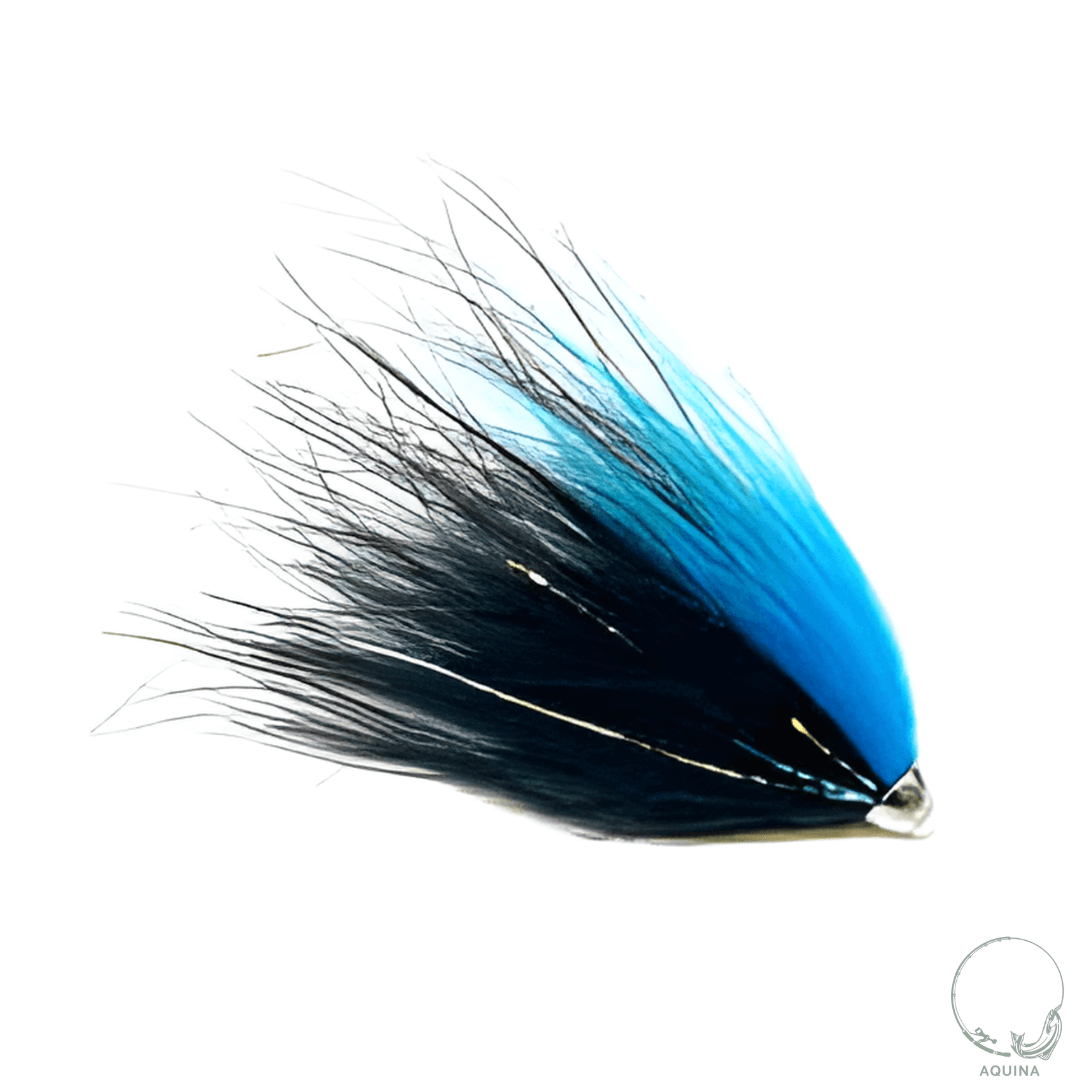
The Blue Zenith Tube Fly represents a modern intruder-influenced steelhead pattern designed to maximize visibility and movement in diverse water conditions. Its vibrant blue coloration combined with layered composite materials produces a strong silhouette while maintaining a balanced profile that swings cleanly through currents without excessive bulk.
Blue Zenith Tube Fly Key Features
- Blue composite loop body for full, flowing profile
- Contrasting shoulder hackles for enhanced motion
- Two-station construction for multi-point movement
- Tube platform allowing interchangeable stinger hooks
- Flash accents integrated for controlled light reflection
Blue Zenith Tube Fly Ideal Conditions
Medium to fast runs with moderate depth provide excellent environments for this pattern. The prominent blue coloration performs especially well in slightly colored water, while the flowing materials maintain visibility and action across changing current speeds.
Blue Zenith Tube Fly Best Season
Summer and fall steelhead seasons are particularly productive, though the strong visual contrast also makes it effective during winter when visibility is reduced. The pattern maintains consistent performance throughout year-round steelhead cycles.
Blue Zenith Tube Fly Recommended Size
Medium tube sizes paired with size 2 to 4 stinger hooks offer optimal balance between visibility and natural movement. This configuration suits most standard steelhead swing presentations.
Blue Zenith Tube Fly Rigging & Presentation
Thread the tube onto the leader followed by the stinger hook secured with junction tubing. Present using a traditional swing across the current, allowing the fly to travel broadside while maintaining steady tension. Adjust sink tips to control depth relative to holding zones.
How Blue Zenith Tube Fly Works
The layered blue materials create a strong silhouette that stands out in varied water clarity. Composite construction generates movement at multiple points, while flash accents produce intermittent visual triggers. This combination sustains attention throughout the swing, encouraging aggressive inspection and commitment.
19. Sun Ray Fish Skull Tube Fly
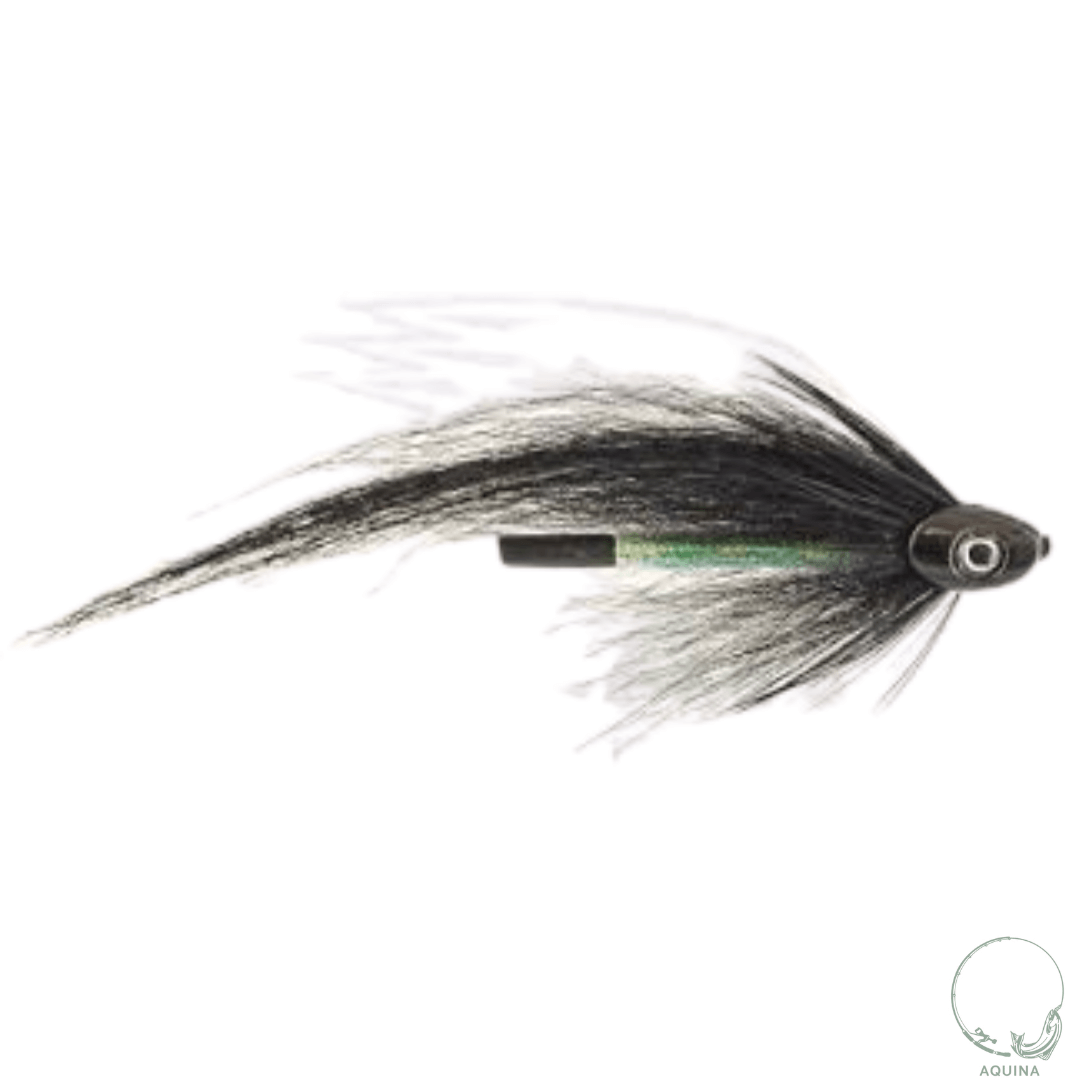
The Sun Ray Fish Skull Tube Fly builds upon the classic Sunray Shadow profile by incorporating a weighted Fish Skull head that enhances depth control and stability during the swing. Its elongated silhouette and streamlined construction create a strong directional swimming presence, making it highly effective for covering broad runs and targeting fish holding at varying depths.
Sun Ray Fish Skull Tube Fly Key Features
- Fish Skull cone head for controlled sink rate
- Long flowing wing for extended swimming profile
- Tube construction allowing hook replacement
- Slim body design for reduced water resistance
- Subtle flash integration for enhanced visibility
Sun Ray Fish Skull Tube Fly Ideal Conditions
Moderate to fast-flowing rivers with defined runs and pools provide excellent environments for this pattern. The weighted head allows effective depth penetration, making it suitable for reaching fish holding in deeper lanes or along current seams.
Sun Ray Fish Skull Tube Fly Best Season
Summer and autumn seasons provide consistent results, particularly during active migratory periods. The streamlined profile remains effective throughout colder months when deeper presentations become necessary.
Sun Ray Fish Skull Tube Fly Recommended Size
Medium to large tube sizes paired with size 4 to 6 stinger hooks offer optimal swimming balance. Longer wing lengths enhance visibility without compromising swing stability.
Sun Ray Fish Skull Tube Fly Rigging & Presentation
Slide the tube onto the leader and secure the stinger hook using junction tubing. Present across current using a controlled swing, allowing the weighted head to guide the fly into the desired depth zone while maintaining consistent motion.
How Sun Ray Fish Skull Tube Fly Works
The Fish Skull head promotes a stable swimming orientation while assisting the fly in reaching deeper holding zones. The extended wing produces continuous flowing movement, creating a distinct silhouette that remains visible throughout the swing and sustains attention across varying water conditions.
20. LOOP Bottle Tube Fly

The LOOP Bottle Tube Fly represents a modern Scandinavian tube fly design developed for targeting aggressive steelhead and salmon in varied river systems. Known for its distinctive bottle-shaped profile and flowing composite materials, this pattern produces strong movement while maintaining a balanced silhouette. Its tube construction improves hook placement and durability, making it a reliable and efficient swinging fly for consistent performance across diverse water conditions.
LOOP Bottle Tube Fly Key Features
- Bottle-shaped composite body for defined silhouette
- Long flowing wing materials for lifelike swimming motion
- Tube fly construction allowing replaceable stinger hooks
- Balanced profile for stable tracking in current
- High-contrast color combinations for increased visibility
LOOP Bottle Tube Fly Ideal Conditions
Moderate to fast-flowing rivers where steelhead and salmon hold in deeper runs and transition zones. The streamlined bottle profile cuts through current efficiently, making it effective with sink tips or full sinking lines. It performs well in both clear and slightly stained water conditions.
LOOP Bottle Tube Fly Best Season
Fall and winter steelhead seasons provide optimal effectiveness, particularly in cold water when fish respond strongly to larger, mobile profiles. The fly remains productive year-round depending on water temperature and fish migration timing.
LOOP Bottle Tube Fly Recommended Size
Tube lengths typically range from 1 to 3 inches. Medium sizes paired with size 4 to 2 stinger hooks provide balanced presentation for most steelhead and salmon fishing scenarios.
LOOP Bottle Tube Fly Rigging & Presentation
Slide the tube onto the leader and attach a stinger hook using junction tubing. Present using traditional swing techniques across current seams, allowing the fly to move naturally through holding water. Maintain steady line tension to preserve profile and motion.
How LOOP Bottle Tube Fly Works
The bottle-shaped body creates a stable visual target while long wing fibers pulse and flow naturally in moving water. Tube construction improves hook positioning behind the body, increasing hook-up efficiency. The balanced design ensures consistent swimming action, triggering aggressive reaction strikes from steelhead and salmon holding in current lanes.
21. Rambulance Tube Fly

The Rambulance Tube Fly is a bold intruder-style steelhead pattern developed to provoke aggressive strikes in cold and challenging river conditions. Built with a large composite profile and vibrant contrasting colors, this tube fly produces continuous movement while maintaining a controlled silhouette. Its articulated-style material arrangement enhances motion, making it highly effective when swung through deep holding water where steelhead remain less active.
Rambulance Tube Fly Key Features
- Intruder-style composite loop construction for maximum movement
- Bright contrasting color combinations for high visibility
- Long flowing synthetic and natural fiber wing
- Tube design allowing adjustable and replaceable stinger hook
- Full-bodied profile that pushes water effectively
Rambulance Tube Fly Ideal Conditions
Cold water environments and deeper holding runs where steelhead respond to larger, highly visible flies. The pattern performs exceptionally well when used with sink tips or full sinking lines, allowing controlled depth and consistent swing presentation through slow and moderate currents.
Rambulance Tube Fly Best Season
Winter steelhead season provides peak effectiveness when fish become less aggressive and require stronger visual triggers. The fly also performs well during early spring and late fall when water temperatures remain low.
Rambulance Tube Fly Recommended Size
Tube lengths typically range from 1.5 to 3 inches. Stinger hooks in sizes 4 to 2 provide reliable hook placement while preserving natural movement and presentation balance.
Rambulance Tube Fly Rigging & Presentation
Thread the tube onto the leader and secure a stinger hook using junction tubing. Present using traditional swing techniques across current seams and holding runs. Slow swings with controlled tension allow the materials to pulse naturally and maintain consistent profile.
How Rambulance Tube Fly Works
The composite construction creates multiple movement points that pulse and expand in current, producing lifelike motion. Bright contrasting colors enhance visibility, helping fish detect the fly in low-light or deep water conditions. Tube rigging positions the hook precisely behind the profile, improving hook-up efficiency while preserving unrestricted material movement.
22. Marts' Zulu Tube Fly

Marts' Zulu Tube Fly is a modern tube adaptation of the traditional Zulu pattern, redesigned for steelhead and salmon in moving water environments. Built with a dark, high-contrast body and flowing hackle materials, this pattern delivers strong visual definition while maintaining a compact, balanced profile. Its tube construction improves hook placement efficiency and allows consistent swimming action during swing presentations across varied river conditions.
Marts' Zulu Tube Fly Key Features
- Traditional Zulu-inspired black body with red accent highlights
- Soft hackle collar providing constant movement in current
- Tube fly construction allowing replaceable stinger hooks
- Slim, balanced profile for natural swimming motion
- High contrast coloration enhancing underwater visibility
Marts' Zulu Tube Fly Ideal Conditions
Moderate to fast-flowing rivers where steelhead and salmon hold in defined runs, seams, and tailouts. The streamlined profile tracks efficiently through current, making it effective with floating lines, sink tips, or full sinking systems depending on desired depth.
Marts' Zulu Tube Fly Best Season
Fall and winter steelhead seasons offer peak performance, particularly in colder water when darker, high-contrast flies trigger aggressive responses. The pattern remains effective year-round in both clear and slightly stained water.
Marts' Zulu Tube Fly Recommended Size
Tube lengths typically range from 1 to 2.5 inches. Stinger hooks in sizes 6 to 2 provide optimal balance between secure hook placement and unrestricted fly movement.
Marts' Zulu Tube Fly Rigging & Presentation
Slide the tube onto the leader and attach a stinger hook using junction tubing. Present using traditional swing techniques across holding water, maintaining steady tension to allow materials to pulse naturally. Adjust sink rate based on current speed and holding depth.
How Marts' Zulu Tube Fly Works
The dark body creates a strong silhouette that stands out against varying underwater backgrounds. Soft hackle fibers pulse continuously with current movement, simulating lifelike motion. Tube construction positions the hook directly behind the fly’s profile, increasing hook-up efficiency while allowing unrestricted material flow and natural swimming behavior.
23. River Rat Tube Fly

The River Rat Tube Fly is a versatile steelhead and salmon pattern designed for consistent performance across a wide range of river conditions. Built with a streamlined composite profile and flowing wing materials, this tube fly delivers continuous movement while maintaining a natural silhouette. Its tube construction improves hook placement and durability, making it especially effective for swinging presentations through holding runs and transition zones.
River Rat Tube Fly Key Features
- Composite wing construction for lifelike movement
- Slim, tapered profile for natural swimming action
- Tube fly design allowing replaceable stinger hooks
- Balanced structure for stable tracking in current
- High-visibility color combinations for varied water clarity
River Rat Tube Fly Ideal Conditions
Moderate and fast-flowing rivers where steelhead and salmon hold in runs, seams, and tailouts. The streamlined profile performs well with sink tips or full sinking lines, allowing controlled depth and effective presentation through different current speeds.
River Rat Tube Fly Best Season
Fall and winter seasons provide peak effectiveness when fish hold deeper and respond to larger moving profiles. The pattern remains productive year-round depending on water temperature and fish migration timing.
River Rat Tube Fly Recommended Size
Tube lengths typically range from 1.25 to 3 inches. Stinger hooks in sizes 6 to 2 offer effective hook placement while preserving natural fly movement.
River Rat Tube Fly Rigging & Presentation
Slide the tube onto the leader and secure a stinger hook using junction tubing. Present using traditional swing techniques across current seams and holding water. Maintain steady line tension to preserve profile and maximize movement during the swing.
How River Rat Tube Fly Works
The composite wing fibers pulse and expand naturally in moving water, creating lifelike motion that attracts attention. The tapered profile ensures smooth current tracking, while tube construction positions the hook behind the fly for improved hook-up efficiency without restricting movement.
24. Hartwick's Hoser - Tube Fly
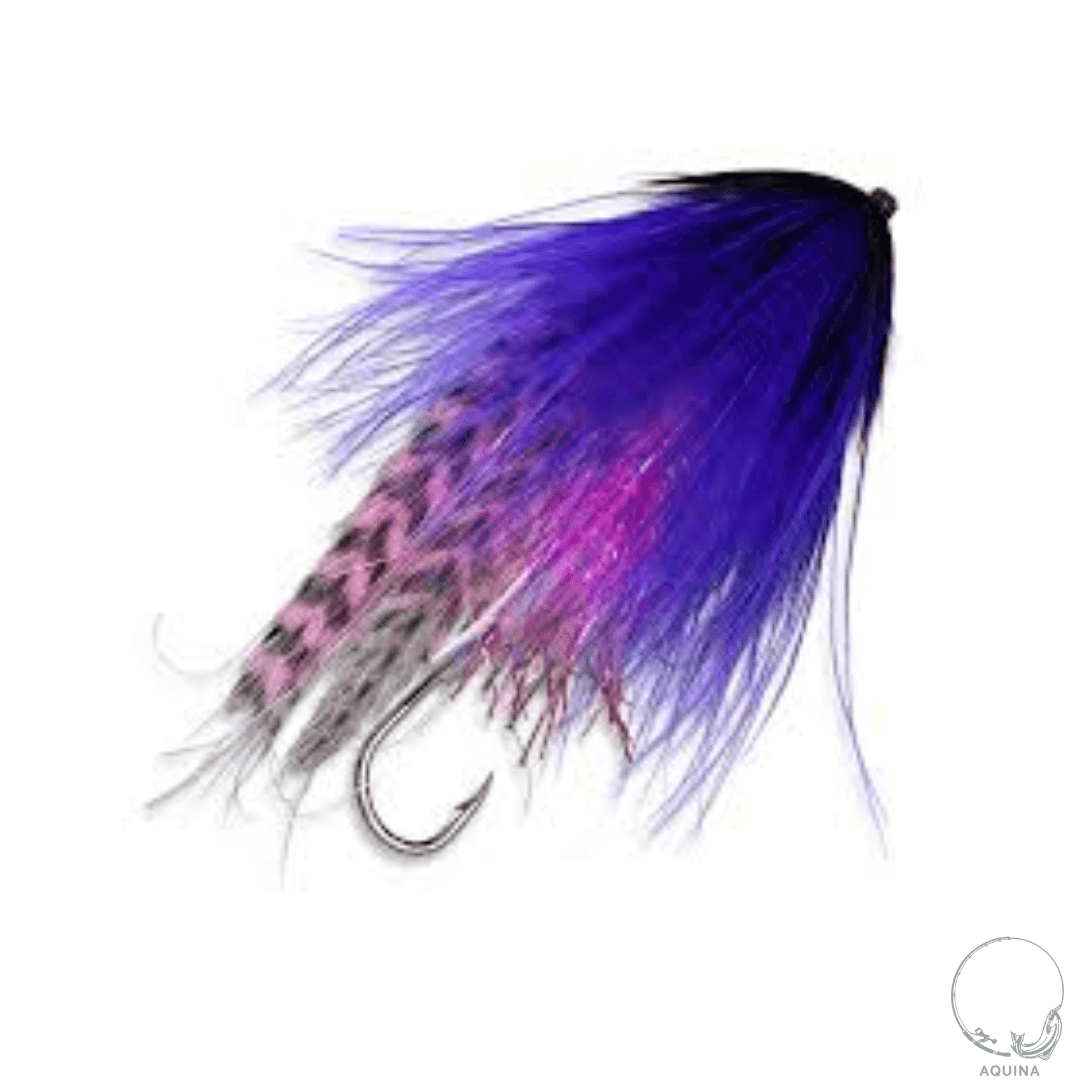
The Hartwick Hoser Tube Fly is a proven intruder-style steelhead pattern designed to generate strong movement and visibility in challenging river conditions. Featuring a bold composite profile and flowing materials, this tube fly creates a lifelike swimming action that remains effective in both clear and stained water. Its tube construction enhances hook positioning and durability, making it a reliable choice for swinging presentations across varied current speeds.
Hartwick Hoser Tube Fly Key Features
- Intruder-style composite construction for maximum motion
- Long flowing wing materials for continuous underwater movement
- Tube fly design allowing replaceable and adjustable stinger hooks
- Full-bodied profile for increased visibility and water displacement
- High-contrast color combinations for improved detection
Hartwick Hoser Tube Fly Ideal Conditions
Cold and moderate-flow rivers where steelhead and salmon hold in deeper runs, seams, and transition zones. The larger profile performs exceptionally well when used with sink tips or full sinking lines, allowing effective coverage of deeper holding water.
Hartwick Hoser Tube Fly Best Season
Winter and early spring steelhead seasons provide peak performance, especially when fish remain less active and require highly visible, slow-moving presentations. The pattern also performs well during fall migration periods.
Hartwick Hoser Tube Fly Recommended Size
Tube lengths typically range from 1.5 to 3 inches. Stinger hooks in sizes 4 to 1 provide reliable hook placement while maintaining balanced fly movement.
Hartwick Hoser Tube Fly Rigging & Presentation
Slide the tube onto the leader and secure a stinger hook using junction tubing. Present using traditional swing techniques across current seams and holding water. Slow, controlled swings allow materials to pulse naturally and maintain a consistent swimming profile.
How Hartwick Hoser Tube Fly Works
The composite wing materials create multiple movement points that pulse and expand in current, producing lifelike motion. The full-bodied profile increases visibility, helping fish detect the fly in deeper or stained water. Tube construction positions the hook directly behind the fly, improving hook-up efficiency while preserving unrestricted movement.
The Tube Flies Comparison Table
A comprehensive guide to all 24 patterns to help you choose the right fly for every situation.
|
Fly Name |
Key Features |
Ideal Conditions |
Best Season |
Recommended Size |
How It Works |
|
Willie Gunn Tube Fly |
Black/orange/yellow coloration • Bucktail & floss • Gold rib • Mixed fiber wing |
Peaty/colored water, high runoff |
Early spring–late autumn |
1–2 inch tubes; hooks 8–12 |
Layered fibers move independently; color triggers aggressive strikes |
|
Sun Ray Shadow Tube Fly |
Bare tube body • Black goat/Arctic fox wing • Peacock herl • Stiff underwing |
Almost all rivers; fast or stained water |
Early spring–summer |
1/2–2 inch tubes; hooks vary |
Minimal materials swim horizontally; black wing triggers strikes |
|
Intruder Tube Fly |
Large sparse body • Two-station tail/thorax • Ostrich/rhea/saddle • Dumbbell eyes |
Deep slow pools; off-colored water |
Fall, winter, spring |
2–4.5 inch tubes; hooks 2–6 |
Two-station design flares in current; silhouette triggers territorial strikes |
|
Temple Dog Tube Fly |
Long flowing wing • Arctic fox/temple dog hair • 20–50mm tubes • Layered wing |
Cold water <10°C; strong current |
Early season & late autumn |
1–2 inch tubes; wings 2–3 inches |
Layered wing undulates; soft materials pulse and reflect light |
|
Marabou Tube Fly |
Blood quill/wooly marabou • Max 8 wraps • Unweighted • Soft turkey feathers |
Midday; turbid, slow/moderate currents |
Year-round; winter black/blue |
3 inch tubes |
Soft barbules pulse naturally; color triggers instinctive strikes |
|
Frances Copper Tube Fly |
Carrot-shaped body • Copper tube • Stiff antennae • Red/black/magenta/blue |
Up to 6 ft deep; eddies/underfalls |
Autumn |
1/4–2 inch tubes |
Carrot shape vibrates; stiff antennae imitate shrimp behavior |
|
Black and Silver Monkey Tube |
Silver body • Black wing • Arctic fox/temple dog/goat hair • Conehead |
Fresh salmon rivers; fast swing |
Spring & autumn |
1 inch aluminum/25–38mm plastic |
Long-wing profile triggers chases; speed enhances strikes |
|
Posh Tosh Tube Fly |
Black & yellow UV • Fluorescent underwing • Black overwing • Conehead |
Clear/peaty/silty water; high or bright flows |
Spring & autumn |
1/4–2 inch tubes |
UV visibility and waving wing trigger aggressive fish responses |
|
Prawn Truder Tube Fly |
Two-stage collar • 45mm Intruder shank • Hot pink/shell pink dubbing • Orange hackle |
BC & Pacific NW rivers; varied currents |
Winter & spring steelhead |
45mm shank; hooks 2–4 |
Two collars move independently; pulses mimic swimming crustaceans |
|
Dragon Gurgler Tube Fly |
Foam & spun deer hair • Red fox tail, moose legs • 2mm foam |
Surface presentations; active topwater |
Summer & fall |
45–50mm tubes (#2–4 hooks) |
Foam & hair create surface wakes; triggers explosive strikes |
|
Turbo Cone Tube Fly |
Vortex-creating cone • Tungsten • 0.2–0.75g weight • Multiple colors |
Slow or fast walking pace |
Year-round |
2.5–4.5x6–12mm tubes (~3 in) |
Cone generates turbulence; materials pulsate & breathe naturally |
|
Flashtail Tube Fly |
Marabou/opossum/ostrich/flash • Brass cone • Thin opossum hide |
Sunny days; winter/summer steelhead |
Year-round |
~3 inch tubes |
Cone props materials; flash wags independently for baitfish effect |
|
Bunny Tube Fly |
Small conehead tube • Black rabbit strip • Minimal materials • Swappable hooks |
Soft edges; stained or clear water |
Summer–fall; winter |
1.25 inch tubes; hooks 6–10 |
Rabbit strip pulses lifelike; cone & collar enhance wiggle |
|
Metal Head Tube Fly |
Brass Ultra Sonic cone • Venting holes • Junction tubing • Colors |
Fast deep flows |
Year-round |
2.5 inch tubes; #2 hooks |
Venting creates turbulence; marabou flows naturally; prevents hang-down |
|
Bomber Tube Fly |
White deer/caribou tail • Hackle wraps • Calf tail wing • Pearl Mylar |
Fish near surface; tandem rigs |
June–Aug; late season |
Medium 27mm; small 20mm |
Buoyant wing provokes territorial response; surface commotion |
|
Riffle Hitch Tube Fly |
Plastic tube 45° hole • Minimal dressing • Squirrel hair V-wing • Half-hitch option |
Low clear runs; evening; large pools |
Mid–late August |
1/2–3/4 inch; 4cm larger |
Wake attracts fish; stimulates chase & raises from lies |
|
Hobbit Spey Tube Fly |
Mallard & Lady Amherst hackles • Green butt • Two-station • Pre-rigged #2 |
Low water; moderate flows |
Summer & winter steelhead |
Pre-rigged #2 |
Green butt contrast; fibers move independently; two-station action |
|
Blue Zenith Tube Fly |
Blue/silver body • Flash wing fibers • Slim baitfish • Lightweight tube |
Clear/lightly stained rivers; moderate flows |
Summer & autumn |
1–1.5 inch tubes; hooks 6–10 |
Flash reflects light; slim profile imitates baitfish |
|
Sun Ray Fish Skull Tube Fly |
Weighted Fish Skull • Long flowing wing • Streamlined • Tube construction |
Deep pools; fast currents |
Autumn & winter steelhead/salmon |
1.5–3 inch tubes; hooks 4–8 |
Weighted head drives depth; flowing wing pulses lifelike |
|
LOOP Bottle Tube Fly |
Bottle-shaped body • Weighted forward • Synthetic flash wing • Balanced |
Fast/deep runs; strong currents |
Spring & autumn |
1–2 inch tubes; hooks 4–8 |
Shape stabilizes fly; weight holds depth; wing pulses naturally |
|
Rambulance Tube Fly |
Bright composite wing • Intruder profile • Multi-flash layers • Tube rig |
Colored water; aggressive zones |
Winter & spring steelhead |
1.5–3 inch tubes; hooks 2–6 |
Large silhouette & flash trigger strikes; wing pulses independently |
|
Marts’ Zulu Tube Fly |
Black body with red accents • Soft hackle • Traditional salmon • Slim |
Clear/slightly stained rivers; moderate flow |
Summer & autumn salmon |
1–1.5 inch tubes; hooks 6–10 |
Dark silhouette & soft hackle mimic insect/baitfish motion |
|
River Rat Tube Fly |
Flash-enhanced wing • Slim baitfish profile • Lightweight tube • Synthetic fibers |
Low/medium water; clear |
Summer & early autumn |
1–2 inch tubes; hooks 6–10 |
Flash & slim shape imitate fleeing baitfish; triggers chase |
|
Hartwick Hoser Tube Fly |
Bright attractor colors • Composite wing • Intruder-style • Tube |
Deep runs; colored water |
Winter steelhead |
2–3 inch tubes; hooks 2–6 |
Bright materials increase visibility; wing flow provokes strikes |
Conclusion
Tube flies have become an essential part of modern salmon and steelhead fly fishing. Their unique design allows anglers to easily replace hooks, adjust presentations, and extend the life of each fly. This flexibility, combined with improved hook-up rates and better fish handling, makes tube flies a reliable choice for anglers targeting migratory fish in rivers around the world.
The 24 tube flies highlighted in this guide represent a mix of proven classics and innovative modern patterns. From long-winged profiles that trigger aggressive chase responses to weighted tube flies designed to reach deeper holding water, each pattern offers advantages depending on river conditions, water clarity, and seasonal fish behavior.
When choosing tube flies for salmon and steelhead, it helps to carry a variety of sizes, colors, and materials. Larger and brighter flies often perform best in high or colored water, while smaller and more natural patterns can be highly effective in clear or low-water conditions.
By experimenting with different tube fly patterns and presentations, anglers can cover water more effectively and increase their chances of triggering strikes from salmon and steelhead throughout the season.
Faqs About Tube fishing flies
What makes tube flies more effective than traditional hook-mounted patterns for salmon and steelhead?
Tube flies increase landing rates from 60-70% to at least 80% because the fly body slides up the line after hookset, reducing leverage that can tear hooks free. The design also allows anglers to replace dulled hooks without discarding the entire fly, extending the pattern's lifespan significantly while maintaining consistent performance throughout the fishing season.
Which tube fly patterns work best in different water conditions?
Water clarity and flow determine pattern selection. The Willie Gunn excels in higher, darker, or peaty water, while the Sun Ray Shadow performs across almost all river levels and conditions. For deep, slow pools, the Intruder's large profile and sparse design works effectively. In colored or stained water, patterns with UV properties like the Posh Tosh or high-contrast designs trigger more strikes.
How do I choose the right tube fly size for salmon and steelhead?
Tube lengths typically range from 1/2 inch to 4 inches depending on conditions and season. Early season and high water call for larger patterns (2-4 inches), while summer and low water conditions favor smaller sizes (1/2 to 1 inch). Match hook sizes between 2 and 12 to your tube length, with smaller hooks reducing fish mortality without sacrificing hookup performance.
What are the advantages of using different tube materials like brass, copper, and plastic?
Different tube materials control sink rates and depth. Brass and copper tubes provide weight for fast, deep flows and early season fishing when you need to get down quickly. Aluminum offers moderate weight for varied conditions, while plastic tubes work best for shallow water or surface presentations. This versatility allows you to adjust depth without changing fly patterns.
When is the best season to fish specific tube fly patterns?
Seasonal timing significantly impacts pattern effectiveness. Early spring through late autumn favors the Willie Gunn, while the Intruder produces best results in fall when spawning triggers aggression. Summer months (June-August) call for surface patterns like the Bomber, and winter steelhead respond well to Marabou tubes in black and blue color schemes. The Sun Ray Shadow and Frances Copper Tube work effectively year-round with appropriate size adjustments.