
Top 28 Best Flies for Ice Fishing
The right flies for ice fishing can turn a slow day on the ice into a productive outing. Anglers have used ice flies to target finicky winter fish for decades. These flies incorporate features such as extra movement, flash, and color to trigger bites. Ice fishing with flies mainly targets trout, but you can also hook species like walleye, northern pike, and bluegills. You need to understand which patterns work in cold water conditions to find the best flies for ice fishing trout.
Here is a list of 28 flies for ice fishing that will help you catch more fish this winter.
1. Zebra Midge

The most trusted midge flies for ice fishing. A thread body with wire ribbing over a beadhead imitates midge pupa with precision, drawing trout when their metabolism slows in cold water. Few patterns show up in more ice fishing tackle boxes than the Zebra Midge, and for good reason. Midges remain active under the ice all winter long, making this simple silhouette a year-round staple rather than a seasonal gamble. Its slim profile slips past pressured, line-shy trout in clear winter water where bulkier patterns spook fish. Because it's cheap and quick to tie in bulk, most ice anglers stock a dozen across two or three colors and rotate until they find the day's hot combination. Pairing it as a dropper below a heavier attractor is one of the most consistent ice fishing fly patterns for covering the water column efficiently while still fishing something subtle for wary fish.
Color and Size Recommendations
- Sizes 18-20 (range 16-22)
- Black, red, and olive
- Oversized tungsten bead for fast sink
How to Fish a Zebra Midge
- Dead-drift near bottom in slower water
- Fish as a dropper behind a flashier fly
- Use a 9-foot leader with 6X-7X tippet
- Add a small split shot 6-8 inches above the fly
2. Micro Woolly Bugger
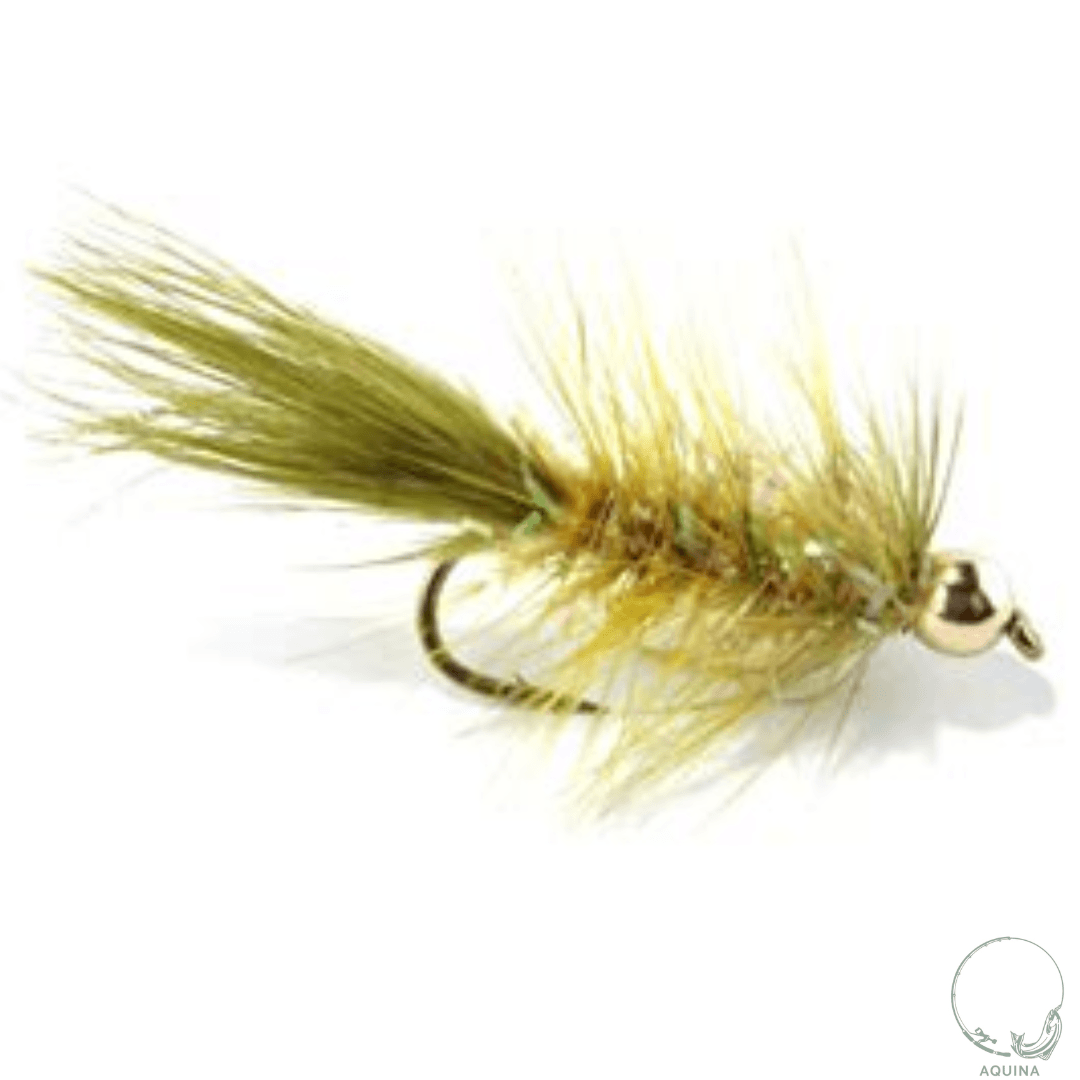
A versatile pick among ice flies for trout, doubling as a leech, minnow, or nymph imitation. The marabou tail pulses even with minimal movement, drawing strikes from cautious winter fish.The original Woolly Bugger is one of the most productive flies ever tied for any season, and the micro version brings that same track record under the ice. Its marabou tail keeps breathing even when your presentation sits nearly still, which matters in near-freezing water where trout won't chase fast-moving prey. Because it can pass for a leech, sculpin, or stonebug depending on retrieve speed, it's a smart searching pattern when you're unsure what winter trout are keyed on. Many guides consider it one of the best all-around ice fishing flies for covering unfamiliar lakes quickly before narrowing down to more specific patterns.
Color and Size Recommendations
- Sizes 12-16, jig hook with red bead
- Black, olive, tan, and white
- Switch colors if bites stall
How to Fish a Micro Woolly Bugger
- Strip in short, quick pulls
- Pause several seconds between strips
- Fish near bottom or suspended near structure
3. Pheasant Tail Nymph

A classic among trout ice fishing flies, imitating everything from mayflies to damselfly nymphs. Tungsten beadhead jig versions sink fast through deep ice holes. The Pheasant Tail Nymph has caught trout on nearly every type of water for generations, and ice fishing is no exception. Its slender, natural profile matches a wide range of winter forage, so it rarely looks out of place regardless of what's actually hatching. Tungsten versions punch through deep holes fast, which saves valuable fishing time on short winter days. Anglers who fish it as part of a two-fly rig often find it out-produces flashier patterns on heavily pressured lakes, making it one of the more dependable ice fishing fly patterns when trout have seen everything else in the box.
Color and Size Recommendations
- Sizes 16-20 for Baetis imitations
- Sizes 12-14 for larger hatches
- Natural, brown, and olive
- Optional fluorescent hotspot collar in orange or pink
How to Fish a Pheasant Tail Nymph
- Dead-drift on a euro-nymphing or tight-line rig
- Fish tandem with a second nymph 18 inches apart
- Target deeper pools and slow runs
4.HARES EAR NYMPH
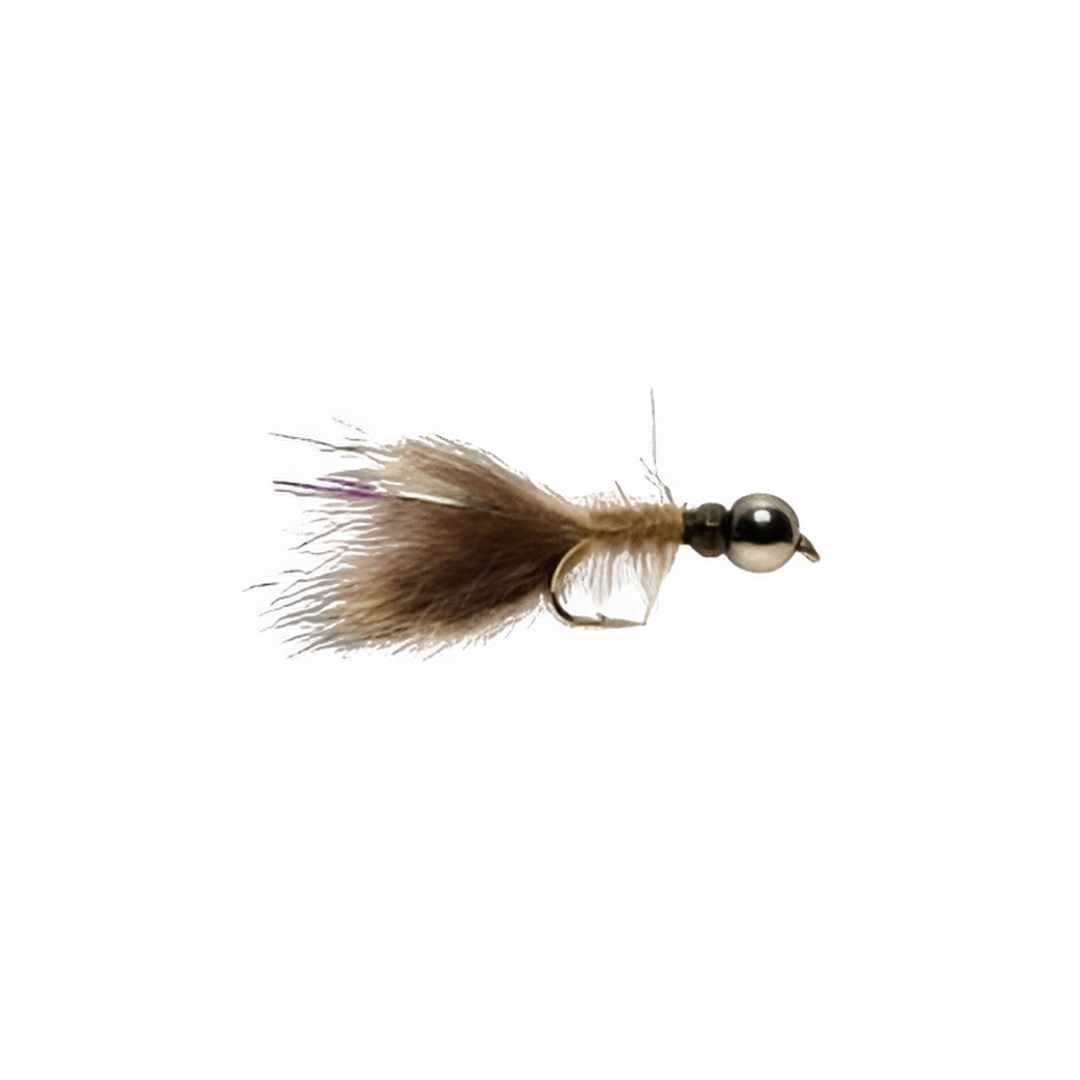
One of the most recognized nymphs ever tied, thanks to its "buggy," spiky profile that mimics nearly any natural nymph, reliable even without a hatch in progress.The Hare's Ear Nymph has stayed in fly boxes for well over a century because its rough, translucent dubbing simply looks alive in the water. That buggy texture works in the angler's favor under the ice, where trout often key on general movement and silhouette rather than an exact match to the hatch. It's a forgiving pattern for anglers newer to ice fishing with flies, since it produces even when presentation isn't perfect..
Color and Size Recommendations
- Sizes 6-20 (size 14 most common for ice)
- Natural and olive
- 2.8mm tungsten bead on size 14 hooks
How to Fish a Hare's Ear Nymph
- Fish 6-18 inches off bottom
- Strip slowly in still water to trigger reaction strikes
- Use beadheads in deep water, unweighted in shallow water
5.San Juan Worm
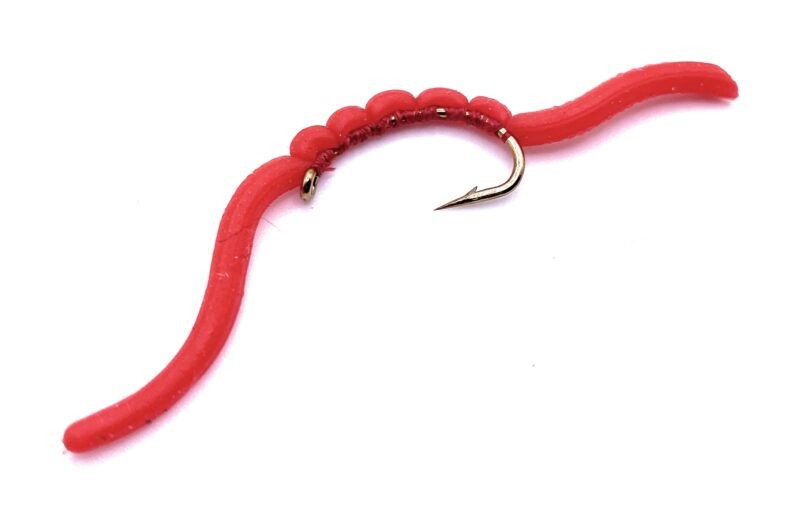
A top pick among winter trout flies, imitating aquatic worms dislodged from streambeds and, in winter, washed under the ice.Few flies trigger as fast or as aggressive a strike as the San Juan Worm, especially when trout are conserving energy in cold water and looking for an easy meal. Its simplicity is its strength: no legs, wings, or tails to imitate, just a segmented worm profile that reads instantly to hungry fish. Because it works equally well fished dead-still or with the slightest twitch, it's one of the more beginner-friendly ice fishing flies for trout.
Color and Size Recommendations
- Sizes 10-14
- Red and pink (also tan and purple)
- Anodized pink bead for weight and trigger point
How to Fish a San Juan Worm
- Use non-beadhead versions in clear water
- Use beadhead versions when visibility drops
- Fish dead-still near bottom structure
6.Prince Nymph
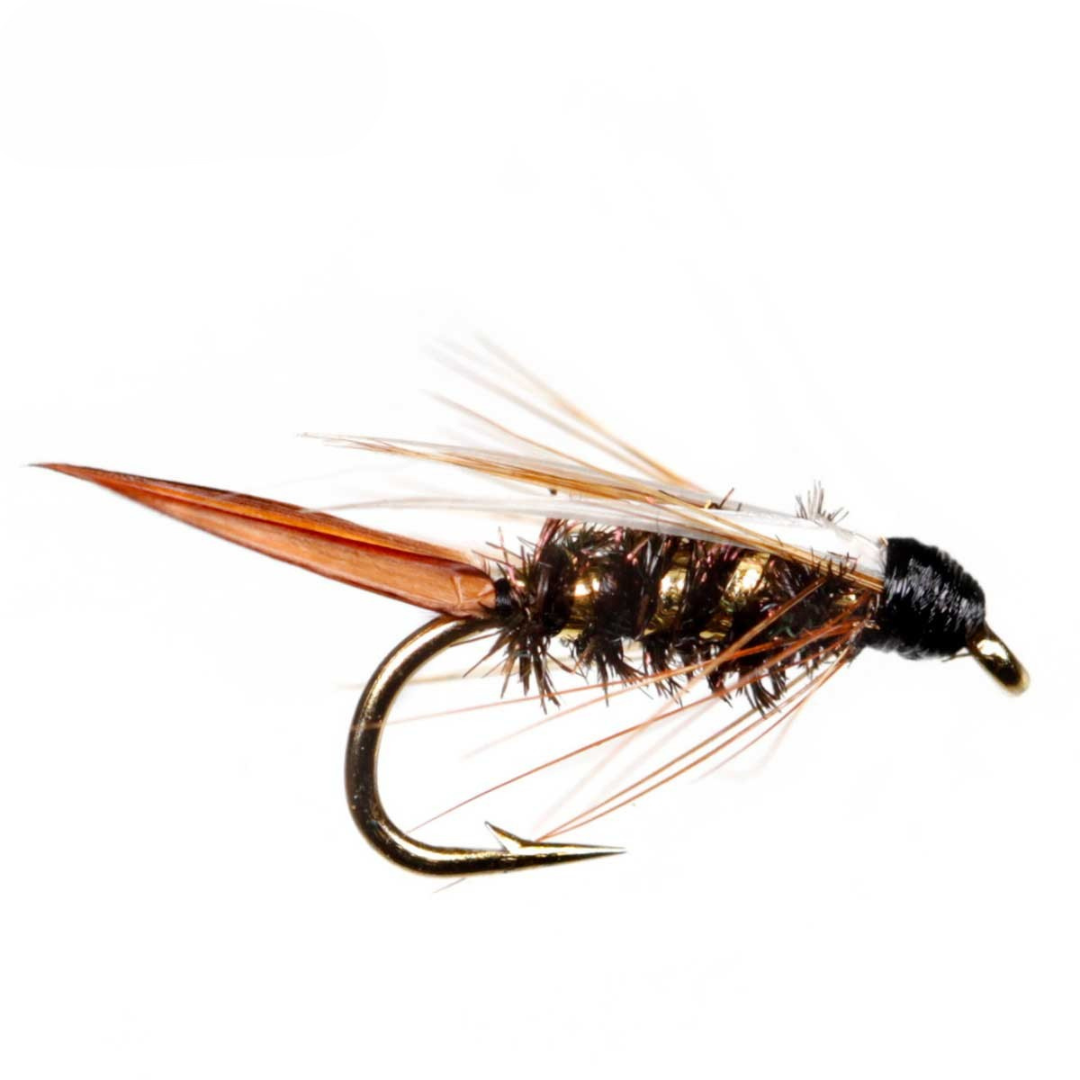
An attractor pattern that doesn't imitate anything specific yet remains one of the most productive ice fishing fly patterns ever tied, thanks to its contrasting white biot wings.The Prince Nymph's peacock herl body has a natural shimmer that catches light even in low winter visibility, making it stand out against a muted ice-fishing backdrop.
Color and Size Recommendations
- Sizes 12-18 (size 14 favorite)
- Peacock herl body, white goose-biot wings
- Brass or tungsten beadhead for faster sink
How to Fish a Prince Nymph
- Fish 24-48 inches under a strike indicator
- Use as the larger fly in a two-fly rig
- Pair with a smaller dropper like a Zebra Midge
7.Copper John

One of the best-selling nymphs in the world. Its compact, weighted profile sinks fast, making it ideal for reaching trout holding deep under the ice.The Copper John earned its reputation as a fish-catching machine long before ice anglers adopted it, and its dense wire body makes it just as effective through a hole in the ice. Getting a fly to the strike zone quickly matters when daylight and patience are both limited in winter, and few patterns sink as efficiently as this one.
Color and Size Recommendations
- Sizes 10-20
- Copper, red, black, and olive
- Black-and-yellow combinations for extra attraction
How to Fish a Copper John
- Fish deep, near bottom structure
- Use in fast or turbulent water for best results
- Combine with a lighter dropper fly
.
8. Scud Pattern

Scuds stay active through winter, making imitations one of the most dependable ice flies for trout anywhere freshwater shrimp populations exist. Scuds are one of the few food sources trout can count on year-round, since these freshwater shrimp remain active in cold water long after most insect hatches have stopped. That makes scud imitations especially valuable on lakes with healthy weed growth, where trout graze consistently through the winter months.
Color and Size Recommendations
- Sizes 18-20
- Olive, green, tan, and orange
- Add weight for fast sink to bottom
How to Fish a Scud Pattern
- Use a 5-foot, 5X tippet
- Bounce the pattern off the bottom
- Target vegetation edges where trout stack up
9.Mop Fly (Mini)
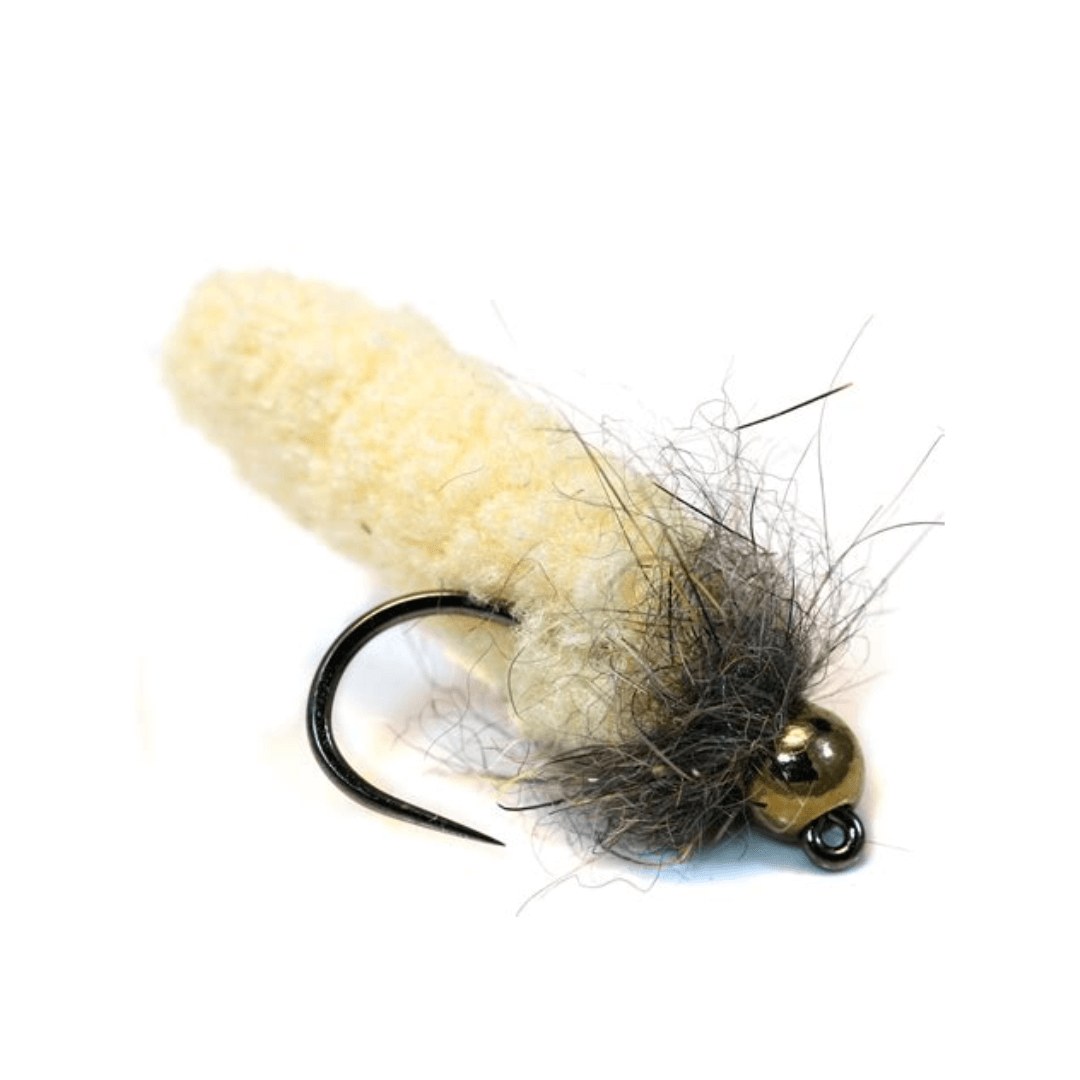
Controversial but undeniably effective, the microfiber body imitates soft-bodied prey like crane fly larvae, a favorite among ice fishing flies for sale for stocked trout. Purists debate whether the Mop Fly counts as a "real" fly, but stocked trout rarely share that opinion. Its soft, pulsing microfiber body moves naturally even on a near-motionless presentation, which is exactly the kind of subtle action winter trout respond to. Bright chartreuse and pink versions stand out in stained water or low light, making this one of the easier ice fishing flies for trout to fish confidently blind. Because it's inexpensive and holds up well, many anglers keep several on hand as an easy confidence pattern for slower days on stocked waters.
Color and Size Recommendations
- Sizes 10-12, barbless jig hooks
- Chartreuse (top color), pink, red, and orange
- 3.8mm tungsten bead
How to Fish a Mop Fly
- Jig slowly near bottom
- Pause to let the microfiber body pulse
- Rotate color before changing size
10. Rainbow Warrior

A best-seller because trout mistake it for sow bugs, scuds, or midge pupae without it representing anything specific, a flash-forward pick among best ice fishing flies. The Rainbow Warrior earns its keep through flash rather than exact imitation, using pearl tinsel to catch available light in dim, under-ice conditions. That subtle sparkle can be the difference-maker on heavily pressured lakes where trout have grown wise to duller patterns. Its small profile also means it can pass for several different food sources at once, from scuds to emerging midges.
Color and Size Recommendations
- Sizes 16-22
- Pearl tinsel body, rainbow scud dubbing
- Red thread hotspot as a strike trigger
How to Fish a Rainbow Warrior
- Fish as a dropper 12-18 inches below a larger pattern
- Use in both stocked and wild trout waters
- Dead-drift near the strike zone
11. Brassie
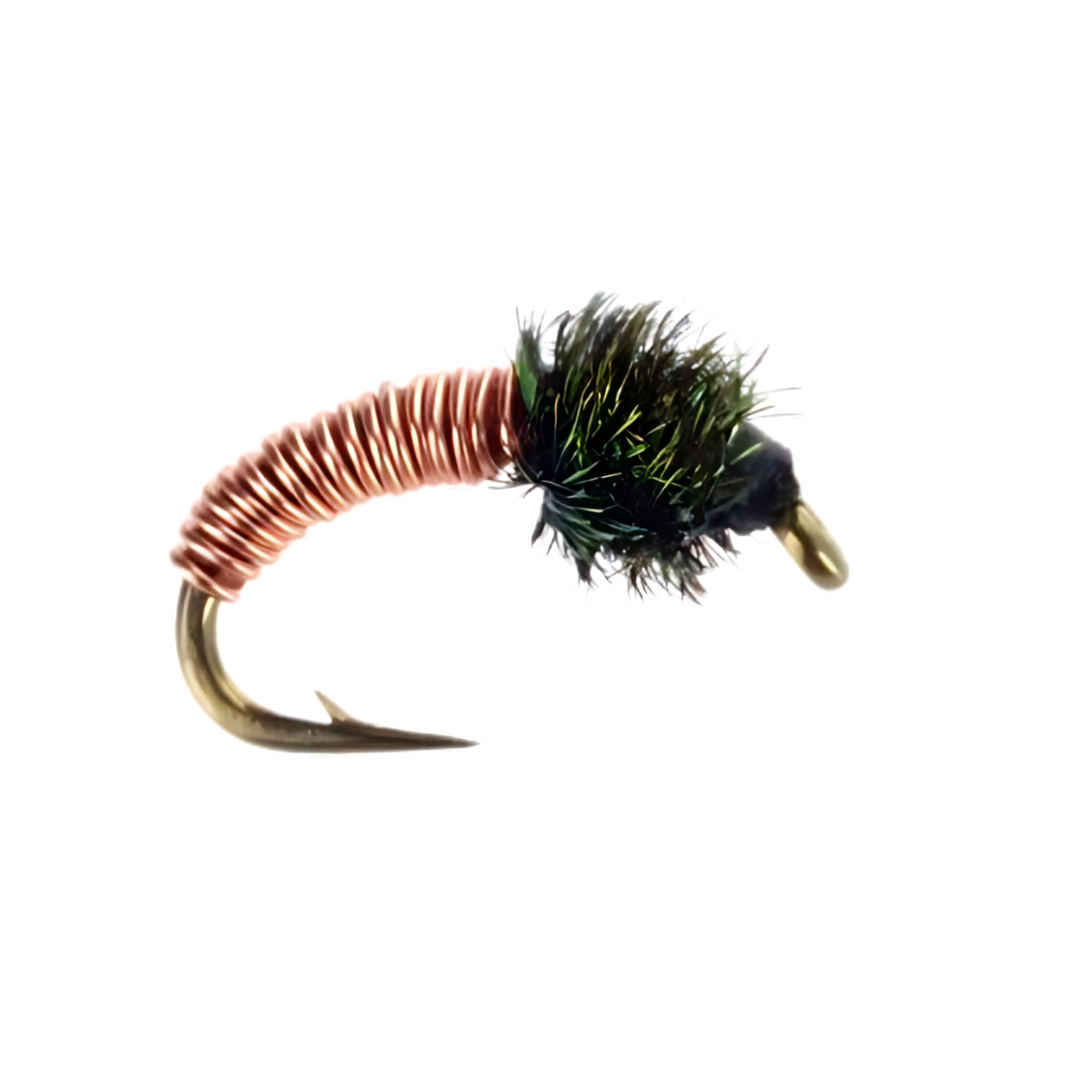
Simple, fast-sinking, and deadly. The copper-wire body imitates both caddis and midge larvae, making it a favorite midge fly for ice fishing. The Brassie's tightly wound wire body gives it weight without bulk, letting it reach depth quickly while keeping a slim, natural silhouette that doesn't spook cautious winter trout. Because it imitates both caddis and midge larvae, it stays productive across a wide range of lakes and conditions without needing an exact hatch match. Its low cost and durability also make it easy to stock in bulk across several colors..
Color and Size Recommendations
- Sizes 16-24 (size 18 most common)
- Copper, red, or black wire
- 5X-7X tippet depending on clarity
How to Fish a Brassie
- Use short, one-inch strips followed by a pause
- Fish behind a floating line and fluorocarbon leader
- Trail behind a streamer for tandem coverage
12. Soft Hackle Wet Fly
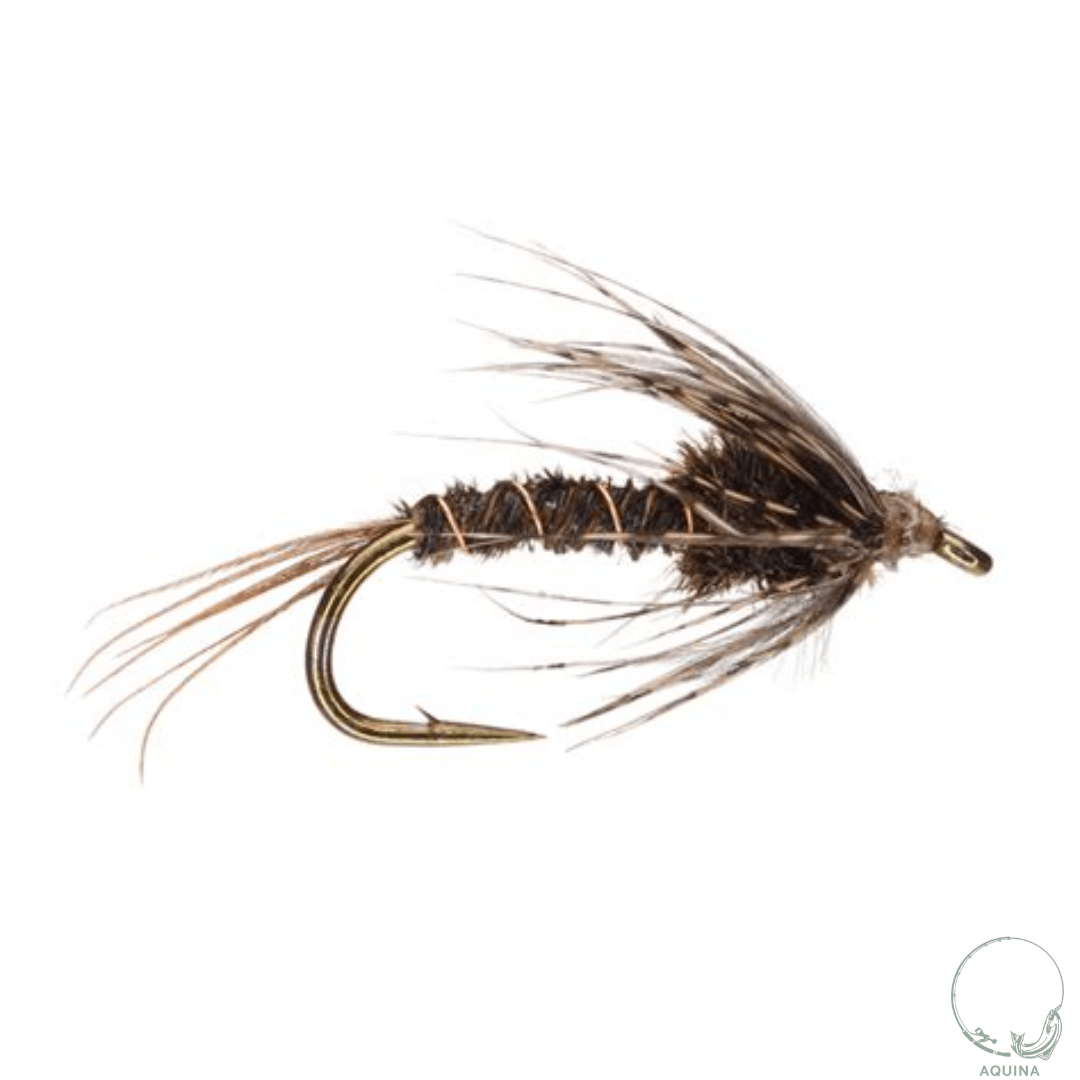
Movement defines this pattern, the hackle collar pulses in the current and traps air bubbles that mimic natural emergers, a staple among trout ice fishing flies. Soft hackle wet flies have caught trout for centuries, and their signature pulsing collar is just as effective under a frozen surface as it is in open water. The trapped air bubbles created by the hackle fibers imitate the natural sheen of an emerging insect, which can trigger strikes even from otherwise inactive fish. Their simple, sparse tie also lets them fish naturally at slow, near-dead-drift speeds ideal for winter presentations..
Color and Size Recommendations
- Sizes 12-16
- Partridge and Orange, Sulfur, Spider patterns
- Beadhead versions in brass or tungsten
How to Fish a Soft Hackle
- Start with a dead drift
- Try jigging and stripping if bites stall
- Fish on the swing near the bottom
13. BLOODWORM CHIRONOMID

Bloodworms are a favorite target for perch, crappie, and trout throughout winter, making them one of the most productive ice fishing fly patterns for pressured, clear water. Bloodworms, the larval stage of chironomids, are a genuine winter staple for fish living in cold, oxygen-rich lakes, which is exactly why imitations perform so consistently through the ice. Their deep red coloring comes from hemoglobin that helps the real insect survive low-oxygen conditions, and matching that hue closely often makes the difference on pressured, gin-clear water. Because natural bloodworms barely move, an almost motionless presentation typically out-fishes any aggressive jigging. Glow versions extend this pattern's usefulness into stained or deeper water where visibility drops and fish rely more on contrast than exact color.
Color and Size Recommendations
- Sizes #6-#12
- Red, maroon, and olive
- Glow chartreuse and glow orange for stained water
How to Fish a Bloodworm
- Use a near-motionless, tight-line presentation
- Fish close to bottom, at hard/soft transition lines
- Use slow, short retrieves only
14. Red Midge Larva
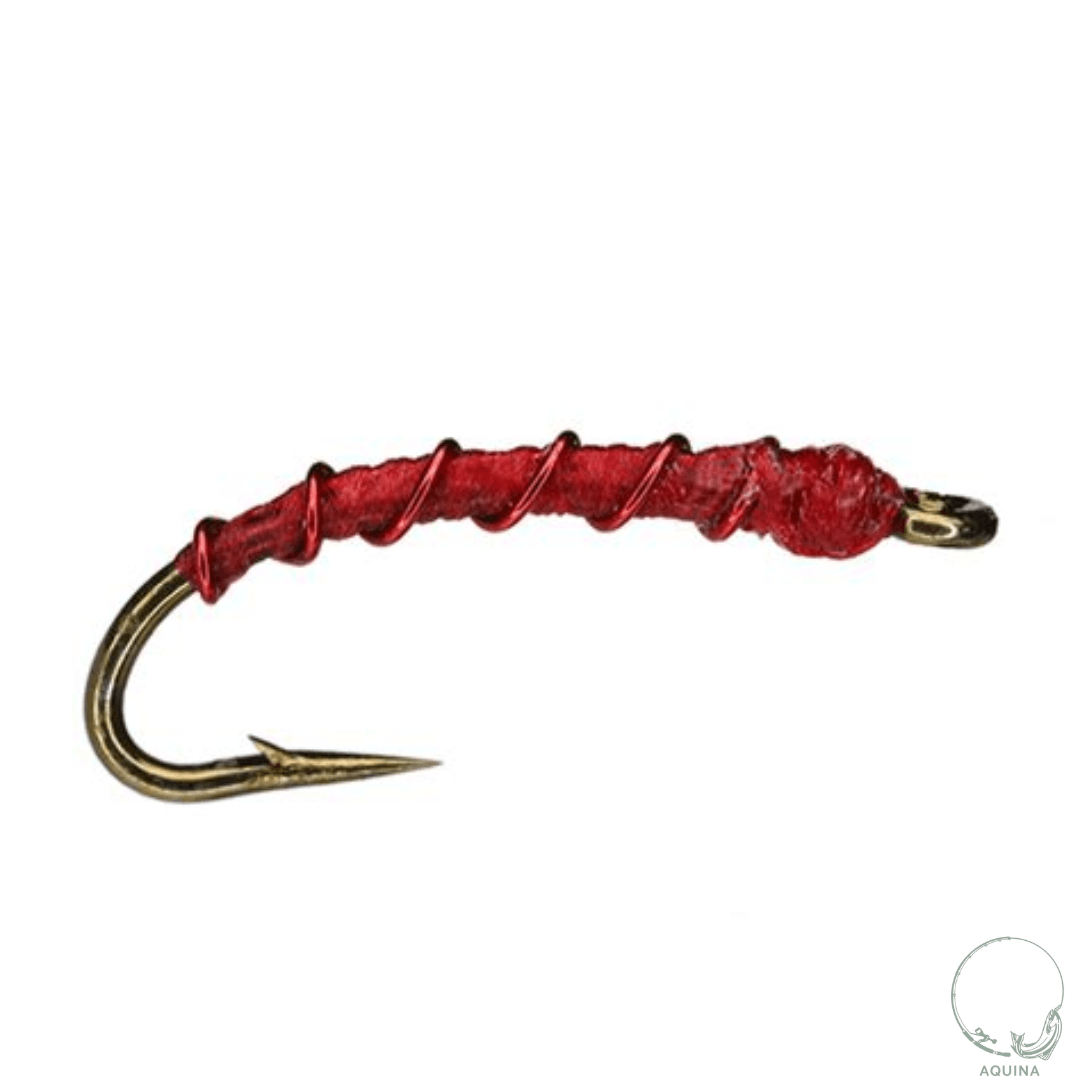
As larvae mature they shift to deep red, becoming irresistible winter trout flies as other food sources diminish in fall and winter. Midge larvae make up a huge share of a trout's winter diet, and their color shift toward deep red as they mature gives this pattern its name and its effectiveness. Because midges hatch year-round in tailwaters and spring-fed lakes, this fly stays relevant even in the dead of winter when other insect activity has all but stopped. Its slim, unweighted design demands precise depth control from added weight rather than bulk on the hook itself, keeping the presentation as natural as possible. t
Color and Size Recommendations
- Sizes 16-22 on small hooks
- Deep red or blood-red thread
- Tungsten bead to eliminate external split shot
How to Fish a Red Midge Larva
- Fish near the streambed
- Position split shot 8 inches above the fly
- Use 6X fluorocarbon tippet for a natural drift
15. Juju Baetis
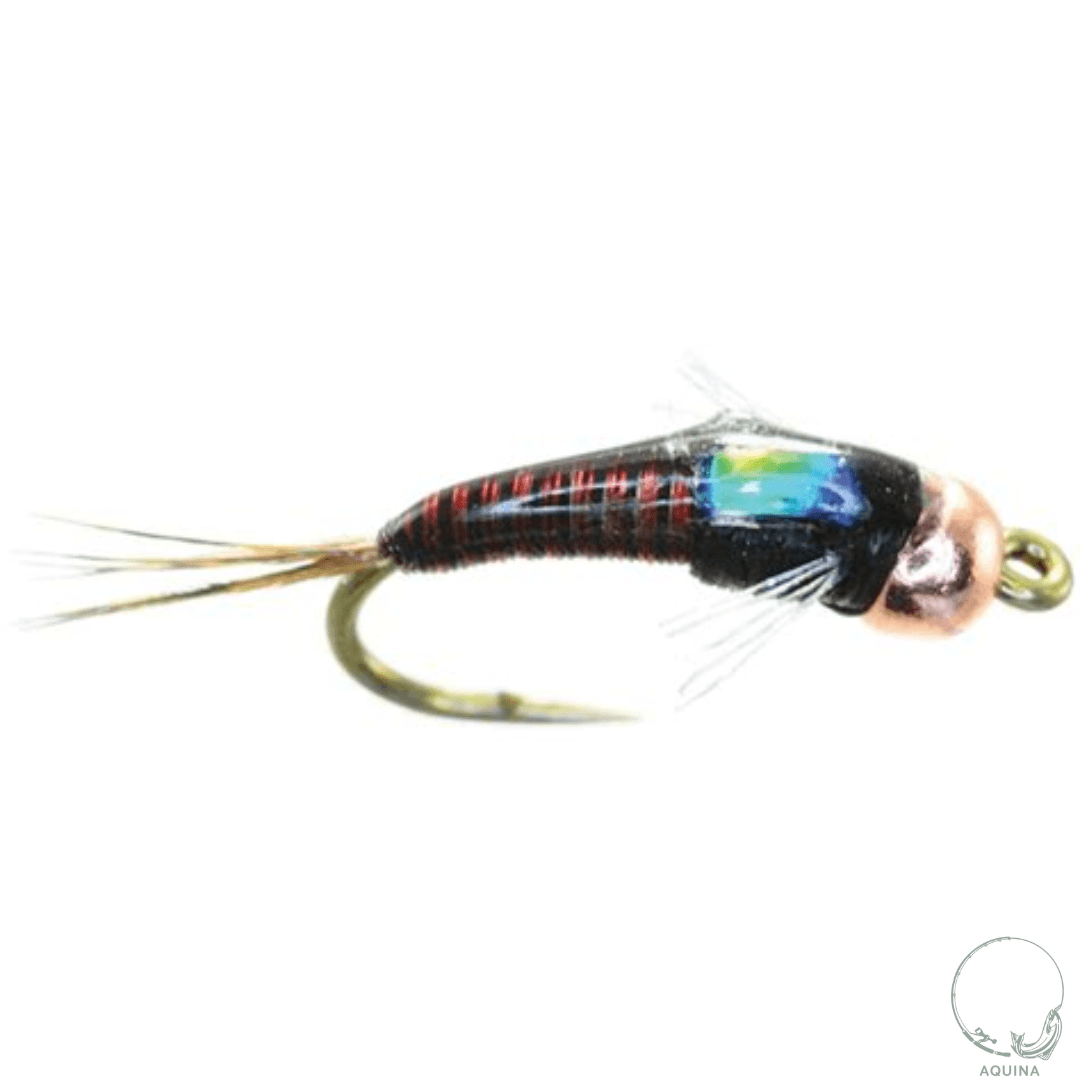
One of the most realistic mayfly nymph imitations available, with segmented ribbing and subtle thorax flash, a strong choice among best ice fishing flies during Blue Wing Olive hatches. Blue Wing Olive mayflies are famous for hatching in the coldest months of the year, often on overcast winter days, and the Juju Baetis was designed specifically to match that emergence. Its segmented ribbing and glass bead give it a lifelike translucency that mimics the natural insect's thorax under low winter light. Because BWOs are one of the few reliable hatches during ice season, having this pattern on hand can turn a slow outing into a strong one almost overnight.
Color and Size Recommendations
- Sizes 20-22 (size 18 beadhead for extra weight)
- Natural olive-brown body with flash ribbing
- Glass bead option for extra shimmer
How to Fish a Juju Baetis
- Dead-drift through seams
- Fish under an indicator or as a dropper below a dry fly
- Use in euro-nymphing setups for pressured trout
16. ICY CADDIS
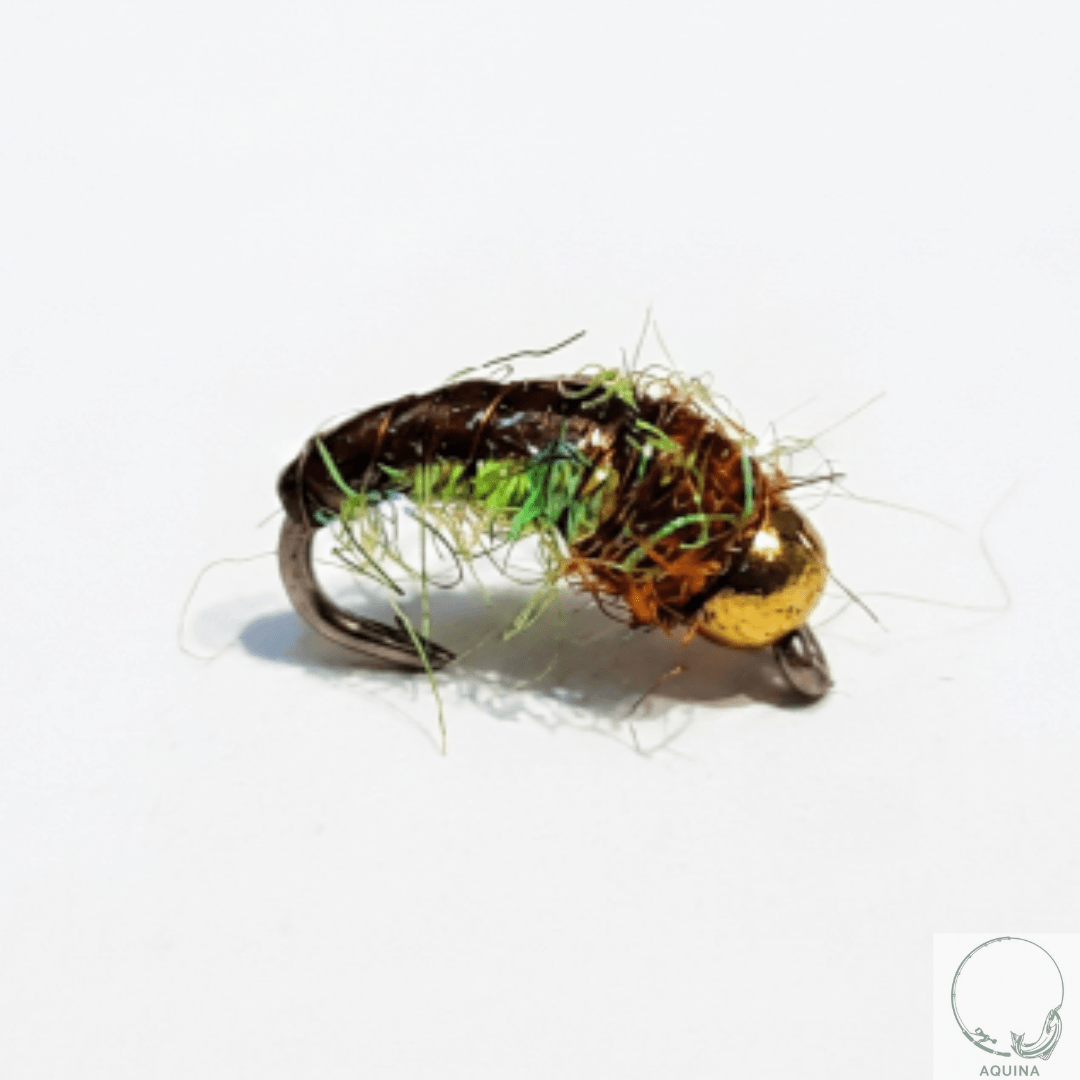
Mimics caddis larvae with added rubber legs and a segmented body, making it effective among ice fishing fly patterns for bottom-feeding trout. Caddis larvae spend most of their life cycle crawling along the bottom in protective cases, a behavior this pattern captures well with its segmented body and subtle rubber legs. Because caddis remain present in the substrate through winter, trout continue keying on this shape long after adult caddis hatches have ended for the year. Its heavier tungsten bead keeps the fly in the productive strike zone longer, which matters when winter feeding windows are short.
Color and Size Recommendations
- Sizes 12-16
- Hare's ear tan, olive, and black
- Tungsten bead for extended strike-zone time
How to Fish an Icy Caddis
- Jig with minimal action to let legs move naturally
- Fish in lakes and slow river sections
- Target low-light conditions for best results
17. Flashback Pheasant Tail

Adding opal tinsel over the wingcase gives this variant extra pull in deep or low-light water, a strong option among ice flies for trout.The Flashback Pheasant Tail takes an already reliable pattern and adds just enough opal tinsel to help it stand out in deep or dimly lit water under the ice. That extra flash can be the deciding factor on overcast winter days or in lakes with reduced visibility, where a purely natural pattern might go unnoticed. Carrying both weighted and unweighted versions gives you flexibility to fish it as a straightforward bottom nymph or let it rise naturally at the end of a drift, imitating an emerging insect heading toward the surface.
Color and Size Recommendations
- Sizes 12-20 (size 18 most versatile)
- Natural pheasant tail with opal tinsel flash
- Weighted (2.7mm tungsten) or unweighted
How to Fish a Flashback Pheasant Tail
- Use weighted versions for bottom presentations
- Use unweighted versions to rise at drift's end
- Fish as a dropper behind larger attractors
18. Tungsten Beadhead Caddis
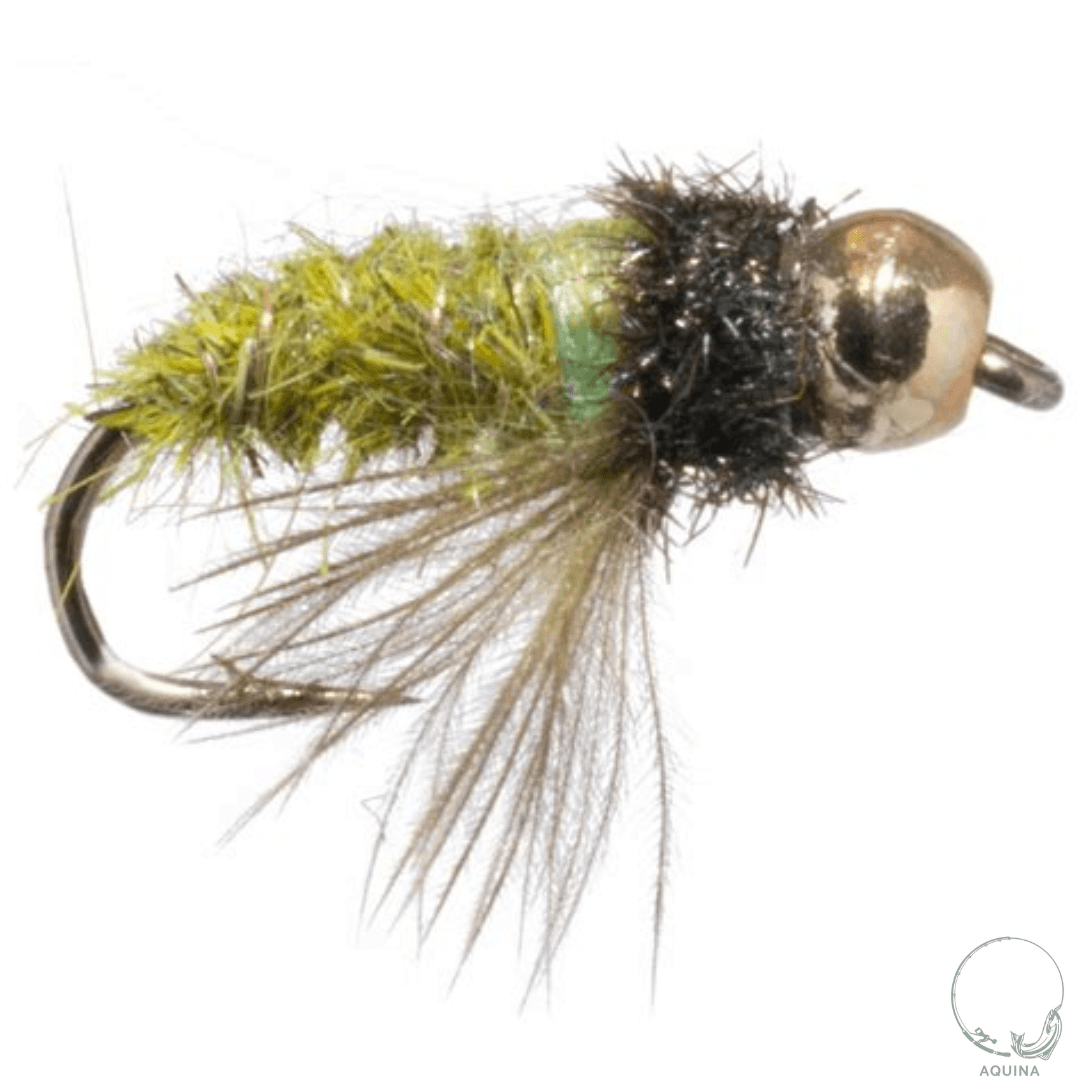
Tungsten's density makes this one of the fastest-sinking ice fishing fly patterns, punching through thick ice holes quickly. Fishing a hole in the ice means working with a narrow, vertical window rather than casting across open water, which makes sink rate one of the most important factors in fly selection. The slotted tungsten bead on this caddis pattern gets it down to depth fast, maximizing actual time spent in front of fish rather than in transit. It's a smart choice on lakes with a strong caddis population and significant depth to cover.
Color and Size Recommendations
- Sizes 12-16
- White, chartreuse, and red
- Slotted tungsten bead for maximum weight
How to Fish a Tungsten Beadhead Caddis
- Let the fly sink fully to depth
- Jig vertically along bottom structure
- Use where caddis larvae are the dominant forage
19. Tungsten Ice Bug
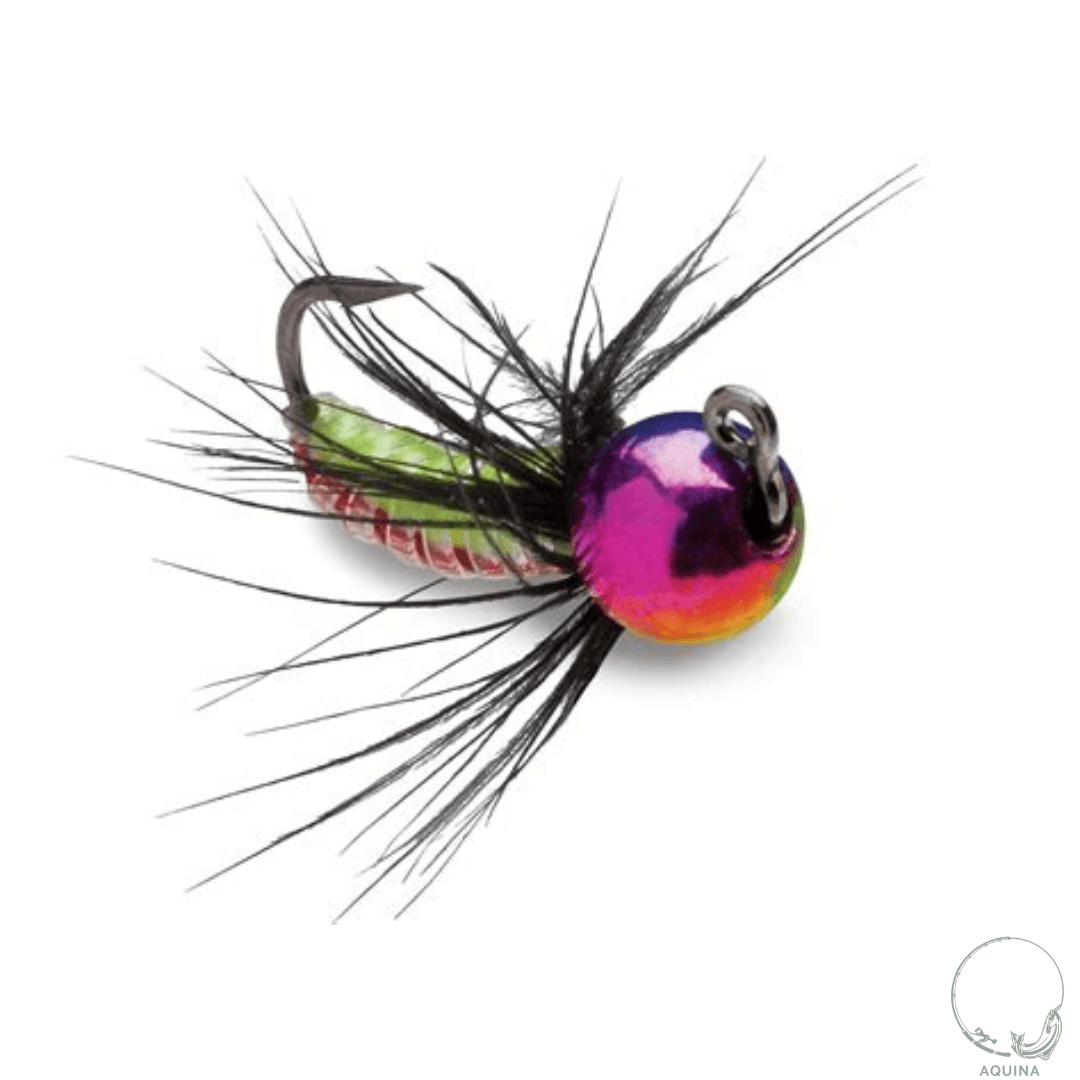
A compact, heavily weighted nymph built for vertical jigging, delivering a fast, direct fall to reach suspended or bottom-holding trout, a key entry among best ice fishing flies. Unlike patterns adapted from open-water fly fishing, the Tungsten Ice Bug is designed from the start for straight-down, through-the-hole presentations, which shows in its compact, dense build. That design makes it especially effective for reaching trout holding in deep lake basins, where getting a natural fall quickly matters more than a lifelike silhouette. A slow, deliberate lift-and-drop with a real pause at the bottom often outproduces faster jigging in cold winter water.
Color and Size Recommendations
- Sizes 12-16
- Black, olive, and brown (natural)
- Hot-pink and orange (reaction triggers)
How to Fish a Tungsten Ice Bug
- Use a slow lift-and-drop cadence
- Pause several seconds at the bottom of each jig
- Fish deep lake basins for best results
20. Wiggler Ice Fly
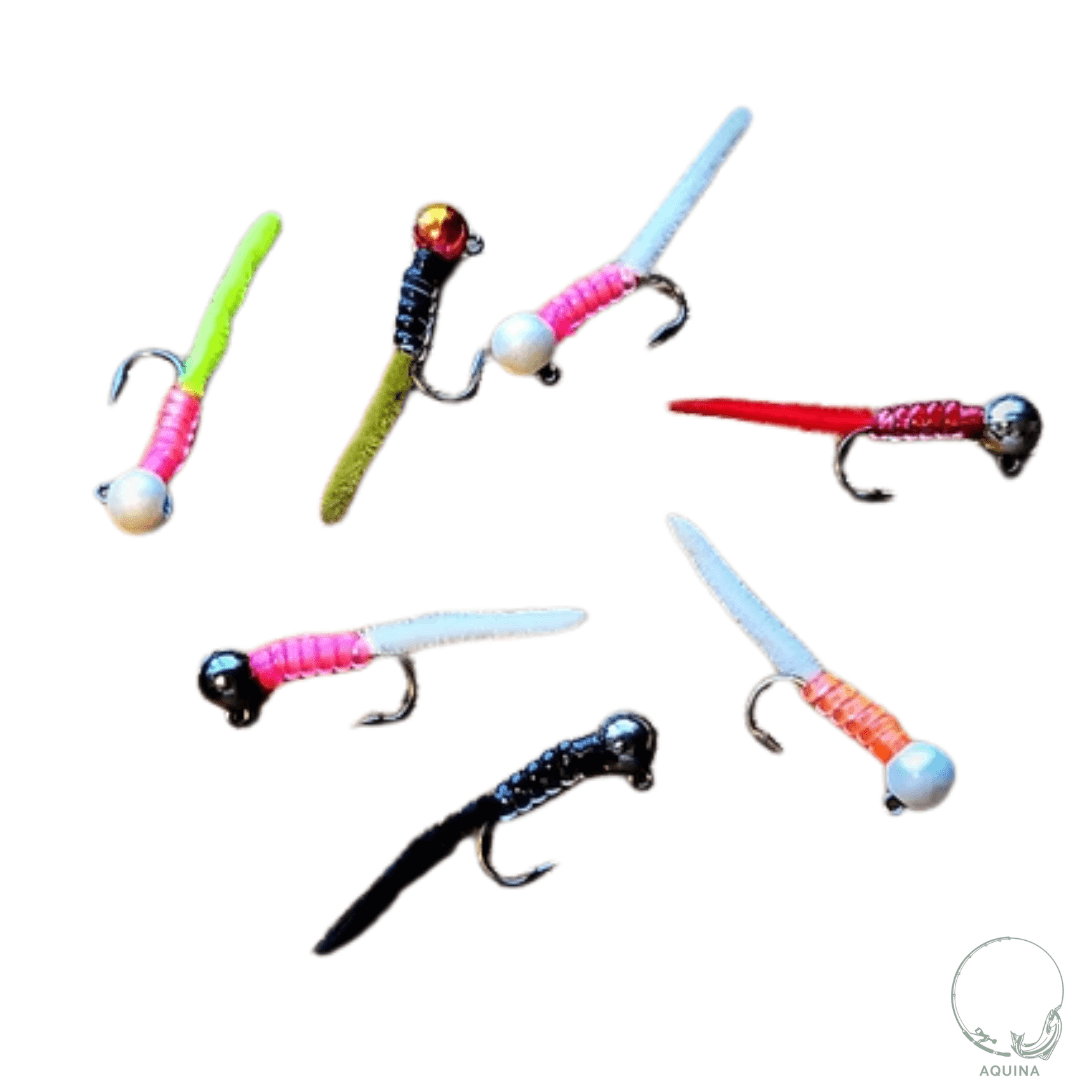
Imitates mayfly and damselfly nymphs wriggling near the substrate, using a segmented body and tail for constant subtle motion, an underrated ice fishing fly pattern. The Wiggler Ice Fly doesn't get the same attention as more famous patterns, but its constantly moving tail gives it a real edge on natural lakes with healthy mayfly and damselfly populations. Because the tail keeps wriggling even after your jig has stopped, it creates a lifelike pause that can hold a following trout's interest just long enough to commit. Fishing it just off bottom, where naturally occurring nymphs are most active, tends to produce the best results.
Color and Size Recommendations
- Sizes 12-16
- Olive, brown, and black
- Marabou or rubber tail for movement
How to Fish a Wiggler Ice Fly
- Jig, then hold to let the tail continue moving
- Fish just off bottom
- Use in natural lakes with nymph populations
21. Tinsel Flash Tungsten Ice Bug
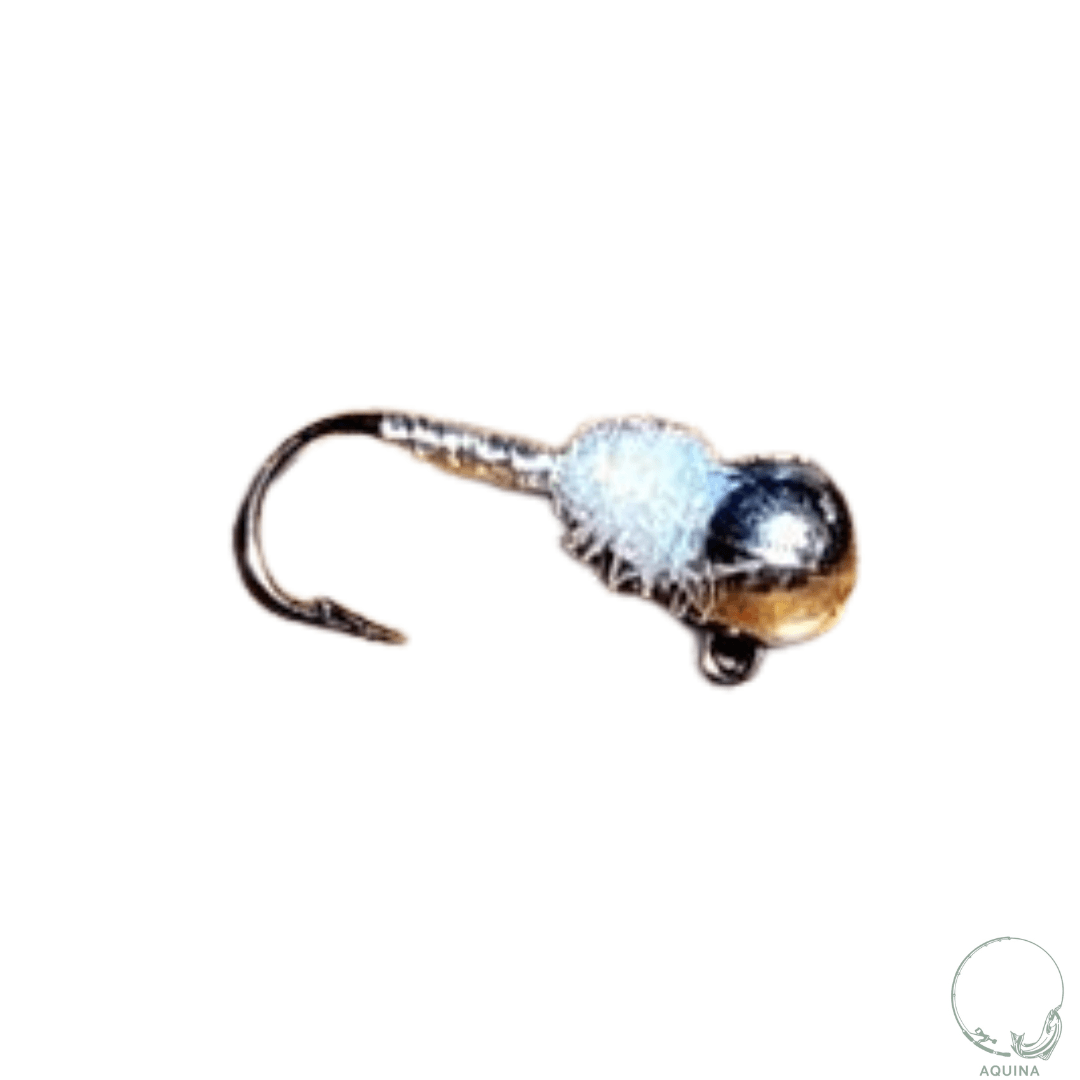
A flashier cousin of the Tungsten Ice Bug, adding pearl or silver tinsel for extra visibility in deep, dark, or stained water, an effective trout ice fishing fly. In deep, dark, or stained winter water, visibility becomes one of the biggest obstacles to getting a trout's attention at all, and that's exactly the gap this pattern is built to fill. The added pearl or silver tinsel catches whatever ambient light filters through the ice, giving fish something to key on from farther away than a duller pattern would allow. Once a trout moves in to investigate the flash, the weighted tungsten body keeps the fly in the zone rather than darting away. It's worth keeping in reserve for stained lakes or deeper basins where standard Ice Bugs come up short.
Color and Size Recommendations
- Sizes 12-16
- Black/silver and olive/pearl
- Tungsten bead for fast sink
How to Fish a Tinsel Flash Ice Bug
- Use the same lift-and-pause jigging as a standard Ice Bug
- Fish in low-visibility or deep water
- Let flash draw fish before the bead pulls it into the zone
22. Freshwater Shrimp

Closely related to scud patterns, this imitation targets trout feeding on crustaceans in lakes and slow rivers, a dependable source of ice flies for trout. Freshwater shrimp, like scuds, are a reliable protein source for trout throughout the coldest months, since they're active in weed beds and along bottom structure regardless of season. A light, natural fall on this pattern helps it mimic the real crustacean's gentle swimming motion rather than looking artificially weighted or stiff.
Color and Size Recommendations
- Sizes 14-18
- Olive, gray, and orange
- Light weight for a natural fall
How to Fish a Freshwater Shrimp
- Fish near bottom or along weed edges
- Use a slow retrieve or subtle jig
- Imitate natural swimming motion
23. Mini Minnow
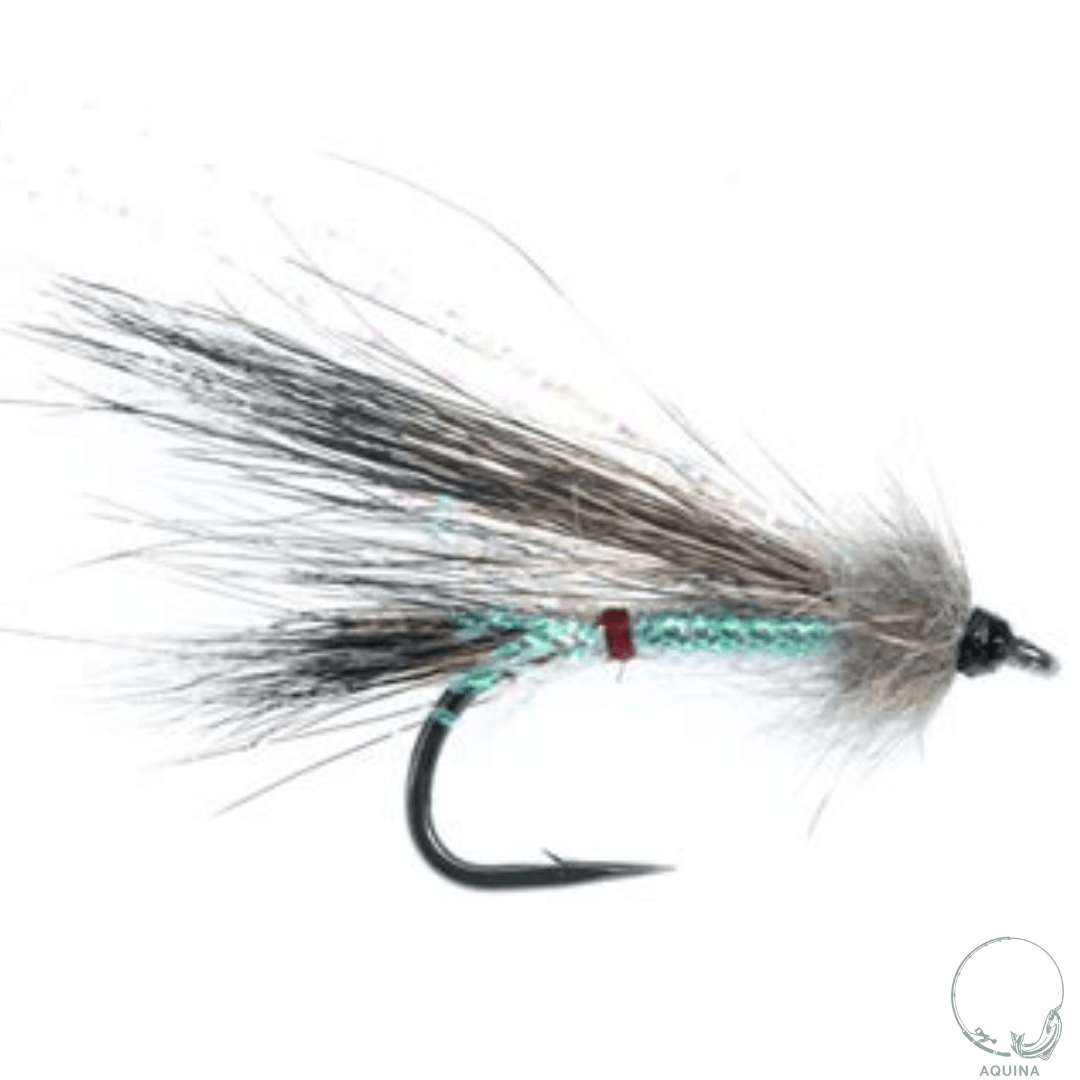
Imitates small baitfish that trout target opportunistically, even in cold water, a realistic addition among ice fishing fly patterns.Larger trout don't stop feeding on baitfish just because the surface has frozen over, and the Mini Minnow gives ice anglers a realistic way to target those more aggressive, size-driven fish. Its slim, silver-toned profile mimics small forage species found in many natural lakes, making it a smart choice on waters known for good baitfish populations. A slow crawl-and-pause retrieve does a better job selling the illusion of an injured or disoriented baitfish than a fast, erratic strip would in near-freezing water.
Color and Size Recommendations
- Sizes 8-12, jig hooks
- Silver, white, black/silver
- Best in lakes with natural baitfish forage
How to Fish a Mini Minnow
- Use a slow crawl-and-pause retrieve
- Fish just off bottom or suspended near structure
- Target larger, more aggressive trout
24. Fuzz Bug Ice Fly
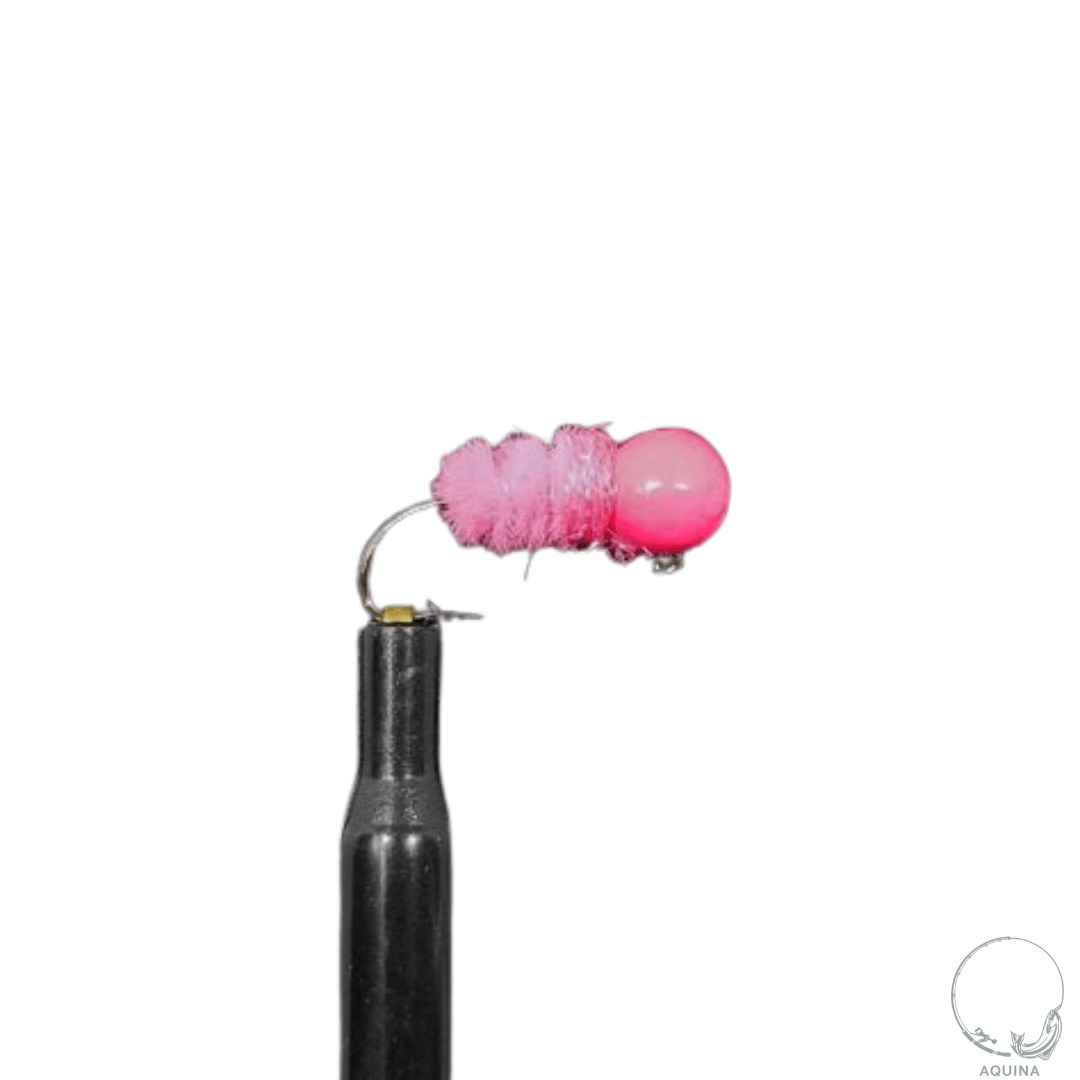
A soft, buggy dubbed body creates a general aquatic-insect silhouette, a solid, general-purpose winter trout fly for searching water. When you're fishing a new lake for the first time in winter and don't yet know what trout are keyed on, a general-purpose pattern like the Fuzz Bug is a smart place to start. Its soft, buggy dubbing creates a believable silhouette without imitating anything too specific, which keeps it from looking out of place regardless of local forage. Because it relies on shape and texture rather than flash, it tends to work well even in gin-clear water where shinier patterns can spook cautious fish.
Color and Size Recommendations
- Sizes 12-16
- Natural, olive, and black
- No added flash needed
How to Fish a Fuzz Bug
- Use a slow dead-drift or gentle jig
- Fish near bottom
- Rotate colors before changing size
25. Split Tail Ice Fly
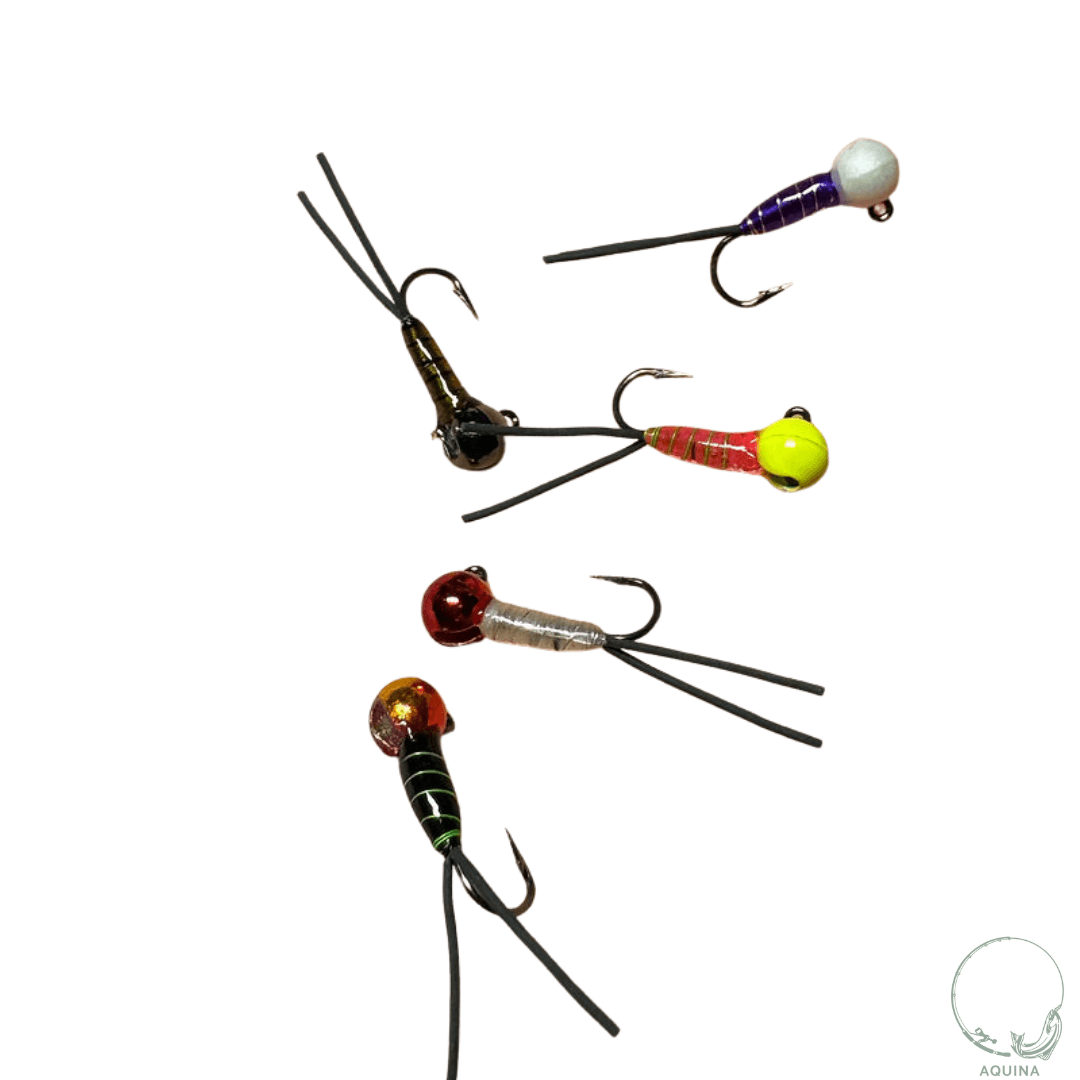
A divided tail adds movement to a buggy, segmented body, a specialized ice fishing fly pattern for subtle profile changes on tough bite days. On tough days when standard nymphs and attractors aren't drawing strikes, small profile changes can make a real difference, and that's where the Split Tail Ice Fly earns its place in the box. The divided tail creates a slightly different kind of movement than a single marabou or rubber tail, giving fish a subtly different visual cue without changing the overall size or color scheme. It's best treated as a rotation option rather than a first choice, brought out specifically when more common patterns have already been tried without success near bottom structure.
Color and Size Recommendations
- Sizes 12-16
- Brown, olive, and black
- Tail split for extra motion
How to Fish a Split Tail Ice Fly
- Fish slowly near bottom structure
- Let the tail separate naturally
- Use when standard patterns aren't producing
26. Stink Bug Ice Fly
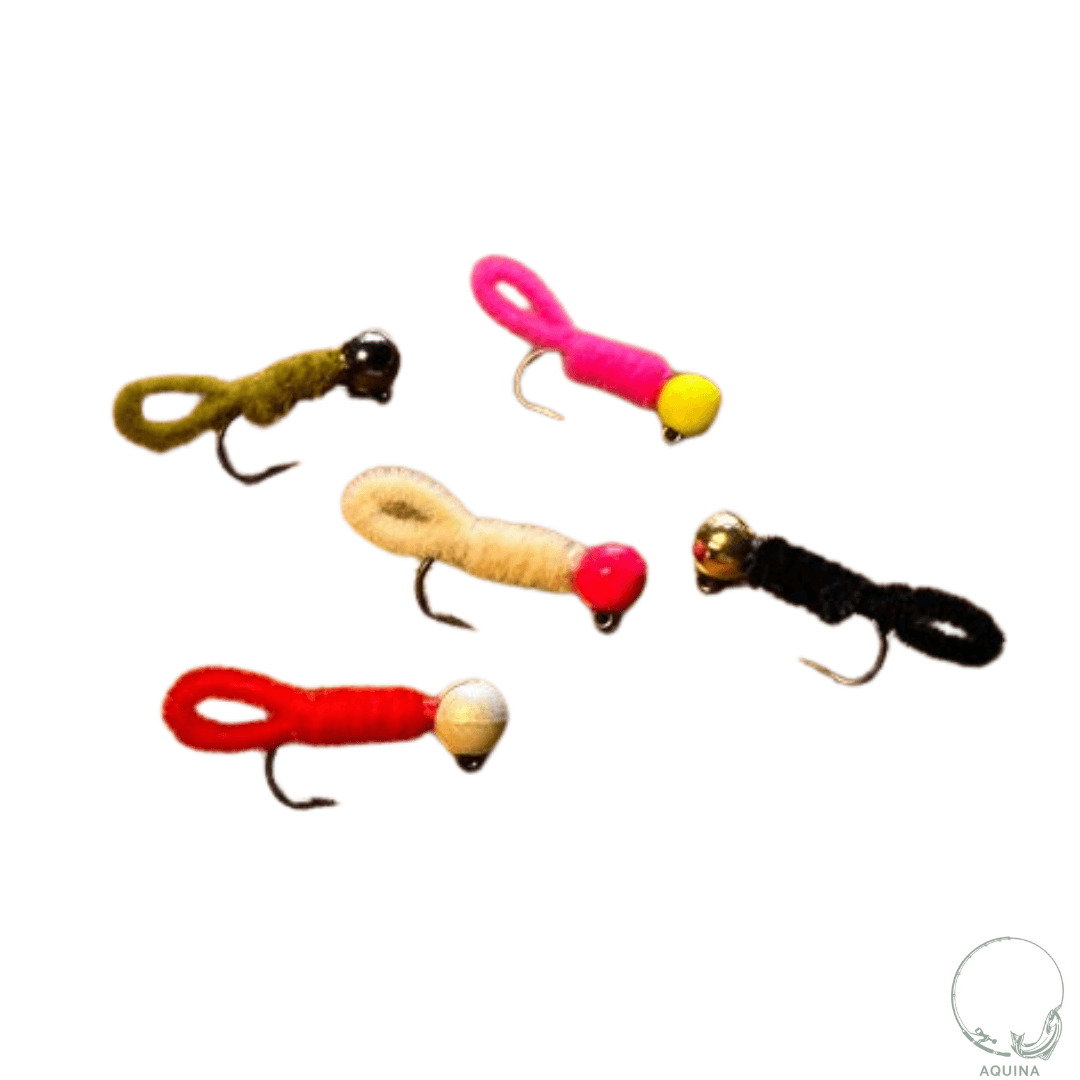
Imitates small aquatic beetles with a bulkier profile than typical midge patterns, a useful rotation among best ice fishing flies for a slightly larger meal. Not every winter feeding opportunity is small, and the Stink Bug gives anglers a way to offer trout a slightly larger, more calorie-rich meal without switching to a full streamer. Its bulkier profile imitates aquatic beetles, which remain present in the substrate even during the coldest months.
Color and Size Recommendations
- Sizes 12-16
- Black, brown, and dark olive
- Minimal added flash
How to Fish a Stink Bug
- Use minimal action
- Let it rest on or near bottom
- Rely on realistic bulk to trigger strikes
27. Ultimate Ice Fly
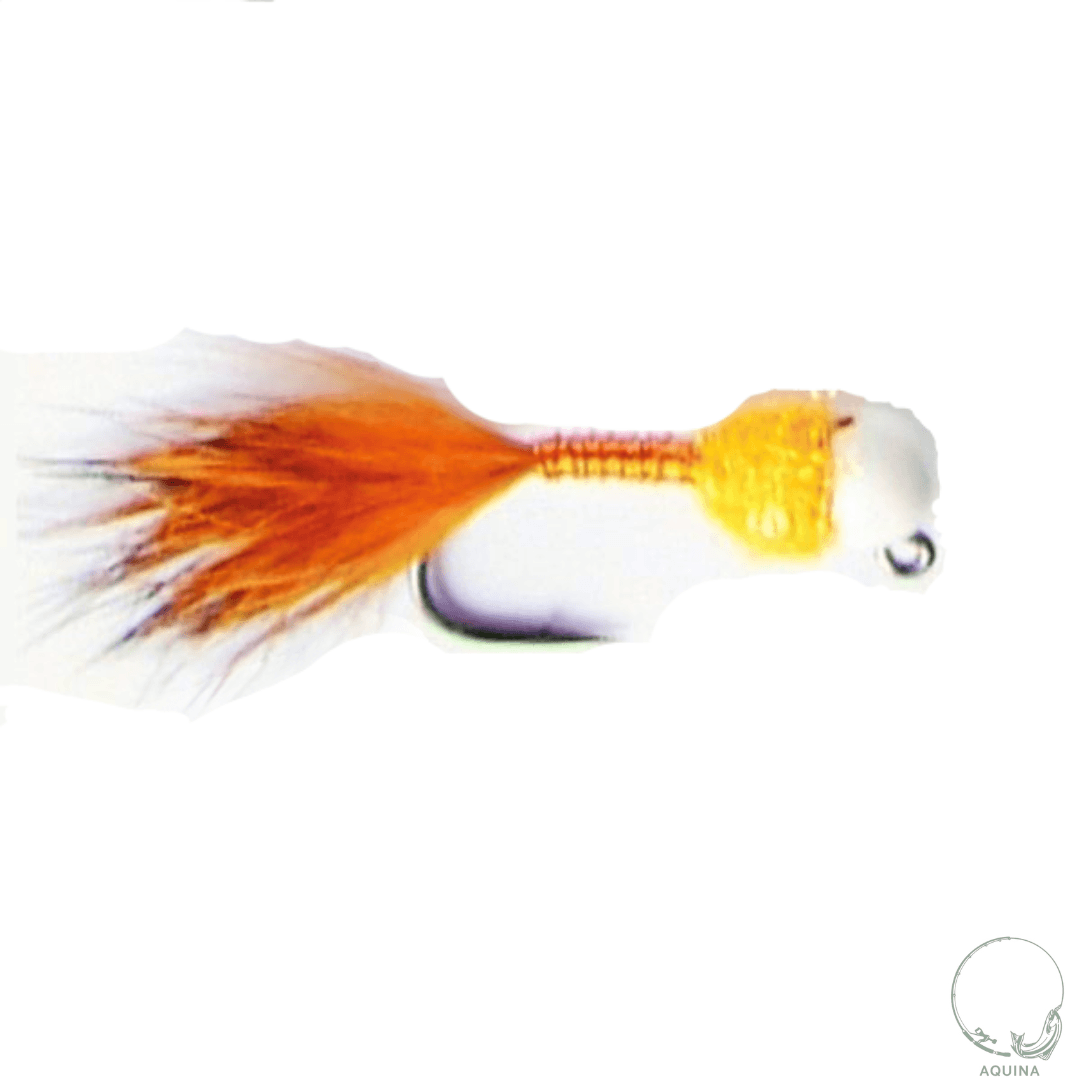
A do-it-all combination pattern blending jig, nymph, and attractor styles, a recommended starting point among ice fishing flies for sale for beginners. For anglers just getting started with ice fishing with flies, narrowing down which of dozens of patterns to buy first can be overwhelming, which is exactly the problem the Ultimate Ice Fly solves. By blending elements of a jig, nymph, and attractor into one design, it covers several bases at once rather than specializing in a single presentation. Its versatility across conditions makes it a dependable fallback when you're unsure what else to try, and its simple lift-and-drop retrieve is easy to learn on your first few outings.
Color and Size Recommendations
- Sizes 12-16
- Black, olive, and hot-pink
- Versatile across multiple conditions
How to Fish an Ultimate Ice Fly
- Use a standard lift-and-drop jig
- Fish near bottom
- Use as a reliable fallback pattern
28. Tungsten Ice Bug
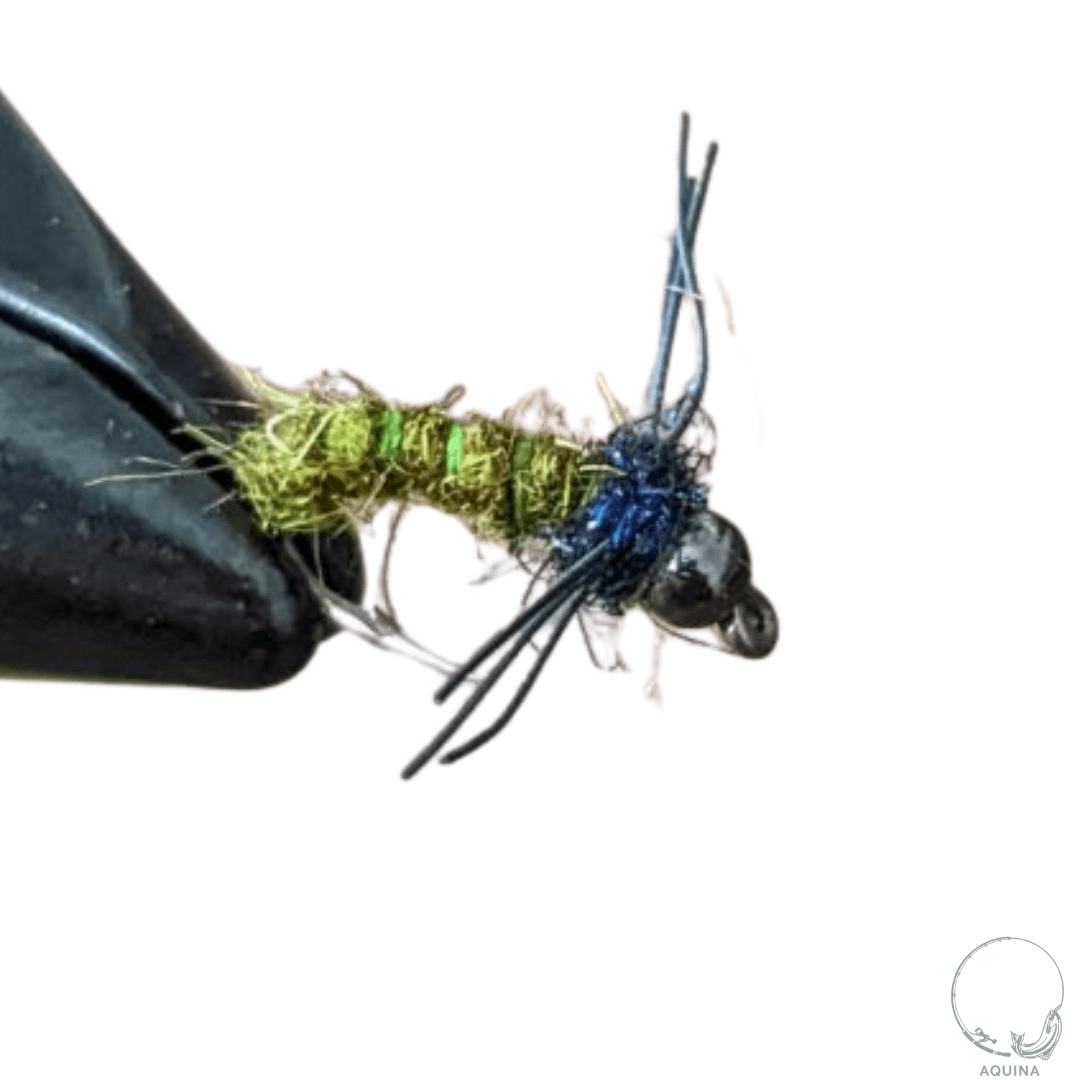
A heavier tungsten variant of the Icy Caddis, trading subtlety for faster sink speed, the most situational entry among these ice fishing fly patterns. The Icy Caddis Ultra isn't an everyday pattern, but on the deepest lake basins where standard tungsten flies struggle to reach bottom fast enough, its extra-heavy bead earns its place in the box. Trading some subtlety for sink speed is a worthwhile tradeoff when trout are holding well below where lighter flies can realistically be fished in the limited time available through a single hole. Bright color options like chartreuse and red also help it remain visible at depth, where natural tones lose contrast quickly. Save this one specifically for the deepest, most challenging winter water in your rotation.
Color and Size Recommendations
- Sizes 12-16
- White, chartreuse, and red
- Extra-heavy tungsten bead
How to Fish an Icy Caddis Ultra
- Jig vertically
- Let it settle fully between movements
- Use in deep lake basins
Final Thoughts: Choosing the Best Ice Fishing Flies for Trout
Stocking a well-rounded ice box is the key to consistent winter success. The most productive flies for ice fishing span several categories, midges, nymphs, worms, attractors, and jig-style patterns, because trout preferences shift daily with light, pressure, and water clarity. Start with proven, high-popularity options like the Zebra Midge, Micro Woolly Bugger, and Pheasant Tail Nymph, then round out your box with specialized ice flies for trout like the Tungsten Ice Bug or Freshwater Shrimp for tougher days. Whether you're searching for best ice fishing flies, dependable winter trout flies, or simply browsing ice fishing flies for sale, matching pattern, size, and presentation to conditions is what separates a slow day on the ice from a personal best.