
TOP 11 BEST FLIES FOR PA TROUT
My experience as an avid angler has taught me that picking the best flies for fly fishing in PA can mean the difference between a great catch and an empty creel. The state offers endless opportunities with more than 125 stocked trout streams that stay open all year. The legendary Little Juniata River stretches 32.1 miles and teems with wild brown trout. Local fishing enthusiasts have created their own breakthroughs here—the Green Weenie fly, a Pennsylvania original, now sits in every serious angler's box.
The right fly patterns are vital when you cast on limestone streams like Big Fishing Creek or wait patiently for the famous Green Drake hatch on Penns Creek. I have tested countless combinations in a variety of Pennsylvania waters, and these top 15 patterns consistently fool even the pickiest trout.
1. Pheasant Tail Nymph

Shop Pheasant Tail Nymph at Wholesale Price per Dozen at AquinaFlies.com – Perfect for Trout Fishing in Pennsylvania.
The Pheasant Tail Nymph is one of the most versatile and effective patterns I've used in Pennsylvania's waterways of all types. Frank Sawyer created this pattern in 1958, and it has become the life-blood of my fly box.
Pheasant Tail Nymph Pattern Variations
The PTN's beauty comes from how adaptable it is. The traditional pattern uses copper wire and pheasant tail fibers, and I really like these key variations:
| Pattern Type | Best Usage | Sizes |
|---|---|---|
| Traditional PTN | Clear water, selective fish | 14-18 |
| Beadhead Flashback | Deep pools, fast water | 12-14 |
| CDC Enhanced | Shallow runs | 16-18 |
Another fantastic pattern to consider for PA waters is the Soft Hackle Pheasant Tail, which adds even more versatility with its subtle movement in the water, making it irresistible to trout in both calm and moving streams.
Best Waters for Pheasant Tail in PA
My time on Pennsylvania's streams has shown that PTNs work best in limestone streams and spring creeks. The PTN makes an excellent dropper pattern in PA waters, especially when you have a hopper-dropper setup going.
Seasonal Effectiveness of Pheasant Tail
PTNs work well year-round, though I've noticed clear patterns in how they perform. I make sure to pack sizes 12, 14, and 16 for early season fishing. These seasonal approaches have given me the best results:
- Spring: Fish smaller sizes (16-18) during mayfly hatches
- Summer: Use beadhead versions in deeper pools
- Fall: Switch to larger patterns (12-14) for aggressive feeding
- Winter: Return to smaller sizes (16-18) for selective fish
I've developed a technique using CDC variations that adds extra movement in the water without looking too flashy. The pattern works consistently in deeper sections with different weighted variations.
2. Wooly Bugger

The Wooly Bugger stands out as a powerhouse pattern among all the flies in my Pennsylvania trout box. I've found this versatile fly can mimic everything from baitfish to leeches. You need this fly to fish successfully in PA waters.
Wooly Bugger Color Selection
Your color choice can make a big difference in catch rates. Three colors have proven to work best:
| Color | Best Conditions | Primary Imitation |
|---|---|---|
| Black | Stained/high water | Leeches |
| Olive | Clear water | Baitfish |
| Brown | Natural presentation | Hellgrammites |
You should try switching colors when fish aren't biting - a simple change often leads to immediate strikes.
Wooly Bugger Fishing Techniques
My countless hours on PA waters have helped me perfect these productive techniques:
- Dead drift presentation in moving water, let it tumble naturally
- Down-and-across swing with short strips
- Upstream cast with quick retrieves for aggressive strikes
Depth control is vital when you pair it with the right technique. I use beadhead versions in deeper pools and weighted patterns in fast water.
Best PA Streams for Wooly Bugger
The Wooly Bugger works well in many conditions on Pennsylvania's waters. Like other streamers, it works better in moving water than slack sections. This pattern has given me great results on:
- Large rivers for aggressive brown trout
- Mountain streams for native brookies
- Limestone springs for selective feeders
Sizes 8-14 work best for trout, and I adjust based on water conditions and fish behavior. You'll catch more fish early morning or late evening.
3. Adams Dry Fly

Shop Adams Dry Fly at Wholesale Price per Dozen – Perfect for Trout Fishing in Pennsylvania Waters.
The Adams dry fly, which originated in Michigan, has become one of my most reliable patterns for trout waters of all sizes in Pennsylvania. Leonard Halladay created this versatile pattern in 1922, and its consistent performance has earned it a stellar reputation over decades.
Adams Fly Pattern History
This legendary pattern's story starts with Halladay who tied it for his friend Charles Adams, an Ohio attorney who loved dry fly fishing. The fly's special qualities came from Halladay's choice of materials: Chadwick's wool mending yarn for the body, Golden Pheasant tippet for the tail, and brown and grizzly hackle. He sourced these hackles from Rhode Island Red and Plymouth Rock roosters that he raised himself.
Adams Fly Sizing Guide
My fly box always contains Adams flies in different sizes to match hatches of all types. Here's my tested sizing strategy for Pennsylvania waters:
| Size | Best Use | Hatch Match |
|---|---|---|
| 12-14 | Early season mayflies | March Browns |
| 16-18 | Summer hatches | Blue-winged Olives |
| 20-22 | Late season midges | Winter hatches |
Adams Fly Presentation Tips
The right presentation makes all the difference with the Adams fly. My experience on Pennsylvania's streams shows these techniques work consistently:
- Cast upstream from rising fish to ensure a natural drift
- Use longer leaders and light tippet for selective trout
- Keep the fly well-dressed with floatant for better visibility
The Adams stands out as both a specific hatch matcher and searching pattern. My time on the water has shown it works exceptionally well during early season mayfly hatches in sizes 12-16, particularly in rough water. This pattern has earned its place in my PA fly box because it can match everything from midges to mayflies effectively.
4. Green Weenie

Image Source: Dark Skies Fly Fishing
The Green Weenie, born in Pennsylvania's trout country, stands as one of my most reliable patterns on local waters. Ken Igo and Russ Mowry developed this straightforward fly in Westmoreland County to fish Loyalhanna Creek.
Green Weenie Pattern Origins
This Pennsylvania original has grown from modest roots into an essential fly box staple statewide. The pattern's success comes from its simple design - we wrapped chartreuse chenille around a hook. The traditional fluorescent chartreuse works better than any other color variation I've tried.
| Pattern Type | Best Usage | Water Conditions |
|---|---|---|
| Traditional Unweighted | Surface fishing | Calm waters |
| Beadhead Version | Deep pools | Fast currents |
| Glass Bead Variant | Shallow runs | Moderate flow |
Green Weenie Fishing Methods
My experience has led me to develop several techniques that work well with the Green Weenie. I never leave home without multiple variations to handle different conditions:
- Dead drift technique in upstream presentations
- Suspended under a dry fly in shallow riffles
- Deep nymph fishing with weighted versions
The pattern really shines from mid-May through early October. I've found that it can trigger strikes even during winter months, especially when you have limestone streams.
Top PA Waters for Green Weenie
Years of testing on Pennsylvania's waters have shown this pattern works well in both limestone and freestone streams. Central Pennsylvania's limestone streams have proven most productive, where wild browns eagerly take it during summer months.
This versatile pattern excels in shallow riffles, bank water, and small pockets. To cite an instance, see how smaller sizes (18-20) produce excellent results in low, clear water conditions. A small shot or diving bead helps keep it in the strike zone on faster streams.
5. Blue Winged Olive

Blue Winged Olives (BWOs) rank among the most reliable hatches in Pennsylvania waters and provide exceptional opportunities throughout the season. These mayflies emerge in both spring and fall, making them a vital pattern for any PA fly box.
Blue Winged Olive Hatch Timing
Pennsylvania's waterways see BWOs emerging from March through mid-July in sizes 16-20. The most productive fishing happens during late morning and early afternoon hours. These insects become active when water temperatures range between 45°F to 57°F.
BWO Pattern Variations
Pattern selection on PA waters requires an all-encompassing approach:
| Pattern Type | Best Conditions | Size Range |
|---|---|---|
| Split Case BWO | Clear Water | 16-20 |
| WD-40 | Surface Film | 18-22 |
| RS2 | Subsurface | 18-20 |
| Film Critic | Emerging Phase | 16-18 |
BWO Fishing Techniques
Selective trout during a BWO hatch require specific approach adjustments based on their feeding behavior. These mayflies are swimmers, and these techniques have proven effective:
- Position upstream of feeding fish and remove strike indicators
- Use shorter tippets for better control in surface presentations
- Employ smooth, gentle hook sets to protect light tippets
Cloudy, rainy days produce the most intense BWO hatches. Nymphing with patterns like the Juju Baetis works well until surface activity begins. Trout often focus on emergers just below the surface, so fishing a combination of emergers and dries during these hatches yields the best results.
6. Elk Hair Caddis
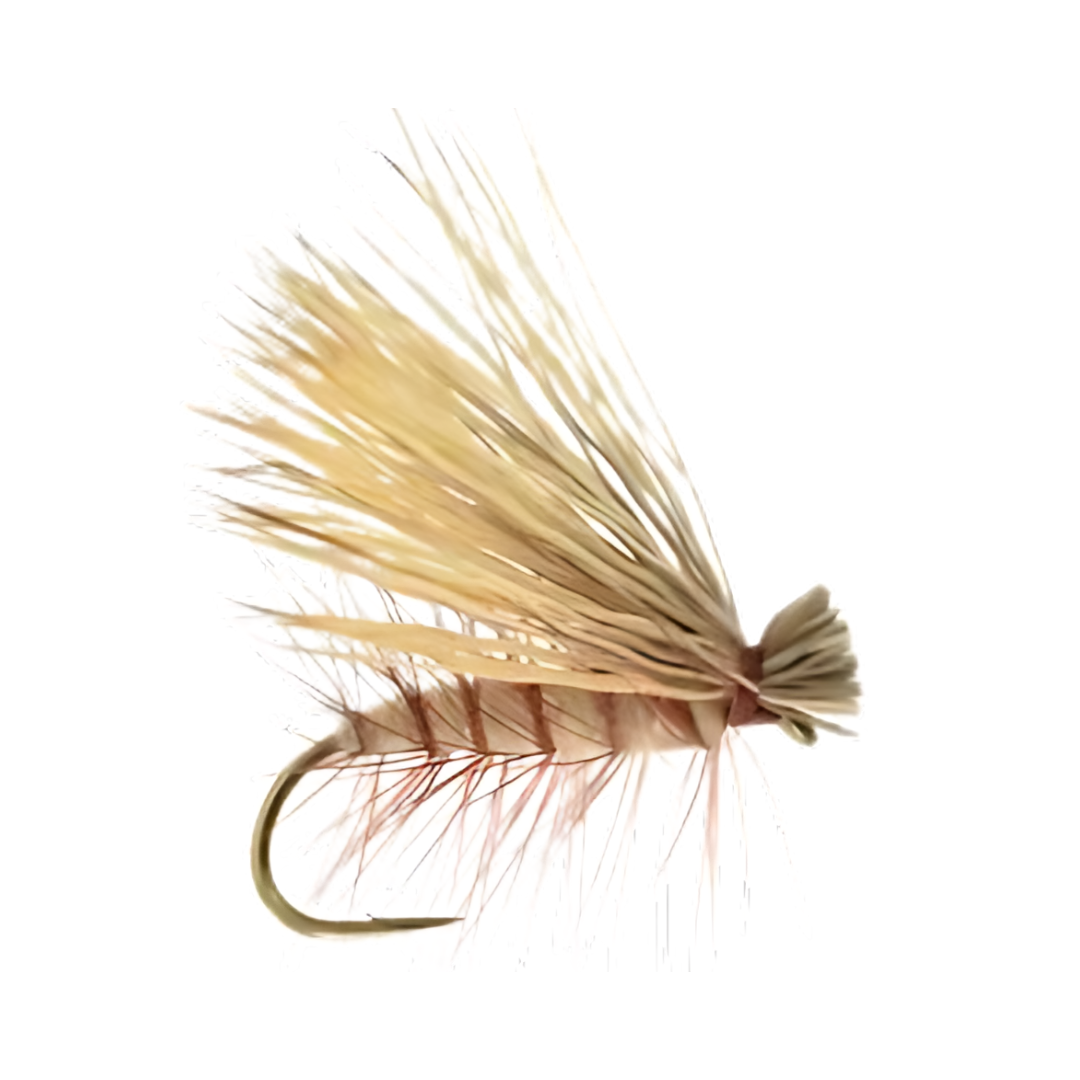
Shop Elk Hair Caddis at Wholesale Price per Dozen – Perfect for Trout Fishing in Pennsylvania Waters
The Elk Hair Caddis stands as a legendary Pennsylvania creation that first appeared on Loyalsock Creek in 1957. It remains one of my most trusted patterns for trout fishing. Al Troth designed this pattern to handle the challenging currents of Pennsylvania's streams.
Elk Hair Caddis Design Features
The pattern's effectiveness comes from its simple construction. It needs just three core materials:
| Component | Material | Purpose |
|---|---|---|
| Wing | Elk/Deer Hair | High flotation |
| Body | Synthetic dubbing | Water resistance |
| Hackle | Brown/Grizzly | Leg imitation |
Best Times to Fish Elk Hair Caddis
My best results come during summer months when caddis activity peaks. The pattern works well in these specific conditions:
- Early morning and dusk periods
- Bright, slightly breezy days
- Warm evenings when bats fly above the water
Caddis Presentation Methods
Years of fishing Pennsylvania's waters helped me refine several presentation techniques. I've found that caddis adults rarely stay still on the water's surface, so active presentations are vital for success.
The "bounce and twitch" technique has become my favorite method. Here's how it works:
- Wade within 30 feet of the target area
- Cast perpendicular to the opposite bank
- Keep the leader off the water
- Create subtle bouncing motions with the rod tip
To fish deeper, I use a dry-dropper setup with an unweighted pupa pattern about two feet behind the Elk Hair Caddis. This setup works great in riffles where fish feed at multiple depths.
The pattern does more than just imitate caddisflies. My time on PA's streams, from limestone springs to mountain waters, shows it works great as a searching pattern. Sizes 14-16 in tan or olive consistently catch fish in streams of all types across PA.
7. Hare's Ear Nymph

My experience of fly fishing Pennsylvania's waters have shown that the Hare's Ear Nymph consistently produces results as a fundamental pattern. The pattern's remarkable knack for imitating aquatic insects, from mayflies to caddisflies, became clear after countless hours on the water.
Hare's Ear Pattern Variations
The pattern's effectiveness comes from its adaptable design. The traditional recipe needs genuine hare's mask dubbing that provides an ideal blend of soft underfur and longer guard hairs. Here's my proven pattern matrix:
| Variation | Materials | Best Conditions |
|---|---|---|
| Traditional | Natural hare's mask | Clear water |
| Golden | Dyed yellow dubbing | Stained water |
| Chocolate | Brown hare's mask | Deep pools |
Hare's Ear Nymph Rigging Tips
My years of testing have led to these reliable rigging methods:
- Dead drift presentation in slow-moving waters
- Euro nymphing with longer leaders for better contact
- Indicator fishing with split shot adjustments
Seasonal Use Guide
The pattern works well throughout the year. My approach changes with seasonal conditions:
Spring: Sizes 12-14 work best for early season mayfly hatches. The pattern's buggy profile matches emerging insects perfectly during this period.
Summer: Traditional patterns work well, and flashback variations add extra attraction. The flash helps trigger strikes in deeper pools and faster currents.
Fall: Darker variations and larger sizes match the naturally occurring food sources better. This adaptation works especially well in Pennsylvania's limestone streams.
Winter: Smaller sizes, typically 16-18, fished deep and slow attract trout even in cold conditions. The pattern's natural movement in the water remains effective.
The pattern does more than simple nymph fishing. It works great in multi-fly rigs, either as the point fly below a dry fly or as part of a tandem nymph setup.
8. San Juan Worm
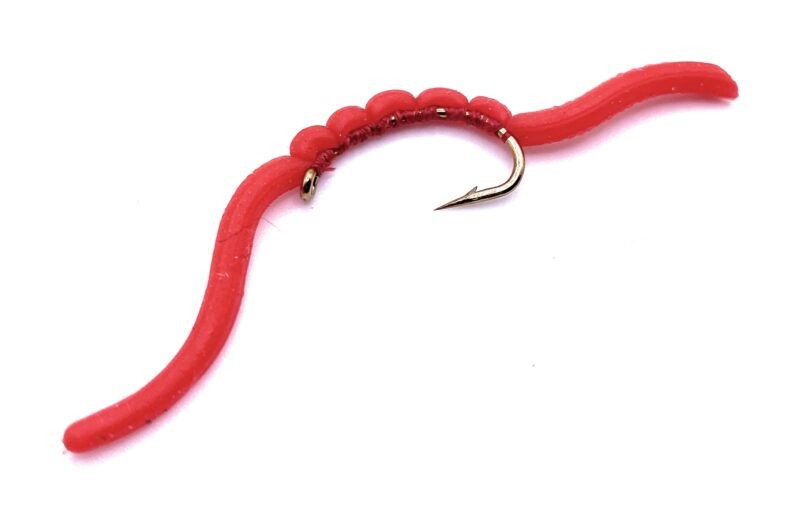
The San Juan Worm might raise eyebrows among purists, but it's one of the most reliable patterns I use in Pennsylvania's waters. My years of testing show this pattern works exceptionally well in high water and spring runoff.
San Juan Worm Colors for PA
My time on Pennsylvania's waters has taught me which color patterns bring the best results:
| Color | Water Condition | Best Season |
|---|---|---|
| Pink | Clear to Stained | Year-round |
| Red | High Water | Spring |
| Tan | Clear Water | Summer |
| Purple | Stained Water | Fall |
Pink stands out as the most versatile choice. It gets strikes in a variety of places, from Carolina lakes to glacial rivers.
At the Time to Fish the San Juan Worm
We targeted these conditions to get the best results:
- After heavy rains when water levels rise
- During spring runoff periods
- In turbid or off-color water conditions
- Near undercut banks during high water
Regular trout fishing works best with San Juan Worm sizes from 12 down to 16. But Pennsylvania's steelhead respond better to larger sizes up to 4 or 6.
Best Waters for San Juan Worm
This pattern shines in Pennsylvania's waterways. My best catches come from deeper pools and along seams where trout naturally gather. The pattern works especially well near the riverbed, where real aquatic worms live among the river's plant life.
The San Juan Worm serves as my primary nymph in a tandem nymph rig. This setup boosts my success rate and matches how natural worms move in the water. Beaded versions help me reach the right depth in faster or deeper sections.
Spring rains and high flows wash natural worms into the water, which substantially improves the pattern's success rate. My approach changes based on water clarity and flow conditions. Small tweaks to color choice and presentation help me match each Pennsylvania stream's unique characteristics.
9. Griffith's Gnat

Shop Griffith's Gnat at Wholesale Price per Dozen at AquinaFlies.com – Perfect for Trout Fishing in Pennsylvania Waters.
10. Prince Nymph

11. Rusty Spinner.

Comparison Table for Top 11 Fly Patterns for Fly Fishing in Pennsylvania.
Conclusion
My extensive testing of these 11 patterns in Pennsylvania's waters has proven their effectiveness for trout fishing year-round. These flies consistently catch fish in limestone springs and mountain freestone streams. They adapt well to our state's varied fishing conditions.
Experience has taught me that success rates improve when you carry multiple variations of each pattern. Matching sizes and colors to specific conditions matters more than having different patterns. The Pheasant Tail Nymph and Wooly Bugger are the life-blood patterns that produce results year-round. Seasonally specific flies like the Green Weenie and Blue Winged Olive shine during their peak periods.
These patterns are the foundations of any Pennsylvania fly box. Each angler eventually develops personal favorites, but starting with these proven flies builds confidence on the water. My success rates have improved consistently by adjusting sizes and presentations based on water conditions and seasonal changes.
The path to successful fly fishing combines understanding patterns and their practical use. These 11 best flies for PA trouts have earned their spot in my box through testing, refinement, and countless trout landed. Pack your box thoughtfully, watch the water closely, and let these time-tested patterns help you realize Pennsylvania's incredible trout fishing potential.
Faqs About Best Flies For Fly Fishing in PA
What are the most versatile fly patterns for trout fishing in Pennsylvania?
The Pheasant Tail Nymph, Wooly Bugger, and Adams Dry Fly are among the most versatile patterns. These flies can imitate a variety of aquatic insects and work well in different water conditions throughout the year.
When is the best time to use a Green Weenie fly in Pennsylvania?
The Green Weenie is most effective from mid-May through early October. It's particularly productive in Central Pennsylvania's limestone streams during summer months when wild brown trout are actively feeding
How should I fish the Elk Hair Caddis pattern in Pennsylvania streams?
Use a "bounce and twitch" technique by casting perpendicular to the opposite bank, keeping the leader off the water, and creating subtle bouncing motions with the rod tip. This mimics the natural movement of caddisflies on the water's surface.
What sizes of Blue Winged Olive patterns work best in Pennsylvania?
Blue Winged Olives typically emerge in sizes 16-20 from March through mid-July. Use smaller sizes (18-22) for late season and winter fishing, and larger sizes (14-16) for early season mayfly hatches.
How can I effectively fish the San Juan Worm in Pennsylvania waters?
Fish the San Juan Worm during high water conditions, spring runoff, or after heavy rains. Use pink, red, or tan colors depending on water clarity. It's particularly effective when fished close to the riverbed in deeper pools and along seams where trout naturally position themselves.