
Top 15 Best Salmon Fishing Flies
Salmon fishing flies can make all the difference when targeting Atlantic Salmon that grow up to four feet in length and eighty pounds in weight. While many anglers struggle to consistently catch these magnificent fish, selecting the right Salmon fly patterns can significantly increase success rates, even in challenging conditions.
The best salmon flies often feature bold, colorful designs that imitate squid, shrimp, stoneflies, or baitfish. However, during low water conditions when the river is "on its bones," certain fly patterns still produce results, albeit in smaller numbers. Particularly in places like Alaska, considered an angler's dream destination, specific flies like the Egg Sucking Leech have proven to be exceptionally effective for Pacific salmon fisheries.
This comprehensive guide reveals 15 proven salmon fishing flies that expert anglers typically keep to themselves. From classic patterns with historical significance to modern innovations that consistently produce results, these flies will enhance your arsenal for your next salmon fishing adventure.
1. Sunray Shadow
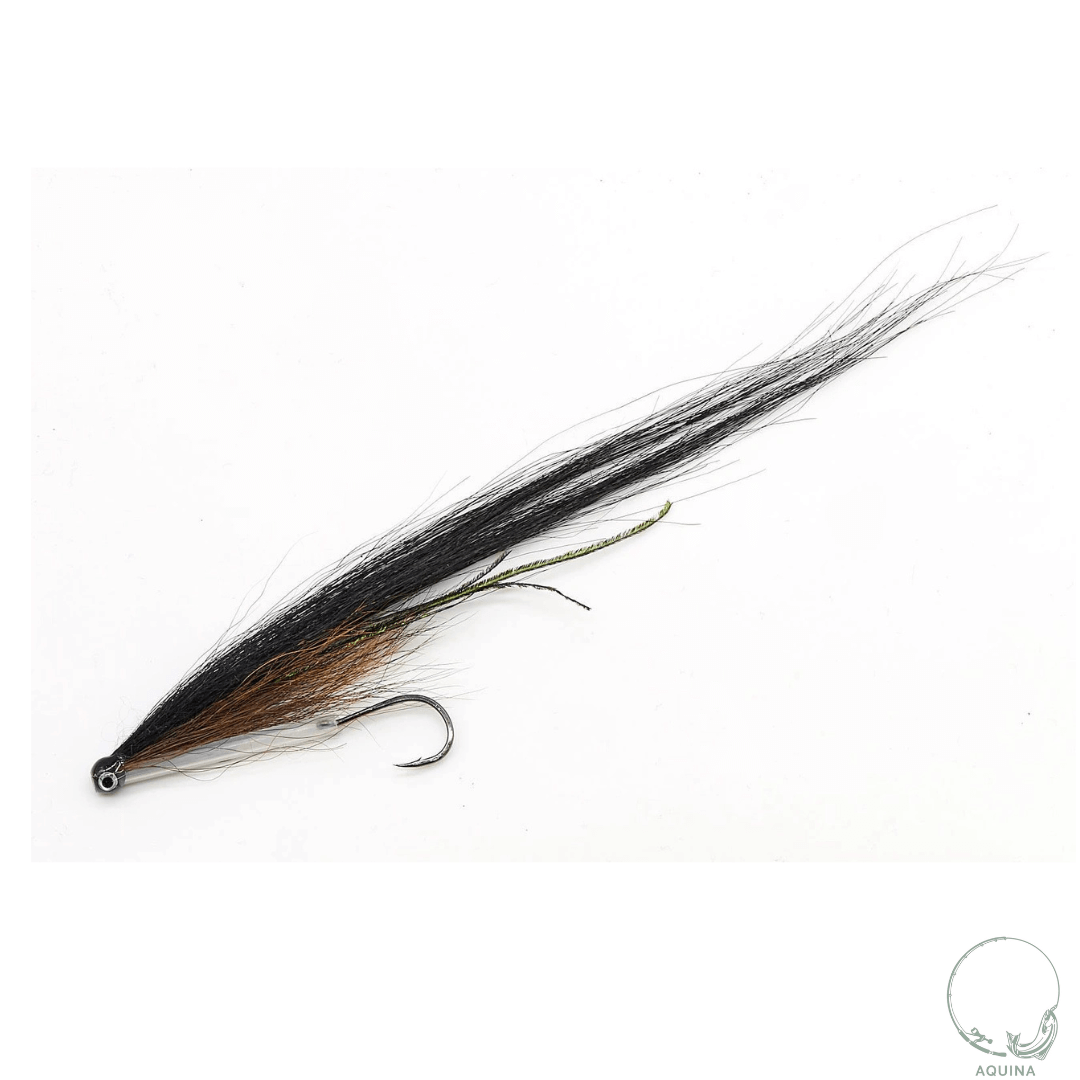
Originally designed by Raymond Brooks in Norway, the Sunray Shadow stands as one of the most revered salmon fishing flies among expert anglers. This remarkably simple yet devastatingly effective pattern has earned its place as a "must-have" in every salmon angler's fly box.
Sunray Shadow Fly Design
The classic Sunray Shadow embodies minimalist fly design with maximum impact. Tied on a plastic or aluminum tube ranging from ½ inch to 2 inches, this pattern features:
- Wing: Primary black Cashmere goat hair (or black arctic fox/American opossum) over white arctic runner
- Accent materials: 2-3 strands of peacock herl plus 2 strands of pearl crystal tinsel
- Hackle: Yellow rooster
- Head: Black with UV resin finish
- Body: Often left naked on the tube itself
Many variations exist, with some tiers adding holographic tinsel bodies or jungle cock cheeks for enhanced appeal. The most popular modification—known as the "Staring Sunray Shadow"—adds eyes under epoxy coating and a body for additional underwater flash.
Why Sunray Shadow Works
The Sunray Shadow's effectiveness lies in its simplicity and movement. The contrasting black-over-white wing creates a distinctive silhouette that triggers predatory responses in Atlantic salmon. Furthermore, when stripped through water, the long flowing wing undulates enticingly, mimicking small baitfish.
This pattern works remarkably well for multiple species beyond Atlantic salmon—sea trout enthusiastically chase it, and even brown trout will attack it with a cannibalistic response. Indeed, for some experienced anglers, it becomes the only fly they confidently tie on.
Best Conditions to Use Sunray Shadow
The Sunray Shadow performs best under specific conditions:
- Water temperature: More effective in warmer water when fish are willing to chase faster-moving lures
- Water speed: Generally more suitable for faster currents rather than slow-moving water
- Fishing technique: Can be fished square across current or stripped with long pulls in slack flows
- Fish condition: Exceptionally effective on fresh-run salmon
- Time of use: Often employed as a "blank saver" when conventional patterns fail
Expert anglers frequently vary the Sunray Shadow's size and coloration according to water clarity and light conditions. Consequently, carrying multiple sizes from 1-inch to 8-inch variations maximizes versatility throughout the fishing season.
2. Jock Scott Salmon Fly

Created in 1850 by Scottish gillie John "Jock" Scott, the Jock Scott has earned its reputation as the "king of salmon flies" and remains one of the most iconic traditional salmon fly patterns in existence. This legendary fly has withstood the test of time, maintaining its popularity among serious anglers since the Victorian era.
Jock Scott Fly Design
The Jock Scott epitomizes the ornate complexity of classic Atlantic salmon flies. Traditionally, this pattern requires approximately 30 different materials in even more tying steps, with an estimated tying time of 60-90 minutes per fly. The authentic design includes:
- Tag: Silver twist and yellow floss silk
- Tail: Golden Pheasant topping and Indian Crow
- Body: Two equal sections—first half yellow floss butted with black herl and veiled with Toucan feathers; second half black floss
- Ribbing: Fine oval silver tinsel over yellow section; broader oval or flat silver tinsel over black section
- Hackle: Natural black cock's hackle
- Wing: Complex assembly including black white-tipped Turkey tail strips, "married" strands of Peacock wing, Swan dyed in various colors, Bustard, and Golden Pheasant tail
- Cheeks: Blue Chatterer
- Sides: Jungle cock
- Head: Black ostrich herl
Many modern tyers use substitutes for protected exotic feathers, such as dyed hackle tips instead of toucan.
Why Jock Scott Works
The Jock Scott's effectiveness stems from its perfect blend of harmony and proportion. As noted by George Kelson in his 1895 book The Salmon Fly, "It is only just possible to find a river or a catch... in which a Jock Scott, when dressed properly, has not made for itself a splendid reputation."
Its intricate design creates a perfect silhouette underwater that triggers predatory responses in salmon. The combination of contrasting colors—primarily yellow, black, and silver—creates flash and movement that attracts fish even in challenging conditions.
Best Conditions to Use Jock Scott
Despite its ornate appearance, the Jock Scott performs admirably across varied water conditions. It excels in:
- Clear to slightly colored water
- Medium to fast flows
- Traditional swing fishing techniques
- Both sunny and overcast conditions
Notably, the fly's yellow component requires proper preparation—orange silk (often substituted) turns an undesirable brown shade when saturated, diminishing effectiveness in clear water and bright weather.
Expert anglers often recommend carrying Jock Scotts in various sizes to adapt to changing river conditions throughout the season.
3.Cascade Shrimp

The Cascade Shrimp has risen to prominence as an extremely versatile salmon fly pattern that anglers worldwide rely on throughout the fishing season. Essentially a variation of the legendary Ally's Shrimp, this pattern has earned its place among the most successful flies for Atlantic salmon, becoming a staple in fly boxes from Scotland to Iceland.
Cascade Shrimp Fly Design
The Cascade Shrimp features a distinctive composition that combines flash and movement:
- Tail: Orange and yellow bucktail mixture with clear Krystal Hair for added flash
- Body: Half silver tinsel and half black floss silk
- Ribbing: Medium oval silver tinsel
- Wing: Silver Krystal Hair and black squirrel (or bucktail)
- Collar Hackles: Yellow and hot orange
- Head: Black thread or varnish
The fly's origins trace back to an experimental tie when a fly fisher decided to create an attractive pattern using Krystal Hair. The flowing effect of two colors of Krystal Hair cascading over the hook inspired its name.
Why Cascade Shrimp Works
The Cascade Shrimp's effectiveness stems from its lifelike presentation of a shrimp, making it irresistible to salmon. Its combination of vibrant colors—orange, yellow, and black—creates an enticing profile in the water. Additionally, the pattern travels exceptionally well through currents, maintaining its shape and action even in variable water conditions.
First success came in April when the pattern was tested on the River Tummel running clear with extra water. Since then, the Cascade has accounted for countless Atlantic salmon across various rivers.
Best Conditions to Use Cascade Shrimp
This pattern excels specifically in:
- Early season fishing, especially in heavy, cold water
- Variable water conditions throughout the year
- Fast or deep water (particularly the conehead and tube variations)
For summer fishing in low water, anglers should opt for tiny flies tied on size 12 hooks or smaller doubles. Conversely, for high and cold water conditions, larger sizes or tube fly versions tied on plastic, aluminum, or brass tubes prove most effective from early spring through late autumn.
4. Green Machine

Known as "the people's fly," the Green Machine originated on New Brunswick's Miramichi River and has become a staple in salmon anglers' fly boxes worldwide. This remarkable pattern was created by John Lyons, who worked at the WW Doak & Sons fly shop in Doaktown, NB, where he tied thousands of these flies each season.
Green Machine Fly Design
The traditional Green Machine features:
- Hook: Wet fly hook (Mustad 3399A or Tiemco TMC7999) in sizes 6-12
- Thread: Black
- Tag: Fine oval silver tinsel (3-4 turns)
- Butt: Double-butt of chartreuse followed by fluorescent red floss or Uni-Stretch
- Body Hackle: Fiery brown cock neck or saddle hackle
- Body: Machine green dyed deer hair
- Head: Black thread finished with head cement
Unlike the Bomber dry fly, the Green Machine belongs to the "buck bug" family. These flies require no tail for flotation, use heavier wet fly hooks, feature sparse hackles, and have slimmer bodies. Most importantly, whereas Bombers float, the Green Machine is designed to sink.
Why Green Machine Works
The Green Machine has earned its reputation for triggering a salmon's playful side, often drawing multiple rises or takes from a single cast. Its vibrant green color paired with the red butt creates a striking appearance designed to ignite predatory instincts in fish. The combination of its lifelike design, vivid colors, and durable materials ensures reliable performance across diverse fishing conditions.
Moreover, its carefully crafted design mimics natural aquatic insects and baitfish, improving strike rates in both fresh and saltwater streams. The Green Machine maintains excellent versatility and ease of use whether fishing in fast-moving rivers or calm waters.
Best Conditions to Use Green Machine
Although originally tied for Atlantic salmon, the Green Machine proves effective for steelhead, trout, and virtually any fish that strikes flies. This versatile pattern can be fished in multiple ways:
- As a wet fly just below the surface
- In deeper water with sink tips
- Swung through the current at a 45-degree downstream angle
- Stripped to imitate moving baitfish
For optimal presentation, cast slightly over the holding area, lift the rod so line pressure pulls the fly under the surface, then allow it to swing slowly over the fish's position.
5. Flesh Fly
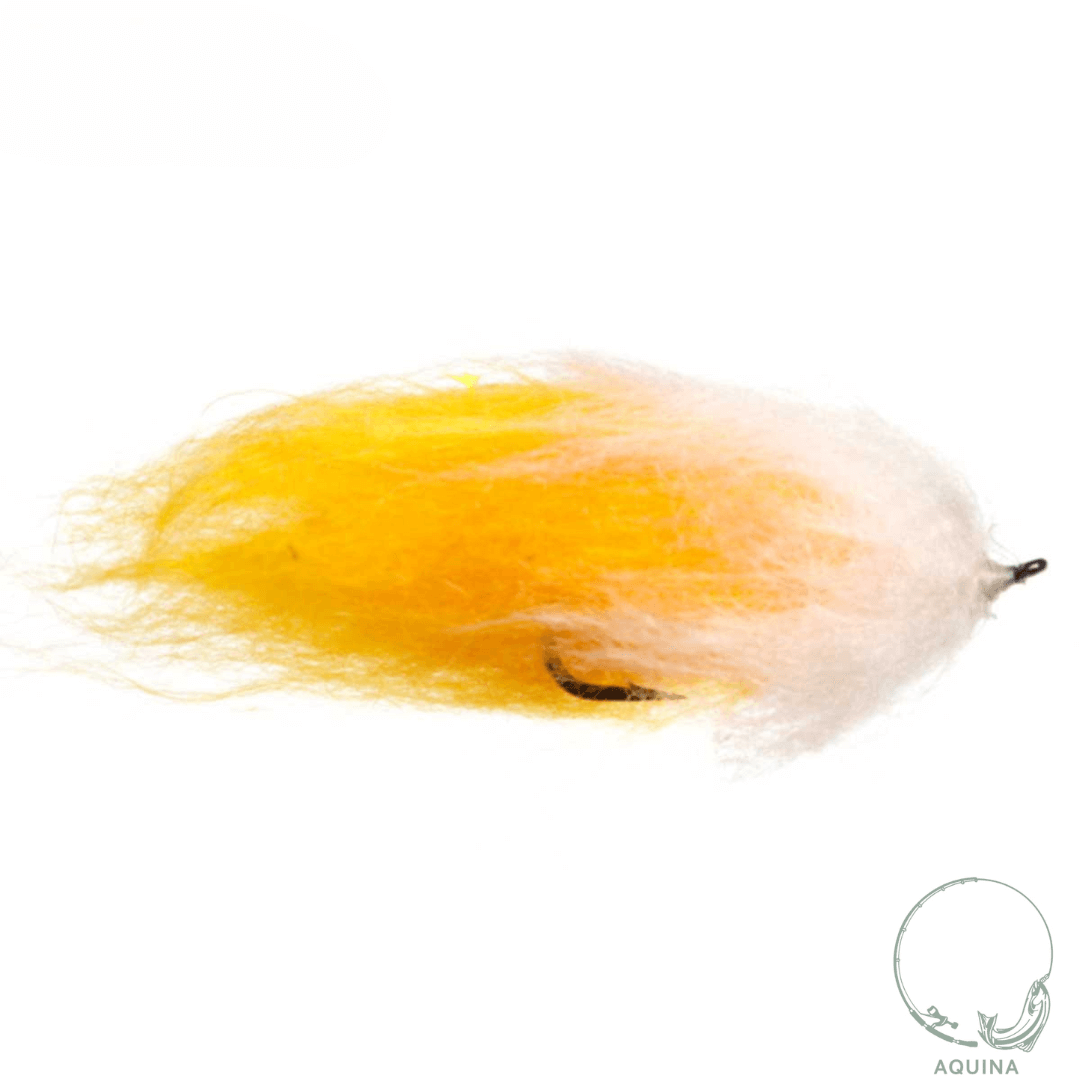
Uniquely positioned among salmon patterns, the Flesh Fly represents a specialized pattern that exploits a biological feeding opportunity in salmon-rich waters. This simple yet devastatingly effective pattern imitates decaying flesh of spawned-out salmon, making it particularly successful in areas where salmon spawn in large numbers.
Flesh Fly Fly Design
The beauty of the Flesh Fly lies in its simplicity—essentially requiring just one primary material. The standard design includes:
- Hook: Streamer hook or egg hook (size 2-10)
- Body and Tail: Non-crosscut rabbit strip in colors like cream, ginger, tan, or "dirty sock"
- Thread: White or pink
- Optional Flash: Pearl Flashabou for added attraction
For tying, first create a thread base, then attach the rabbit by stroking back the fur to expose the skin. The tail should be approximately 1.5 inches on a size 6 hook—too long and it will foul, too short and it loses action. Stretch the rabbit slightly while wrapping clockwise around the hook shank. Some tiers add marabou tails or dubbing (like UV shrimp pink) at the head for additional attraction.
Why Flesh Fly Works
Throughout the salmon spawning cycle, rainbow trout, steelhead, and other species gorge themselves on chunks of decaying salmon flesh floating downstream. This high-protein food source explains why Alaskan rainbows grow so large. Flesh flies accurately imitate this natural food, triggering opportunistic feeding responses.
The pattern's effectiveness varies with coloration—fresher salmon flesh requires more vibrant orange/pink tones, whereas older, bleached carcasses call for paler, washed-out colors like cream or tan.
Best Conditions to Use Flesh Fly
Flesh flies perform best under these conditions:
- Post-spawning periods when salmon carcasses are present
- Mid-September through the end of season (especially productive in odd-numbered years)
- Focus on areas where salmon carcasses wash through or pile up
- Can be fished year-round in Alaska as some form of salmon flesh is always present
For presentation, either fish under an indicator with a 9-10 foot leader and small split shot 24 inches above the fly, or swing the pattern on a sink tip with a shorter (4-foot) leader. Adapt color based on the "flesh hatch" stage—orange/pink for fresh flesh, white/cream for older decomposed flesh
6. Executioner

The Executioner stands as a firm favorite among serious salmon anglers, primarily for its deadly effectiveness in challenging low water conditions. This classic pattern has established itself as a "go to" fly for many experienced fishermen seeking Atlantic salmon during summer months.
Executioner Fly Design
The Executioner features a striking black, red, and silver color combination that catches both angler and fish attention. Its classic design includes:
- Tail: Golden pheasant crest
- Butt: Thin flat silver tinsel with red floss (3-4 turns maximum)
- Body: Flat silver tinsel
- Ribbing: Thin oval silver tinsel or wire
- Wing: Black squirrel or goat hair
- Throat: Black rooster hackle
- Head: Red varnish, often with jungle cock cheeks
Micro variations tied on double hooks (size 14) feature a red hotspot, making them perfect for summer fishing holidays in Iceland, Ireland, and Scandinavia.
Why Executioner Works
The Executioner's success stems from its eye-catching UV body that glows like a beacon underwater, giving fish a clear target to home in on. This distinctive pattern was created by a former editor of Trout & Salmon magazine, subsequently establishing itself as exceptionally effective for both salmon and sea trout.
Its design proves particularly deadly in low, clear water where the flash of silver against black creates an irresistible profile. The red-silver-black color scheme triggers aggressive strikes even in pressured waters.
Best Conditions to Use Executioner
The Executioner excels under these specific conditions:
- Low, clear water situations
- Summer months when water levels drop
- Grilse fishing in small sizes
- Early and late hours, though effective throughout the day
- Dusky conditions when targeting sea trout
For optimal presentation, fish it at the end of a floating line or swing it with a light sink tip. Many anglers consider it a 50/50 pattern, meaning it works equally well in various conditions throughout the season.
7. Ally’s Shrimp

Designed by Scottish angler Ally Gowans in the 1970s, Ally's Shrimp quickly established itself as one of the most effective salmon fishing flies ever created. This pattern has captured numerous Atlantic salmon across Scottish rivers, Ireland, Norway, and beyond, becoming an essential addition to every serious salmon angler's collection.
Ally's Shrimp Fly Design
Ally's Shrimp features a straightforward yet deadly effective combination of materials:
- Hook: Standard salmon doubles (sizes 4-12)
- Tag: Fine oval silver tinsel
- Tail: Golden pheasant crest fibers
- Body: Rear half fluorescent orange floss, front half black floss
- Rib: Oval silver tinsel
- Hackle: Natural black cock's hackle
- Wing: Bronze mallard strips flanked by strands of yellow, orange, and black bucktail
- Head: Black
Modern variations often include cone heads or tube-tied versions for faster-sinking presentations in deeper pools or faster currents.
Why Ally's Shrimp Works
The success of Ally's Shrimp stems from its perfect imitation of a natural shrimp's profile in water. In fact, the combination of orange and black creates an irresistible silhouette that triggers aggressive strikes from salmon. The mallard wing provides stability during the swing, whereas the bucktail offers attractive movement that mimics a living creature.
Best Conditions to Use Ally's Shrimp
Ally's Shrimp performs admirably across various fishing scenarios:
- Medium to high water conditions
- Slightly colored water after rainfall
- Spring and autumn seasons
- Early morning or evening light
- Traditional down-and-across presentations
For optimal results, fish this pattern on sink-tip lines or with small split shot in faster currents. Typically, the fly works best when swung slowly through likely holding lies, giving salmon ample opportunity to track and take the fly.
8. Royal Coachman Salmon
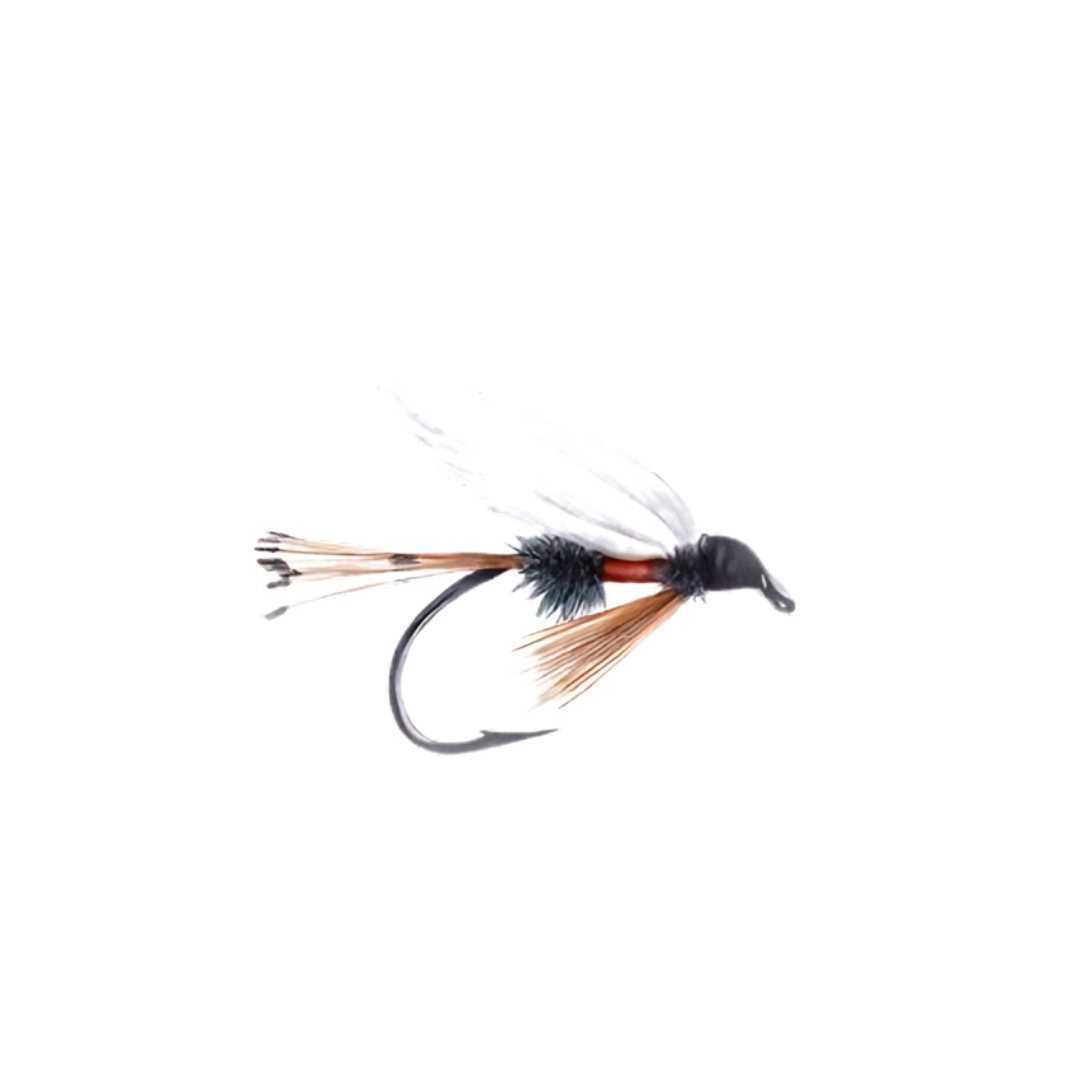
Among the most recognizable patterns in the fly fishing world, the Royal Coachman has captivated anglers for well over a century with its distinctive appearance and remarkable versatility. This classic pattern has undergone numerous variations throughout its storied history, initially emerging as a modification of the British Coachman wet fly.
Royal Coachman Salmon Fly Design
The traditional Royal Coachman salmon pattern features:
- Body: Peacock herl sections separated by a distinctive band of red floss or silk
- Wings: White mallard quill (modern versions often use synthetic Z-lon)
- Tail: Originally wood duck flank, now commonly golden pheasant tippet
- Hackle: Brown or red-brown
- Optional: Some tiers add gold tip/tag for enhanced appeal
This iconic pattern has spawned numerous variations including dry flies, wet flies, and streamers. For salmon fishing, larger streamer versions prove most effective, tied on hooks sized 1-8.
Why Royal Coachman Salmon Works
The Royal Coachman's effectiveness stems from its status as an exceptional attractor pattern. Unlike flies that imitate specific insects, this versatile pattern creates a striking silhouette that triggers predatory responses. The contrasting colors—primarily the red band against dark peacock herl—create an irresistible profile that attracts salmon's attention.
Additionally, the fly's versatility allows it to be fished in multiple ways: as a traditional wet fly swung across currents, stripped like a streamer, or dead-drifted below the surface.
Best Conditions to Royal Coachman Salmon
The Royal Coachman performs admirably throughout:
- Clear water with moderate currents
- Spring and summer months during active insect hatches
- Rivers with natural forage bases
- Both bright sunlight and cloudy conditions
For optimal presentation when targeting salmon, fish the pattern on sink-tip lines in deeper pools or swing it through likely holding areas. During periods when salmon are feeding on nymphs or small insects below the surface, this pattern proves particularly effective.
9.Egg Sucking Leech
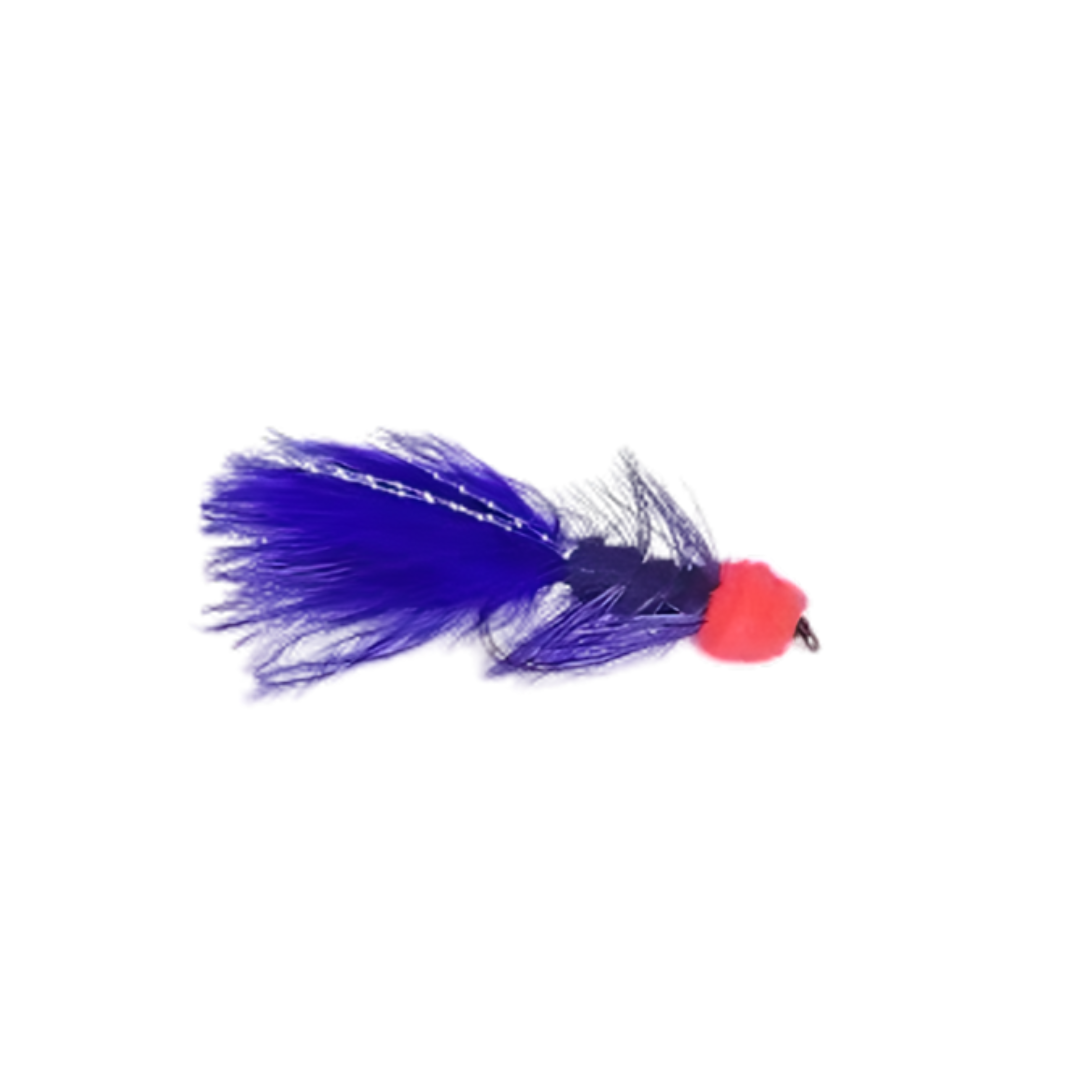
From Alaska to Arkansas, the Egg Sucking Leech (ESL) stands as one of the top-producing streamer flies ever created, outperforming even the traditional Wooly Bugger. This versatile pattern combines the natural movement of a leech with the visual appeal of an egg imitation.
Egg Sucking Leech Fly Design
This pattern typically consists of:
- Hook: 2X-long streamer hook (sizes 4-10)
- Tail: Black marabou or rabbit strip
- Body: Black, purple, or olive chenille/dubbing
- Hackle: Black saddle hackle palmered over body
- Head/Egg: Bright orange, pink, or chartreuse chenille or bead
Originally tied with black rabbit fur strips, the ESL has evolved into countless color combinations, with purple and natural rabbit variations proving most successful. Modern versions often incorporate materials like Ice Dub for enhanced flash and realism.
Why Egg Sucking Leech Works
The primary reason for this pattern's success lies in its versatility and ability to trigger predatory responses. Unlike natural ecosystems where leeches rarely attach to eggs, this combination creates an irresistible profile mimicking both food sources.
The ESL effectively targets multiple species beyond salmon, including steelhead, rainbow trout, brown trout, and bass. Fish become particularly responsive during spawning seasons when they instinctively protect nesting areas.
Best Conditions to Use Egg Sucking Leech
Fishing the ESL requires adapting to water conditions:
For cold water or early season fishing, dead-drift drag-free presentations keep the fly in strike zones longer. As temperatures rise, fish become more active—cast upstream, let sink briefly, followed by short strips with intermittent pauses.
This pattern truly shines during spawning seasons yet remains productive year-round in Alaska. Its versatility allows multiple presentation methods: strip it, jig it, or swing it across currents.
10. Foam Top

Designed by Cory Williams for pursuing silver salmon in Alaska, the Foam Top fly presents a highly buoyant pattern that creates the perfect commotion to entice aggressive strikes from salmon, primarily silvers in shallower backwaters.
Foam Top Fly Design
The Foam Top integrates several key components:
- Tail: Marabou for lifelike movement
- Body: Spun and clipped deer hair
- Top: Thick piece of foam (typically 2mm) for exceptional buoyancy
- Optional: Bright orange head and underbody to attract attention
This construction ensures the fly stays afloat even after absorbing water, allowing anglers to manipulate it with life-like movements that trigger predatory responses.
Why Foam Top Works
The Foam Top's effectiveness stems from its ability to create surface disturbance while maintaining excellent visibility. The foam material enables the fly to bob up and down like a cork, creating natural twitching action that mimics struggling prey. This action usually provides enough movement that additional rod tip enhancements become unnecessary.
Best Conditions to Use Foam Top
The Foam Top excels under these conditions:
- Early season when salmon and steelhead are most aggressive
- Rough pocket water around boulders in swiftly moving streams
- Hot, breezy summer afternoons
- Calmer, shallower backwaters where silver salmon hunt
Fish this pattern on a floating line, swinging through current with occasional strips, plops, and pauses.
11. Hareball Leech

Originally developed for Pacific Northwest fisheries, the Hareball Leech has earned a reputation as one of the best Alaska flies ever created. This quick-to-tie pattern has become a staple for anglers targeting salmon and steelhead across North America.
Hareball Leech Fly Design
The Hareball Leech features a simple yet effective design:
- Hook: Salmon hook (Daiichi 2141) in sizes 1/0 to 4
- Thread: Flat waxed 210 (typically black or pink)
- Tail: Rabbit strip with Flashabou or Krystal Flash
- Body: Rabbit strip palmered over medium Cactus Chenille or Estaz
- Collar: Schlappen (often matching or contrasting color)
- Eyes: Nickel or black Dazl Eyes (5/32" or 7/32")
Popular color combinations include black, purple, chartreuse, blue, and hot pink. Many tiers create contrasting combinations like black/blue or black/chartreuse for added visibility.
Why Hareball Leech Works
The Hareball Leech's effectiveness stems from its lifelike movement underwater. The rabbit fur creates natural pulsating action that mimics a living creature, simultaneously the weighted eyes ensure the fly sinks to proper depth. First developed for Alaskan waters, this pattern effectively imitates various food sources found in river systems, triggering aggressive strikes from salmon and steelhead.
Best Conditions to Use Hareball Leech
This pattern excels when:
- Swung across current seams
- Stripped through deep pools
- Spot-cast to schools of salmon in slack water
- Used in off-colored water or low-light conditions
Tied in bright cerise or hot pink, it becomes exceptionally effective for targeting Great Lakes and West Coast salmon.
12. Rusty Rat

The venerable Rusty Rat emerged from a fascinating historical controversy in the Atlantic salmon fly world. While Roy Angus Thompson created the original "RAT" series in 1911 (his initials forming the name), the distinctive rusty orange version came later as a collaborative effort between New Brunswick tier Clovis Arsenault and angler Joseph Pulitzer II in 1949.
Rusty Rat Fly Design
This classic salmon hair-wing pattern features:
- Hook: Salmon/steelhead hook (sizes 4-8)
- Thread: Red (though Clovis' original ties had black heads)
- Tag/Rib: Small oval gold tinsel
- Tail: Peacock sword fibers
- Body: Rear half rusty orange floss with underwing extending halfway over the tail; front half peacock herl
- Wing: Fox guard hairs (silver or red)
- Hackle: Grizzly
The fly's development contains a remarkable story—Pulitzer was fishing with one of Clovis' Black Rats when the black body withered, exposing the underlying rusty-colored floss. He proceeded to land a 41-pound salmon on this "rusty" fly.
Why Rusty Rat Works
As a foundational hair-wing pattern, the Rusty Rat's effectiveness comes from its perfect silhouette and color combination. Its rusty orange and black profile creates an irresistible presentation underwater. Furthermore, many tiers consider it an excellent training fly that teaches techniques required for more complex patterns.
Best Conditions to Use Rusty Rat
This versatile pattern performs reliably across various river conditions. As an established Atlantic salmon fly that later gained popularity among West Coast steelheaders, it has proven its worth on numerous waterways. The contrasting orange-and-black colors with peacock accents make it visually appealing in different water clarities and light conditions.
13. Orange Blossom

Crafted by Canadian tier Carmelle Bigaouette in the 1950s, the Orange Blossom has steadily earned its reputation as a highly effective salmon pattern, primarily designed for early season high water conditions.
Orange Blossom fly Design
The Orange Blossom features a striking color combination that turns heads both in and out of water:
- Hook: Up-eye salmon hook
- Tag: Fine oval silver tinsel and orange floss
- Tail: Golden pheasant crest under Indian crow substitute
- Butt: Black ostrich herl
- Body: Embossed silver tinsel with yellow hackle
- Wing: Mixed brown and white bucktail
- Collar: Soft orange hackle
- Cheeks: Jungle cock (optional)
Why Orange Blossom Works
The effectiveness of this pattern lies in its vivid combination of orange, black, and subtle gold highlights that shine across various light conditions. This dynamic flash proves irresistible to salmon, generating powerful strikes from both Atlantic and Pacific species. Its good silhouette, flash, and proper weight help get it into the strike zone quickly and keep it there.
Best Conditions to Orange Blossom
This versatile pattern excels during spring and fall seasons, yet performs exceptionally well for aggressive brown trout and brook trout at ice-out. As an excellent stillwater option and reliable producer in early season high water situations, the Orange Blossom demands space in every serious salmon angler's fly box.
14. Bomber

The Bomber stands out among salmon flies as a true surface pattern, designed to float high and create enticing disturbance that triggers explosive strikes. First tied by legendary New Brunswick angler Elmer Smith in the 1960s, this iconic dry fly has become a staple for Atlantic salmon fisheries across North America and Europe.
Bomber Fly Design
The Bomber features a distinctive deer-hair construction that fundamentally differs from wet fly patterns:
- Body: Tightly spun and clipped deer hair (traditionally natural, but now tied in various colors)
- Wing: More deer hair spun and left unclipped, creating a bushy profile
- Hackle: Brown or grizzly, wrapped densely to enhance flotation
- Thread: Matching the body color for seamless appearance
Many contemporary tiers incorporate synthetic materials like foam or poly yarn to enhance buoyancy, primarily in the wing section. Color variations commonly include natural brown, orange, green, and yellow, often with contrasting body sections.
Why Bomber Works
Unlike subsurface patterns, the Bomber's effectiveness stems from its ability to create surface commotion that mimics struggling insects. The disruption draws curious salmon to investigate, naturally triggering strikes even when fish aren't actively feeding. Beyond visual appeal, its wake and movement across the water's surface presents an irresistible target that provokes territorial responses from salmon.
Best Conditions to Bomber
The Bomber performs exceptionally during:
- Low, clear water conditions in summer months
- Early morning or late evening periods
- Calm water sections where surface disturbance remains visible
- Shallow tailouts where salmon can easily spot surface activity
Traditionally fished with a downstream presentation allowing the fly to swing across current seams, the Bomber often produces best results with occasional twitches to enhance its lifelike appearance.
15. Cosseboom

Introduced in the early 1900s by American angler John C. Cosseboom of Woonsocket, Rhode Island, the Cosseboom fly has maintained its status as a highly effective Atlantic salmon pattern worldwide. Originally created for use on Nova Scotia's Margaree River around 1923, this versatile streamer continues to attract both salmon and steelhead across various conditions.
Cosseboom Fly Design
The traditional Cosseboom features a streamlined profile with:
- Hook: Streamer hook (sizes 2-10)
- Body: Medium olive-green floss or silk
- Ribbing: Flat or oval silver tinsel
- Wing: Gray squirrel tail
- Hackle: Lemon-yellow hackle tied as a collar
- Head: Red thread finished with lacquer
The original pattern was tied with an olive green body, silver tinsel ribbing, gray squirrel tail wing, and a lemon-yellow hackle. Nevertheless, contemporary versions sometimes incorporate golden pheasant tippet tail and brown hackle for enhanced action.
Why Cosseboom Works
The Cosseboom's effectiveness stems from its natural color palette and streamlined profile. The green body contrasts perfectly with river surroundings, whereas the silver tinsel provides subtle flash that attracts fish in clear or slightly tinted water. Its slender, realistic silhouette mimics small baitfish or aquatic insects, triggering predatory responses.
Best Conditions to Use Cosseboom
This pattern excels in:
- Clear to slightly tinted water
- Medium to low water levels
- Cool to moderate temperatures (45°F-65°F)
- Spring and fall salmon runs
- Early mornings and late afternoons
- Moderate to slow currents
Comparison Table of the 15 Best Salmon Fishing Flies
Comparison Table.
| Fly Pattern | Origin/Designer | Main Design Features | Best Conditions | Primary Colors | Target Species/Effectiveness |
|---|---|---|---|---|---|
| Sunray Shadow | Raymond Brooks, Norway | Tube-tied with black Cashmere goat hair over white arctic runner | Warmer water, faster currents | Black/White | Atlantic salmon, sea trout |
| Jock Scott | John Scott, 1850, Scotland | Complex pattern using ~30 materials, including exotic feathers | Clear to slightly colored water, medium-fast flows | Yellow/Black/Silver | Atlantic salmon |
| Cascade Shrimp | Variation of Ally's Shrimp | Silver tinsel body, Krystal Hair wing, orange/yellow hackles | Early season, heavy cold water | Orange/Yellow/Black | Atlantic salmon |
| Green Machine | John Lyons, New Brunswick | Deer hair body, double-butt design, brown hackle | Multiple water conditions, wet fly presentation | Green/Red/Black | Atlantic salmon, steelhead, trout |
| Flesh Fly | Not mentioned | Simple rabbit strip design | Post-spawning periods, mid-September onwards | Cream/Tan/Pink | Rainbow trout, steelhead |
| Executioner | Former Trout & Salmon editor | Silver tinsel body, black wing, red hotspot | Low, clear water conditions | Black/Red/Silver | Atlantic salmon, sea trout |
| Ally's Shrimp | Ally Gowans, 1970s | Orange/black floss body, bronze mallard wing | Medium to high water, slightly colored | Orange/Black | Atlantic salmon |
| Royal Coachman Salmon | Not mentioned | Peacock herl body, red band, white wings | Clear water, moderate currents | Red/White/Black | Salmon, multiple species |
| Egg Sucking Leech | Not mentioned | Marabou tail, chenille body, bright egg head | Spawning seasons, year-round in Alaska | Black/Purple/Orange | Salmon, steelhead, trout |
| Foam Top | Cory Williams | Foam top, deer hair body, marabou tail | Early season, shallow backwaters | Not specified | Silver salmon |
| Hareball Leech | Pacific Northwest origin | Rabbit strip body, weighted eyes, flash materials | Deep pools, off-colored water | Multiple variations | Salmon, steelhead |
| Rusty Rat | Clovis Arsenault & J. Pulitzer II, 1949 | Fox hair wing, rusty orange floss, peacock herl | Various river conditions | Rusty orange/Black | Atlantic salmon, steelhead |
| Orange Blossom | Carmelle Bigaouette, 1950s | Silver tinsel body, mixed wing, orange hackle | Spring/fall, high water | Orange/Silver/Yellow | Atlantic/Pacific salmon |
| Bomber | Elmer Smith, 1960s | Spun deer hair construction, dense hackle | Low, clear water, summer months | Natural brown/Various | Atlantic salmon |
| Cosseboom | John C. Cosseboom, 1923 | Olive-green body, gray squirrel wing, yellow hackle | Clear to slightly tinted water, medium-low levels | Olive-green/Gray/Yellow | Atlantic salmon, steelhead |
Conclusion
Selecting the right fly pattern stands as one of the most crucial factors for successful salmon fishing. Throughout this guide, fifteen proven salmon flies have been revealed—patterns that many expert anglers typically keep secret. Each fly represents years of testing and refinement across diverse waters worldwide, ultimately becoming established staples in serious anglers' collections.
Classic patterns like the Jock Scott and Rusty Rat carry historical significance while maintaining their effectiveness through generations of use. Meanwhile, innovative designs such as the Sunray Shadow and Green Machine continue to demonstrate remarkable versatility across changing water conditions. The comparison table clearly illustrates how these patterns utilize specific color combinations and materials to trigger predatory responses in salmon.
Water conditions undoubtedly dictate which fly will perform best on any given day. Clear, low water often calls for smaller, subtler patterns like the Executioner or Bomber. Conversely, higher, colored water typically demands larger, brighter flies such as the Cascade Shrimp or Orange Blossom to attract attention. Expert anglers therefore carry multiple sizes and variations to adapt quickly as river conditions change.
These fifteen patterns cover virtually every fishing scenario an angler might encounter during salmon season. From subsurface presentations with the Egg Sucking Leech to surface disruptions created by the Foam Top, this collection provides options for all techniques and conditions. Additionally, many patterns demonstrate effectiveness beyond salmon—attracting steelhead, sea trout, and other species.
Armed with these proven patterns, anglers gain significant advantages on the water. Knowledge of when and how to present each fly maximizes opportunities for success. Though salmon fishing remains challenging, the right fly dramatically increases strike potential even during difficult conditions. These fifteen patterns therefore deserve space in every serious salmon angler's fly box, ready to deploy when conventional offerings fail to produce results.
Key Takeaways
These 15 expert-level salmon flies represent decades of proven success across diverse fishing conditions, from classic Victorian patterns to modern innovations that consistently outperform standard offerings.
• Match fly selection to water conditions: Clear, low water demands subtle patterns like Executioner or Bomber, while high, colored water requires bright, large flies like Cascade Shrimp or Orange Blossom.
• Carry multiple sizes and variations: Expert anglers adapt quickly by having the same pattern in different sizes—small doubles for summer low water, larger tubes for spring high water conditions.
• Focus on proven color combinations: Black/white (Sunray Shadow), orange/black (Ally's Shrimp), and silver/red (Executioner) consistently trigger predatory responses across various salmon species.
• Master versatile patterns first: Flies like Green Machine and Egg Sucking Leech work for multiple species beyond salmon, making them essential "go-to" patterns when conventional flies fail.
• Time your presentations strategically: Post-spawning periods favor flesh patterns, early season calls for bright attractors, while summer low water requires surface disturbance patterns like Bomber.
These patterns cover virtually every salmon fishing scenario you'll encounter, providing significant advantages over anglers using only conventional flies. Success often comes down to having the right pattern for specific conditions rather than relying on popular but less effective alternatives
Faqs About best salmon fishing flies
What is considered the most effective salmon fly pattern?
While effectiveness can vary, the Willie Gunn is widely regarded as one of the most successful and famous salmon flies. However, many patterns like the Sunray Shadow, Ally's Shrimp, and Green Machine have proven highly effective across various conditions.
Which fly characteristics tend to attract salmon?
Salmon often respond well to flies with some flash, contrasting colors, and lifelike movement. Patterns that incorporate black, orange, and yellow tend to be particularly effective in spring, while adding red can be beneficial from mid-summer onward.
How should I choose flies for different salmon fishing conditions?
Match your fly selection to water conditions. Use subtle patterns like the Executioner or Bomber in clear, low water. For high, colored water, opt for bright, larger flies such as the Cascade Shrimp or Orange Blossom. Carry multiple sizes to adapt quickly to changing conditions.
Are there versatile salmon fly patterns that work for multiple fish species?
Yes, patterns like the Green Machine and Egg Sucking Leech are highly versatile. They not only attract salmon but also work well for steelhead, trout, and other species, making them essential "go-to" patterns when conventional flies fail.
How important is fly selection in salmon fishing success?
Fly selection is crucial for successful salmon fishing. Having the right pattern for specific conditions often makes the difference between success and failure. Expert anglers carry a variety of proven patterns to adapt to changing water conditions and fish behavior throughout the season
Where can I buy bulk salmon fishing flies online?
You can buy bulk salmon fishing flies online from trusted specialty fly shops, outdoor retailers, and direct suppliers. Many anglers prefer ordering custom salmon flies directly from manufacturers or international fly tying factories in Kenya, such as Aquinaflies.com. This ensures hand-tied quality, consistency, and better pricing on larger quantities. Kenya has been renowned since the colonial era for producing skilled fly tiers with decades of experience and deep knowledge of traditional patterns.