
18 Best Crayfish Flies
Crayfish flies are some of the most effective streamer patterns for trout and bass, especially in tailwaters where large fish rely on high-protein forage. If you’re looking for the best crayfish flies for trout, these crustacean imitations consistently outperform traditional nymphs and dry flies when fish are feeding near the bottom. With hundreds of crayfish species across North America, they are a primary food source in rivers, lakes, and reservoirs, making crayfish fly patterns a must-have for anglers targeting trophy fish.
To consistently catch fish on crayfish patterns, anglers need to understand crayfish behavior. Unlike drifting insects, crayfish stay near the bottom, moving with slow crawls and quick backward darts. They concentrate around rocky bottoms, undercut banks, submerged timber, tailouts, and lake drop-offs — exactly where larger trout and bass hold. The best crayfish pattern flies combine realistic profile, proper weight, and lifelike movement to maintain bottom contact while mimicking defensive posture. Short strips, subtle pauses, or dead-drifting along structure trigger instinctive strikes from predatory fish keyed into this high-protein prey.
This guide covers the 18 best crawfish flies (also called crawdad flies) that consistently catch trout and bass

The Full Motion Crayfish, developed by Steve May and Ken Collins, stands out as an exceptionally realistic fly that mimics both the appearance and movement of natural crayfish. This pattern excels at fooling predatory fish with its lifelike presentation and durability.
Full Motion Crayfish Key Features
- Hook-point-up design reduces bottom snags
- Orange antron highlights for visibility
- Rabbit fur claws for lifelike motion
- Furry foam shell back for realism
- Rubber legs enhance movement
- Multiple natural color options (tan, rust, olive, brown)
- Brass barbell eyes for proper orientation
Full Motion Crayfish Ideal Conditions
Performs best in rocky-bottom rivers, around stumps, and near submerged structure where crayfish are common. The snag-resistant design makes it effective in heavy cover and varied depths.
Full Motion Crayfish Best Season
Effective year-round, with peak performance in spring during molting periods and early summer when feeding activity increases.
Full Motion Crayfish Recommended Size
Typically tied from 2–4 inches to match local crayfish. Smaller sizes suit selective trout; larger versions attract aggressive bass.
Full Motion Crayfish Rigging & Presentation
Use a short, strong leader around structure. Present with slow bottom crawls and short strips, allowing the fly to settle naturally between movements.
How Full Motion Crayfish Works
The rabbit fur and rubber legs create constant subtle motion, while the inverted barbell-eye design keeps the fly riding hook-point-up. Strikes often occur during pauses as the fly drops back to the bottom, mimicking a vulnerable crayfish.
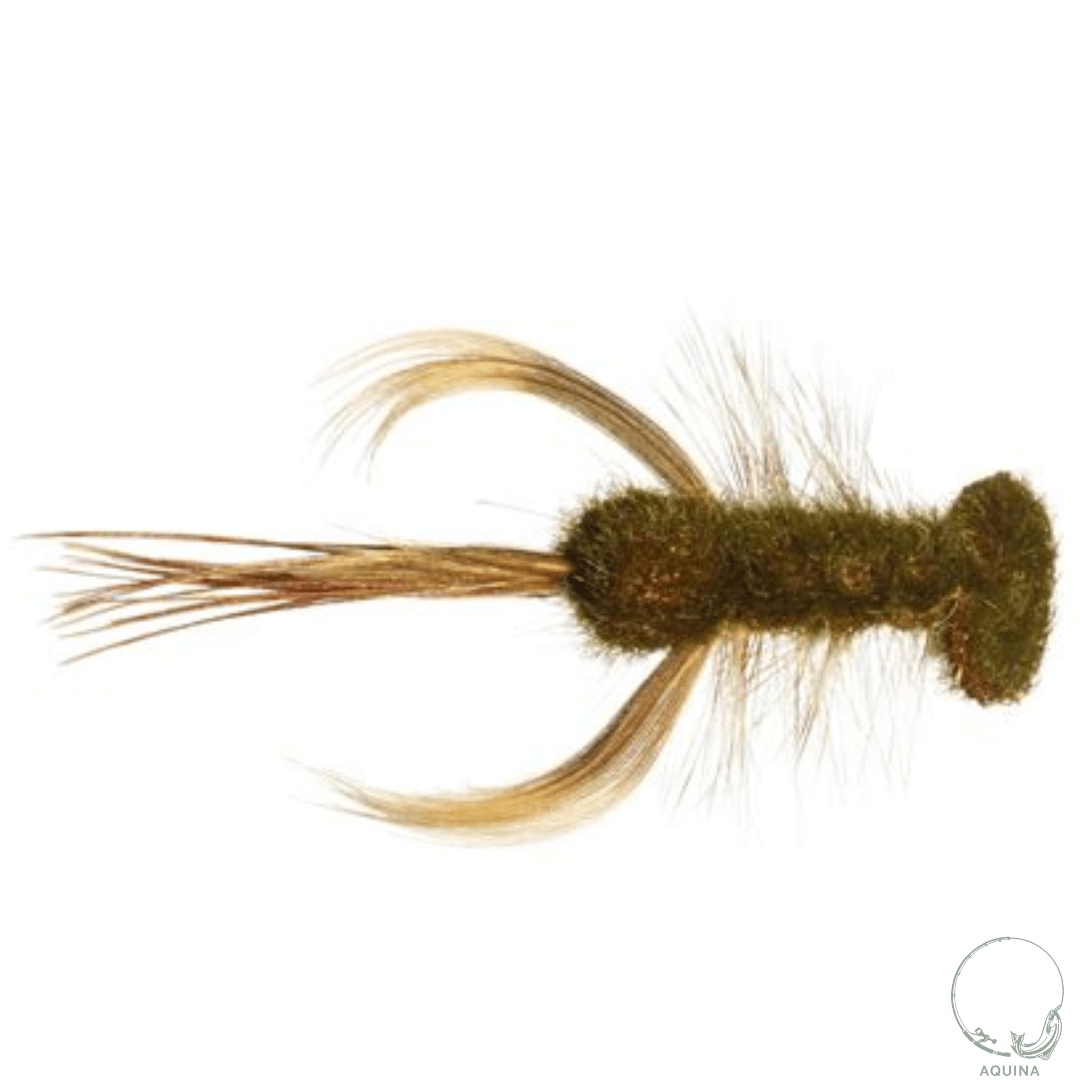
Designed by legendary fly tier Bob Clouser in the mid-1980s, the Clouser Crayfish adapts the proven inverted Clouser platform into a highly effective crayfish imitation. Originally developed for smallmouth bass, it has since become a reliable choice for trout, particularly when fish are keyed in on molting “soft craw” crayfish.
Clouser Crayfish Key Features
- Inverted hook-point-up design
- Lead dumbbell eyes for depth and balance
- Silicone legs for lifelike movement
- Furry foam body adds weight and profile
- Palmered hackle imitates walking legs
- Defined pincers and antenna details
- Muted, natural earth-tone colors
Clouser Crayfish Ideal Conditions
Excels in moderate-depth riffles, runs, and rocky shoreline areas with gravel or sandy bottoms. Highly effective in rivers where crayfish are abundant.
Clouser Crayfish Best Season
Productive year-round, with peak performance during crayfish molting periods when prey is most vulnerable.
Clouser Crayfish Recommended Size
Commonly fished in sizes 8–10 for trout. Larger profiles often attract trophy-class fish.
Clouser Crayfish Rigging & Presentation
Fish under an indicator, high-stick in pocket water, or swing across runs. Use a strip-and-pause retrieve to maintain bottom contact and imitate natural crayfish movement.
How Clouser Crayfish Works
The inverted design prevents snags while keeping the fly tight to the substrate. Silicone legs collapse on the strip and flare on the pause, replicating a crayfish’s defensive swim. Most strikes occur as the fly sinks or hesitates, mimicking vulnerable prey.
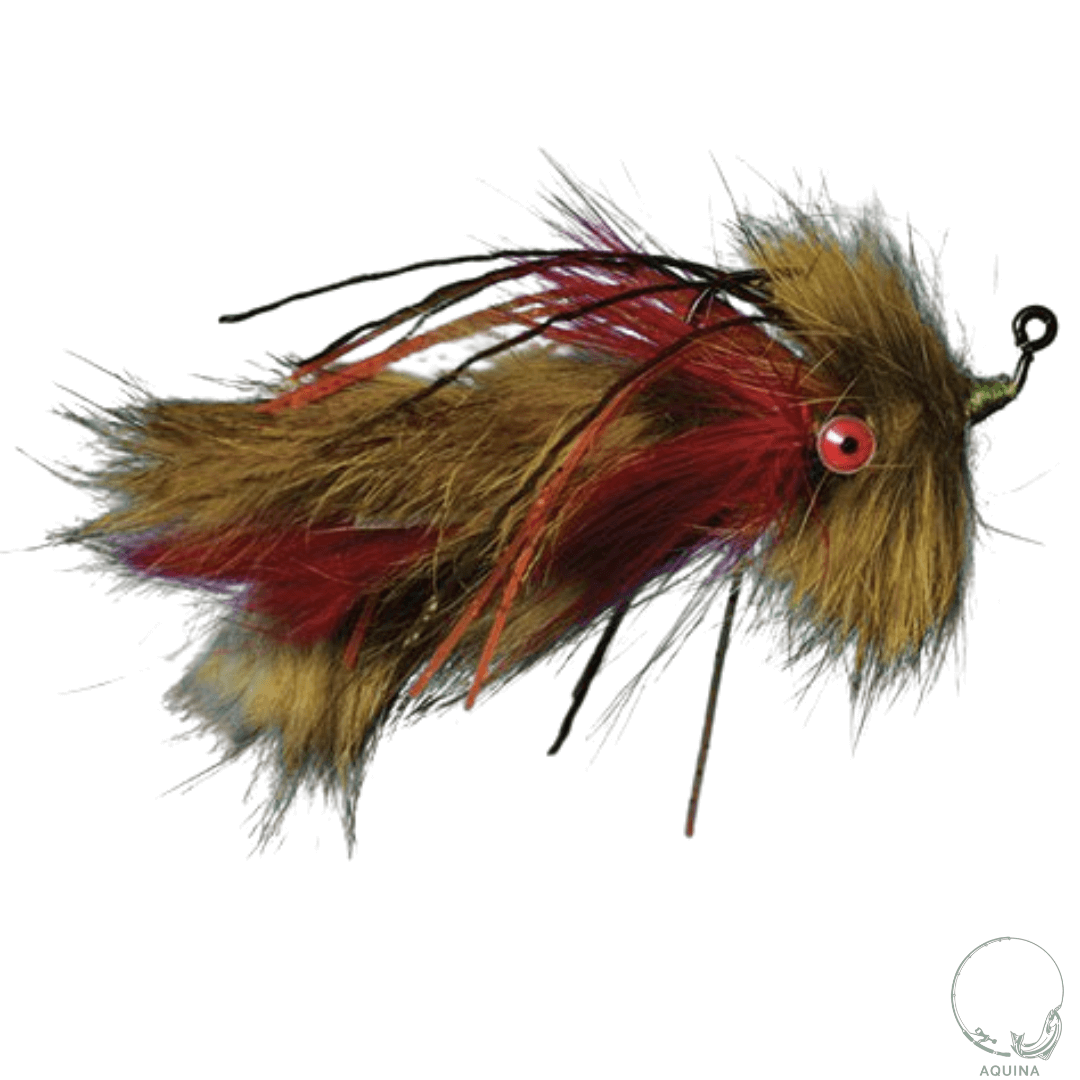
The Big Daddy Craw by Solitude Fly Company is a premium crayfish imitation engineered to match the size, bulk, and defensive posture of mature crayfish. Designed with a heavily weighted structure and realistic claw profile, this pattern delivers consistent bottom contact and lifelike movement. Its durable construction and anatomically accurate silhouette make it highly effective for trout and other predatory fish that rely on crayfish as a primary food source.
Big Daddy Craw Key Features
- Heavily weighted dumbbell eyes for rapid sink and bottom stability
- Oversized claw profile imitating mature crayfish defensive posture
- Durable synthetic and natural material blend for longevity
- Segmented body design replicating natural crayfish anatomy
- Rubber legs providing continuous subtle motion
- Hook-point-up orientation reducing snagging on rocky bottoms
Big Daddy Craw Ideal Conditions
Excels in deep pools, rocky riverbeds, lake drop-offs, and structure-heavy environments where large crayfish live. Particularly effective near boulders, submerged timber, ledges, and undercut banks where predatory fish actively forage along the bottom.
Big Daddy Craw Best Season
Most productive from late spring through fall when crayfish reach mature size and become a major food source. Highly effective during molting periods when crayfish are vulnerable and during warmer months when fish feed aggressively.
Big Daddy Craw Recommended Size
Commonly tied in sizes 2–8. Larger sizes imitate adult crayfish and attract larger predatory fish, while smaller sizes match juvenile crayfish in pressured waters.
Big Daddy Craw Rigging & Presentation
Allow the fly to sink completely to the substrate before retrieving with slow, deliberate strips. Use pauses between movements to imitate natural crawling behavior. Occasional quick strips followed by pauses effectively imitate the defensive darting motion of an escaping crayfish.
How Big Daddy Craw Works
The weighted eyes position the fly in a natural defensive posture while the claws and legs create lifelike movement even when stationary. Its bulky profile presents a substantial, high-protein prey item, triggering instinctive feeding responses from bottom-oriented predatory fish.
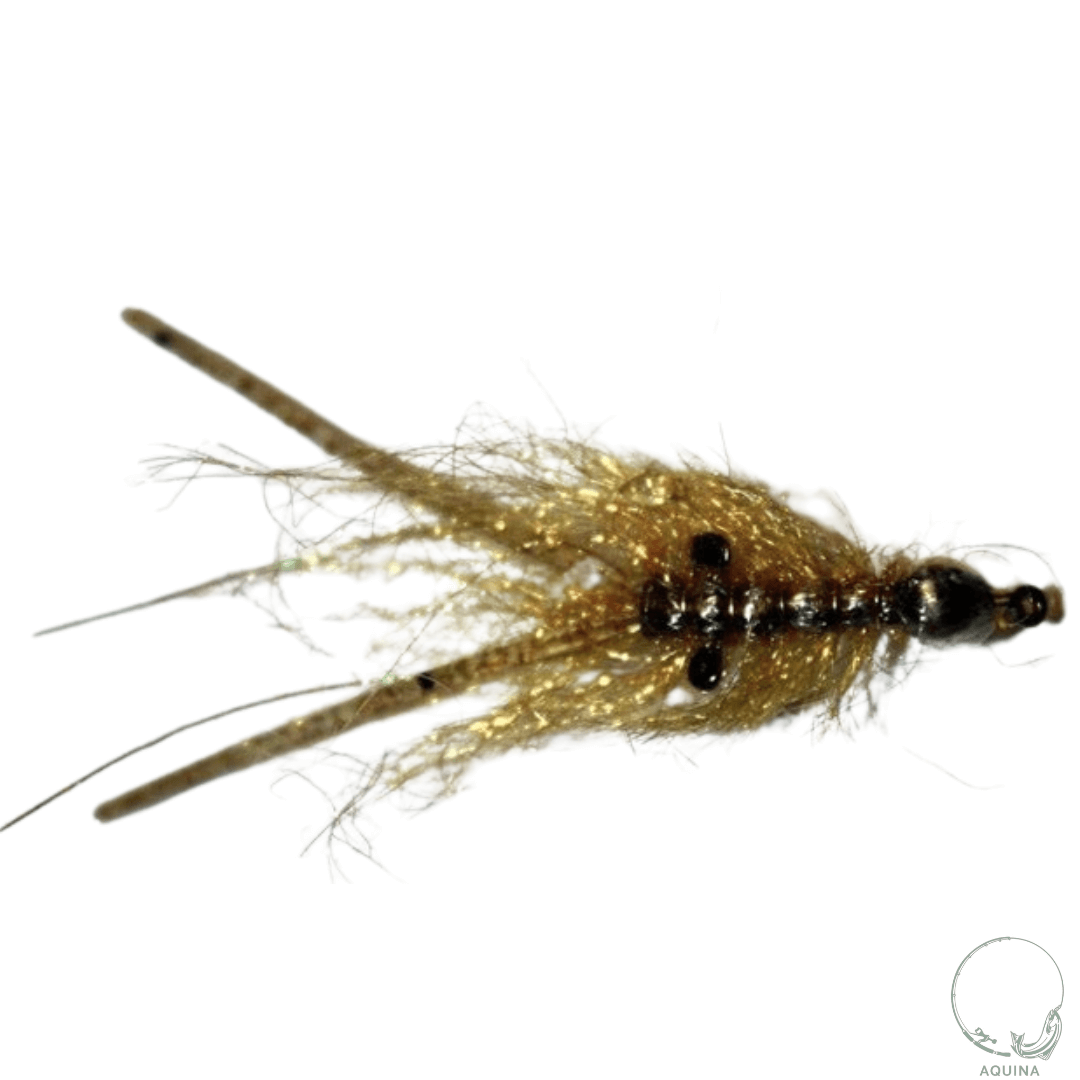
The Baby Daddy Craw is a compact crayfish imitation designed to replicate juvenile crayfish commonly found in rivers and lakes. Built with a realistic profile and balanced weight, this pattern maintains consistent bottom contact while preserving natural posture. Its smaller size and lifelike construction make it highly effective when fish focus on young, vulnerable crayfish.
Baby Daddy Craw Key Features
- Weighted dumbbell eyes
- Compact crayfish profile
- Durable body materials
- Rubber legs and claws
- Segmented body design
- Hook-point-up orientation
Baby Daddy Craw Ideal Conditions
Excels in shallow riffles, rocky shorelines, and moderate-depth pools where juvenile crayfish live. Particularly effective around gravel beds, submerged wood, and transition zones where fish forage along the bottom.
Baby Daddy Craw Best Season
Most productive from spring through fall when juvenile crayfish are abundant. Especially effective during early season periods when smaller forage dominates feeding activity.
Baby Daddy Craw Recommended Size
Typically tied in sizes 6–10. Smaller sizing matches juvenile crayfish and performs well in clear water and pressured environments.
Baby Daddy Craw Rigging & Presentation
Allow the fly to sink fully before retrieving slowly with short strips and pauses. Maintain bottom contact and use subtle movement to imitate natural crawling behavior.
How Baby Daddy Craw Works
The weighted structure keeps the fly near the bottom while rubber legs and claws create continuous natural motion. Its smaller profile imitates a vulnerable juvenile crayfish, triggering confident feeding responses from predatory fish.
5. Crayfish Fly

The Crayfish Fly is a bottom-oriented imitation designed to replicate one of the most important food sources in freshwater ecosystems. Built to match the natural shape, movement, and posture of a live crayfish, this pattern maintains proper orientation and consistent bottom contact. Its lifelike profile and realistic motion make it a dependable choice in rivers, streams, and lakes.
Crayfish Fly Key Features
-
Weighted eyes or underbody
-
Realistic crayfish profile
-
Rubber legs and claws
-
Segmented body structure
-
Natural earth-tone colors
-
Hook-point-up design
Crayfish Fly Ideal Conditions
Excels in rocky bottoms, gravel beds, deep pools, and lake margins where crayfish naturally live. Highly effective near submerged timber, boulders, and undercut banks where fish forage along the substrate.
Crayfish Fly Best Season
Most productive from spring through fall during peak crayfish activity. Remains effective year-round in waters with stable crayfish populations.
Crayfish Fly Recommended Size
Typically tied in sizes 4–10. Larger sizes imitate adult crayfish, while smaller sizes represent juvenile forage.
Crayfish Fly Rigging & Presentation
Allow the fly to sink fully before retrieving with slow strips and pauses. Maintain bottom contact and use subtle movement to imitate natural crawling and defensive motion.
How Crayfish Fly Works
The weighted design keeps the fly positioned along the bottom while flexible legs and claws produce natural movement. This realistic posture and motion imitate a vulnerable crayfish, encouraging strong predatory responses.

The Weighted Crayfish is a bottom-focused imitation designed to maintain constant contact with the substrate, accurately replicating the natural behavior of a live crayfish. Its integrated weight ensures proper depth and stable orientation, allowing the fly to move naturally along the bottom. This construction makes it highly effective in deep water, fast currents, and structure-rich environments.
Weighted Crayfish Key Features
-
Heavy dumbbell eyes or weighted underbody
-
Bottom-oriented hook-point-up design
-
Realistic crayfish profile
-
Flexible legs and claws
-
Durable segmented body
-
Natural brown, olive, or rust tones
Weighted Crayfish Ideal Conditions
Excels in deep pools, fast runs, rocky riverbeds, and lake drop-offs where maintaining bottom contact is essential. Highly effective near structure such as rocks, ledges, submerged timber, and undercut banks.
Weighted Crayfish Best Season
Most productive from spring through fall when crayfish activity is highest. Particularly effective during periods of increased feeding along the bottom.
Weighted Crayfish Recommended Size
Commonly tied in sizes 2–8. Larger sizes match mature crayfish, while smaller sizes imitate juvenile forage.
Weighted Crayfish Rigging & Presentation
Allow the fly to sink fully to the bottom before retrieving slowly with short strips and pauses. Maintain steady bottom contact to imitate natural crawling behavior.
How Weighted Crayfish Works
The added weight ensures the fly reaches and stays near the bottom, while flexible materials create lifelike movement. This combination produces a realistic imitation that closely matches the appearance and behavior of a natural crayfish.
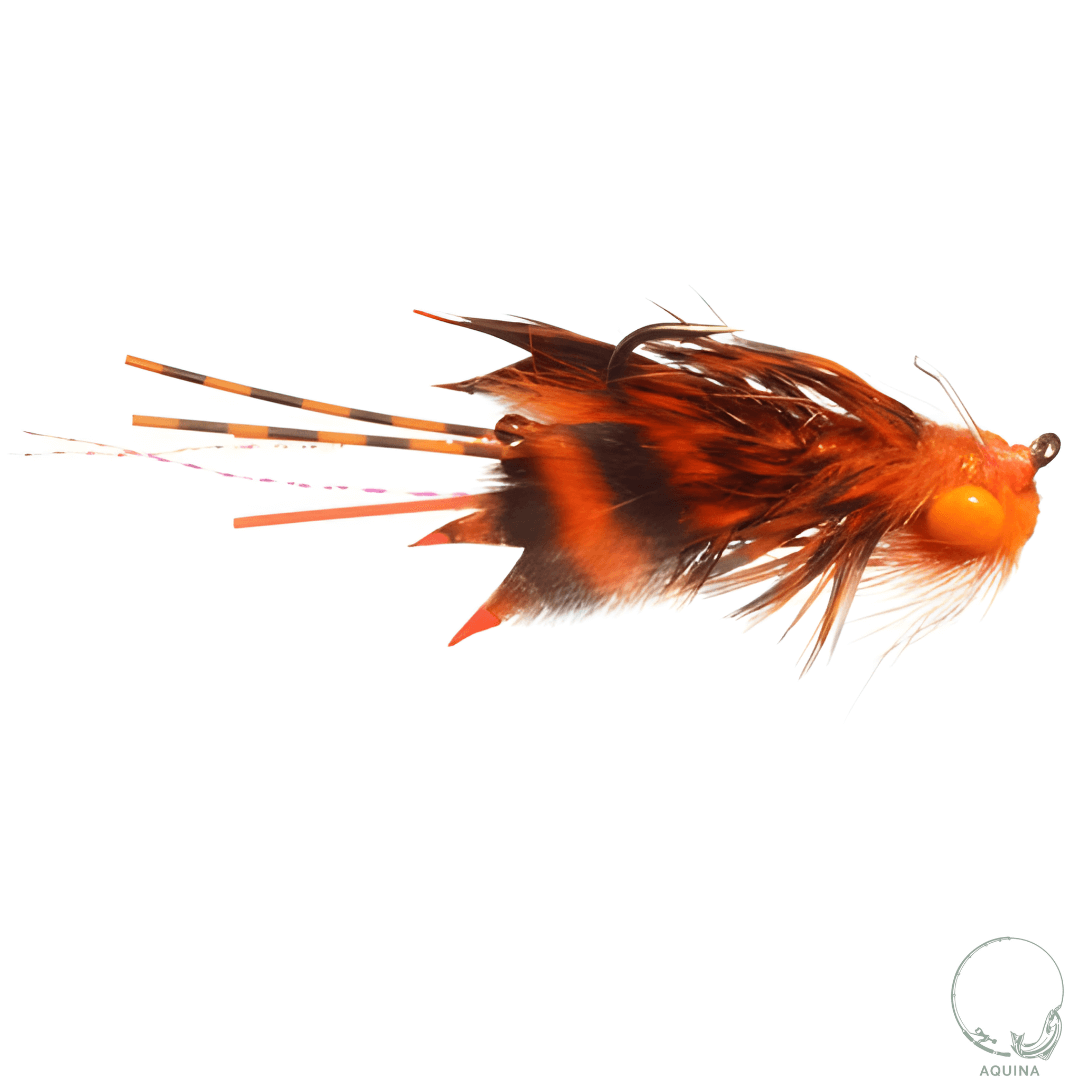
Developed by Dave Whitlock, the Near Nuff Crayfish is a timeless, impressionistic pattern that excels in varied conditions. Its simple yet effective design mimics natural crayfish without relying on complex materials.
Whitlock’s Near Nuff Crayfish Key Features
- Chenille body for natural silhouette
- Rabbit fur claws for realistic movement
- Lead wire underbody for weight
- Rubber legs imitate appendages
- Hook-point-up design prevents snagging
- Multiple color options
Whitlock’s Near Nuff Crayfish Ideal Conditions
Best in clear, shallow to medium-depth waters with rocky structures. Performs well even in pressured fisheries.
Whitlock’s Near Nuff Crayfish Best Season
Early spring through fall, especially after heavy rains.
Whitlock’s Near Nuff Crayfish Recommended Size
Sizes 4–8 depending on local crayfish size.
Whitlock’s Near Nuff Crayfish Rigging & Presentation
Use a 7-foot 3X leader; employ short strips with pauses or allow the fly to tumble naturally in the current.
How Whitlock’s Near Nuff Crayfish Works
Rabbit fur claws and rubber legs create subtle lifelike movement, while the weighted body ensures proper depth without unnatural sinking.
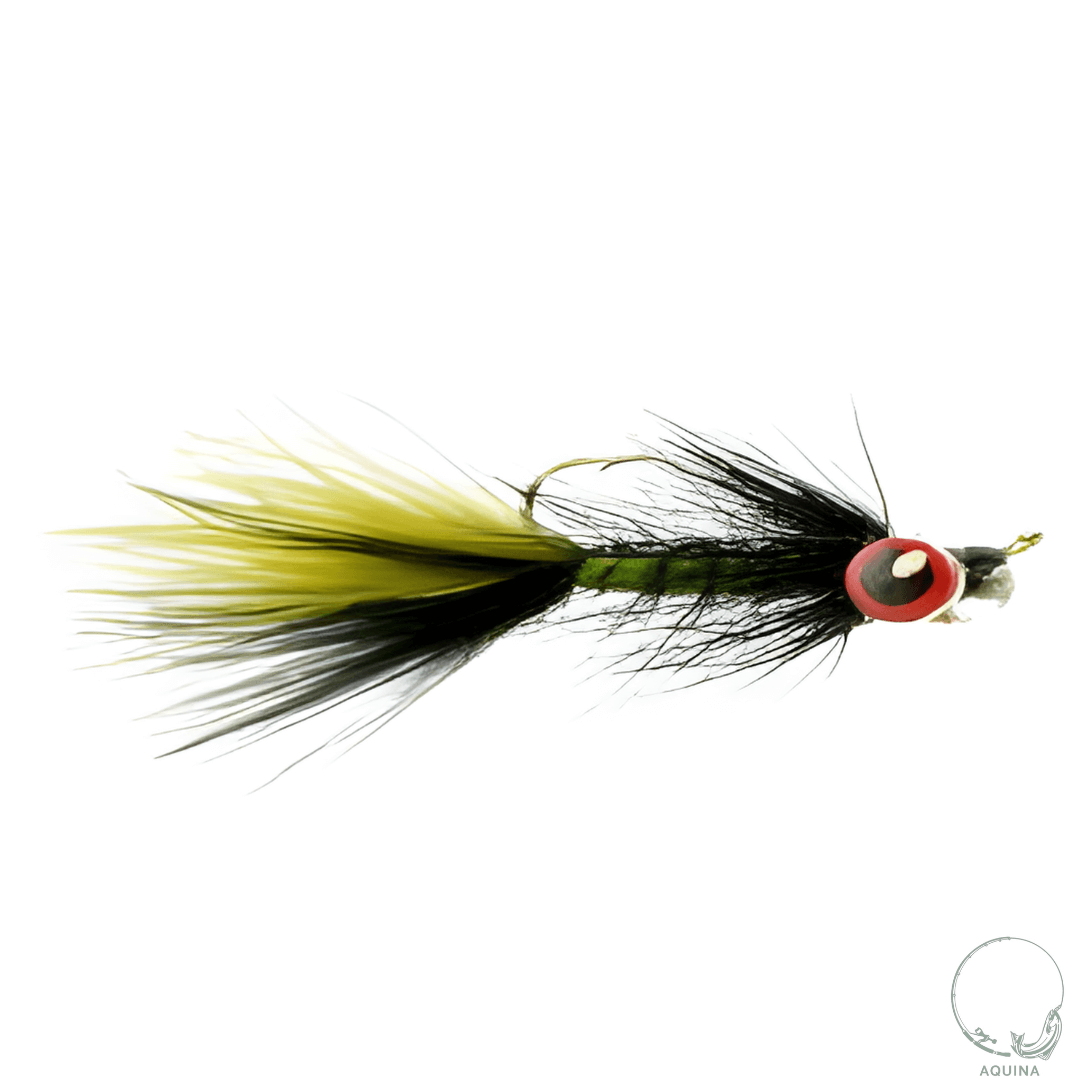
The Soft Hackle Crayfish Bugger is a hybrid crayfish imitation that combines the proven Woolly Bugger profile with soft hackle fibers to enhance realism and movement. Designed to imitate a swimming or fleeing crayfish, this pattern offers exceptional versatility and lifelike action, making it highly effective in both stillwater and moving water environments.
Soft Hackle Crayfish Bugger Key Features
- Soft hackle collar for lifelike movement
- Weighted head or bead for depth control
- Marabou or rabbit tail for flowing motion
- Rubber legs for added realism
- Bugger-style body with natural segmentation
- Natural crayfish-inspired color tones
Soft Hackle Crayfish Bugger Ideal Conditions
Excels in rivers, lakes, and reservoirs where crayfish are present. Particularly effective along rocky bottoms, weed edges, submerged structure, and transition zones between shallow and deep water.
Soft Hackle Crayfish Bugger Best Season
Highly productive from spring through fall during peak crayfish activity. Remains effective year-round in waters with stable forage populations.
Soft Hackle Crayfish Bugger Recommended Size
Typically tied in sizes 4–10. Larger sizes imitate adult crayfish, while smaller sizes match juvenile forage.
Soft Hackle Crayfish Bugger Rigging & Presentation
Allow the fly to sink near the bottom before retrieving with slow strips, pauses, or gentle lifts. Vary retrieve speed to imitate natural crawling or swimming movement.
How Soft Hackle Crayfish Bugger Works
The soft hackle fibers pulse and expand naturally in the water, while the flowing tail and weighted head maintain depth and movement. This creates a convincing crayfish imitation that effectively replicates natural motion and behavior near the bottom.

The Poxyback Crayfish is a highly realistic crayfish imitation distinguished by its hardened epoxy shell back that replicates the natural carapace of a live crayfish. Originally developed to improve durability and anatomical accuracy, this pattern combines lifelike appearance with functional weight and movement, making it extremely effective for trout and other predatory fish feeding near the bottom.
Poxyback Crayfish Key Features
- Epoxy-coated shell back for realistic appearance
- Durable body construction for extended use
- Weighted underbody or dumbbell eyes for depth control
- Rubber legs and claws for natural motion
- Segmented body profile mimicking real crayfish
- Hook-point-up design to minimize bottom snagging
Poxyback Crayfish Ideal Conditions
Excels in rocky-bottom rivers, lake edges, and deep pools where crayfish naturally live. Particularly effective near submerged logs, boulders, and undercut banks where predatory fish actively search for crustaceans.
Poxyback Crayfish Best Season
Most productive from spring through fall during peak crayfish activity and molting periods. Remains effective year-round in tailwaters and lakes with stable crayfish populations.
Poxyback Crayfish Recommended Size
Typically tied in sizes 4–10. Larger sizes imitate adult crayfish, while smaller sizes match juvenile crayfish common in pressured waters.
Poxyback Crayfish Rigging & Presentation
Allow the fly to sink fully to the bottom before retrieving slowly with short strips and pauses. Maintain bottom contact throughout the retrieve to imitate natural crawling behavior. Occasional quick strips can imitate an escaping crayfish.
How Poxyback Crayfish Works
The epoxy shell creates a realistic crayfish silhouette while adding durability and subtle weight. Combined with moving legs and proper bottom orientation, the fly convincingly imitates a live crayfish, triggering aggressive feeding responses from predatory fish.
10. Crayfish Olive
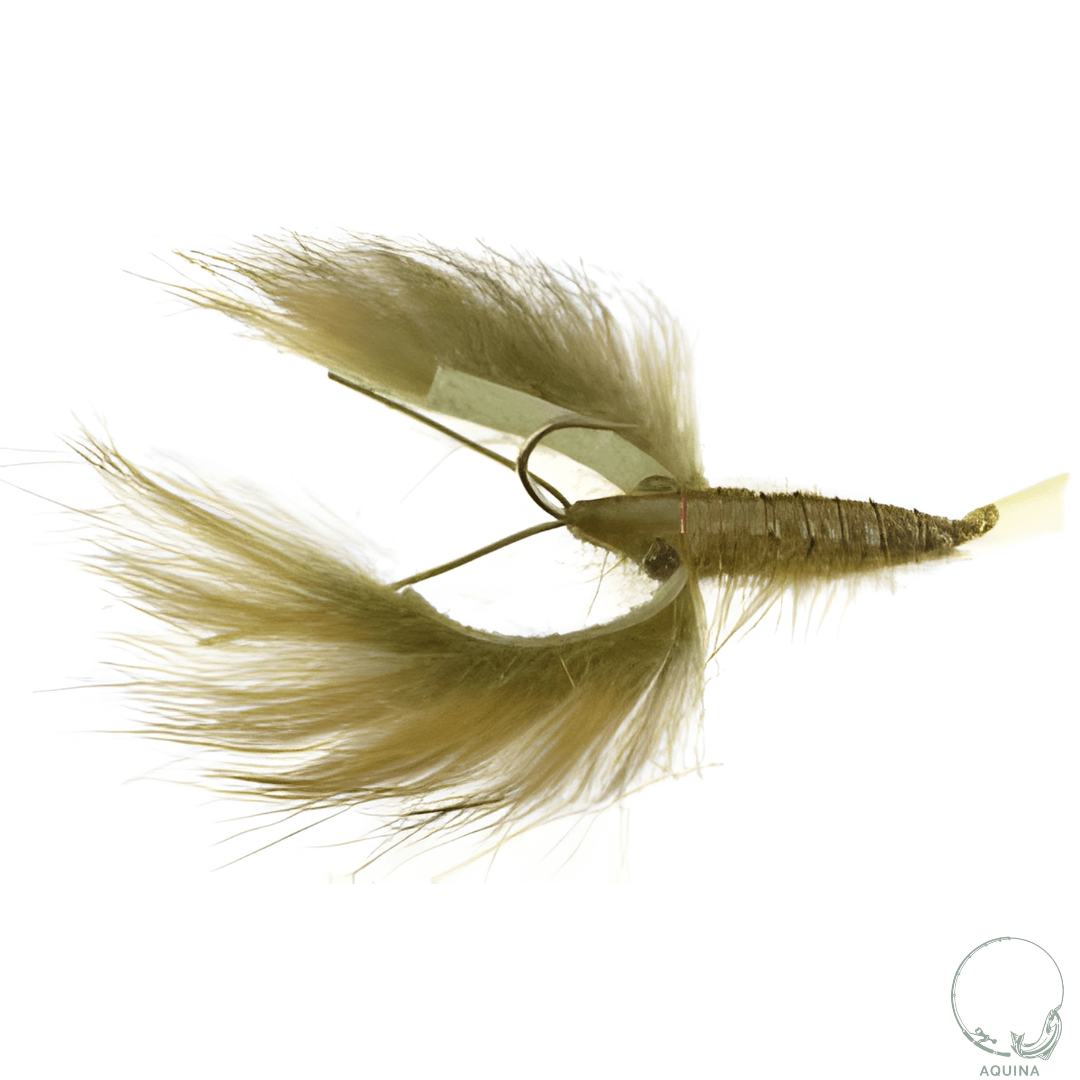
The Crayfish Olive fly is a classic, versatile pattern that imitates natural olive-colored crayfish found in streams and lakes. Designed with a combination of rabbit fur and soft dubbing, it delivers lifelike movement, realistic profile, and subtle vibrations to attract predatory fish such as trout and bass.
Crayfish Olive Key Features
- Olive rabbit fur claws for natural motion
- Soft dubbing body for realistic texture
- Weighted underbody or bead eyes for depth control
- Rubber legs for subtle vibration
- Hook-point-up design for snag resistance
- Natural olive coloration
- Durable, long-lasting construction
Crayfish Olive Ideal Conditions
Best in clear to slightly stained water over rocky or gravel substrates, along undercut banks, and near submerged structure.
Crayfish Olive Best Season
Effective year-round, with peak performance during spring through fall when crayfish are active.
Crayfish Olive Recommended Size
Sizes 4–10 are typical; smaller sizes for pressured trout, larger sizes for aggressive predators.
Crayfish Olive Rigging & Presentation
Fish upstream or across current; allow fly to settle on the bottom, then use short, twitching strips to simulate natural crawling and defensive movements.
How Crayfish Olive Works
The rabbit fur claws and rubber legs create subtle pulsing and lifelike motion, while the weighted underbody keeps the fly hook-point-up. This combination convincingly mimics a live crayfish, triggering instinctive strikes from trout and bass.

Bob Clouser's original Clouser Minnow has been adapted into an effective crayfish pattern, making it one of the most versatile flies ever created. Initially developed for baitfish imitation, this pattern successfully mimics crayfish through strategic color and material modifications.
Clouser Minnow Crayfish Key Features
- Lead eyes tied on top causing hook to ride point-up
- Bucktail wing in crayfish colors
- Flash material for subtle shimmer
- Simple yet effective design
- Minimal body materials
- Optional claws for enhanced realism
- Hook-point-up design minimizes snags
Clouser Minnow Crayfish Ideal Conditions
This pattern excels in classic crayfish habitats including rocky bottoms, submerged logs, and areas with current breaks. Comparatively, it outperforms many patterns in both clear and slightly stained water.
Clouser Minnow Crayfish Best Season
Year-round effectiveness makes this a reliable pattern, yet it shines primarily during summer months when crayfish activity increases.
Clouser Minnow Crayfish Recommended Size
Size 8 represents the standard for trout fishing, with larger sizes 1/0 through 4 preferred for bass and saltwater applications.
Clouser Minnow Crayfish Rigging & Presentation
Fish with short, sharp strips followed by pauses to mimic a crayfish's natural movement. Allow the fly to sink completely before beginning retrieval.
How Clouser Minnow Crayfish Works
The inverted design with lead eyes causes an enticing jigging action. Naturally, the bucktail breathes underwater, creating subtle movements even during pauses.

The Sculpinator Crayfish stands as a popular pattern among anglers seeking cost-effective yet fish-catching crayfish imitations. This creation mimics the natural movements and appearance of sculpins—bottom-dwelling baitfish that trout frequently target.
Sculpinator Crayfish Key Features
- Fish-Skull Bandito Sculpin Head for realistic profile
- Rabbit zonker strips creating lifelike movement
- Yellow grizzly marabou fins mimicking natural appendages
- Olive or brown color variants matching natural prey
- Non-reflective hook reducing fish wariness
- UV resin finish enhancing durability
- Adaptable to various sizes depending on conditions
Sculpinator Crayfish Ideal Conditions
This pattern excels in rocky environments where sculpins naturally reside. Unlike traditional crayfish patterns, it performs exceptionally alongside structures where predatory fish ambush prey. The fly's design allows effective fishing in both shallow riffles and deeper pools.
Sculpinator Crayfish Best Season
Year-round effectiveness makes this pattern reliable, yet peak performance occurs throughout summer months.
Sculpinator Crayfish Recommended Size
Size 4 represents the standard, yet the pattern adapts to various sizes depending on local prey dimensions.
Sculpinator Crayfish Rigging & Presentation
Fish with short strips followed by pauses, mimicking a sculpin's bottom-hugging movement pattern.
How Sculpinator Crayfish Works
The realistic head profile combined with the rabbit strips creates a natural swimming motion that triggers predatory responses from trout.
13. Rusty Bomber
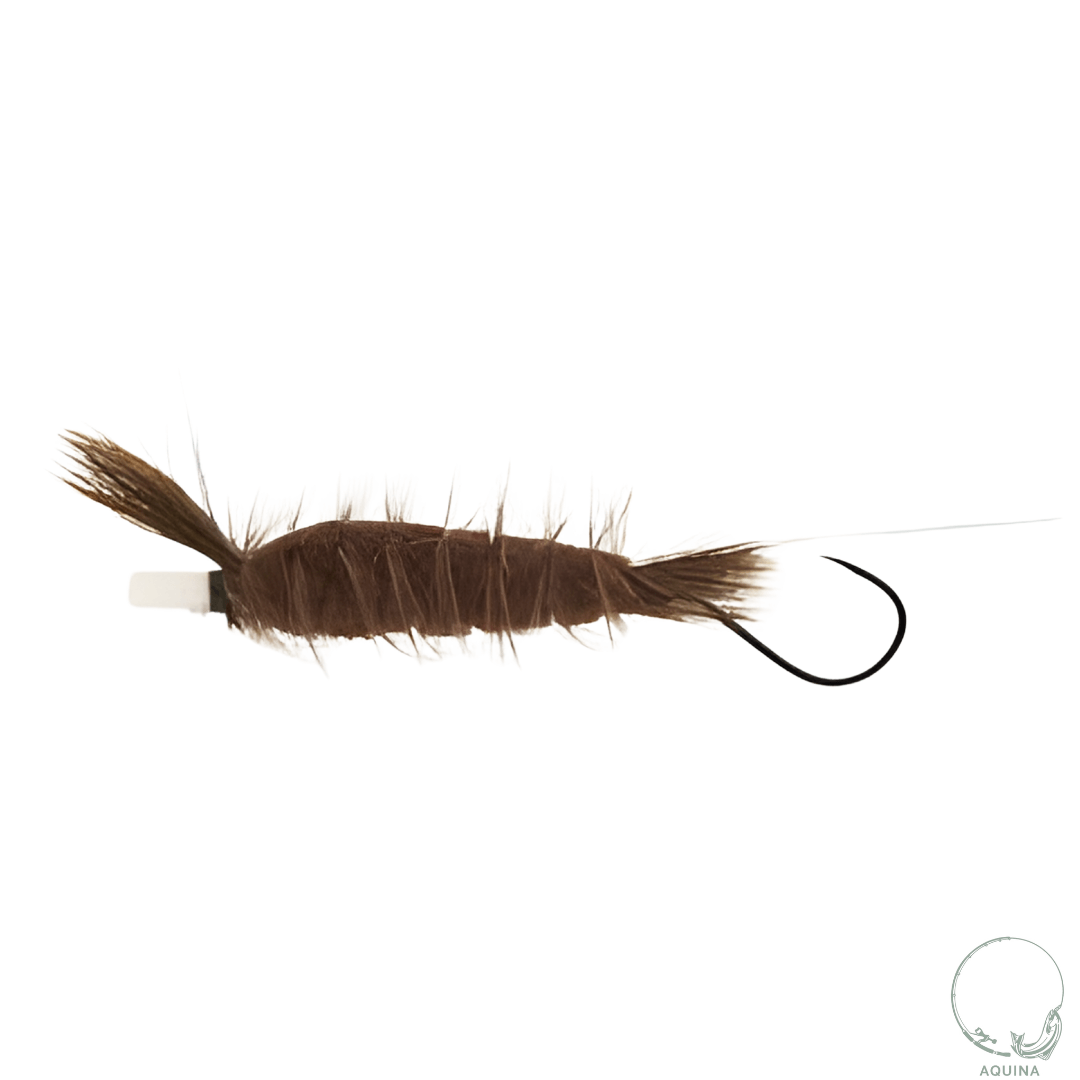
Originally created by Reverend Elmer Smith in the 1960s for Atlantic salmon, the Rusty Bomber is a classic surface-skating dry fly that provokes explosive strikes through surface commotion. Its deer hair body and hackle create lifelike movement across the water.
Rusty Bomber Key Features
- Rust-colored deer hair body
- Brown saddle hackle
- White polar bear or calf tail wing
- Red fox squirrel tail
- Optional Mylar strands for visibility
- Surface-skating design
- Available as hook or tube
Rusty Bomber Ideal Conditions
Excels in windy conditions over pools, runs, and sea-pools where fish are territorial or competing.
Rusty Bomber Best Season
Late summer from August onwards, as pools fill and fish become aggressive.
Rusty Bomber Recommended Size
Sizes 2, 4, 6, and 8 for varied water conditions.
Rusty Bomber Rigging & Presentation
Use a strong line with a Rapala knot. Cast across the current, lift slowly, and allow wind to carry the fly; small rod-tip wiggling adds enticing motion.
How Rusty Bomber Works
Skates on the surface, mimicking struggling prey. Fish strike aggressively from below, responding to lifelike surface disturbance rather than bottom drift.
14. Foxy Clouser
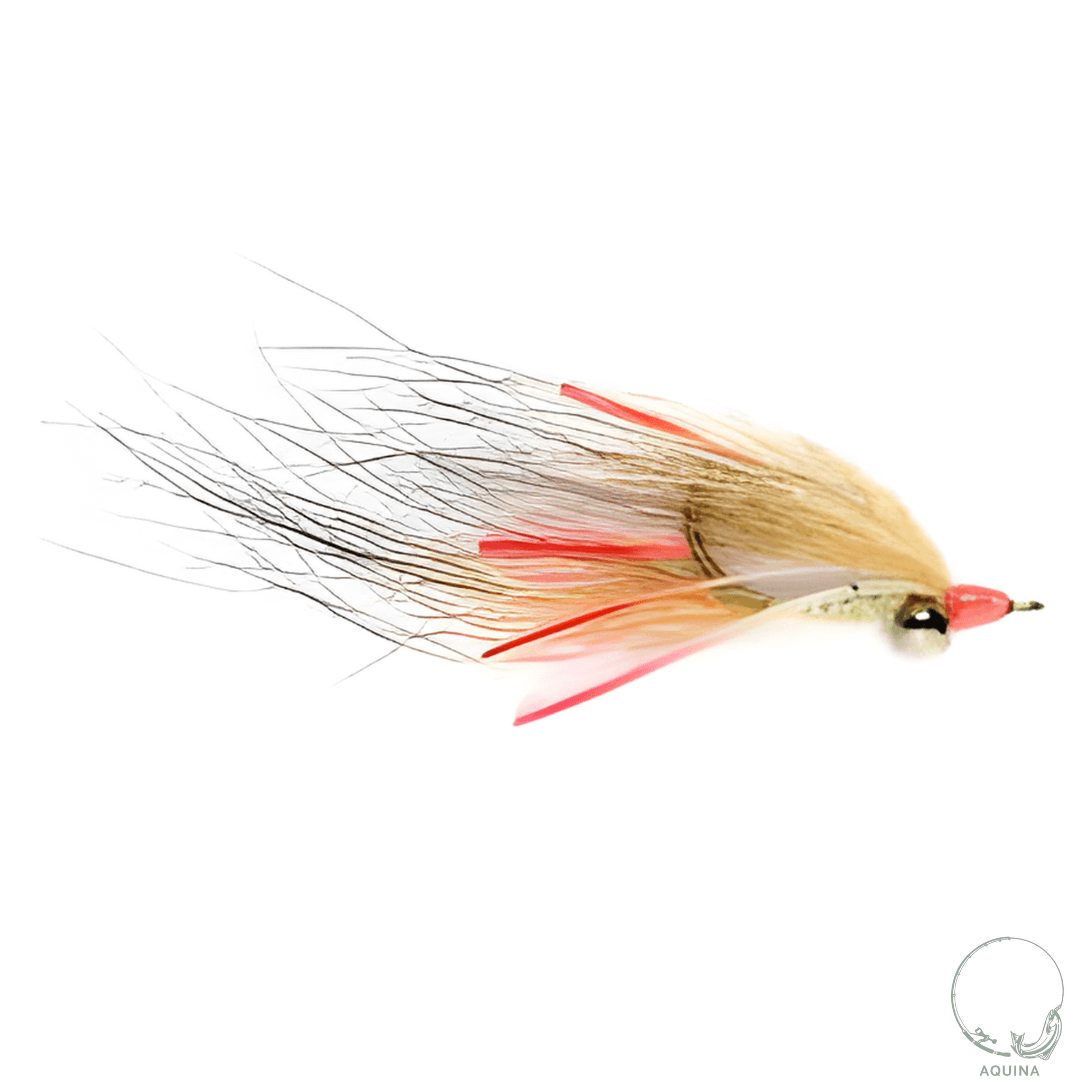
The Foxy Clouser, a variation of Bob Clouser’s classic design, uses fox fur to create a lifelike crayfish imitation. Its weighted, impressionistic profile triggers strikes while maintaining natural movement underwater.
Foxy Clouser Key Features
- Fox fur for enhanced movement
- Orange/brown crayfish coloration
- Lead dumbbell eyes for jigging
- Hook-point-up design prevents snags
- Water-absorbing materials for added weight
- Simple, effective profile
- Strikes triggered by lifelike motion
Foxy Clouser Ideal Conditions
Best near rocky structures in clear or slightly stained water.
Foxy Clouser Best Season
Effective year-round, especially for smallmouth bass feeding on crayfish.
Foxy Clouser Recommended Size
Sizes 8 and 10; larger sizes appeal to bigger fish.
Foxy Clouser Rigging & Presentation
Use strip-and-pause retrieves to mimic natural rise and fall along the bottom.
How Foxy Clouser Works
Weighted eyes create a jigging action; pauses allow the fly to settle hook-point-up, imitating a natural crayfish position.
15. Crawdad
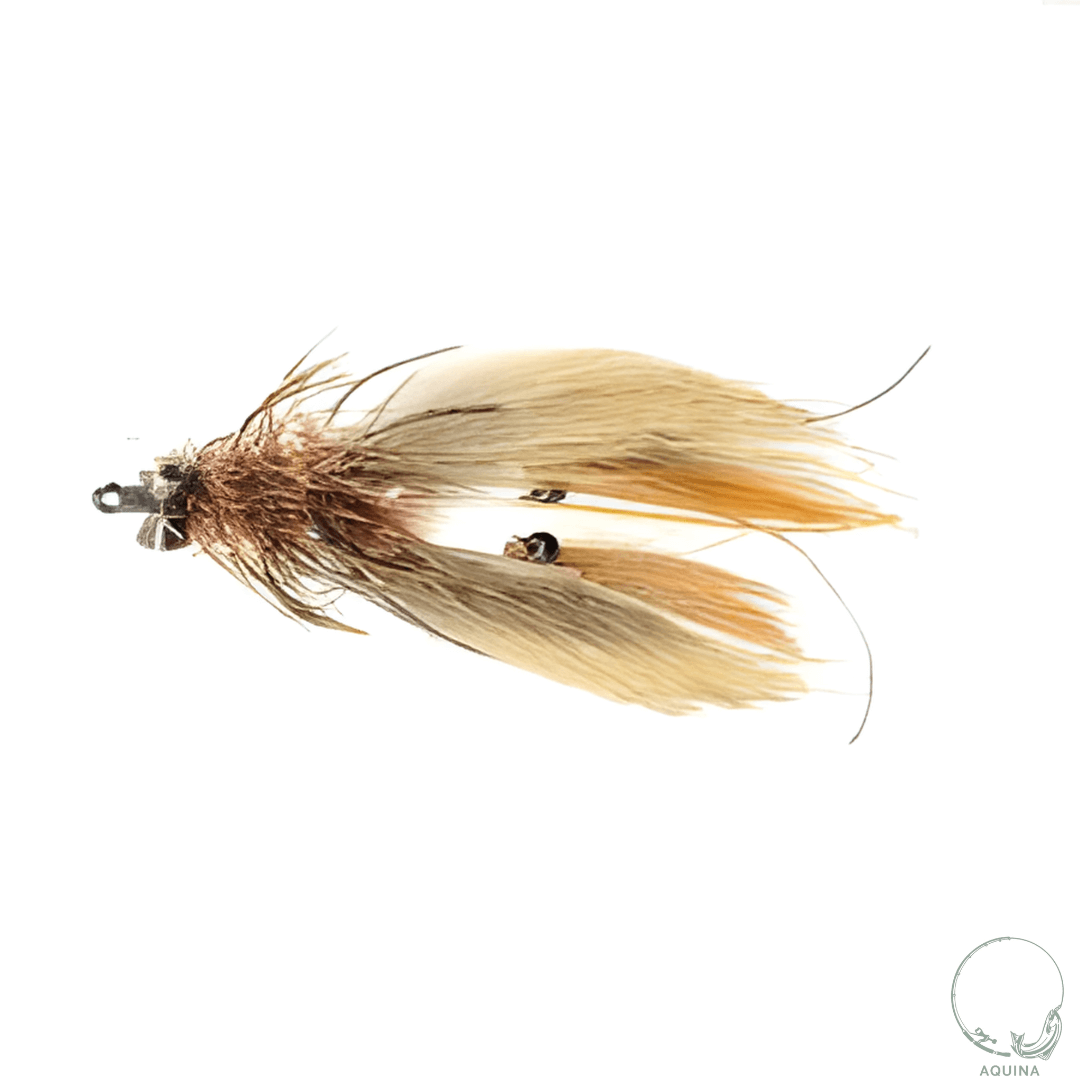
The Crawdad fly is a realistic, bottom-oriented crayfish imitation built to match the bulk and posture of mature crayfish. With a weighted body and articulated materials, it excels at producing aggressive takes from trout, bass, and other predatory species feeding near the substrate.
Crawdad Key Features
- Articulated or extended body for full crayfish profile
- Rabbit or synthetic claws for lifelike movement
- Weighted underbody or dumbbell eyes
- Rubber legs for vibration
- Natural brown, rust, or olive coloration
- Hook-point-up configuration to reduce snags
- Durable materials for repeated strikes
Crawdad Ideal Conditions
Performs best in rocky-bottom rivers, deep pools, lake edges, and around submerged timber where crayfish naturally dwell. Particularly effective near structure and drop-offs.
Crawdad Best Season
Spring through fall, especially during molting cycles and warm-water feeding periods when crayfish activity peaks.
Crawdad Recommended Size
Typically tied in sizes 2–8 to imitate adult crayfish; larger profiles often trigger bigger fish.
Crawdad Rigging & Presentation
Allow the fly to sink fully before initiating a slow crawl retrieve. Use short strips with pauses to imitate natural backward darting behavior. In current, fish it across-stream and maintain bottom contact.
How Crawdad Works
The weighted design keeps the fly near the bottom in a natural defensive posture. Moving claws and legs create subtle motion, convincing predatory fish they are targeting a vulnerable, protein-rich meal.

The Bunny Bug Crayfish represents what many guides consider the perfect pattern—quick to tie yet remarkably effective across multiple warmwater species. This versatile fly bridges the gap between freshwater and saltwater applications, proving equally deadly for bass, trout, redfish, and speckled trout throughout various conditions.
Bunny Bug Crayfish Key Features
- Rabbit zonker strip for natural movement
- Interchangeable dumbbell eyes for variable sink
- Foam body for buoyancy and profile
- Rubber legs mimic appendages
- Marabou tail for pulsing action
- Flash materials for visibility
- Brown hackle for subtle motion
Bunny Bug Crayfish Ideal Conditions
Excels around riprap, rocky shorelines, and broken talus entering lakes.
Bunny Bug Crayfish Best Season
Mid-spring through summer, including early bass spawn.
Bunny Bug Crayfish Recommended Size
Typically tied on size 4 Daiichi 2220 hook.
Bunny Bug Crayfish Rigging & Presentation
Use a floating line with 9–12 ft leader; strip and jig to control depth naturally.
How Bunny Bug Crayfish Works
Rabbit zonker strip and marabou tail create pulsing motion; dumbbell eyes adjust sink rate, presenting a lifelike crayfish to predatory fish.
17. Yabby Crayfish
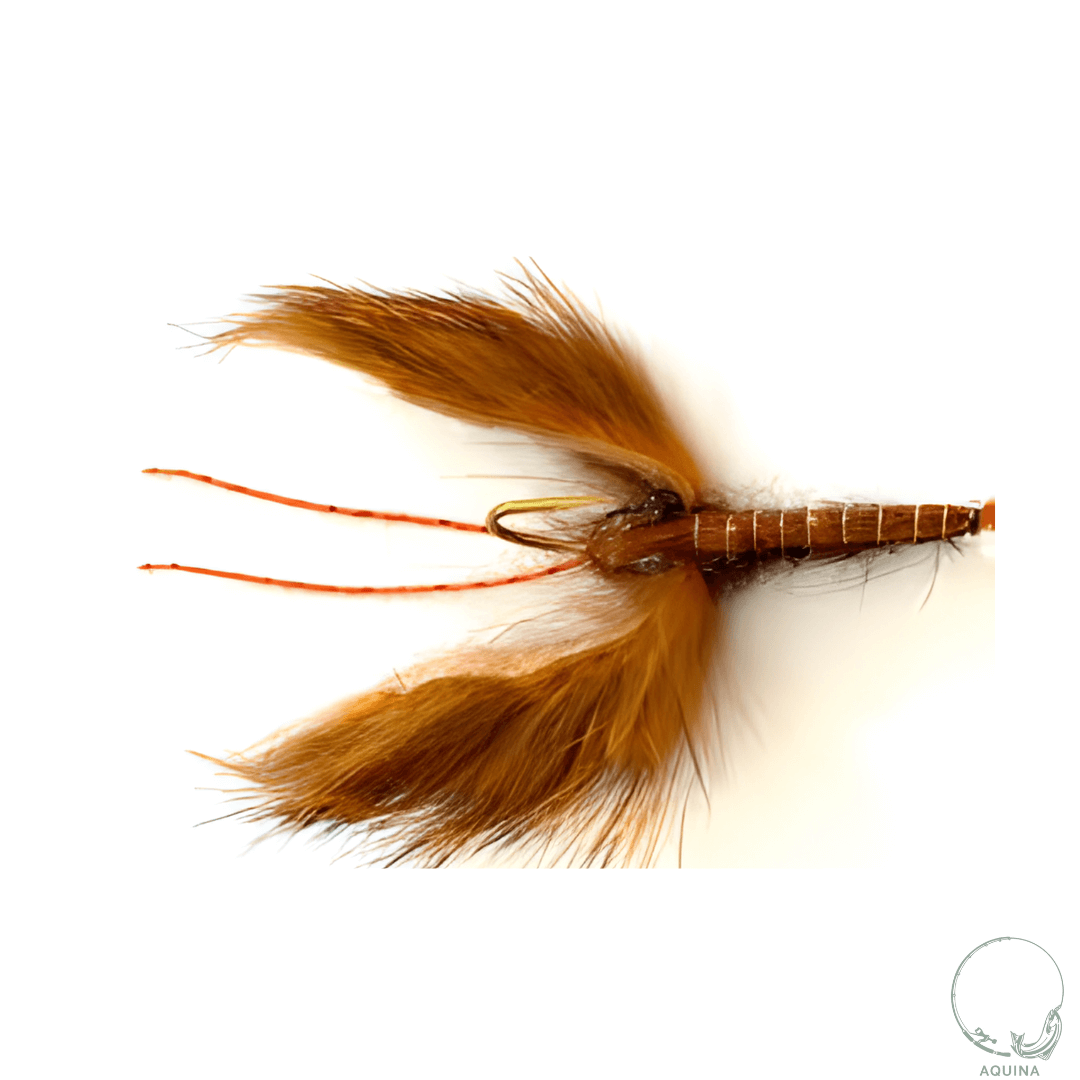
The Yabby Crayfish is a realistic imitation of Australia’s native freshwater crayfish, built to replicate the natural profile and bottom-crawling behavior of a vulnerable crustacean. Its lifelike movement and weighted construction make it highly effective for trout, bass, bream, perch, catfish, and carp.
Yabby Crayfish Key Features
- Realistic yabby profile
- Weighted body or bead eyes for depth control
- Soft claws and rubber legs for pulsing motion
- Segmented body construction
- Natural brown and olive tones
- Hook-point-up design to reduce snags
Yabby Crayfish Ideal Conditions
Excels around rocky bottoms, lake margins, undercut banks, submerged timber, and structure where yabbies naturally forage. Performs well in clear to lightly stained water.
Yabby Crayfish Best Season
Most productive from late spring through early autumn, though effective year-round when fish key in on crustaceans.
Yabby Crayfish Recommended Size
Commonly tied in sizes 2–8 depending on target species and local forage size.
Yabby Crayfish Rigging & Presentation
Allow the fly to sink fully before retrieving with slow strips and pauses to imitate natural crawling or backward darting movement along the bottom.
How Yabby Crayfish Works
Soft materials pulse naturally while the weighted body keeps the fly near the substrate. This realistic posture and movement present a high-protein, vulnerable meal that triggers aggressive strikes from predatory fish.
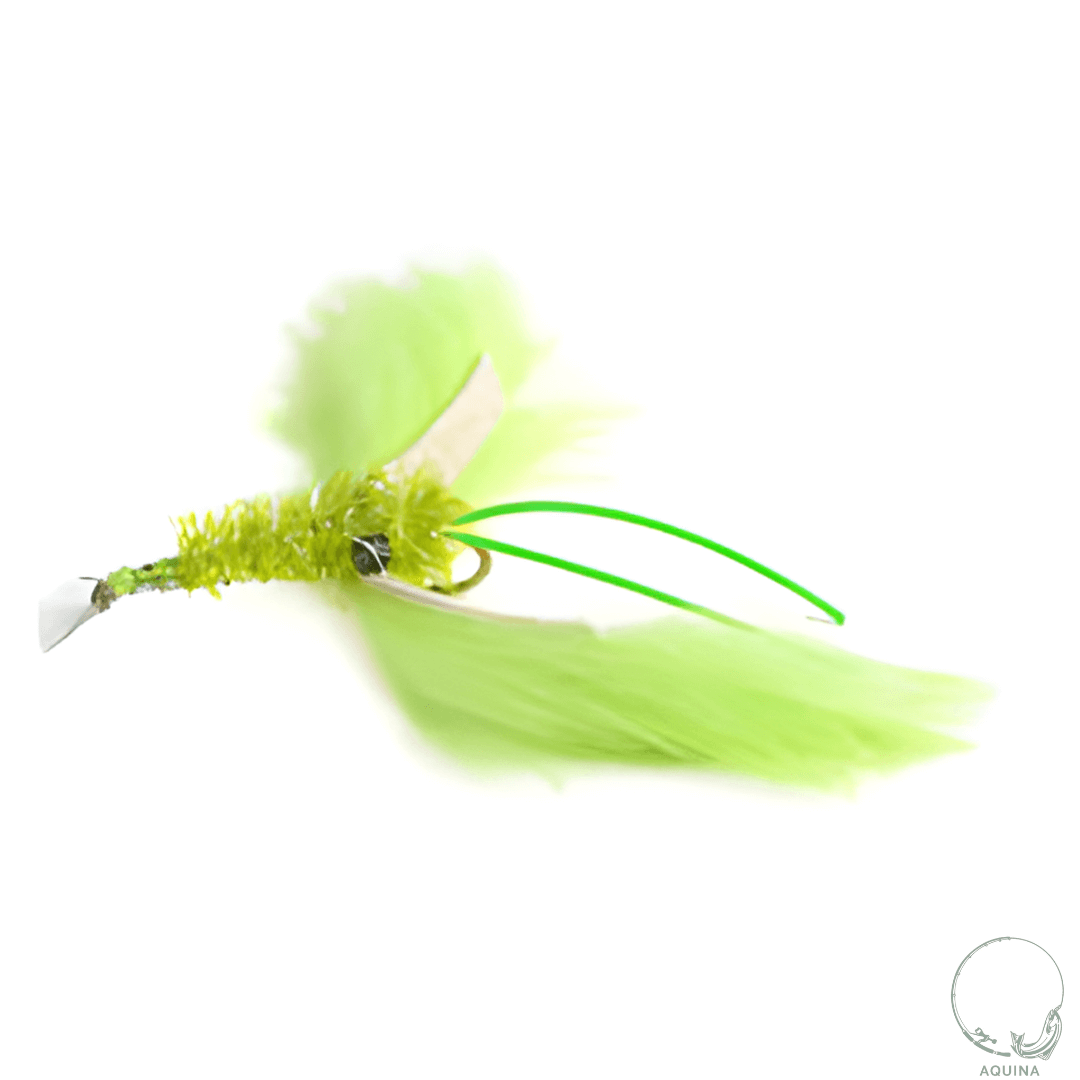
The Mini Zonker Crayfish is a streamlined, highly mobile crayfish imitation that emphasizes lifelike movement over anatomical precision. Built around rabbit zonker strips, this pattern creates constant undulating motion even at slow retrieve speeds. Its compact size makes it ideal when fish are keyed in on juvenile crayfish rather than full-grown adults.
Mini Zonker Crayfish Key Features
- Rabbit zonker claws for natural movement
- Slim, compact profile
- Weighted underbody or bead-chain eyes
- Subtle rubber legs for vibration
- Natural olive, rust, or brown colors
- Soft materials for lifelike motion
Mini Zonker Crayfish Ideal Conditions
Rocky rivers, lake drop-offs, and undercut banks; excels in clear to lightly stained water.
Mini Zonker Crayfish Best Season
Late summer through fall; effective during low-water periods.
Mini Zonker Crayfish Recommended Size
Sizes 6–12; smaller for pressured trout, larger for aggressive fish.
Mini Zonker Crayfish Rigging & Presentation
Sink to the bottom, use slow, erratic strips; across-current drifts enhance natural tumble.
How Mini Zonker Crayfish Works
Rabbit zonker strips pulse even when paused, simulating live juvenile crayfish. Its subtle motion and small profile provoke predatory strikes from trout and bass.
Comparison Table
| Pattern Name | Key Features | Best Season | Ideal Conditions | Recommended Sizes | Notable Characteristics |
| Full Motion Crayfish |
• Hook point up design • Orange antron • Rabbit fur body • Rubber legs • Brass barbell eyes |
Spring – Summer | Rocky bottom environments | 4–8 | Exceptionally realistic with lifelike movement |
| Clouser Crayfish |
• Inverted design • Lead dumbbell eyes • Silicone legs • Furry foam body • Palmered hackle |
Year-round | Moderate depth areas with rocky/gravelly bottoms | 8–10 | Effective during molting periods |
| Big Daddy Craw |
• Dumbell eyes • Segmented body • Rubber legs • Crayfish imitation • Hook-up design |
Late spring – fall | Excels in deep pools, rocky riverbeds | 6–10 | Durable and highly lifelike movement |
| Baby Daddy Craw |
• Compact crayfish profile • Weighted dumbbell eyes • Rubber legsand claws • Segmented body profile • Hook-point-up design |
Spring – Fall | Rocky streams and structured water | 4–10 | Durable and highly lifelike movement |
| Crayfish Fly |
• Weighted design • Super-realistic appearance • Rubber legs and claws •Segmented body profile • Hook-point-up design |
Spring-fall | Rocky bottoms, deep pools. | 2–10 | Excels in finicky conditions |
| Whitlock's Near Nuff |
• Chenille body • Rabbit fur claws • Lead wire underbody • Rubber legs • Wire antennae |
Early spring – Fall | Clear days in shallow to medium-depth waters | 4–8 | Simple yet highly effective design |
| Soft Hackle Crayfish Bugger |
• Marabou tail • Soft hackle • Rubber legs • Multiple color variants • Bugger-style body |
Year-round | Rocky bottom environments | 2–12 | Highly versatile pattern |
| Poxyback Crayfish |
• Epoxy-coated shell • Weighted underbody/dumbbell eyes • Rubber legs • Segmented body • Durable construction |
Spring – Fall | Medium to deep pools with rocky structure | 4–10 | Creates natural jigging action |
| Crayfish Olive |
• Olive rabbit claws • Soft dubbing body • Weighted underbody • Rubber legs • Natural coloration |
Year-round (best spring–fall) | Clear to lightly stained rocky water | 4–10 | Natural olive imitation with subtle motion |
| Clouser Minnow (Crayfish) |
• Lead eyes on top • Bucktail wing • Flash material • Minimal body |
Year-round | Rocky bottoms and submerged logs | 8 for trout, 1/0–4 for bass | Versatile adaptation of classic pattern |
| Sculpinator Crayfish |
• Fish-Skull head • Rabbit zonker strips • Yellow grizzly marabou • UV resin finish |
Year-round | Rocky environments | 4 | Excellent alongside structure |
| Rusty Bomber |
• Deer hair body • Brown saddle hackle • White polar bear wing • Red fox squirrel tail |
Late season (August onwards) | Windy surface conditions | 2–8 | Creates aggressive surface disturbance |
| Foxy Clouser |
• Fox fur materials • Orange/brown colors • Lead dumbbell eyes • Hook-point-up design |
Year-round | Rocky structures | 8–10 | Specialized crayfish variant |
| Crawdad |
• Articulated or extended body • Weighted head • Rubber legs • Natural colors |
Spring – Fall | Deep pools and rocky structure | 2–8 | Mature crayfish profile for larger fish |
| Bunny Bug Crayfish |
• Rabbit zonker strip • Dumbbell eyes • Foam body • Rubber legs |
Mid-spring – Summer | Riprap or broken talus slopes | 4 | Effective in both fresh and saltwater |
| Yabby Crayfish |
• Realistic yabby profile • Weighted body • Soft claws • Segmented construction
|
Late spring – Early autumn | Rocky bottoms and structured lake edges | 2–8 | Australian-style crayfish imitation |
Armed with knowledge about these 18 exceptional crayfish patterns, anglers can now approach any fishing situation with confidence. Selecting the right crayfish imitation undoubtedly makes a significant difference when targeting trophy fish, especially during vulnerable molting periods when these crustaceans become prime targets.
Each pattern offers unique advantages depending on water conditions, season, and target species. The Full Motion Crayfish excels with its lifelike presentation, whereas the classic Clouser Crayfish delivers consistent results through its versatile design. Similarly, specialized patterns like Bunny Bug Crayfish capitalize on specific feeding behaviors that trigger aggressive strikes from selective trout.
Weight considerations remain essential when choosing your crawfish pattern. Heavier flies work better in deeper pools or faster currents, while lighter variations prove more effective in shallow, clear waters. Additionally, color selection should match local crayfish populations – typically ranging from olive and brown to rusty orange tones.
Presentation techniques equally matter when fishing these patterns. Short strips followed by extended pauses typically mimic natural crayfish movement most effectively. Alternatively, dead-drifting these flies through likely holding areas allows predatory fish ample opportunity to strike.
Though seemingly complex at first glance, mastering crayfish fly fishing ultimately comes down to understanding basic principles: match the natural prey size, fish the correct habitat, and present the fly realistically. These fundamental concepts, coupled with the detailed pattern information provided above, equip anglers with everything needed for success on the water.
The next time traditional dry flies or nymphs fail to produce results, remember these crawfish patterns. Their effectiveness throughout the fishing season, particularly for targeting larger fish, makes them essential additions to any comprehensive fly box. Your biggest catch might just come from presenting the right crayfish pattern in the right place at the right time.
Conclusion
Understanding crayfish behavior vastly improves fly fishing success with these crawdad patterns. Mature crayfish typically forage in low light conditions—morning, evening, or under overcast skies—making them perfect for targeting nocturnal brown trout. Conversely, immature crayfish remain more active during daylight hours, not yet conditioned to hunt under protective darkness.
Through seasonal cycles, crayfish remain available yet change in vulnerability. During winter, they burrow into bottom sediment or under rocks, sometimes over 6 inches deep to avoid cooler temperatures. Come fall, they mate, with offspring hatching in early spring. Their activity peaks in water temperatures above 50°F from late spring through early fall, making these prime fishing seasons.
These freshwater lobsters provide calorie-rich meals that larger fish rarely refuse. Their defensive behavior—raising claws before jetting backward when threatened—creates the key trigger for predatory strikes. Successful patterns mimic this distinctive fleeing motion.
For best results, match local crayfish coloration—typically olive/tan is standard, while orange/rust patterns imitate vulnerable molting stages. In fast currents, dead-drifted patterns under indicators work effectively.
Ultimately, effective crawdad fly patterns incorporate appropriate triggers: realistic behavior, internal movement, and proper coloration. Whether fishing complex imitations or simple classics, these crawfish patterns consistently attract trophy fish throughout the fishing season.
Key Takeaways
Master these essential crayfish fly fishing insights to consistently catch more and bigger fish throughout the season.
- Match the molt cycle: Fish crayfish patterns during spring and summer when natural crayfish molt frequently, making them vulnerable and triggering feeding frenzies among predatory fish.
- Focus on realistic movement over appearance: Effective patterns like the Bunny Bug Crayfish and Clouser Crayfish prioritize lifelike behavior and internal movement rather than perfect visual imitation.
- Use hook-point-up designs for structure fishing: Patterns with inverted ties and weighted eyes prevent snagging while crawling along rocky bottoms where crayfish naturally live.
- Present with strip-and-pause retrieves: Short strips followed by extended pauses mimic natural crayfish movement and trigger more strikes than continuous retrieval.
- Target trophy fish with larger patterns: Crayfish represent high-protein meals that big trout rarely refuse, making sizes 4-8 ideal for attracting larger specimens.
The key to success lies in understanding that crawfish flies work because they represent substantial, calorie-rich meals available year-round. Whether you choose simple patterns like the Clouser Crayfish or complex imitations like the Full Motion Crayfish, focus on fishing them where natural crayfish live—around rocky structure, gravel bars, and current breaks—using presentations that mimic their distinctive fleeing behavior.
Faqs About Crayfish Pattern fishing flies
What is the most effective crayfish fly pattern?
While effectiveness can vary depending on conditions, the Clouser Crayfish is often considered one of the most versatile and successful crayfish imitations. Its simple yet effective design mimics multiple food sources, including crayfish, making it a reliable choice year-round.
When is the best time to fish crayfish patterns?
The best time to fish crayfish patterns is typically from late spring through early fall. This coincides with increased crayfish activity and molting periods, making them more vulnerable to predation. However, some patterns can be effective year-round, especially in tailwaters.
How should I present a crayfish fly?
Present crayfish flies using short, quick strips followed by pauses to mimic natural crayfish movement. Cast upstream and allow the fly to sink before retrieving. In faster currents, dead-drifting under an indicator can also be effective.
What size crayfish fly should I use?
Crayfish fly sizes typically range from 4 to 8, with size 6 being a versatile choice for most situations. However, matching the size to local crayfish populations is crucial. Larger sizes (4-6) can be more effective for targeting trophy fish.
How do I choose the right color for my crayfish fly?
Choose colors that match local crayfish populations, which typically range from olive and brown to rusty orange. Olive or tan patterns work well as standard colors, while orange or rust variations can imitate vulnerable molting crayfish and trigger more strikes.