
Top 21 Best Dry Flies for Trout.
Choosing the right dry trout flies can make your time on the water truly memorable and full of exciting action. Whether you're working slow summer currents, navigating fast pocket water, or trying to match a selective hatch, success starts with selecting reliable dry flies for trout that imitate natural insects with lifelike precision. Anglers who master dry fly fishing for trout understand that success depends on using proven dry fly patterns that imitate natural insects with lifelike accuracy.
In this guide, we break down the Top 21 Best Dry Flies for Trout—a curated list of must-have patterns trusted by beginners and seasoned fly anglers alike. From classic mayfly imitations to high-floating dry flies caddis patterns, each fly offers its own advantage depending on water conditions, hatch cycles, and trout behavior.
Whether you’re restocking your fly box or browsing dry flies for sale, this list will help you choose the most effective patterns for consistent results in any dry flies fishing situation.
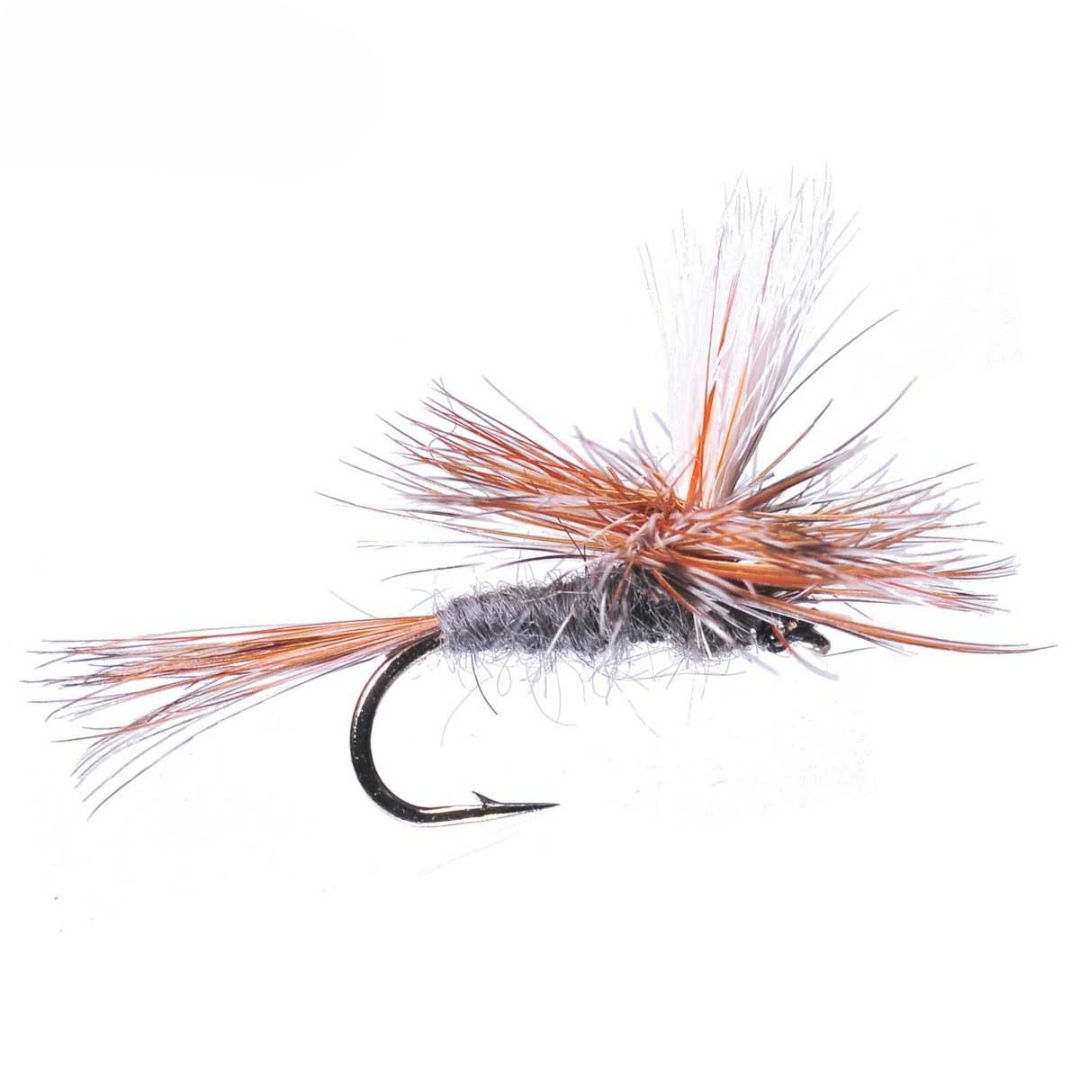
The Parachute Adams is one of the most dependable and versatile dry trout flies, making it an essential pattern for any angler’s fly box. Its gray body, white post, and parachute hackle create a realistic mayfly silhouette, making it highly effective for dry fly fishing for trout in streams, tailwaters, and stillwaters.
Key Features
- Mimics BWOs, PMDs, and multiple mayfly hatches
- Parachute design offers natural drift and excellent visibility
- Performs well across many dry fly patterns and hatch conditions
Best season to use the Parachute Adams dry fly: year-round, with peak action from March–November.
Ideal for clear water, gentle currents, and low-light situations.
Presentation & Sizes
- Use a natural dead-drift, apply floatant, and fish with 5X–6X tippet.
- Recommended sizes: 12–22, with size 16 the most versatile.
A timeless classic, the Parachute Adams remains one of the best dry flies for trout and a proven performer for any dry flies fishing setup.

The Elk Hair Caddis is one of the most effective dry trout flies, especially during summer caddis hatches. Its buoyant elk-hair wing and palmered hackle keep it riding high, making it perfect for dry fly fishing for trout in fast water, pocket water, and broken currents. This proven pattern remains a top choice for anglers seeking reliable dry flies caddis options.
Key Features
- Tent-shaped elk hair wing imitates adult caddisflies
- High-floating design ideal for rough or broken water
- Durable, versatile, and effective across many dry fly patterns
Best Season & Conditions
Best season to use the Elk Hair Caddis dry fly: late spring through early fall, with peak performance during summer caddis hatches.
Fish near banks, overhangs, riffles, and pocket water.
Presentation & Sizes
- Dead-drift or gently skate to mimic a moving adult caddis.
- Recommended sizes: 12–18, with size 14 most common.
A trusted classic, the Elk Hair Caddis delivers consistent results across all dry flies fishing conditions.

Griffith’s Gnat is a delicate yet effective dry trout fly, perfect for imitating small midges and mid-season insect hatches. Its dark body and sparse hackle make it ideal for dry fly fishing for trout, especially in slow-moving or clear water.
Key Features
-
Mimics midges and tiny insects naturally
-
Lightweight, easy to float on calm water
-
Effective across multiple dry flies patterns
Best Season & Conditions
-
Spring through fall, during hatch periods
-
Fish near slow pools, riffles, and edges
Presentation & Sizes
-
Dead-drift naturally, small tippet (6X–7X) recommended
-
Sizes 18–24, with size 20 most versatile

The Last Chance Cripple is a proven dry trout fly that imitates crippled mayflies. Its realistic profile and upright posture make it highly effective for dry flies fishing, especially when fish are selective.
Key Features
-
Imitates struggling mayflies on the surface
-
Durable and floats well in slow to moderate currents
-
Works across many dry flies patterns and conditions
Best Season & Conditions
-
Spring to early fall during mayfly hatches
-
Ideal for riffles, slow runs, and tailwaters
Presentation & Sizes
-
Dead-drift with a natural floatant
-
Sizes 12–18, with size 14 most common

X-Caddis is a highly visible dry trout fly designed for fast-action summer caddis hatches. Its high-floating body and wing make it one of the most effective dry flies for trout, especially in turbulent streams or pocket water.
Key Features
-
Imitates adult caddis with exceptional buoyancy
-
Palmed hackle ensures visibility in broken water
-
Durable and versatile for many dry flies patterns
Best Season & Conditions
-
Peak in summer caddis hatches
-
Fish near riffles, banks, and shallow runs
Presentation & Sizes
-
Dead-drift or gentle skating motion
-
Sizes 12–18, with size 14 most effective

Rusty Spinner is a staple dry trout fly, perfect for imitating spent mayflies. Its rusty wing and natural silhouette make it ideal for dry fly fishing for trout in calm waters.
Key Features
-
Spent mayfly imitation
-
Excellent in slow-moving streams
-
Works across dry flies fishing setups
Best Season & Conditions
-
Late spring through early fall
-
Fish near riffles and pools
Presentation & Sizes
-
Dead-drift with light tippet
-
Sizes 14–20, size 16 most versatile

The Stimulator is a proven dry trout fly for large and aggressive trout. Its high-floating profile makes it a top choice among dry flies for trout, especially in fast water.
Key Features
-
Attractor pattern for diverse hatches
-
High-floating and visible
-
Durable across dry flies patterns
Best Season & Conditions
-
Spring through fall
-
Fish fast runs and pocket water
Presentation & Sizes
-
Dead-drift or short drag
-
Sizes 10–16, size 14 most popular
The Royal Wulff is a legendary dry trout fly, suitable for rough or turbulent streams. Its buoyant design ensures top performance in dry flies fishing situations.
Key Features
-
Attractor pattern works year-round
-
High visibility in broken water
-
Works with multiple dry flies patterns
Best Season & Conditions
-
Spring through fall
-
Fish riffles, runs, and broken currents
Presentation & Sizes
-
Dead-drift with floatant
-
Sizes 10–16, size 14 common

Chubby Chernobyl is an excellent dry trout fly, designed for fast-action fishing. Its high-floating profile makes it ideal for dry fly fishing for trout in turbulent water.
Key Features
-
Buoyant, high-visibility design
-
Mimics adult insects in fast water
-
Effective across dry flies patterns
Best Season & Conditions
-
Spring through summer
-
Fish pocket water and riffles
Presentation & Sizes
-
Dead-drift or short skimming motion
-
Sizes 10–14, size 12 most effective

Purple Haze is a top dry trout fly for anglers targeting aggressive trout. Its distinctive colors attract attention and make it a reliable dry flies for trout choice.
Key Features
-
Vibrant colors to trigger strikes
-
Floats well in turbulent water
-
Works across dry flies fishing setups
Best Season & Conditions
-
Spring through early fall
-
Fish riffles, pools, and banks
Presentation & Sizes
-
Dead-drift naturally or twitch slightly
-
Sizes 10–16, size 14 recommended

CDC Caddis Emerger is a highly effective dry trout fly, mimicking caddis mid-emergers. Its buoyant CDC fibers create a realistic profile for dry flies caddis presentations.
Key Features
-
CDC wing imitates natural emergence
-
Floats lightly and naturally
-
Works with multiple dry flies patterns
Best Season & Conditions
-
Late spring through summer
-
Fish near banks, riffles, and slow pools
Presentation & Sizes
-
Dead-drift gently with fine tippet
-
Sizes 12–18, size 14 most common

Comparadun is a proven dry trout fly, ideal for surface-feeding trout. Its low-profile design works well in clear water for dry flies fishing setups.
Key Features
-
Mayfly imitation with subtle profile
-
Floats naturally in calm water
-
Effective across many dry flies patterns
Best Season & Conditions
-
Spring through fall
-
Fish calm pools and riffles
Presentation & Sizes
-
Dead-drift, use 5X–6X tippet
-
Sizes 12–20, size 16 most versatile

Galloup’s Ant Acid is an effective dry trout fly, mimicking terrestrial ants. Ideal for summer fishing and dry flies fishing setups.
Key Features
-
Terrestrial insect imitation
-
Floats naturally on surface
-
Works across many dry flies patterns
Best Season & Conditions
-
Summer peak ant hatches
-
Fish near banks and pools
Presentation & Sizes
-
Dead-drift naturally
-
Sizes 10–14, size 12 most common

Water Walker is a top dry trout fly for riffles and pocket water. Its buoyant profile makes it perfect for dry flies for trout presentations in fast streams.
Key Features
-
Floats high, visible in broken water
-
Durable and versatile
-
Works across multiple dry flies patterns
Best Season & Conditions
-
Spring to early fall
-
Fish riffles, pocket water, and small rapids
Presentation & Sizes
-
Dead-drift naturally
-
Sizes 10–14, size 12 most common

Missing Link Caddis is a reliable dry trout fly, perfect for summer caddis hatches. Its floating wing and palmered hackle make it ideal for dry flies caddis presentations.
Key Features
-
Buoyant, visible in turbulent water
-
Mimics adult caddis naturally
-
Works across multiple dry flies patterns
Best Season & Conditions
-
Late spring to early fall
-
Fish riffles, runs, and broken currents
Presentation & Sizes
-
Dead-drift naturally or slight twitch
-
Sizes 12–18, size 14 most effective

Klinkhammer is an exceptional dry trout fly for selective trout. Its emergent profile and buoyancy make it ideal for dry fly fishing for trout.
Key Features
-
Emerger-style design
-
Floats naturally
-
Works across many dry flies patterns
Best Season & Conditions
-
Spring through fall
-
Fish slow runs, pools, and near banks
Presentation & Sizes
-
Dead-drift with floatant
-
Sizes 12–18, size 14 recommended

Captive Dun is a classic dry trout fly that mimics spent mayflies. Its upright profile works well for dry flies for trout in calm to moderate currents.
Key Features
-
Spent mayfly imitation
-
Floats upright naturally
-
Works in multiple dry flies patterns
Best Season & Conditions
-
Spring to early fall
-
Fish calm pools, runs, and riffles
Presentation & Sizes
-
Dead-drift with floatant
-
Sizes 12–18, size 14 most effective

Goddard Caddis is a proven dry trout fly, ideal for caddis hatches in fast water. Its buoyant wing ensures excellent visibility for dry flies caddis presentations.
Key Features
-
High-floating caddis imitation
-
Durable and versatile
-
Works across dry flies patterns
Best Season & Conditions
-
Summer peak caddis hatches
-
Fish riffles, runs, and pocket water
Presentation & Sizes
-
Dead-drift naturally
-
Sizes 12–18, size 14 most common

Blue Wing Olive is a must-have dry trout fly, imitating BWOs. Ideal for dry fly fishing for trout in streams, tailwaters, and rivers.
Key Features
-
Subtle mayfly imitation
-
Floats naturally
-
Works in multiple dry flies patterns
Best Season & Conditions
-
Spring through fall
-
Fish pools, riffles, and slow runs
Presentation & Sizes
-
Dead-drift naturally
-
Sizes 14–22, size 16 most effective

Trico Spinner imitates small mayflies and is an effective dry trout fly. Its tiny profile excels in selective trout conditions for dry flies fishing.
Key Features
-
Small mayfly imitation
-
Floats lightly
-
Works in multiple dry flies patterns
Best Season & Conditions
-
Summer peak trico hatches
-
Fish pools and riffles
Presentation & Sizes
-
Dead-drift naturally
-
Sizes 18–24, size 20 most common

March Brown is a versatile dry trout fly, effective across multiple streams and rivers. Ideal for dry flies for trout in medium to slow currents.
Key Features
-
Classic mayfly imitation
-
Floats naturally on surface
-
Works across multiple dry flies patterns
Best Season & Conditions
-
Spring through fall
-
Fish runs, riffles, and pools
Presentation & Sizes
-
Dead-drift or gentle twitch
-
Sizes 12–18, size 14 most common
Comparison Table of the 21 Best Dry Flies for Trout
| Fly Pattern | Design Features | Best Conditions | Primary Imitation | Recommended Sizes | Key Fishing Technique |
| Parachute Adams | Gray body, parachute hackle | Year-round, versatile | Small surface insects | 10–22 | Dead-drift presentation |
| Elk Hair Caddis | Hollow elk hair, palmered hackle | Summer months, fast water | Caddis and surface insects | 12–18 | Skating or dead-drift |
| Griffith’s Gnat | Peacock herl body, palmered grizzly hackle | Early morning/evening, calm waters | Tiny drifting insects | 18–22 | Dead-drift with fine leader |
| Last Chance Cripple | CDC wings, realistic abdomen | During insect hatches | Low-profile emergers | 12–22 | Dead-drift in surface film |
| X-Caddis | No-hackle design, deer hair wing | Still water, moderate riffles | Emerging caddis | 16–18 | Dead-drift presentation |
| Rusty Spinner | Splayed tails, rusty dubbing | Calm mornings/evenings | Low-floating spent insects | 14–20 | Dead-drift with long leaders |
| Stimulator | High wide wing, short flared tail | Rough water, searching runs | Large terrestrials | 12–16 | Searching pattern drift |
| Royal Wulff | White wings, red band, peacock herl | Fast riffles, rough water | Attractor surface insects | 10–16 | Dead-drift, occasional twitch |
| Chubby Chernobyl | Dual-layered foam construction | Fast-moving waters | Large surface insects | 2–16 | Dry-dropper rig setup |
| Purple Haze | Purple body, parachute design | Murky water, active hatches | Small emergers | 12–18 | Dead-drift presentation |
| CDC Caddis Emerger | CDC feathers, low profile | Active caddis hatches | Emerging caddis | 16–18 | Fish in surface film |
| Comparadun | Deer hair wing, no hackle | Spring/summer calm hatches | Low-profile surface insects | 10–22 | Delicate dead-drift |
| Water Walker | Foam wings, rubber legs | June–July, rough water | Crawling/terrestrial insects | 8–16 | Natural drift with strips |
| Galloup’s Ant Acid | Three-segment foam body | Mid-summer through fall | Ants and small terrestrials | 10–16 | Cast tight to structure |
| Missing Link Caddis | Elk hair post, flash abdomen | During caddis hatches | Struggling caddis | 14–18 | Dead-drift in surface film |
| Klinkhammer | Curved hook, parachute post | Active surface insect emergence | Emergent surface insects | 12–18 | Half-submerged presentation |
| Captive Dun | CDC loop wing, marabou tail | Dense insect hatches | Subtle emergers | 14–18 | Fish flush in surface film |
| Goddard Caddis | Spun deer hair body | Spring caddis hatches | Adult caddis | 14–16 | Skating or subtle twitch |
| Blue Wing Olive | Slim olive body, slate-gray wing | Early spring & late fall, cool/overcast | Low-profile surface insects | 18–22 | Dead-drift with long leader |
| Trico Spinner | Slender dark body, flat spent wings | Mid–late summer mornings | Small surface spinners | 20–24 | Long gentle dead-drift with ultra-light tippet |
| March Brown | Tan-brown segmented body, upright wing | Late March – early May | Medium-large surface insects | 12–14 | Dead-drift through riffles; subtle lifts |
Conclusion
Dry trout flies and dry flies for trout form the backbone of effective surface fishing. Each fly’s design, key features, and presentation are tailored to match various insects, water conditions, and seasons. From emergent insects to low-floating adults, this guide offers anglers dependable dry flies patterns for accurate hatch matching, increasing success across streams, tailwaters, and stillwaters. Careful observation of surface activity and proper dry fly fishing for trout techniques can make these patterns consistently productive, whether you are fishing rising trout or scouting subtle seams. Selecting the right fly and presenting it naturally ensures a higher likelihood of strikes and a more enjoyable fishing experience.
Faqs About Trout Dry fishing flies
What are some essential dry fly patterns for trout?
Some essential dry trout flies include Parachute Adams, Elk Hair Caddis, Royal Wulff, Griffith’s Gnat, and Comparadun. These versatile dry flies for trout imitate a variety of surface insects and perform well in diverse conditions.
How do I choose the right size dry fly?
Generally, sizes 12–18 work well for most dry flies fishing scenarios. For tiny insects, go as small as 20–22, and for larger surface insects, choose size 10–14. Always match the fly size to the natural insects present on the water.
What’s the best way to present a dry fly?
For most situations, use a dead-drift presentation by casting upstream and letting the fly float naturally with the current. Avoid drag by mending your line. Slight twitches or skating movements can sometimes entice reluctant trout.
When is the best time to fish dry flies?
Dry fly fishing for trout is most productive during surface insect activity, typically in the morning and evening. Terrestrial patterns like ants or hoppers can also be effective during warm daytime periods. Always observe the water for rising fish and match your dry flies patterns to what’s active.
How do I keep my dry fly floating?
Apply a silicone-based floatant to your fly before fishing and reapply as needed, typically every 20–30 minutes or after catching a fish. For waterlogged flies, use a desiccant powder to remove moisture and then reapply floatant. Some dry trout flies, especially those made with CDC or foam, remain naturally buoyant.
How do I choose between olive, tan, or brown caddis flies?
Select colors that match the natural insects in your waters. Olive works well in spring, tan in summer, and brown in late season. Using dry flies caddis that resemble the local insect color increases the chance of a strike.