
21 Best Zonker Flies for All Seasons
Zonker flies are consistently among the most effective and versatile streamer patterns in any angler's arsenal. These highly productive flies trigger predatory instincts in trout with remarkable consistency, making them essential additions to every serious fly box. Characterized by their distinctive rabbit fur strip (zonker strip) tied along the hook's back, zonker flies create natural, lifelike movement in the water that fish simply cannot resist. The pulsating action of the fur strip perfectly mimics the swimming motion of baitfish fins, consequently fooling even the most cautious predators. Additionally, the shiny sides of many zonker patterns represent the reflective flanks of natural prey, enhancing their effectiveness across different fishing scenarios.
Throughout the fishing calendar, zonker patterns prove their worth as reliable fish catchers that perform consistently across various water types and conditions. Whether fished in depths between 3 and 5 feet or actively "worked" through different water columns, these streamer patterns consistently produce results when other flies fail. Furthermore, many traditional patterns can be converted to zonker-style flies while maintaining their basic elements and proven color schemes.
This comprehensive guide examines 21 tried-and-true zonker patterns that deserve space in your fly box. From classic designs that have fooled fish for generations to modern variations that incorporate innovative materials, these patterns will help you catch more fish regardless of the season.
1. Black Zonker

The Black Zonker stands as a classic streamer pattern that has remained a staple in fly boxes since its creation by Dan Byford in the mid-1970s. This deadly pattern creates a striking dark silhouette that predatory fish can easily locate, particularly in challenging water conditions.
Black Zonker key features
-
Black rabbit strip for lifelike swimming action
-
Reflective Mylar belly adds subtle flash
-
Strong dark silhouette for high visibility
-
Snag-resistant design for fishing near structure
-
Versatile profile suggesting minnows or leeches
Black Zonker ideal conditions
The Black Zonker performs exceptionally in low-light situations such as early morning or late evening. Moreover, this pattern excels in murky or muddy water conditions where its dark silhouette stands out when visibility is reduced. Its effectiveness extends across rivers, lakes, and even saltwater environments, making it truly versatile.
Black Zonker best season
This pattern works year-round but proves especially effective during periods of heavy rainfall or snowmelt when waters become discolored. Indeed, the Black Zonker remains productive throughout all seasons since its basic profile imitates food sources available year-round.
Black Zonker recommended size
Black Zonkers typically come in sizes 4-10, with the most common being 6-8. Select smaller sizes (8-10) for clear water conditions and larger sizes (4-6) for murkier water or when targeting larger predatory fish.
Black Zonker rigging and presentation
For optimal results, strip the Black Zonker along the bottom with an erratic retrieve to mimic injured baitfish. Therefore, try casting down and across the current, then retrieve with short, sharp strips interspersed with brief pauses. Essentially, the fly can be actively retrieved or dead-drifted with equal success.
Why Black Zonker works
The Black Zonker's effectiveness stems from its perfect combination of silhouette and movement. The rabbit fur creates lifelike undulation that triggers predatory responses. Its dark profile against a reflective belly provides the contrast that predatory fish instinctively attack, making it irresistible to trout, bass, salmon, and steelhead.
2. White Zonker

Originally created by Dan Byford, the White Zonker has earned its reputation as a deadly streamer pattern that effectively imitates baitfish. This classic pattern remains a top fly that consistently produces results across various fishing scenarios.
White Zonker key features
-
White rabbit strip for natural swimming action
-
Pearl Mylar belly providing subtle flash
-
Red marabou throat for added attraction
-
Strong streamer hook for solid hookups
-
Highly visible profile in clear water
-
Simple, proven design with lasting effectiveness
White Zonker ideal conditions
The White Zonker excels in clear water conditions where its flashy appearance creates maximum visibility. This pattern performs optimally in shallow waters between 2-6 feet deep in both rivers and lakes. Notably, it's particularly effective during shad kills when baitfish are abundant.
White Zonker best season
Although productive year-round, this pattern shines in winter and early spring when dead minnows naturally drift downstream. In addition, it's an excellent choice during summer months in clear water when predatory fish actively chase baitfish.
White Zonker recommended size
Typically tied on size 2-8 hooks, with TMC 300 being a popular choice. For targeting steelhead and larger trout, sizes 2-4 work best, whereas sizes 6-8 are more suitable for smaller trout in clearer waters.
White Zonker rigging and presentation
For optimal results, cast across current and retrieve with short, sharp pulls to imitate a fleeing baitfish. Alternatively, let the fly "shelter" for a few seconds before swiftly retrieving it away, mimicking natural baitfish behavior. Some anglers also find success dead-drifting smaller sizes under an indicator.
Why White Zonker works
The White Zonker succeeds primarily because it perfectly imitates the scales of baitfish that attract predatory species. Its bright white color creates a highly visible silhouette that predators can track even in murkier conditions. The pulsating rabbit strip combined with the reflective Mylar belly creates an irresistible presentation that triggers aggressive strikes.
3. Olive Zonker
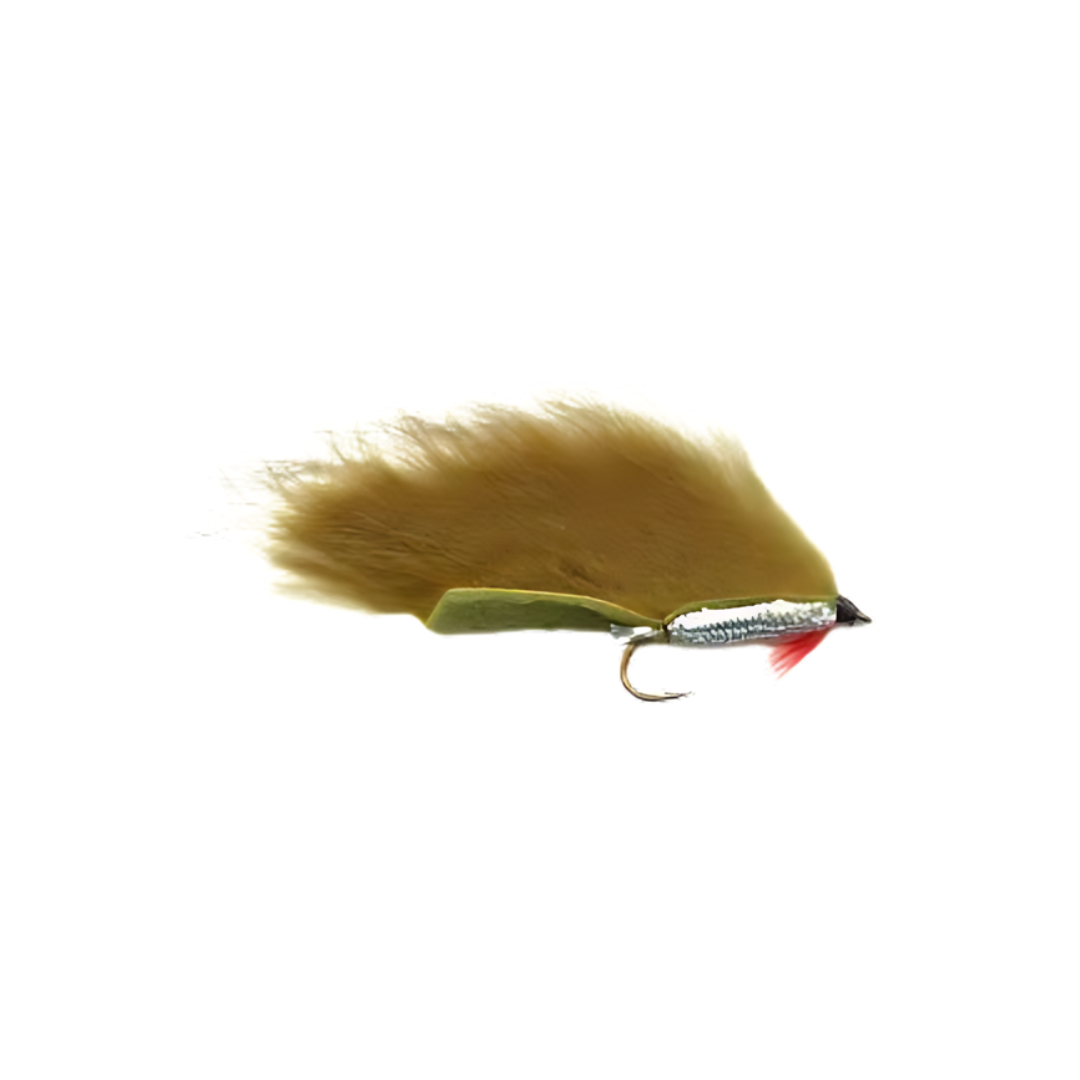
The versatile Olive Zonker stands out as a timeless pattern that consistently produces results across various fishing conditions. This classic streamer effectively imitates small baitfish, leeches, and other aquatic prey that trout and bass eagerly chase.
Olive Zonker key features
-
Rabbit strip body with lifelike pulsing action
-
Natural olive coloration for versatility
-
Weighted for quick sink rate
-
Subtle flash to attract attention
-
Durable build for repeated use
Olive Zonker ideal conditions
The Olive Zonker performs admirably in both clear and stained water conditions. Unlike the Black Zonker which excels in murky water, this olive variation maintains its effectiveness across varying water clarities. Subsequently, it has earned its place as a mainstay in any streamer angler's fly box.
Olive Zonker best season
Given its versatility, the Olive Zonker remains productive throughout the year. Rather than being limited to specific seasonal conditions, this pattern can be reliably deployed whenever anglers decide to go out on the water.
Olive Zonker recommended size
Commonly available in sizes ranging from 4 to 10, with sizes 6 and 8 being particularly popular for most fishing conditions. For larger rivers and targeting bigger fish, size 6 proves most effective.
Olive Zonker rigging and presentation
To maximize the pulsating motion of this pattern, present it upstream and retrieve back quickly or use a traditional down-and-across strip-strip-pause retrieve. The fly can be stripped, swung, or dead-drifted through rivers, lakes, and stillwaters with equal effectiveness.
Why Olive Zonker works
The Olive Zonker's success primarily stems from its realistic movement and natural coloration. The rabbit fur strip comes alive with even the slightest current, creating an undulating motion that perfectly mimics fleeing baitfish. Furthermore, its olive hue closely resembles numerous natural prey items, making it irresistible to predatory fish across various water conditions.

Designed as a fantastic baitfish imitator, the Grizzly Zonker creates an irresistible presentation that excites even the most cautious fish. This pattern combines reflective materials with natural movement to create a highly effective streamer.
Grizzly Zonker key features
-
Reflective Mylar body with natural shimmer
-
Rabbit fur top for lifelike movement
-
Grizzly hackle for added visibility
-
Multiple color options available
-
Optional weighting for faster sink
-
Durable build for repeated strikes
Grizzly Zonker ideal conditions
The Grizzly Zonker performs best in afternoon fishing situations where sunlight brings out the full effect of the grizzly hackle. Accordingly, this pattern excels in waters across Alaska, Nova Scotia, British Columbia, Washington State, California and other Western Pacific water sources.
Grizzly Zonker best season
Fall stands as the prime season for fishing this pattern, yet it remains effective throughout the year for targeting predatory fish. First, consider using it during periods when baitfish are abundant in your fishing waters.
Grizzly Zonker recommended size
Typically tied on size 6 barbless hooks, though variations exist from size 2-10 depending on target species. For larger trout and bass fishing, sizes 2-4 work effectively.
Grizzly Zonker rigging and presentation
Fish this pattern with irregular bursts through the current, imitating a wounded or confused baitfish. Above all, focus on maintaining a natural presentation that highlights the zonker's pulsating movement.
Why Grizzly Zonker works
The combination of pulsating rabbit strip movement alongside grizzly hackle creates a natural motion that entices trout even in pressured waters. Plus, this pattern excites big trout that lurk deep and strike hard, alongside being equally effective for bass, pike, and steelhead.
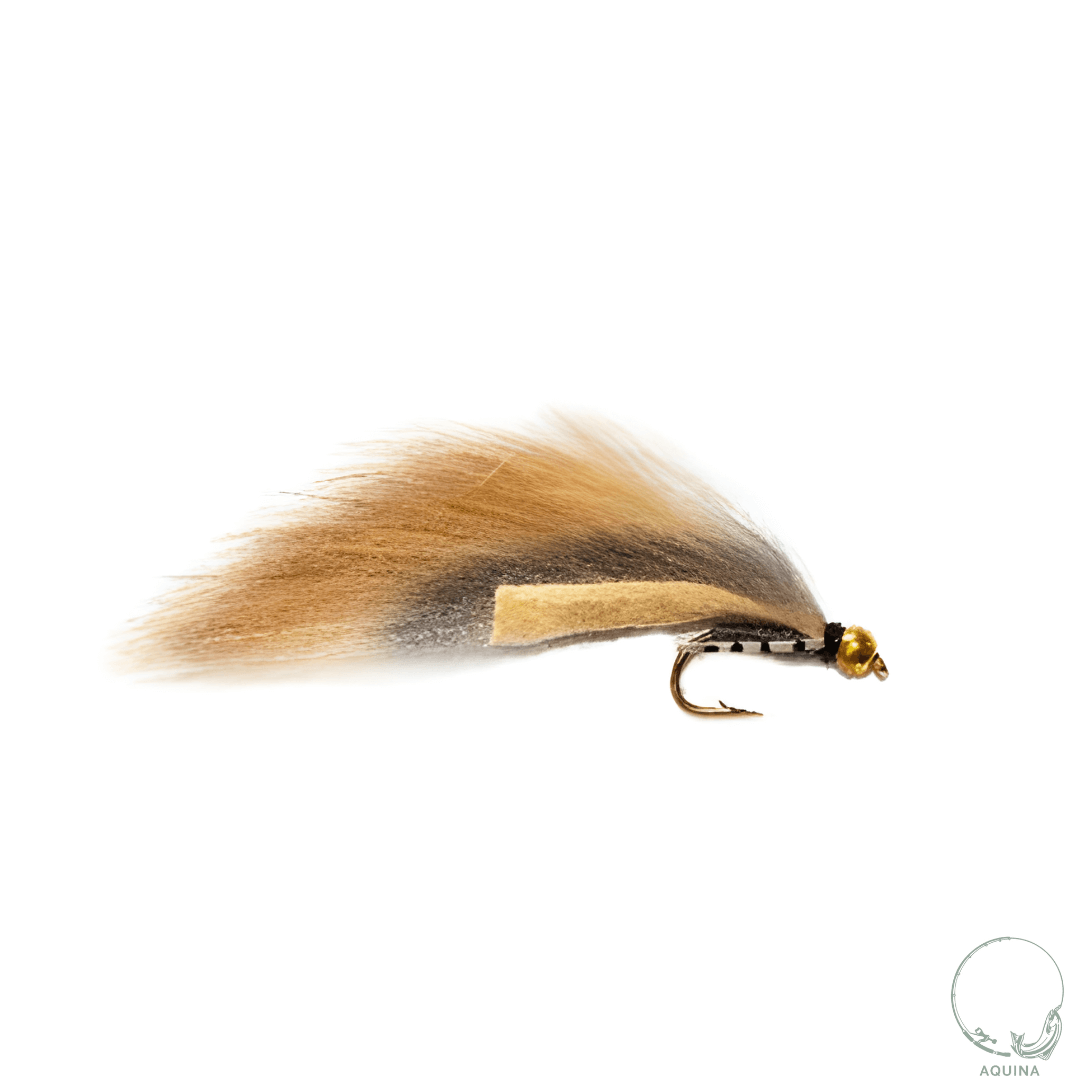
The Natural Zonker represents the original colorway in the zonker fly family, offering a realistic appearance that closely mimics native baitfish and leeches found in freshwater environments. This understated yet highly effective pattern often outperforms its more colorful counterparts under specific fishing conditions.
Natural Zonker key features
-
Natural gray rabbit strip for pulsing movement
-
Mylar body with scale-like flash
-
Pearl/silver contrast for visibility
-
Simple, unweighted construction
-
Durable for repeated strikes
-
Versatile baitfish and leech profile
Natural Zonker ideal conditions
Natural Zonker flies perform optimally in water depths between 3 and 5 feet with moderate current. In fact, this pattern excels around fist-sized rocks and larger bottom structures that indicate suitable current strength. The fly works exceptionally well in clear to lightly stained water where its subtle, realistic appearance proves most effective.
Natural Zonker best season
This versatile pattern remains productive year-round, making it a reliable choice regardless of season. Nonetheless, it shows particular effectiveness during spring when fished slower and deeper than usual. Given that water temperatures affect fish metabolism, adapting your retrieval speed accordingly maximizes success rates throughout changing seasons.
Natural Zonker recommended size
Natural Zonkers typically come tied on hooks sized 4 to 12, with sizes 6 to 8 being most versatile for general trout fishing. Select smaller sizes (10-12) for clearer water or pressured fish, yet opt for larger patterns (4-6) when targeting substantial predators or fishing slightly murky conditions.
Natural Zonker rigging and presentation
For optimal results, fish Natural Zonkers on floating line with a 4-foot sink tip to achieve proper depth. Primarily, these flies should be actively "fished" rather than simply dead-drifted. Try adding downstream mends to create wiggle, or strip in line and let it drift again to maximize the pulsating fur action. Swimming the fly around structure mimics how natural prey navigate obstacles.
Why Natural Zonker works
The Natural Zonker's effectiveness stems from its perfect imitation of native prey species. The subtle gray coloration blends seamlessly with natural environments, making it less likely to spook wary fish. Plus, the pulsating rabbit fur creates irresistible movement that triggers predatory instincts even in pressured waters. Its combination of natural appearance and lifelike action makes it a consistently productive pattern across various fishing situations.

The eye-catching Orange Zonker serves as a hot attractor pattern that draws attention even in challenging fishing conditions. This high-visibility streamer has gained popularity primarily for its ability to trigger strikes when standard patterns fail.
Orange Zonker key features
-
Vibrant orange rabbit wing with strong swimming action
-
Rippling rabbit strip for continuous movement
-
Red zonker accent for added visibility
-
Orange dubbing body for contrast
-
Proven in lakes, ponds, and reservoirs
-
Optimized for stillwater fishing
Orange Zonker ideal conditions
The Orange Zonker excels as a baitfish imitator in still waters. Hence, this pattern performs best in dams, reservoirs, and lakes where predatory fish actively hunt. Yet, its effectiveness extends to various water conditions, including tailwaters where traditional patterns often underperform.
Orange Zonker best season
Initially designed for year-round use, this pattern shows particular effectiveness during spring and early summer as water begins to clear and warm slightly. Plus, its bright color makes it an excellent choice during overcast days when visibility is reduced.
Orange Zonker recommended size
Available in multiple sizes from 6-8, with smaller options sometimes available. Size 8 remains the most versatile option for general trout fishing.
Orange Zonker rigging and presentation
For optimal results, use a fast, erratic retrieve to highlight the rippling motion through the water. Certainly, the pattern should be actively moved rather than simply dead-drifted.
Why Orange Zonker works
The Orange Zonker's bright color serves as a powerful attractor that triggers predatory instincts. Surprisingly, its effectiveness often surpasses more natural-looking patterns, especially in pressured fishing scenarios.

Key Features
- Natural green rabbit strip for lifelike movement
- Flexible legs adding subtle prey motion
- Varied green tones for realistic shading
- Streamlined profile for rivers and lakes
- Lightly weighted head for proper swim
- Durable build for repeated strikes
Ideal Conditions
The Nugget Flexi Legs Green Zonker performs exceptionally well in both freshwater lakes and rivers with moderate to fast current. It is especially effective near structures, drop-offs, and riffles where predatory fish lie in wait. This pattern excels in clear to slightly stained waters where the subtle green coloration and leg movement provide natural prey imitation.
Best Season
This pattern is productive throughout the year, with peak effectiveness during spring and early summer when small baitfish and insects are active near the surface. It also works well in autumn as fish actively chase prey preparing for winter.
Recommended Size
Typically tied on hook sizes 6-10, with size 8 offering versatility for most freshwater predatory species. The combination of profile and leg length ensures an effective silhouette across varying water conditions.
Rigging and Presentation
For maximum effectiveness, strip the fly steadily with occasional pauses to mimic natural prey movement. The flexible legs should be allowed to pulse freely, enhancing lifelike motion. Swinging the fly across current seams or near submerged structures often triggers aggressive strikes.
Why the Fly Works
The success of the Nugget Flexi Legs Green Zonker comes from the natural green base combined with independent leg movement and weighted head. This produces an enticing, realistic presentation that triggers predatory instincts. The subtle shading and pulsing action convince fish that the fly is a struggling prey, resulting in frequent, aggressive strikes.
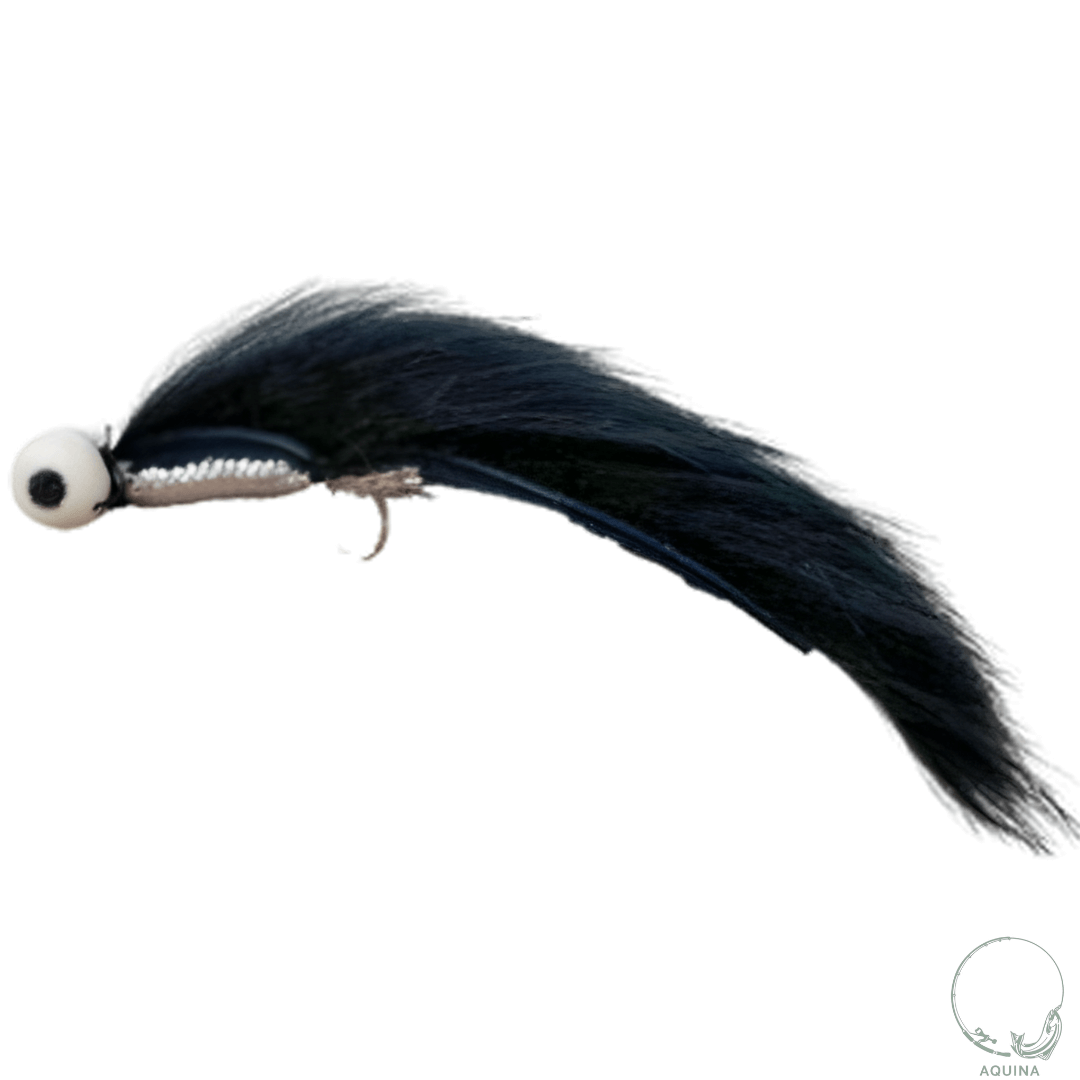
The innovative Black Booby Zonker combines traditional zonker elements with distinctive foam "booby" eyes, creating a highly effective stillwater pattern. This specialty fly delivers exceptional results in specific fishing scenarios that other patterns simply cannot match.
Black Booby Zonker key features
-
Black marabou tail and wing for fluid movement
-
Black and pearl fritz body for subtle contrast
-
Floating 5 mm ethafoam eyes with sinking body
-
Long, snake-like profile imitating multiple prey
-
Simple, effective design for stillwater use
Black Booby Zonker ideal conditions
This pattern performs best in stillwater environments where its unique design can be fully utilized. Primarily effective in reservoirs, lakes, and ponds where traditional patterns may falter.
Black Booby Zonker best season
Early season stands out as its prime period, typically when fish are sitting deeper in the water column.
Black Booby Zonker recommended size
Commonly tied on size 10 hooks, offering ideal proportions for this specialized pattern.
Black Booby Zonker rigging and presentation
Two primary presentation methods yield impressive results: first, fish it on the surface either stationary or "popped" back across the top; second, use a short leader with sinking line, allowing it to pop up just off the bottom.
Why Black Booby Zonker works
The pattern's effectiveness stems from its unique design - as the weighted body sinks, the foam eyes create an irresistible rising action that triggers predatory responses. Plus, this presentation perfectly imitates struggling prey unable to escape.

The Fish Skull Zonker Olive emphasizes anatomical realism by incorporating a small, detailed skull or head element with a traditional olive zonker body. The rigid head provides structure and alters the swimming angle, enhancing lifelike movement while maintaining balance in the water.
Fish Skull Zonker Olive key features
- Olive rabbit strip for pulsing, natural movement
- Fish skull-style head for added profile and structure
- Balanced swimming angle enhancing realism
- Streamlined design minimizing drag
- Durable materials maintaining shape
Fish Skull Zonker Olive ideal conditions
Performs best in rivers and lakes with moderate current and clear to slightly stained water. Excels near structure or drop-offs where predatory fish hold.
Fish Skull Zonker Olive best season
Year-round effectiveness, particularly in spring and autumn when fish target mid-sized prey near the bottom.
Fish Skull Zonker Olive recommended size
Typically tied in sizes 4–8, with size 6 offering versatility across currents and depths.
Fish Skull Zonker Olive rigging and presentation
Use steady or swinging retrieves to highlight body motion. Pauses and slight twitches increase the fly’s lifelike appeal.
Why Fish Skull Zonker Olive works
The skull head creates realistic swimming angles and displacement, while the rabbit body provides motion. This combination triggers strikes from cautious predators that focus on mid-sized prey.
10. Squirrel Zonker
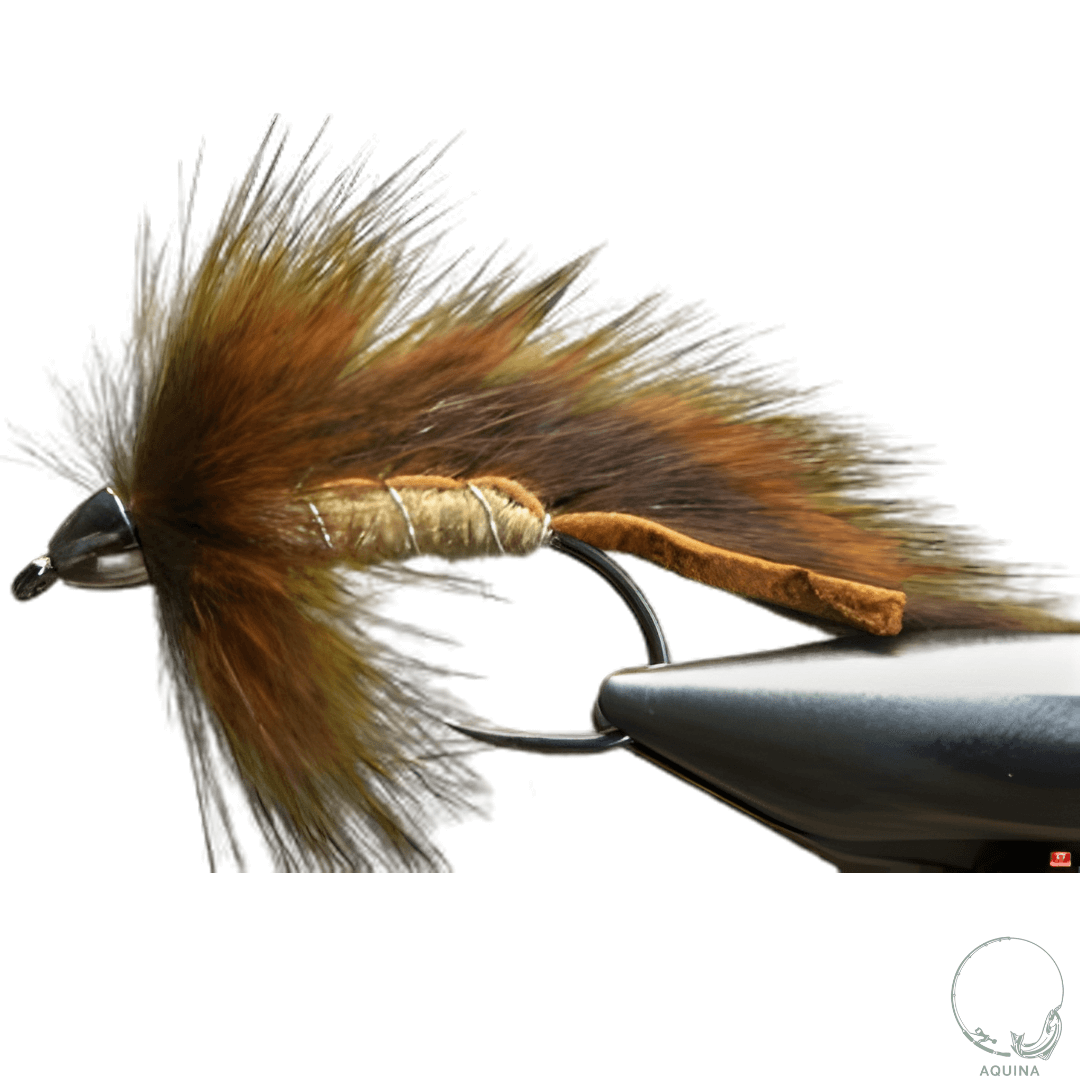
Unlike traditional rabbit-based variants, the Squirrel Zonker utilizes fine squirrel fur to create a more subtle yet equally effective streamer pattern. This specialized zonker option provides remarkable durability coupled with exceptional movement that triggers predatory responses.
Squirrel Zonker key features
-
Squirrel zonker strip for instant water movement
-
Bushy profile that pushes water effectively
-
Reinforced head for added durability
-
White underbelly acting as a strike trigger
-
3D eyes enhancing realism
Squirrel Zonker ideal conditions
The Squirrel Zonker truly shines in current scenarios where its movement can be maximized. As stated by guides, this pattern performs optimally when cast diagonally downstream, allowing it to swing through current seams.
Squirrel Zonker best season
Spring stands out as the prime season for this pattern, coinciding with sculpin spawning periods when numerous small sculpins populate the water. Throughout spring, this fly becomes particularly effective as it perfectly imitates these abundant small prey items.
Squirrel Zonker recommended size
Typically tied in sizes 4 to 8, making them versatile for multiple fishing scenarios. The sizing provides ideal proportions for imitating smaller forage fish that predatory species actively target.
Squirrel Zonker rigging and presentation
For maximum effectiveness, cast the fly diagonally downstream, allowing it to swing naturally through current seams. Alternatively, utilize a strip-strip-pause retrieve to imitate injured baitfish movements.
Why Squirrel Zonker works
The Squirrel Zonker's success stems from its natural ability to mimic smaller forage that trout commonly encounter. Correspondingly, the pattern's bushy profile coupled with its flappy zonker tail creates water-pushing action that predatory fish cannot resist.

Key Features
- Bright yellow rabbit strip body for visibility
- Red tinsel rib for flash and contrast
- Barred rabbit tail for lifelike movement
- Lightly weighted head for proper swim angle
- Durable thread and materials for multiple strikes
- Long profile appealing to larger predators
- Color combination attracts attention in varied water
Ideal Conditions
Performs best in lakes, ponds, and slow-moving rivers, particularly in low-light or overcast conditions. Effective near surface structures such as lily pads, weed edges, and submerged rocks. The bright coloration ensures the fly remains visible even in slightly stained waters.
Best Season
Highly productive from spring through late summer when baitfish and insects are active near the surface. Also works in early autumn when predators are actively feeding.
Recommended Size
Hook sizes 6-10 provide an effective profile, with size 8 offering the best balance of visibility and lifelike movement for medium to large predatory fish.
Rigging and Presentation
Use a combination of steady strips and short, sharp pulls to make the body and tail undulate. Slow or erratic retrieves near structure often provoke explosive strikes.
Why the Fly Works
The bright yellow body and red sparkle rib create a highly visible and attractive target, while the long, flowing tail mimics the movement of struggling prey. This combination triggers strikes from opportunistic and aggressive fish.

This hybrid zonker creation merges two classic fly types—the muddler and zonker—into an impressively effective pattern. The FMJNM (Full Metal Jacket Nutria Muddler) stands apart as one of the heaviest zonker variants available, designed specifically for targeting deep-holding fish.
FMJNM key features
-
Muddler-zonker hybrid for maximum effectiveness
-
Slender brass cone head for deep diving
-
Nutria or mink zonker strip for lifelike movement
-
Silver tinsel body with deer hair collar/head
-
Sturdy Kamasan B800 hook for durability
-
Oval silver tinsel ribbing adds flash
FMJNM ideal conditions
The FMJNM performs exceptionally at night in current situations where its deep-diving capabilities shine. As mentioned by experienced anglers, fishing this pattern in flowing water allows it to reach depths where substantial predatory fish hold.
FMJNM best season
Throughout the year, this pattern maintains its effectiveness, yet it truly excels during nighttime fishing sessions regardless of season.
FMJNM recommended size
Given its substantial weight, this fly necessitates heavier tackle—a minimum 7-weight rod, with 8 or 9-weight options making casting considerably easier.
FMJNM rigging and presentation
For optimal results, cast across current and allow the pattern to sink deeply prior to retrieval. Per expert guidance, this sculpin imitation works best when fished along the bottom.
Why FMJNM works
The FMJNM's effectiveness comes from its perfect balance between weight and movement—the cone head drives it deep where substantial predators hold, alongside the pulsating motion of the nutria strip creating irresistible action.
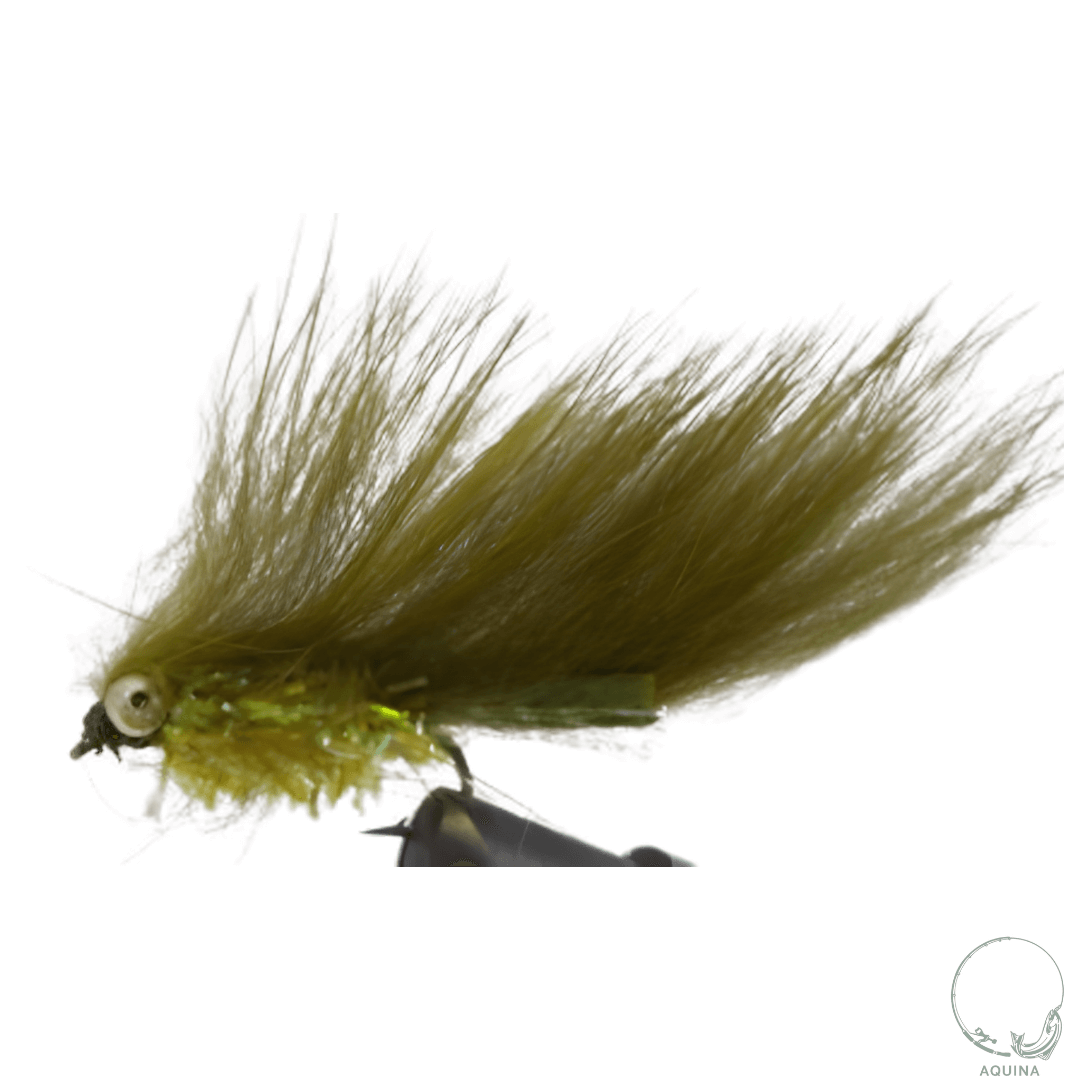
Key Features
- Olive rabbit strip body with natural shading
- Fritz collar for added flash
- Tinsel/Mylar accents for subtle reflection
- Weighted head for natural swimming orientation
- Durable construction for repeated strikes
- Medium-length profile for freshwater predators
- Flash, color, and movement attract attention
Ideal Conditions
Performs well in clear and lightly stained rivers, streams, and lakes. Particularly effective near current seams, drop-offs, and rocky structure where fish lie in ambush. Works in both moderate and slow water flows.
Best Season
Effective year-round, with peak results in spring and autumn. Early summer works well during low-light conditions or overcast days.
Recommended Size
Hook sizes 6-10, with size 8 providing the most versatility. Proportions allow natural swimming and correct orientation in currents of varying speeds.
Rigging and Presentation
Fish with steady to slow strips, occasionally pausing to allow the Fritz collar to pulse naturally. Swinging or drifting along structure enhances visibility and triggers strikes.
Why the Fly Works
Olive shading combined with subtle flash and a well-proportioned profile mimics natural prey effectively. The movement of the rabbit strip and Fritz collar creates irresistible lifelike action, provoking predatory responses.

Key Features
- Pearl green rabbit strip body with fluorescent highlights
- Reflective flash material for attraction
- Slightly weighted head for natural orientation
- Durable construction for repeated strikes
- Long, flowing profile for predatory fish
- Subtle color gradients for realism
- Tail movement and flash create irresistible action
Ideal Conditions
Excels in clear to moderately stained rivers, streams, and lakes. Especially effective near drop-offs, current seams, and around submerged structures where predatory fish lie in ambush. Works in both slow and moderate water flows.
Best Season
Effective throughout the year, with peak activity in spring and summer when baitfish are abundant. Early autumn fishing also produces strong results, especially in low-light conditions.
Recommended Size
Hook sizes 6-10, with size 8 being the most versatile. The long profile ensures visibility and natural movement.
Rigging and Presentation
Strip steadily with occasional pauses to allow the rabbit strip and flash to undulate naturally. Effective when swung across current seams or retrieved near structure.
Why the Fly Works
The combination of pearl green and fluorescent green, along with reflective flash and flowing tail, creates a highly visible and lifelike prey imitation. This combination triggers predatory instincts across a variety of freshwater environments.
15. Bloody Zonker
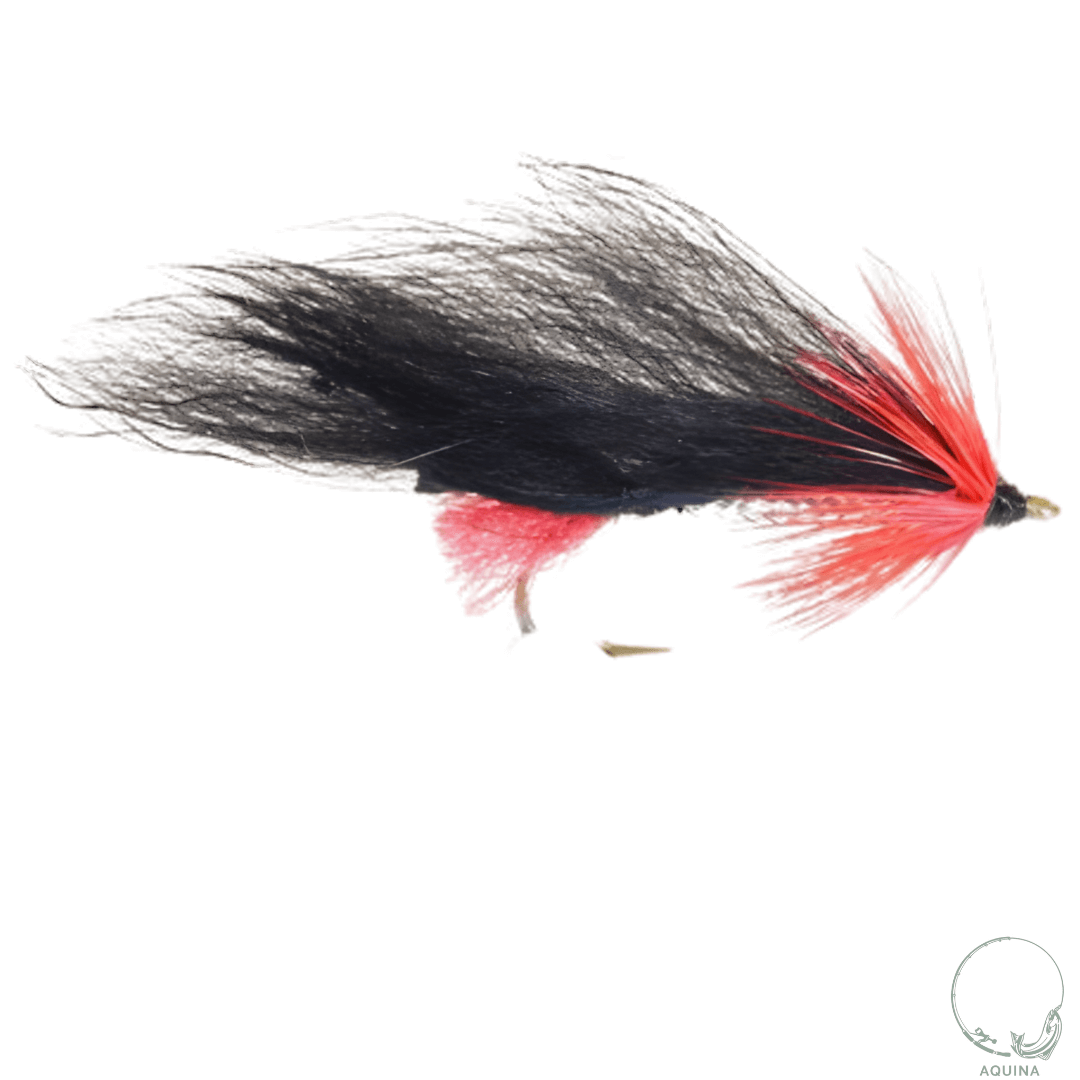
A transformed version of the classic Bloody Butcher wet fly, the Bloody Zonker combines traditional wet fly elements with the irresistible movement of zonker strips. Originally designed for sea trout, this versatile pattern has evolved into an effective option for multiple predatory species.
Bloody Zonker key features
-
Classic silver, red, and black color for strong contrast
-
Tinsel body adds flash and durability
-
Red throat mimics "bleeding gill" to trigger strikes
-
Front hackle swept back for profile and movement
-
Effective for trout, sea trout, salmon, and tarpon
-
Proven color scheme across various waters
Bloody Zonker ideal conditions
The Bloody Zonker performs exceptionally in rivers and lakes where predatory fish actively hunt. At the same time, this pattern excels in situations where a larger profile is needed to attract substantial fish. Fishponds and reservoirs represent ideal environments for this versatile pattern.
Bloody Zonker best season
As a year-round pattern, the Bloody Zonker maintains consistent effectiveness throughout changing seasons. Yet, it proves particularly lethal during periods when baitfish are abundant or stressed.
Bloody Zonker recommended size
Typically tied on hooks sized 8-12, with size 10 providing versatility across various fishing scenarios.
Bloody Zonker rigging and presentation
For maximum effectiveness, use either active stripping or swinging techniques to highlight the zonker strip's movement. In addition, fishing this pattern with short, varied retrieves near structure often produces explosive strikes.
Why Bloody Zonker works
The pattern's deadly effectiveness stems from its perfect combination of flash (tinsel body) and movement (zonker strip). Furthermore, the classic "butcher" color scheme of silver, red, and black has proven irresistible to predatory fish for generations.

Among the most adaptable streamer designs, the Zonker Minnow Variation takes the foundational zonker concept and enhances it with additional elements for improved fish-catching ability. This pattern represents the evolution of a time-tested design that dates back to the earliest days of fly fishing.
Zonker Minnow Variation key features
-
Rabbit strip back for lifelike swimming motion
-
Pearl core braid body reflects light like fish scales
-
Grizzly barred rabbit tail for natural movement
-
Red rabbit zonker throat mimics injured prey
-
3D holographic eyes (7/32") for realism
-
UV-cure resin finish for durability and shine
Zonker Minnow Variation ideal conditions
The Zonker Minnow Variation performs optimally across diverse water types. Ironically, this pattern excels in both clear mountain streams and larger rivers where predatory fish actively hunt small baitfish. For optimal results, fish this pattern in waters where trout and perch respond reliably to streamer presentations.
Zonker Minnow Variation best season
Unlike season-specific patterns, this versatile creation remains productive throughout the entire year. In short, anglers can confidently fish this pattern whenever they head to the water, simply adjusting retrieval speed to match current conditions.
Zonker Minnow Variation recommended size
Typically tied on size 2 hooks, with popular options being either Umpqua XT350 or Daiichi 2461 long shank streamer hooks. The substantial hook size provides excellent hook-setting capability without compromising the fly's natural movement.
Zonker Minnow Variation rigging and presentation
For maximum effectiveness, modify your retrieval technique to match fishing conditions—faster strips for active fish or slower, more deliberate movements during cooler periods. Fishing near structure or along current seams frequently produces strikes.
Why Zonker Minnow Variation works
The undulating rabbit strip creates irresistible motion even with minimal current or retrieval movement. Overall, this pattern's success comes from its perfect combination of silhouette, material selection, and lifelike action that consistently triggers predatory responses.

The innovative Pine Squirrel Zonker offers fly tiers a relatively recent addition to the streamer scene, featuring shorter, finer hair than traditional rabbit zonkers for exceptional micro-action in water. These specialized strips have rapidly gained popularity among serious anglers seeking enhanced movement in smaller patterns.
Pine Squirrel Zonker key features
-
Ultra-soft thin-cut strips for lifelike streamers
-
Natural markings imitate baitfish perfectly
-
Tightly profiled for realistic underwater motion
-
Excellent water-shedding for all-day use
-
Available in carefully dyed colors
Pine Squirrel Zonker ideal conditions
Pine Squirrel Zonker performs magnificently in both deep fast water and small mountain streams. In fact, these patterns excel in SW Montana where micro zonkers tied with pine squirrel instead of rabbit fur have become extremely popular.
Pine Squirrel Zonker best season
This versatile pattern maintains effectiveness year-round. As demonstrated on the Firehole and Madison River, pine squirrel zonkers produce excellent results throughout spring fishing.
Pine Squirrel Zonker recommended size
Typically tied on size 8-10 hooks with 3X-long streamer hooks being ideal choices. Smaller sizes work perfectly for micro-streamer applications targeting trout.
Pine Squirrel Zonker rigging and presentation
For optimal performance, fish either weightless with floating line or add minimal weight with a few turns of light lead/tungsten wire. Alternatively, use sink tip lines for deeper presentations while maintaining the fly's natural action.
Why Pine Squirrel Zonker works
The undulating quality of pine squirrel creates irresistible movement that triggers strikes even when suspended in water. Furthermore, its fine markings and natural appearance make it an exceptional choice for imitating small prey fish.

Key Features
- Bold orange rabbit strip for high visibility
- Barred tiger pattern for contrast
- Slightly weighted head for natural swimming
- Durable construction for repeated strikes
- Medium-long profile for predatory fish
- Subtle reflective accents for flash
- Streamlined design mimics fleeing prey
Ideal Conditions
Best suited for rivers, lakes, and reservoirs where bright coloration is needed to attract attention. Effective near current breaks, submerged structures, and shaded areas where predatory fish hunt. Works well in clear to moderately stained waters.
Best Season
Highly effective from late spring through early autumn. Overcast days and low-light conditions increase effectiveness.
Recommended Size
Hook sizes 6-10 work best, with 8 being most versatile. Longer profiles maximize visibility and appeal to larger predatory fish.
Rigging and Presentation
Use a combination of fast and slow strips to produce pulsating movement, particularly near structures and drop-offs. Occasional pauses allow the tail to undulate, mimicking struggling prey.
Why the Fly Works
The bright orange coloration and tiger-barred pattern create a high-contrast target that triggers predatory instincts. Paired with realistic swimming action, the fly often produces aggressive strikes in a variety of freshwater environments.
19. UV Pearl Zonker

The UV Pearl Zonker represents a modern adaptation of the classic zonker design, integrating subtle UV and pearl materials while preserving the essential movement characteristics. The rabbit strip remains the primary action driver, while the pearl and UV components enhance light reflection without overpowering the fly’s natural silhouette. This pattern is designed to maintain realism while improving visibility in varied light and water conditions.
UV Pearl Zonker key features
-
Rabbit strip creating undulating motion
-
Pearl body for natural flash
-
UV materials for low-light visibility
-
Streamlined baitfish profile for tracking
-
Balanced design minimizing excess flash
UV Pearl Zonker ideal conditions
This pattern excels in both clear and slightly stained water, particularly where light penetration fluctuates. It performs well in rivers, lakes, and reservoirs where subtle visibility enhancements improve detection without spooking fish.
UV Pearl Zonker best season
The UV Pearl Zonker remains effective throughout the year, with heightened performance during overcast days or low-light periods when UV reflection becomes more pronounced.
UV Pearl Zonker recommended size
Most commonly tied in sizes 4–10, with sizes 6–8 offering the best balance of profile and movement.
UV Pearl Zonker rigging and presentation
Fish with varied retrieve speeds depending on fish activity. Slow, steady retrieves highlight the rabbit strip’s motion, while faster strips activate the pearl and UV components during active feeding periods.
Why UV Pearl Zonker works
This pattern succeeds by combining natural fur movement with controlled visual enhancement. The rabbit strip creates lifelike action, while the pearl and UV materials subtly amplify visibility, resulting in a fly that attracts attention without appearing unnatural.
20. Dumbbell Zonker

The Dumbbell Zonker modifies the traditional zonker layout by incorporating dumbbell eyes to control depth and orientation. This addition allows the fly to reach deeper water efficiently while altering its swimming angle. Despite the added weight, the rabbit strip continues to provide consistent movement, maintaining the core appeal of the zonker pattern.
Dumbbell Zonker key features
-
Rabbit fur zonker strip for natural pulsing
-
Dumbbell eyes controlling depth
-
Defined swimming angle on retrieve
-
Stable profile resisting rolling
-
Balanced weight and movement
Dumbbell Zonker ideal conditions
This pattern excels in deeper runs, pools, and areas with stronger current where unweighted zonkers struggle to reach productive zones. It is particularly effective when fish hold near the bottom or along drop-offs.
Dumbbell Zonker best season
A true year-round performer, the Dumbbell Zonker is especially effective during colder months when fish remain deeper and respond to slower presentations.
Dumbbell Zonker recommended size
Typically tied in sizes 2–8, depending on desired depth and hook strength, with sizes 4–6 being the most versatile.
Dumbbell Zonker rigging and presentation
Use slower, controlled retrieves or short strips combined with pauses to allow the fly to sink and maintain depth. Swinging the fly through deeper seams can also be highly effective.
Why Dumbbell Zonker works
The fly’s success comes from its ability to combine zonker-style movement with precise depth control. The dumbbell eyes place the fly where fish are holding, while the rabbit strip continues to trigger strikes through lifelike motion.
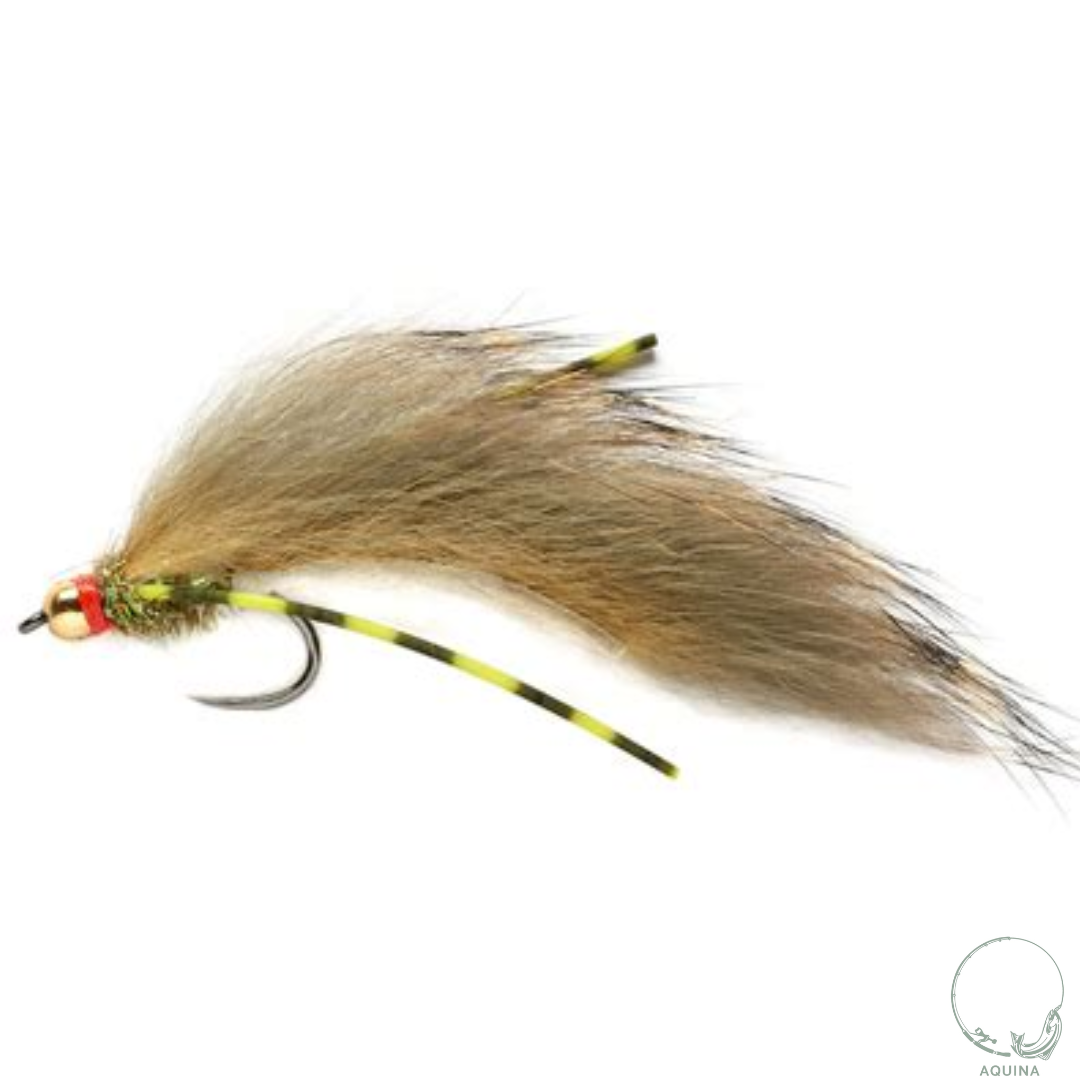
The Flexi Olive Zonker emphasizes realism through flexibility and natural coloration. Its construction allows the fly to bend and respond fluidly to changes in retrieve speed and current, enhancing the illusion of living prey. The olive color scheme maintains a subtle, natural appearance that blends seamlessly into a wide range of aquatic environments.
Flexi Olive Zonker key features
-
Rabbit strip for natural movement
-
Flexible body enhancing motion
-
Olive coloration for camouflage
-
Streamlined profile reducing drag
-
Responsive action on retrieves
Flexi Olive Zonker ideal conditions
This pattern performs well in clear to lightly stained water, especially in rivers and lakes where fish feed on naturally colored prey. It is effective along weed edges, current seams, and transition zones.
Flexi Olive Zonker best season
Effective throughout the year, with particular strength during spring and summer when natural olive-toned prey dominates aquatic systems.
Flexi Olive Zonker recommended size
Commonly tied in sizes 6–10, with size 8 being a reliable all-purpose option.
Flexi Olive Zonker rigging and presentation
Fish with smooth, steady retrieves to allow the flexible body to move naturally. Occasional pauses enhance the illusion of a living prey item adjusting direction or speed.
Why Flexi Olive Zonker works
The pattern’s effectiveness lies in its realism. The flexible body and rabbit strip work together to create fluid, natural motion, while the olive coloration ensures the fly blends naturally into its environment.
The Zonker Flies Comparison Table
| Zonker Pattern | Key Features | Ideal Conditions | Best Season | Recommended Size | Special Characteristics |
|---|---|---|---|---|---|
| Black Zonker |
- Black rabbit fur strip - Reflective Mylar belly - Snag-resistant design |
Low-light, murky water | Year-round, especially during rainfall/snowmelt | 4–10 (most common 6–8) | Creates a strong dark silhouette visible in all conditions |
| White Zonker |
- White rabbit strip - Pearl Mylar tubing - Red marabou throat |
Clear water, 2–6 feet deep | Winter / early spring | 2–8 | Excellent for clear water and baitfish-heavy conditions |
| Olive Zonker |
- Olive rabbit strip - Weighted design - Shiny body |
Clear to stained water | Year-round | 4–10 | Natural coloration mimicking multiple prey items |
| Grizzly Zonker |
- Reflective Mylar body - Grizzly hackle - Multiple color variants |
Afternoon fishing, sunlit conditions | Fall (prime) | 6 barbless | Strong visibility in bright light |
| Natural Zonker |
- Natural gray rabbit fur - Mylar tubing body - Pearlescent silver contrast |
3–5 feet depth, moderate current | Year-round, especially spring | 4–12 | Close imitation of native forage |
| Orange Zonker |
- Vibrant orange rabbit strip - Red rabbit accent - Orange dubbing body |
Still waters, dams, reservoirs | Spring / early summer | 6–8 | High-visibility attractor pattern |
| Nugget Flexi Legs Green Zonker |
- Green rabbit strip body - Flexible synthetic legs - Subtle green tone variation |
Rivers and lakes with structure | Year-round, peak spring & summer | 6–10 | Added leg movement creates lifelike pulsing action |
| Black Booby |
- Black marabou tail and wing - Black/pearl fritz body - 5 mm foam eyes |
Stillwater environments | Early season | 10 | Foam eyes create a rising, suspending action |
| Fish Skull Zonker Olive |
- Olive rabbit strip body - Fish skull-style head - Subtle reflective underbody |
Rivers, lakes, near structure | Year-round | 6–10 | Realistic swimming angle with injured-prey profile |
| Squirrel Zonker |
- Squirrel fur strips - Clear Cure Goo head - White underbelly |
Moving water scenarios | Spring | 4–8 | Natural fur produces fine micro-movement |
| Red Sparkle Body Yellow Zonker |
- Yellow rabbit strip body - Red sparkle body material - Long flowing tail |
Lakes, slow rivers, low light | Spring to summer | 6–10 | Bright contrast and flash trigger reaction strikes |
| FMJNM |
- Brass cone head - Silver tinsel body - Deer hair collar |
Deep, fast current | Year-round | Requires 7–9 wt rod | One of the heaviest zonker variants |
| Fritz Zonker Olive |
- Olive rabbit strip - Fritz underbody - Subtle flash accents |
Clear to lightly stained water | Year-round | 6–10 | Combines natural color with added visual depth |
| Pearl Green Flash Body Fluo Green Zonker |
- Fluorescent green rabbit strip - Pearl flash body - Slightly weighted head |
Rivers and lakes, varied clarity | Year-round | 6–10 | High visibility with reflective scale effect |
| Bloody Zonker |
- Silver, red, and black color scheme - Tinsel body - Red throat |
Rivers and lakes | Year-round | 8–12 | Classic “butcher” color contrast |
| Zonker Minnow |
- Pearl core braid body - 3D holographic eyes - UV resin finish |
Diverse water types | Year-round | Size 2 | Enhanced traditional baitfish profile |
| Pine Squirrel |
- Ultra-soft thin strips - Natural markings - Water-shedding properties |
Deep fast water, mountain streams | Year-round | 8–10 (3X-long hooks) | Creates subtle micro-action even in heavy current |
| Tiger Zonker Orange |
- Orange barred rabbit strip - Tiger-style contrast pattern - Streamlined profile |
Rivers, lakes, reservoirs | Late spring to autumn | 6–10 | Aggressive visual trigger with strong contrast |
Zonker flies undoubtedly rank among the most versatile and effective streamer patterns available to fly anglers today. Throughout this guide, we've explored 21 proven zonker patterns that consistently deliver results across various fishing conditions and seasons. The distinctive rabbit fur strip characteristic of zonker flies creates that irresistible, lifelike movement that triggers predatory instincts in fish, whether you're targeting trout, bass, steelhead, or other species.
Each pattern showcased offers unique advantages depending on water conditions, season, and target species. From the classic Black Zonker excelling in low-light and murky conditions to the vibrant Orange Zonker serving as a hot attractor pattern, these flies provide solutions for virtually any fishing scenario you might encounter. Additionally, specialized variations like the Pine Squirrel Zonker with its fine hair and micro-action or the innovative Black Booby Zonker with its distinctive foam eyes demonstrate how this timeless design continues to evolve.
The effectiveness of zonker patterns stems primarily from their perfect imitation of natural prey movement. The pulsating action of the fur strip mimics the swimming motion of baitfish or the undulation of leeches, consequently fooling even the wariest fish. Furthermore, these patterns maintain their fish-catching abilities regardless of how they're fished—stripped actively, swung through current, or even dead-drifted.
Water clarity and light conditions should guide your color selection. Darker patterns like the Black and Olive Zonkers typically perform better in murky water or low light, while brighter options such as the White Zonker or The Tiger Zonker Orange excel in clearer conditions or when you need to trigger reaction strikes. Essentially, having a selection of colors and sizes ensures you're prepared for changing conditions.
Size selection remains equally important, with most zonkers available in sizes ranging from 2-12. Generally, larger patterns work better for bigger water or when targeting substantial predators, whereas smaller sizes prove more effective in clear, pressured fishing scenarios.
Though incorporating zonker flies into your arsenal might initially seem overwhelming given the variety available, starting with a few core patterns like the Black, White, and Olive Zonkers provides an excellent foundation. Afterward, you can expand your collection based on local water conditions and target species. These versatile patterns will undoubtedly improve your streamer fishing success and help you catch more fish throughout the seasons.
Conclusion
Zonker flies stand among the fly fishing world's most adaptable and productive patterns, consistently delivering results when other flies fail. What makes these patterns truly remarkable is their ability to be fished slowly yet still provide plenty of movement—a quality that gives them a distinct edge during colder months when fish are less active.
As shown across the various patterns examined, zonker flies excel throughout every season. In winter, patterns like The Tiger Zonker Orange and Nugget Flexi Legs Green Zonker perform exceptionally well in cold water. Alternatively, summer conditions favor variations like the Orange Zonker with its high visibility profile.
Unlike many specialized patterns, zonkers maintain their fish-catching abilities regardless of water temperature. Their versatility extends beyond seasons to target species as well, proving deadly for trout, bass, steelhead, pike, and even saltwater species.
Perhaps most impressively, these patterns effectively imitate various prey items from sculpins and crayfish to small baitfish. First used in the mid-1970s by Colorado fly shop owner Dan Byford, zonker streamers have evolved into countless productive variations while maintaining their core fish-catching principles.
For any angler seeking consistent results across changing conditions, maintaining a selection of zonker patterns in different sizes and colors provides the perfect solution for year-round success.
Key Takeaways
These 21 zonker fly patterns provide proven solutions for catching fish across all seasons and water conditions, from classic designs to innovative modern variations.
- Color selection drives success: Dark patterns (Black, Olive) excel in murky water and low light, while bright options (White, Orange) trigger strikes in clear conditions and pressured waters.
- Rabbit fur strips create irresistible movement: The pulsating zonker strip mimics natural baitfish swimming motion, triggering predatory instincts even in slow currents or cold water.
- Size matters for conditions: Use larger patterns (sizes 2-6) for big water and substantial predators, smaller sizes (8-12) for clear water and pressured fish scenarios.
- Versatile presentation options maximize effectiveness: Strip actively, swing through current, or dead-drift these patterns with equal success across rivers, lakes, and stillwaters.
- Year-round productivity sets zonkers apart: Unlike seasonal patterns, these flies maintain fish-catching ability regardless of water temperature, making them essential for consistent angling success.
Starting with core patterns like Black, White, and Olive Zonkers provides an excellent foundation, then expand your collection based on local conditions and target species. These time-tested streamers will significantly improve your fishing success when other flies fail to produce results.
Faqs About Zonker fishing flies
What makes zonker flies so effective for fishing?
Zonker flies are highly effective due to their lifelike movement in water. The rabbit fur strip creates a pulsating action that perfectly mimics the swimming motion of baitfish or leeches, triggering predatory instincts in fish even in slow currents or cold water.
Which zonker patterns work best in murky water conditions?
In murky water conditions, darker zonker patterns like the Black Zonker and Olive Zonker tend to perform best. These flies create a strong silhouette that fish can easily detect in low visibility situations.
How should I choose the right size zonker fly?
Choose larger zonker flies (sizes 2-6) for fishing in big water or targeting substantial predators. For clear water and pressured fishing scenarios, opt for smaller sizes (8-12). Adjust based on the specific conditions and target species in your fishing area.
Can zonker flies be used year-round?
Yes, zonker flies are effective year-round. Unlike many seasonal patterns, zonkers maintain their fish-catching abilities regardless of water temperature. They can be adapted to various fishing conditions and target species throughout all seasons.
What's the best way to fish a zonker fly?
Zonker flies are versatile and can be fished in multiple ways. You can strip them actively to imitate fleeing baitfish, swing them through current, or even dead-drift them. Experiment with different retrieval techniques to find what works best for the specific conditions and fish behavior you encounter.